student
From balancing your course load to forging relationships with classmates to extracurricular involvement, these are the tried and true methods to nail your career as a student.
: “The World of Chemistry: Its Importance and Role in Our Everyday Life
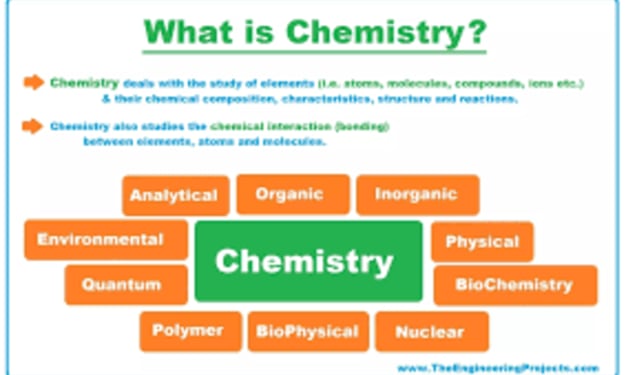
Chemistry – The Central Science of Everyday Life --- 1. Introduction Chemistry is the branch of science that explores the composition, structure, properties, and changes of matter. It seeks to answer essential questions like: What is this made of? How does it react? Why does it change? From the oxygen we inhale to the fuel that powers our vehicles, chemistry plays a role. It helps explain why leaves turn yellow in autumn, how cooking oil fries food, or how medications cure illnesses. Everything around us — from the soft drinks we sip to the smartphones we use — involves chemistry in some form. Chemistry is called the “central science” because it links physical sciences (like physics) with biological sciences (like biology and medicine). Understanding chemistry means understanding how the world works at a fundamental level — from molecules to mountains. --- 2. Main Branches of Chemistry Chemistry is a vast field divided into several specialized branches. Each focuses on a particular type of substance or process: a. Organic Chemistry This branch deals with compounds made primarily of carbon and hydrogen, often including oxygen, nitrogen, sulfur, and more. These compounds form the basis of all life. Examples: fuels (gasoline, diesel), plastics (polyethylene), medicines (aspirin), perfumes, synthetic fibers, food flavors, pesticides. Why important? Organic chemistry helps in drug development, materials science, and understanding living organisms. --- b. Inorganic Chemistry Inorganic chemistry studies compounds that are not based on carbon-hydrogen bonds, such as metals, salts, and minerals. Examples: table salt (NaCl), ammonia (NH₃), sulfuric acid, ceramic materials, paint pigments, catalysts. Applications: Used in manufacturing, construction materials, fertilizers, and water treatment. --- c. Physical Chemistry This field combines chemistry and physics. It explains how and why chemical reactions happen and studies the physical properties of matter. Topics covered: thermodynamics, reaction kinetics, equilibrium, phase changes, quantum mechanics. Applications: energy storage systems (batteries), industrial chemical reactions, explosives, and fuel efficiency. --- d. Analytical Chemistry Analytical chemistry focuses on identifying and measuring substances. It answers questions like "What is this made of?" and "How much of a substance is present?" Used in: food quality control, forensic labs, environmental testing, pharmaceutical research. Examples: blood sugar testing, water contamination analysis, testing drug purity. --- e. Biochemistry Biochemistry studies the chemistry of living organisms. It looks at biological molecules like proteins, DNA, RNA, carbohydrates, and lipids. Applications: medicine, genetic engineering, nutrition science, disease research, metabolic studies. Examples: how enzymes work, how food is digested, how cells produce energy. --- f. Industrial Chemistry (New Addition) This branch focuses on large-scale production of chemicals and materials used in industries. Examples: manufacturing of fertilizers, cement, glass, petrochemicals, soaps. Importance: Helps optimize production processes, minimize cost, and improve sustainability. --- 3. Chemistry in Daily Life Though often unnoticed, chemistry touches every aspect of our everyday routine: --- a. In Food and Cooking Cooking involves chemical changes like Maillard reactions (browning of food), boiling, frying, and baking. Preservatives (like sodium benzoate) prevent microbial growth. Additives improve flavor, color, and texture (e.g., MSG, citric acid). Nutritional labels use data from chemical analysis to calculate calories, proteins, fats, etc. --- b. In Cleaning and Hygiene
By Mudasir Shafiq about a year ago in Education
What to Look for in a Professional Online Algebra Exam Help Service
Online exams have revolutionized the way we learn, giving students the flexibility and ease of use as never before. However, this change has its own challenges particularly for courses such as algebra, which require understanding, speedy problem solving and precise computations. As deadlines approach and the math's becomes difficult students typically turn to online academic support services to help. The question is what can you do to find an online professional algebra aid service that's trustworthy as well as efficient and worth the money you pay for it?
By Lucas Lednerabout a year ago in Education
From Zero to Code Hero: How I Built a Mobile VS Code Editor Without a PC or Fluent English
Made by M. Junaid Author’s Note: This is not just a coding project – this is a real-life story of how I turned limitations into a powerful creation using only my mobile phone, a strong will, and AI support. Introduction: From Limitations to Creation A few months ago, I didn’t even have a personal computer. All I had was my mobile phone, a strong desire to learn, and a dream to build something valuable — not just for myself, but for others like me. I thought, "What if there are more people who want to learn to code, but they don’t have a PC?" That’s where my idea was born: I decided to create a mobile-friendly VS Code-like editor that works directly on a phone browser. But there was another challenge — 👉 I didn’t know English properly. Still, I didn’t let that stop me. I started chatting with ChatGPT in Roman Urdu. I would write messages like: “HTML code kese likhta he?” “VS code jesa editor kese banayein mobile pe?” At first, ChatGPT couldn’t fully understand what I meant. But I didn’t quit. I kept trying different ways of asking until finally, I began to understand how to build things. Slowly, line by line, I built something big. 𝗧𝗵𝗲 𝗕𝗶𝗿𝘁𝗵 𝗼𝗳 𝗤𝗮𝗯𝗶𝗹 𝗘𝗱𝗶𝘁𝗼𝗿 I named it Qabil Editor – “Qabil” means capable in Urdu. It’s a message to everyone who thinks they’re not good enough: You are capable, no matter your background or tools. I built it using: 🅷🆃🅼🅻, 🅲🆂🆂, 🅰🅽🅳 🅹🅰🆅🅰🆂🅲🆁🅸🅿🆃 Monaco Editor (used in real VS Code) And ChatGPT as my guide, teacher, and debugger 🔧 Features I Added (Step by Step) What started as a basic editor turned into something powerful: ✅ Multiple Tabs: HTML / CSS / JavaScript ✅ Live Preview (real-time output) ✅ Auto Save (to LocalStorage) ✅ Auto Close Tags ✅ Remove Extra Spaces Button ✅ Full HTML & CSS Suggestions (like VS Code) ✅ Theme Toggle (Light/Dark mode) ✅ Typing Animation with Glitch Effect ✅ Download Buttons for each file ✅ Mobile Responsive UI ✅ Tag Format Toggle (<h1></h1> or <h1>\n</h1> style) Each feature took time and effort. I had no instructor, no formal training — just a mobile screen and endless conversations with ChatGPT. ⚔️ Challenges I Faced (And How I Fixed Them) I faced a lot of issues that most devs solve with a PC and Stack Overflow. But I had none of that. I had to describe each bug to ChatGPT in broken English or Roman Urdu. Here are some of the hardest problems: ❌ CSS Suggestions didn’t show inside <style> tag ➤ I manually adjusted logic using getValueInRange() to detect when CSS should trigger. ❌ Enter key wasn’t going to the next line ➤ I found duplicate editor.addCommand issues and fixed them. ❌ Style tag was behaving like CSS block ➤ I corrected the logic to treat <style> as an HTML tag, not a CSS model switch. ❌ Internal and inline CSS suggestions weren’t working ➤ I made the suggestions appear based on cursor detection inside style and style="". ❌ Mobile layout was breaking Monaco Editor ➤ I rewrote and adjusted layout CSS again and again until it worked on every screen size. I even had to manually add over 200+ CSS properties and values for better suggestion support! 📱 Why This Project Matters Thousands of learners, especially in countries like Pakistan, India, and Bangladesh, don’t have access to a computer. They want to code, but don’t know where to begin. Qabil Editor proves you can start with just a mobile phone. It’s not just a tool. It’s a statement — that passion beats limitations. 💭 𝗪𝗵𝗮𝘁’𝘀 𝗡𝗲𝘅𝘁 𝗳𝗼𝗿 𝗤𝗮𝗯𝗶𝗹 𝗘𝗱𝗶𝘁𝗼𝗿? 𝗜’𝗺 𝗽𝗹𝗮𝗻𝗻𝗶𝗻𝗴: A React-based version Making it a PWA so it can be installed like an app Adding code sharing features Building a community of mobile coders Most of all, I want to inspire others to stop waiting for perfect tools and start building with what they have. Final Thoughts: You Can Do It Too When I started, I couldn’t code. I couldn’t speak English fluently. I didn’t even have a PC. Today, I’ve built a fully working VS Code clone – on mobile – with the help of AI and a never-give-up mindset. If you feel stuck or think your tools aren’t enough, remember this: You don’t need perfect English. You don’t need expensive devices. You just need start and ask questions — even if it’s in Roman Urdu. 𝑴𝒂𝒅𝒆 𝒃𝒚 𝑴. 𝑱𝒖𝒏𝒂𝒊𝒅 𝑰𝒇 𝒕𝒉𝒊𝒔 𝒔𝒕𝒐𝒓𝒚 𝒊𝒏𝒔𝒑𝒊𝒓𝒆𝒅 𝒚𝒐𝒖, 𝒑𝒍𝒆𝒂𝒔𝒆 𝒔𝒖𝒑𝒑𝒐𝒓𝒕 𝒃𝒚 𝒔𝒉𝒂𝒓𝒊𝒏𝒈 𝒊𝒕 𝒂𝒏𝒅 𝒆𝒙𝒑𝒍𝒐𝒓𝒊𝒏𝒈 𝒕𝒉𝒆 𝑸𝒂𝒃𝒊𝒍 𝑬𝒅𝒊𝒕𝒐𝒓. 𝑴𝒐𝒓𝒆 𝑼𝒑𝒅𝒂𝒕𝒆𝒔 𝑪𝒐𝒎𝒊𝒏𝒈 𝑺𝒐𝒐𝒏!
By Muhammad Junaid about a year ago in Education
*The Healthy Brain: Unlocking the Secrets to Optimal Cognitive Function*. AI-Generated.
In today's fast-paced world, maintaining a healthy brain is more crucial than ever. Our brains are the control centers of our bodies, responsible for processing information, controlling movements, and facilitating emotions. With the increasing demands of modern life, it's essential to prioritize brain health to ensure optimal cognitive function, mental wellbeing, and overall quality of life.
By Tariq khanabout a year ago in Education
The Silent Killer of Humanity
The streets of Lahore buzzed with life, but in a narrow alley behind a row of shops, a little boy named Bilal sat barefoot on the cold pavement. He held a worn-out shoe polish box in one hand and a cloth in the other. He was only ten years old, yet his eyes carried the weight of a man who had seen too much. Every day, Bilal left his small, one-room home before sunrise. His mother was sick, coughing through the night. His father had passed away in a factory accident two years ago, and since then, the burden of survival had shifted to Bilal's small shoulders. His younger sister, Ayesha, barely five, stayed home with their ailing mother. People passed by him every day — some in shiny cars, others on motorbikes. Some gave him a nod, a few tossed him a coin, but most ignored him, as if poverty had made him invisible. Bilal didn’t beg. He had pride. He offered to shine shoes with whatever polish he could afford. For five rupees, he gave his customers a smile and a quick polish. For ten, he gave them silence. It was not enough, but it was honest. What the world didn't see was how poverty was quietly killing him. Not with a bullet, not with poison, but with slow humiliation. With the ache of hunger that never truly went away. With the silent tears he wiped when his mother had no medicine. With the guilt of missing school so he could earn just enough to buy bread. One evening, Bilal sat outside a fancy café, waiting for a customer. Inside, kids his age laughed over burgers and fries. A girl, wearing a clean school uniform, noticed him and pulled her mother’s sleeve. “Ammi, look at him… why is he outside?” Her mother barely looked. “Don’t stare, beta. Just eat.” Bilal stared back, not with envy, but with a longing to be seen. Poverty doesn't only steal food; it steals identity, hope, and voice. A few minutes later, the girl quietly slipped out, holding a sandwich. She hesitated, then walked to Bilal. “Here… I thought you might be hungry,” she said softly. Bilal blinked. “Thank you,” he whispered, unsure whether to smile or cry. She sat down beside him for a moment. “Why don’t you go to school?” “I want to,” Bilal replied. “But I have to work. My mom is sick.” She nodded, not with pity, but with understanding. “That’s not fair.” “It’s not,” he agreed, voice low. When she left, Bilal didn’t feel poor for a moment — someone had seen him. That small act of kindness, that pause in a busy world, reminded him that he still existed. But poverty wasn't done with him. That night, his mother’s health worsened. There was no money for a doctor. Bilal sat helplessly, holding her hand, feeling the fear of losing the only person who had loved him unconditionally. Poverty is a silent killer. It kills not just through hunger or disease, but through neglect, invisibility, and the slow erosion of dignity. No gunshot, no headlines — just a quiet disappearance of hope. A week later, a charity worker named Sara, who had heard about Bilal through the little girl, came to their home. She brought food, medicine, and more importantly, a chance. She helped his mother get treatment and enrolled Bilal and Ayesha in a school that provided free education and meals. For the first time in years, Bilal smiled with his heart. But this was just one story. There were thousands like him, unheard, unseen. For every Bilal who gets a chance, ten others fade into silence. --- Poverty is not just an economic issue — it is a human tragedy. It kills dreams, relationships, potential, and the very spirit of those it touches. And until we learn to see the Bilals of the world, poverty will continue to be the silent killer of humanity.
By Farhat ullahabout a year ago in Education
How to Get Good Quality Sleep. AI-Generated.
How to Get Good Quality Sleep Introduction Let’s be real—most of us aren’t getting enough quality sleep, and it’s costing us big time. Whether you’re tossing and turning all night or waking up feeling like you never slept at all, poor sleep messes with your mood, energy, focus, and overall health.
By Asghar Badshahabout a year ago in Education
"Hungry Days, Glorious Tomorrows"
From Empty Streets to Endless Possibilities In the crowded slums of Darapur, among broken roofs and narrow alleyways, lived a boy named Ayaan. His world was filled with the noise of struggle—vendors shouting, pots clanging, and the constant worry of where the next meal would come from. But Ayaan carried something rare within him: a dream too big for the tiny room he called home.
By WASEEM IQBALabout a year ago in Education
Unlock Digital Growth: Your Essential Guide to What is Digital Marketing?
The Gateway to Modern Business: What Exactly IS Digital Marketing? Hello , aspiring marketers and business innovators! Take a moment to reflect on your last hour. You scrolled through a social media feed, searched for information online, or perhaps checked your email. In each of those moments, you were interacting with "digital marketing." It's no longer just a trend; it's the invisible force powering modern commerce, the vital bridge connecting businesses with their customers in an increasingly interconnected world.
By Waqas Ahmadabout a year ago in Education
Comparing and Contrasting Service Design and Delivery in PepsiCo. and Coca-Cola
1. Introduction In the widespread food and beverage industry, Coca-Cola and PepsiCo are the giant and prominent businesses occupying the world’s largest consumer share of beverages and food products. Moreover, both of the companies offer multifaceted drink products in terms of sodas, sports drinks, fruit juices, mocktails, and sparkling water. However, the most popular brands of both Coca-Cola and PepsiCo are Malta, Coke, Sprite, Pepsi, and Fanta (Gómez, 2023). Furthermore, both brands are renowned but regardless of Coca-Cola owning the title of the world’s largest beverage company, the revenue of PepsiCo recorded in 2022 was significantly higher than Coca-Cola (Ridder, 2024). PepsiCo mainly operating in the US attained a $86 billion revenue in 2022, while Coca-Cola gained a revenue of $43 billion in the same year (Ridder, 2024). This article aims to compare the organizational culture, service design, and delivery in PepsiCo and Coca-Cola.
By Lucy Rowellabout a year ago in Education
How to Learn Something Within 24 Hours: 4 Step Formula
Introduction: The Pressure of Time Imagine this: you wake up one morning and realize you have just one day to learn something completely new. Maybe it’s a skill for work, a topic for a test, or a concept you desperately need to understand for an upcoming meeting. The pressure is real, and the clock is ticking. How can you possibly learn effectively in just 24 hours? I faced this challenge myself not long ago. I had to prepare a presentation about a subject I barely knew. Panic was my first reaction, but then I remembered a formula I developed over time—one that breaks down the process of rapid learning into four simple, manageable steps. Here’s how I mastered the material, and how you can too. --- Step 1: Define Your Goal and Focus Precisely The first step is to clarify exactly what you need to learn. When time is tight, you can’t afford to be vague or broad. For example, if you need to learn a new software, don’t aim to become an expert in every feature. Instead, define the precise function or skill you need to master. Ask yourself: What is the core outcome I need to achieve in 24 hours? What are the key concepts or skills essential to this outcome? What level of understanding is acceptable (basic familiarity vs. in-depth knowledge)? By narrowing your focus, you avoid wasting time on irrelevant details. This clarity acts like a map guiding your entire learning process. --- Step 2: Gather High-Quality Resources Efficiently Once your goal is clear, the next step is gathering the best learning materials fast. Time is precious, so skip lengthy books and exhaustive courses. Instead, look for concise, reliable sources such as: YouTube tutorials focused on your specific goal Summary articles or guides Quick-start manuals or cheat sheets Online forums or FAQs for common questions The trick here is to choose materials that match your learning style and are directly related to your goal. Don’t try to consume everything—select the top 2 or 3 resources and commit to them. --- Step 3: Active Learning and Practice Now comes the most important step: active engagement. Passive reading or watching won’t cut it in such a short timeframe. You must interact with the material through practice, testing yourself, and applying what you learn immediately. For example: Take notes in your own words Summarize each key point aloud or in writing Complete practice exercises or simulate real tasks Teach the concept to an imaginary audience or a friend Active learning helps transfer information from short-term memory into long-term retention much faster. It also exposes gaps in your understanding so you can address them immediately. --- Step 4: Review and Reflect Before the Deadline With only hours to go, it’s tempting to cram more content, but the final step is to pause and review what you’ve learned. Spend time revisiting your notes, testing yourself without looking, and clarifying weak points. Reflect on: What are the most important concepts or skills you must remember? How confident do you feel about each area? Are there quick fixes or mnemonics you can use to cement the information? This reflection reinforces memory and builds your confidence, so you can perform under pressure rather than freeze in panic. --- Conclusion: The Power of a Structured Approach Learning something within 24 hours is absolutely possible—but only if you approach it strategically. By defining a focused goal, selecting targeted resources, engaging actively, and reviewing thoughtfully, you can maximize your retention and skill acquisition in a single day. This 4-step formula transformed how I handle last-minute learning challenges. Next time you’re faced with a tight deadline, try these steps and watch yourself absorb new knowledge faster than you thought possible.
By Azmat Roman ✨about a year ago in Education
Train Your Brain: The New Rules of Mental Fitness
In a world obsessed with physical fitness, we’ve overlooked the most powerful muscle we own: the mind. Just like our bodies, our brains need regular training to stay sharp, resilient, and energized — especially in an age of constant distraction, burnout, and stress. Welcome to the new era of mental fitness.
By Kamran Zebabout a year ago in Education