student
From balancing your course load to forging relationships with classmates to extracurricular involvement, these are the tried and true methods to nail your career as a student.
How to Become an AI Genius
Artificial Intelligence (AI) is no longer the future—it's the present. From self-driving cars to smart assistants, AI is reshaping industries, economies, and daily life. At the heart of this transformation are the AI geniuses—individuals whose ideas and innovations are worth millions, sometimes even hundreds of millions of dollars.
By Waseem Khan about a year ago in Education
Looking back with grandeur: Oasis kick off reunion tour in Cardiff with triumphant, nostalgic gig
Swaggering, cocksure and incredibly loud, Oasis burst back on to the live music scene on Friday night with an accomplished – if ever so slightly distanced – debut gig on their reunion world tour.
By SHYAKA MARSabout a year ago in Education
Text therapy: study finds couples who use emojis in text messages feel closer
Using emojis in text messages enhances connection and fun in close personal relationships, US study finds The secret to a good relationship may be staring smartphone users in the face.
By SHYAKA MARSabout a year ago in Education
Stop counting sheep – and 13 more no-nonsense tips for getting back to sleep
Don’t count sheep Bad news for that old favourite, counting sheep. “It has been studied and it doesn’t work,” says Dr Eidn Mahmoudzadeh, a Manchester GP and co-founder of The Sleep Project, which offers support for sleeplessness at all ages. “It is too simple and mundane; people don’t carry on, they just get bored and their thoughts wander to worrying about sleep.” Counterintuitively, you should go for something more mentally challenging, he says, to distract the brain.
By SHYAKA MARSabout a year ago in Education
The School Gate
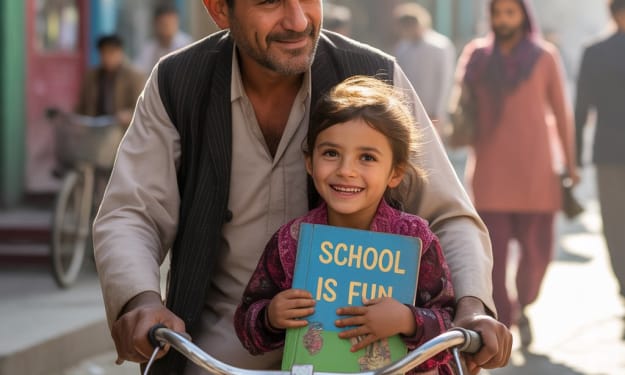
Every morning before the sun fully claims the sky over Kabul, Abdul Hakim leaves his modest home carrying only an old wooden stool and a small flask of tea. His destination is always the same: the heavy iron gates of the girls’ school that his daughter, Zainab, attends.
By Malak Khalid Khanabout a year ago in Education
The Journey of Ayaan: A Story of Student Motivation
Ayaan sat by the window, watching the rain tap gently against the glass. The world outside looked grey and sleepy, but inside his mind, thoughts raced like lightning. He was a student with big dreams—he wanted to become a scientist, to discover things no one else had seen, and to help people with new inventions. But lately, school had felt like a mountain too high to climb. The weight of exams, assignments, and expectations pressed down on him, making him wonder if he was really cut out for this path.
By Kashif Hussainabout a year ago in Education
The Silent Rise: Understanding the Increasing Rate of Cancer in People. AI-Generated.
Just a few decades ago, cancer was something most people only whispered about. It was rare in our communities and mostly associated with older age. But today, things have changed dramatically. Almost every family has a story—someone’s uncle, cousin, sister, or friend battling cancer. The disease, once distant and mysterious, is now heartbreakingly familiar. As cases rise globally, the question isn’t just why this is happening but also what can we do about it. Cancer is no longer just a health concern. It’s a deeply personal and emotional issue that’s shaping how we live, eat, work, and care for one another. A Modern Disease? Not Quite. But It’s Growing Fast. Cancer isn’t new. It’s been around for centuries. But the rate at which it’s increasing today is alarming. According to the World Health Organization (WHO), cancer is now one of the leading causes of death worldwide. It’s expected that by 2040, the number of new cancer cases per year will rise to over 29 million. This isn’t just about numbers—it’s about real people, real families, and real pain. So, what’s changed? Why does it feel like more people—especially younger individuals—are being diagnosed than ever before? Our Environment Is Part of the Problem Modern life comes with convenience, but it also brings hidden dangers. Our environment has drastically changed in the last 50 years. We’re exposed to more chemicals, pollutants, and artificial substances than any generation before us. Pesticides in our fruits and vegetables, preservatives in packaged food, air pollution from traffic and factories, and plastic toxins in our water bottles—these aren’t just environmental issues. They’re health issues. Studies have shown strong links between these factors and increased risks of cancers like lung, breast, colon, and skin cancer. I remember once visiting a friend in a small rural village. They lived near a factory that released smoke daily. Over the years, more than a dozen people from their community were diagnosed with cancer. Some were farmers, others were children. It made me realize how deeply our surroundings affect our health—often in ways we don’t fully see until it’s too late. The Lifestyle Link: What We Eat, How We Live Our eating habits have also transformed. Home-cooked meals made with natural ingredients are becoming rare, replaced by processed foods, sugary drinks, and takeaways. These dietary changes are strongly linked to several types of cancer, particularly colon, stomach, and liver cancers. I’ll admit, I was guilty of this too. Fast food was my go-to after work, and I rarely paid attention to labels or ingredients. But when a close friend was diagnosed with breast cancer in her early 30s, everything changed. Her doctors believed her high-sugar, low-fiber diet, combined with stress and lack of exercise, contributed to her condition. It was a wake-up call—not just for her, but for all of us around her. Since then, I’ve made conscious changes. More vegetables, fewer processed items. I started cooking more at home, walking daily, and drinking more water. It wasn’t easy, but I realized prevention isn’t about perfection—it’s about intention. The Stress Factor: A Hidden Enemy One thing that doesn’t get talked about enough is stress. Chronic stress weakens the immune system, affects sleep, and increases inflammation in the body—all of which can contribute to cancer. We live in a world of deadlines, digital distractions, and constant pressure to do more, be more, and achieve more. But our minds and bodies aren’t designed for nonstop tension. I used to brush off stress as just “part of adult life.” But over time, I saw how it silently affects health. Not just mine, but everyone around me. High blood pressure, anxiety, poor sleep—all signs of a system under strain. Mental health is physical health. And learning to manage stress—whether through prayer, meditation, therapy, or simply spending time in nature—is not a luxury. It’s a necessity. Genetics vs. Environment: What Really Causes Cancer? It’s true that genetics play a role in cancer. Some people are more likely to develop certain cancers because of inherited genes. But here’s something important: only about 5–10% of cancers are purely genetic. The rest are linked to environmental and lifestyle factors. That means we can take steps to reduce our risk. We may not control our genes, but we do have a say in how we live our lives. Regular checkups, early screenings, and awareness of family history are important. But so is drinking clean water, avoiding tobacco, using natural products, and getting enough rest. Emotional Impact: What Cancer Does Beyond the Body Cancer isn’t just a physical illness—it’s an emotional journey. The fear, uncertainty, and pain it brings are unimaginable unless you’ve lived it or watched someone you love go through it. I still remember the trembling voice of my cousin when she got her diagnosis. The waiting. The hospital visits. The sleepless nights. But I also remember the strength. The prayers. The small victories. The way everyone rallied around her with meals, hugs, and hope. That’s the other side of cancer—the way it brings people together and reminds us what truly matters. Can We Prevent Cancer? Some, Yes. Others, We Fight Early. Not all cancers are preventable, but many are. According to the American Cancer Society, at least 40% of cancers could be prevented through simple lifestyle changes like: Avoiding tobacco Eating a healthy diet Staying physically active Limiting alcohol Protecting skin from the sun Reducing exposure to harmful chemicals Early detection also saves lives. Many cancers, if caught early, can be treated successfully. That’s why awareness and education are so important. Final Words: What We Can Do Together The rising number of cancer cases isn’t just a statistic. It’s a story unfolding around us—one that involves real people with dreams, families, and futures. We need to speak more openly about it. Share our experiences. Encourage healthier living. Support those in treatment. And demand cleaner, safer environments for ourselves and future generations. If cancer has taught me anything, it’s that life is fragile. Every moment matters. And while we may not be able to stop every case, we can certainly fight for a world where fewer people suffer—and more people survive. Let’s live smarter, love deeper, and take care of ourselves and each other.
By Sherooz khanabout a year ago in Education
Social Media And its Effects On Students Learning
SO young people to connect with others all over the world will teach them so much and help them become more rounded individuals, Before the Digital Era and the Rise of social media, life used to be pleasurable and straightforward, with no pressure of constantly updating your life. Everything you do use to be personal to you, with no fear of getting hacked or data leakage. With the continued and Increasing dominance of social media, the way of communication has changed. Social media has shrunk physical distance and has made people closer than ever before. You can now move to any part of the world without fear of being far away from your family members and loved ones. According to Statista, currently, there are more than 3.6 billion social media users worldwide. And this number is projected to increase by 0.81 billion by 2025 According to Statista, here are the most popular social media site by the end of January 2022: How Old Are the People Using social media? People in the age group 18 to 30 are the biggest social media users, most of them being students. Here, the data prepared by Pew shows social media users according to the age, Age Percentage of users 18-29 88% 30-49 78% 50-65 64% 65 and above 37% The increase in the number of studen social media has changed the education Social Media has both positive and g impacts on students How is social media Useful for Students Social media connects people from ac globe. Social media makes edutation accessible for all students. Connection family and friends is easy and simple, regas of physical distance. Young people showcase their individual talents much eme with social media platforms. Social media a young people to get a more unbiased view current affairs by having multiple sources a their fingertips. Job opportunities are mos accessible, both in social media itself and any other career path, Social Media Connects Students from All Over the World. Social media is all about connecting people from all around the world. There are no geographical boundaries when it comes to connecting people through social media. If you are a student, you may have come across many social media groups created to connect students studying the same subject as you are Students solve each other's problems in such groups and share their experiences while learning a particular subject or topic You may also share much other important information like the scope of subjects you are studying, job opportunities, etc. This kind of data can be helpful for the group members. Moreover, social media can also provide a platform for students exchange programs that many colleges and universities offer. How Can Social Media Platform Connect Students with Teachers?
By My sToRiES mY ViOcEabout a year ago in Education