student
From balancing your course load to forging relationships with classmates to extracurricular involvement, these are the tried and true methods to nail your career as a student.
The Fox Under the Oak
In a quiet village nestled between rolling hills and fields of golden wheat, lived a curious boy named Eli. He was no more than ten, always barefoot, with a straw hat on his head and a sparkle in his eyes. Eli lived on a small farm with his grandparents. Every day after his chores, he wandered into the meadows with a heart full of wonder and a pocket full of bread crusts for any animal he might meet.
By Fawad Khan babarabout a year ago in Education
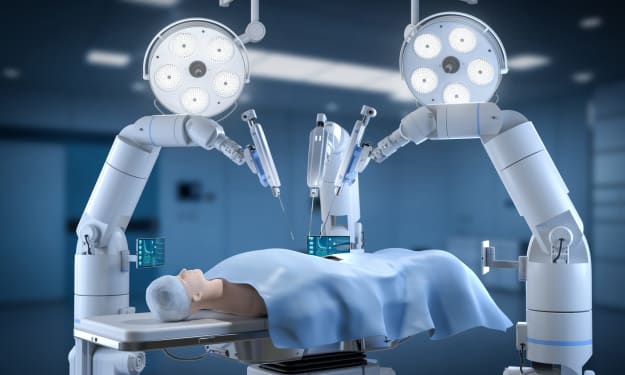
Robotic Surgery
In the ever-evolving world of medicine, technological advancements have consistently played a pivotal role in improving patient outcomes and transforming the way healthcare is delivered. One such innovation that has been making waves in the medical community is robotic surgery. This cutting-edge technology has been revolutionizing the field of surgery, enabling surgeons to perform complex procedures with unprecedented precision, flexibility, and control. *What is Robotic Surgery?* Robotic surgery, also known as robot-assisted surgery, is a type of minimally invasive surgical procedure that utilizes a robotic system to assist surgeons during operations. These systems are designed to provide high-definition 3D visualization, precise instrumentation, and enhanced dexterity, allowing surgeons to perform complex procedures with greater ease and accuracy. *Benefits of Robotic Surgery* The benefits of robotic surgery are numerous and well-documented. Some of the most significant advantages include: 1. *Minimally Invasive*: Robotic surgery involves smaller incisions than traditional open surgery, resulting in less tissue damage, reduced blood loss, and less post-operative pain. 2. *Enhanced Precision*: The robotic system provides high-definition 3D visualization and precise instrumentation, enabling surgeons to perform complex procedures with greater accuracy and control. 3. *Improved Outcomes*: Robotic surgery has been shown to reduce the risk of complications, shorten hospital stays, and improve patient outcomes in a variety of surgical procedures. 4. *Reduced Recovery Time*: The minimally invasive nature of robotic surgery allows patients to recover faster and return to their normal activities sooner. *Applications of Robotic Surgery* Robotic surgery has a wide range of applications across various medical specialties, including: 1. *Urology*: Robotic surgery is commonly used for prostatectomies, kidney surgeries, and bladder procedures. 2. *Gynecology*: Robotic surgery is used for hysterectomies, endometriosis treatment, and fibroid removal. 3. *Cardiology*: Robotic surgery is used for bypass surgeries, mitral valve repairs, and cardiac tumor removals. 4. *General Surgery*: Robotic surgery is used for procedures such as cholecystectomies, hernia repairs, and bowel resections. *The Robotic Surgery System* The robotic surgery system consists of several components, including: 1. *Surgeon Console*: The surgeon controls the robotic instruments from a console, which provides high-definition 3D visualization and precise instrumentation. 2. *Patient Cart*: The patient cart is equipped with robotic instruments that are inserted through small incisions in the patient's body. 3. *Vision Cart*: The vision cart provides high-definition 3D visualization of the surgical site, enabling the surgeon to perform complex procedures with greater precision and control. *The Future of Robotic Surgery* As technology continues to advance, robotic surgery is expected to become even more sophisticated, with potential applications in: 1. *Remote Surgery*: Performing surgeries remotely using advanced robotic systems, enabling surgeons to operate on patients in different locations. 2. *Artificial Intelligence Integration*: Integrating artificial intelligence into robotic surgery systems, enabling AI-assisted decision-making and predictive analytics. 3. *Advanced Instrumentation*: Developing new and advanced robotic instruments that can perform complex tasks with greater precision and control. *Conclusion* Robotic surgery has revolutionized modern medicine, enabling surgeons to perform complex procedures with unprecedented precision, flexibility, and control. With its numerous benefits, wide range of applications, and potential for future advancements, robotic surgery is poised to play an increasingly important role in shaping the future of healthcare. As technology continues to evolve, it will be exciting to see how robotic surgery transforms the field of medicine and improves patient outcomes. *Frequently Asked Questions* 1. *Is robotic surgery safe?*: Yes, robotic surgery is a safe and effective procedure that has been shown to reduce the risk of complications and improve patient outcomes. 2. *How long does robotic surgery take?*: The length of robotic surgery varies depending on the procedure and the complexity of the case. 3. *What are the benefits of robotic surgery?*: The benefits of robotic surgery include minimally invasive procedures, enhanced precision, improved outcomes, and reduced recovery time. 4. *Is robotic surgery available everywhere?*: Robotic surgery is available in many hospitals and medical centers around the world, but availability may vary depending on the location and the specific procedure. *Conclusion* Robotic surgery is a rapidly evolving field that has the potential to transform the way surgery is performed. With its numerous benefits and wide range of applications, robotic surgery is poised to play an increasingly important role in shaping the future of healthcare. As technology continues to advance, it will be exciting to see how robotic surgery transforms the field of medicine and improves patient outcomes.
By Motivate4universeabout a year ago in Education
The Role of Social Media in Modern Society
In the past two decades, social media has evolved from a novelty to an integral part of modern society. Platforms like Facebook, Twitter, Instagram, and LinkedIn have become essential tools for communication, information dissemination, and networking. Social media has transformed the way we interact, share ideas, and perceive the world around us. *The Impact of Social Media on Communication* Social media has revolutionized the way we communicate. With the rise of social media, people can now connect with others across geographical boundaries, cultures, and time zones. Social media platforms provide various ways to communicate, including text, images, videos, and live streaming. This has enabled people to stay in touch with friends and family, connect with like-minded individuals, and join online communities that share similar interests. *The Role of Social Media in Information Dissemination* Social media has become a primary source of information for many people. News outlets, organizations, and individuals use social media to share information, news, and updates. Social media platforms have made it possible for information to spread quickly and reach a large audience. This has enabled people to stay informed about current events, trends, and issues that affect their lives. *The Impact of Social Media on Relationships* Social media has also changed the way we form and maintain relationships. While social media has made it easier to connect with others, it has also raised concerns about the quality of these relationships. Some argue that social media relationships are superficial and lack depth, while others believe that social media has enabled people to connect with others who share similar interests and passions. *The Dark Side of Social Media* While social media has many benefits, it also has a dark side. Social media can be addictive, and excessive use can lead to mental health issues like anxiety, depression, and loneliness. Social media can also be a breeding ground for cyberbullying, harassment, and online abuse. Furthermore, social media can be used to spread misinformation, propaganda, and hate speech, which can have serious consequences. *The Future of Social Media* As social media continues to evolve, it's essential to consider its future implications. Social media platforms are constantly changing, with new features and algorithms being introduced regularly. It's crucial to stay informed about these changes and their potential impact on our lives. *Conclusion* Social media has become an integral part of modern society, transforming the way we communicate, share information, and form relationships. While social media has many benefits, it also has a dark side, and it's essential to be aware of its potential risks and consequences. As social media continues to evolve, it's crucial to stay informed and adapt to its changes. *The Way Forward* To navigate the digital landscape effectively, it's essential to be mindful of social media's impact on our lives. Here are some tips: 1. *Use social media intentionally*: Use social media with a purpose, whether it's to stay in touch with friends, stay informed about current events, or connect with like-minded individuals. 2. *Set boundaries*: Set limits on your social media use, and prioritize face-to-face interactions. 3. *Be critical*: Be critical of the information you consume on social media, and verify facts before sharing. 4. *Practice self-care*: Take breaks from social media, and prioritize self-care activities that promote mental and physical well-being. By being mindful of social media's impact and using it intentionally, we can harness its benefits while minimizing its risks. *FAQs* 1. *What is social media?*: Social media refers to online platforms that enable users to create, share, and interact with content. 2. *How has social media changed communication?*: Social media has revolutionized communication, enabling people to connect with others across geographical boundaries and time zones. 3. *What are the benefits of social media?*: Social media provides various benefits, including connectivity, information dissemination, and networking opportunities. 4. *What are the risks of social media?*: Social media can be addictive, and excessive use can lead to mental health issues. It can also be used to spread misinformation and hate speech. By understanding the role of social media in modern society, we can navigate the digital landscape effectively and harness its benefits while minimizing its risks.
By Motivate4universeabout a year ago in Education
I Was Tired of Document Mess Until I Found a Simple Scanning Solution
For years, I had a drawer (actually, more like three drawers) filled with receipts, old contracts, handwritten notes, and even grocery lists from months ago. Every time I needed something important, like a warranty, medical record, or tax document, it turned into a frustrating search mission. The paper clutter was overwhelming, and I kept telling myself I would sort it all out “someday.”
By Yasim Asifabout a year ago in Education
Is Online Learning with a Tutor Effective? Here’s What You Need to Know
It’s a fair question. After all, when you’re paying for extra help, you want to make sure it’s actually working. Let’s dive into what makes online tutoring effective and how it can help your child succeed.
By Archived Userabout a year ago in Education
Comprehensive Analysis of the NHS Referral to Treatment (RTT) Dataset in SAS
Introduction This report driven by patient-centric analytics of SAS critically evaluates the NHS Referral to Treatment (RTT) dataset answering vital questions posed by the hospital managers. The goal is decoding referral patterns, the analysis of waiting times across specialties and locations, to recommend data-driven strategies aimed at enhancing patient satisfaction. Overall, the report emphasizes a role of perceptive analysis in healthcare dynamics, useful to draw some perceptions in relation to operational planning and patient care. From it, three pivotal questions zoom in on referral volume trends, specialties, and locations with extended waiting times, avenues for revolutionizing patient satisfaction founded on insights from driven data. The report essentially converts raw data into information ready actionable decision making, protecting the managers' interests of the hospital in improved health delivery, optimization of goals and overall patient satisfaction.
By Lucy Rowellabout a year ago in Education