list
The best in education made simple and easy; lists for all things school-related, from websites that sell cheap textbooks to the 'most expensive colleges' lists that will put you in the red.
Exploring the Types of Expanded Metal Mesh. Content Warning. AI-Generated.
Expanded metal mesh is a versatile material widely used across various industries, from construction to security. Its unique structure and properties make it ideal for applications ranging from decorative elements to functional barriers. In this blog, we will explore the different types of expanded metal mesh, their characteristics, and their applications. Let’sdive in!
By Emirerri Steel Manufacturer Private Limited2 years ago in Education
How AI Can Enhance 3D Laser Scanning
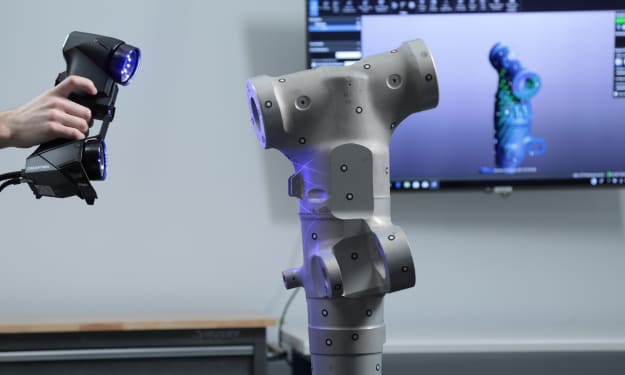
Efficiency is the key to construction success. The pressing problems with outdated manual documentation approaches gave birth to the usage of laser scanning for AEC applications. However, this is not the end of the evolutionary road. In these AI times, we do have one more revolution in project documentation rolling out now. It is AI for laser scanning! By streamlining certain scanning and data processing workflow steps, artificial intelligence (AI) has the potential to change the 3D laser scanning market. Businesses may cut costs and improve project outcomes by using AI in the scanning process to increase accuracy, speed, and efficiency.
By Alishna Brown2 years ago in Education
7 Facts About Rapid Syphilis Testing in Singapore
Syphilis is a sexually transmitted infection (STI) that can have serious health implications if left untreated. Early detection and treatment are crucial for managing the disease effectively. In Singapore, rapid syphilis testing has become an essential tool in combating this infection. In this blog, we will explore seven important facts about rapid syphilis test in Singapore, providing a clear and comprehensive overview.
By Anteh Dispensary2 years ago in Education
Student
Student loans are a critical and often life-altering financial tool for many students worldwide. They provide access to higher education, opening doors to opportunities that might otherwise be out of reach. However, they also come with challenges and responsibilities that can have long-term implications. Let's delve into the emotional landscape of student loans, exploring their impact on individuals and society.
By Aminu Muhammad2 years ago in Education
A Journey of Nikola Tesla. AI-Generated.
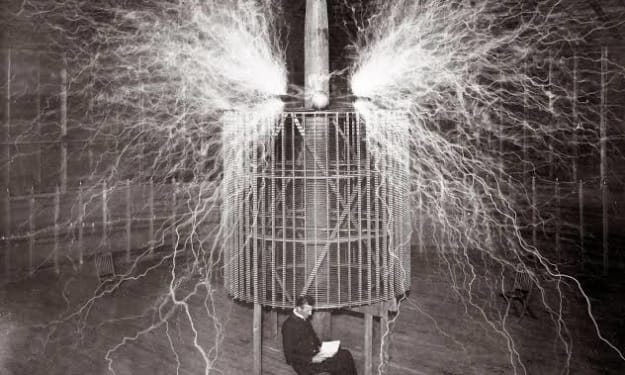
### The Journey of Nikola Tesla **Nikola Tesla was born** on July 10, 1856, in a small village in what is now Croatia. From a young age, he was curious about how things worked. He loved to read and was especially fascinated by science and machines. His father was a writer and a priest who wanted Nikola to follow in his footsteps, but Nikola had different dreams. **When he was a teenager,** Tesla moved to the city of Graz to attend university. He studied electrical engineering and quickly became interested in electricity. He spent long hours learning and experimenting with electrical machines. Tesla's hard work paid off when he invented a new type of motor that used alternating current (AC) instead of direct current (DC), which was the standard at the time. **In 1884, Tesla moved to New York City** to pursue his dreams. He met Thomas Edison, a famous inventor known for his work with direct current. Edison was interested in Tesla's ideas and hired him to work on improving his electrical systems. However, Tesla and Edison had different ideas about how electricity should be used. Edison believed in direct current, while Tesla was convinced that alternating current was better. **Tesla decided to leave Edison’s company** and started working on his own. He faced many challenges and had to find ways to support himself. He did odd jobs and lived a modest life, but he never gave up on his dream. Tesla's persistence paid off when he secured funding from a group of investors. With their support, Tesla built a laboratory and began working on his inventions. One of his major breakthroughs was the development of the AC induction motor, which used alternating current to create a rotating magnetic field. This invention was crucial for the efficient generation and distribution of electricity. Tesla's AC system eventually won a major competition to provide electricity for the 1893 World's Fair in Chicago. His success at the fair made him famous and showed the world that his ideas were not only innovative but also practical. **Tesla continued to make important discoveries** throughout his life. He invented the Tesla coil, a device that could produce high-voltage, high-frequency alternating current. This invention was used in early radio technology and later in wireless communication. Tesla also worked on developing wireless power transmission, which he believed could someday allow people to send electricity through the air without wires. Despite his many achievements, Tesla faced financial difficulties. He was not always good at managing money, and he struggled to find investors for his projects. He spent his later years working on ambitious ideas, such as a global wireless communication system and a machine that could harness the power of the Earth’s magnetic fields. **In his final years,** Tesla lived in New York City, where he continued to work on his experiments and inventions. He was known for his eccentric behavior and often walked through the city at night, feeding pigeons in a nearby park. Despite his financial struggles, Tesla remained dedicated to his work and was driven by his passion for science and discovery. Nikola Tesla passed away on January 7, 1943, but his legacy lives on. He is remembered as one of the greatest inventors and scientists of all time. His contributions to the development of electrical power systems and wireless technology have had a lasting impact on the world. Tesla's life was a testament to the power of curiosity, hard work, and perseverance. He overcame many obstacles to become a great scientist and inventor. His story inspires people to follow their passions and never give up on their dreams, no matter how difficult the journey may be. **Tags:** - Nikola Tesla - Great Scientist - Inventor - Electrical Engineering - Alternating Current - AC Motor - Wireless Technology - Inventions - Persistence - Curiosity - Historical Figures - Science History
By Karl Nicken 2 years ago in Education
The Ultimate Guide to Plant-Based Nutrition for Optimal Health
Introduction In recent years, plant-based nutrition has surged in popularity as more people discover the benefits of eating more fruits, vegetables, legumes, nuts, and seeds. This dietary approach emphasizes whole, minimally processed foods that are rich in nutrients and low in harmful substances, making it a powerful tool for promoting optimal health. Whether you're motivated by concerns about health, the environment, or animal welfare, adopting a plant-based diet can offer numerous benefits. This guide will provide a comprehensive overview of plant-based nutrition, exploring its benefits, practical tips for implementation, and delicious meal ideas.
By Maiakwai4u2 years ago in Education
Front end web development company and front end web development agency
Front End Web Development Company and Front End Web Development Agency are terms often used interchangeably to describe businesses that specialize in creating the visual and interactive elements of websites. These companies employ skilled developers who use HTML, CSS, and Front End Web Development Company, Front End Web Development Agency JavaScript to design and build the part of a website that users see and interact with.
By Front-End Development Services2 years ago in Education
Depressive and Bipolar Disorders: Crash Course Psychology
American psychologist, and professor of psychiatry, Kay Redfield Jamison, is one of the world's foremost authorities on bipolar disorder. She's spent her career researching, lecturing, and writing seminal books on the condition. A condition that she also happens to have had her entire adult life. In her memoir, "An Unquiet Mind," Jamison details what it really means to be bipolar. She writes of not sleeping for days on end, of feeling long periods of euphoria, and filling whole notebooks with her racing thoughts and grandiose ideas. While in these manic states, she experienced a tremendously inflated sense of self-esteem and did impulsive things that felt good at the time but had painful consequences, like going on lavish shopping sprees, engaging in promiscuous behavior, racking up credit card debt, and emptying her bank accounts. But these episodes were followed by emotional crashes: Crippling bouts of depression that sent her into a suicidal spiral. At the age of 28, Jamison tried to kill herself by taking an overdose of Lithium, lapsed into a coma, but thankfully emerged from it determined to find help through medication and therapy. Through her research and writing, Dr. Jamison has pioneered our understanding of bipolar disorder, depression, and the nexus of mental struggles that we now think of as mood disorders. And she's probably one of the best ambassadors we have for all those people who live successful, productive lives with mental illness. Just like the anxiety disorders we talked about last time, mood disorders are misunderstood. They're diluted by depictions of depression as something that can be treated with one day at a spa or descriptions of people as manic depressive just because they were sad yesterday and aren't today. As students of psychology, our job is to understand what mood disorders really are, how they manifest themselves, and what might cause them. And as you probably guessed, this can be pretty tough terrain to explore. These disorders can take people from terrifying highs to pits of despair that seem all but bottomless. But! In between there's what Jamison has called, "A rich, imaginative life" -- all made possible by your moods. We've been talking a lot about terms and concepts that mean something different than what you think they mean, but this time, the term "Mood" is not one of those. In a psychological context, moods are pretty much exactly what you think they are: Emotional states that are even more subjective and harder to define than the emotions themselves. And while psychologists have defined about 10 basic emotions, moods tend to fall into two broadly and infinitely variable categories. You got the good moods and the bad moods. Probably the most important distinction between emotion and mood is that moods are long-term emotional states rather than discreet, fleeting feelings. And "mood-disorders," which are characterized by emotional extremes and challenges in regulating mood tend to be longer-term disturbances. These include depressive disorders, typified by prolonged hopelessness and lethargy, and bipolar disorders, the most prominent of which involve alternating between depression and mania. Depression has been called the common cold of psychological disorders. Which is not to say that it isn't serious, but it's common and it's pervasive and it's the top reason people seek out mental health help. We've all felt down before, obviously, often in response to a specific loss: a breakup or a lost job or the death of a loved one. And the fact is, you probably should feel bad at times like those. It can actually be good for a mind and body to slow down, to help digest losses that you experience, but in general, sadness is temporary. It's when sadness and grief extend beyond the generally accepted social norms, or plunge into a depth that causes serious dysfunction that you find yourself in the territory of depressive disorders. The DSM-5, our handy (if super flawed) user's guide to psychological disorders officially diagnoses a major depressive disorder when a patient has experienced at least five signs of depression for more than two weeks. These symptoms include not just depressed mood, but also significant weight or appetite loss or gain, too much or too little sleep, decreased interest in activities, feeling worthless, fatigued, or lethargic, difficulty concentrating or making decisions, and recurrent thoughts of death or suicide. So while everyone experiences sadness, depression is a physiological as well as psychological illness. It messes with your sleep, and appetite, and energy, and neurotransmitter levels, all interfering with the way your body runs itself. Plus in keeping with our definition of psychological disorders, to be considered a true disorder this behavior needs to cause the person or others around them prolonged distress - the feeling that something is really wrong. Just as a person with a severe, generalized anxiety disorder may never want to leave the house, a clinically depressed person often feels so hopeless and overwhelmed that they have trouble living a normal life. And unlike the bipolar disorders, the depressive disorders tend to be all lows. You've probably heard of manic depression. It's the outdated term for bipolar disorders. These include those classic dark lows of depression, but also bouts of the opposite - of extreme mania in more severe cases. Someone suffering from a bipolar disorder may flip back and forth between normal and depressive and manic phases within a single day or week or month. And a true manic episode doesn't just mean being energetic or happy, it's a period of intense, restless, but often optimistic hyperactivity in which your estimation of yourself and your abilities and your ideas can often get skewed. Like, really, REALLY skewed. Some patients experience mania only rarely, but when they do, it can be destructive. Kay Jamison has testified to that. Once during a manic episode, she bought up a drug store's entire supply of snake-bite kits, convinced of an imminent attack of rattlesnakes that only she knew was coming. In another, she purchased 20 books by the Penguin Publishing House because she said, "It could be nice if the penguins could form a colony." In other words, bad judgment is common. And it can get worse. Full blown manic episodes often end up in psychiatric hospitalization, since the risk to self or others can become severe. When the highs eventually end, they're often followed by dark periods of depression. When left untreated, suicide or suicide attempts are common, another element of the disorder that Jamison herself can attest to. Like so many things in psychology, the cause of mood disorders is often a combination of biological, genetic, psychological, and environmental factors. We know, for example, that mood disorders run in families - genes matter. And you're more likely to experience a bipolar or depressive disorder if you have parents or siblings who suffer from them. Studies have of identical twins show that if one twin has a bipolar disorder, that the other has a seven in ten chance of also being diagnosed, regardless of whether they were raised together or apart. And while a stressful life can't give you bipolar disorder, it could trigger a manic or depressive episode in someone with a pre-existing condition. Or start a descent into a major depressive episode in someone who never before had experienced depression. In other words, a person who loses a loved one could go from sad to depressed or slide into a bipolar episode, but it couldn't cause them to have the disorder to begin with. In the case of depressive disorders, for most people, after weeks, months, or even years, their depression can end, hopefully with the return to baseline healthy functioning. World-wide, women tend to be diagnosed with major depression more often than men, but many psychologists think this is simply because women tend to seek treatment more. It's also possible that depression in men tends to manifest itself more in terms of anger and aggression, than as sadness and hopelessness. This is just an example of how depression is much more than just being sad and that the characteristic lack of purpose and helplessness can manifest itself in a lot of different ways. Looking at mood disorders from a neurological perspective, we see that depressed, manic, and average brains show very different brain activity in neural imaging scans. As you might expect, a brain in a depressed state slows down. While a brain in a manic state shows a lot of increased activity, making it hard for that person to calm down or focus or sleep. Our brain's neurotransmitter chemistry also changes with these different states. For example, norepinephrine, which usually increases arousal and focus, is severely lacking in depressed brains, but kind of off the charts during manic episodes. In fact, drugs that seek to reduce mania in part do it by reducing norepinephrine levels. You may have also heard about how low serotonin levels correlate with depressive states. Exercise, like jogging or break dancing or whatever, increases serotonin levels, which is one reason exercise is often recommended to combat depression. And most medications designed to treat depression seem to work by raising serotonin or norepinephrine levels. And of course there's yet another way to look at things. The social-cognitive perspective examines how our thinking and behavior influence depression. People with depression often view bad events through an internal lens or mind set that influences how they're interpreted. And how you explain events to yourself, in a negative or positive way, can really effect how you recover from them - or don't. Say you were humiliated in the lunch room when someone tripped you and chicken soup flew all over the place, and you sat down on a brownie, and it was just a bad day. A depressive mind might immediately start thinking that the humiliation will last forever, that no one will ever let you live it down, that it's somehow your own fault, and you can't ever do anything right. That negative thinking, learned helplessness, self-blame, and over-thinking can feed off itself and basically smother the joy out of the brain, eventually creating a vicious self-fulfilling cycle of negative thinking. The good news is that the cycle can be broken by getting help from a professional, turning your attention outward, doing more fun things, and maybe even moving to a different environment. But again, that social-cognitive prospective is just part of a much bigger puzzle. Positive thinking is important, but it's often inadequate on its own own when up against genetic or neurological factors. So mood disorders are complicated conditions and rarely are they eliminated with a single cure. Instead, they're often things you just live with. And as Dr. Jamison has shown us, you can live well. Today we talked about what mood disorders are, as well as what they aren't. You learned about the symptoms of depressive and bipolar disorders, and the possible biological, genetic, environmental, and social-cognitive causes of mood disorders.
By Mai Vinh Thang2 years ago in Education
Unlock Your Potential: Select the Ideal Social Media Platforms for Developers
In today’s connected world, social media has become more important than ever for any developer seeking to create a personal brand, highlight areas of expertise, or network within the larger tech community. With so many choices at one’s fingertips, the challenge often lies in making a choice. This article looks at strategies to pick the most effective social media platforms for a developer so that an online presence becomes impactful yet efficient.
By Okoye Ndidiamaka2 years ago in Education