how to
How tos for the learners and the learned; tips and tricks to help you study effectively, survive your school years, impress your teachers and more.
How to Improve Win Rate in Sales in 2025 with Eubrics.ai. AI-Generated.
Introduction: How to Improve Win Rate in Sales in 2025 In today’s hyper-competitive sales environment, improving your win rate is the ultimate game-changer. The year 2025 brings new challenges: buyers expect personalized, data-driven interactions, and sales cycles demand agility and insight. To thrive, sales teams must leverage advanced AI technologies that not only streamline processes but also elevate skills and performance. At Eubrics.ai, we have developed a suite of AI-powered products designed specifically to boost sales win rates by transforming onboarding, upskilling, and leadership development.
By Maxim Dsouzaabout a year ago in Education
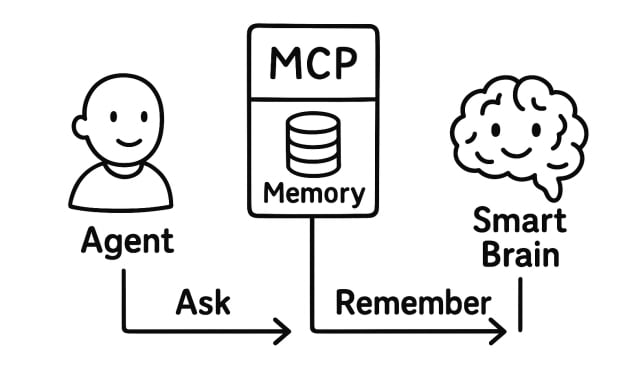
Understanding Model Context Protocol (MCP): The Brain's Instruction Manual for AI
Have you ever wondered how AI helpers understand what you’re asking? The secret lies in something called Model Context Protocol or MCP for short. Don’t worry if it sounds complicated—it’s actually a concept we can break down into simple pieces!
By Deepak Guptaabout a year ago in Education
How to Increase Memory Power and Concentration for Student. . AI-Generated.
Acing Memory and Concentration: A Student’s Direct to More honed Studying In today’s fast-paced scholarly environment, understudies are always besieged with tremendous sums of data and competing diversions. Whether planning for an exam, handling a challenging subject, or basically endeavoring for superior execution, two mental aptitudes can make all the contrast: memory and concentration. These are not settled characteristics, but capacities that can be created and refined with the right propensities, methodologies, and mindset.
By Sakibul Islamabout a year ago in Education
Doing Well in Thinks about: Opening Your Full Scholarly Potential . AI-Generated.
Doing Well in Thinks about: Opening Your Full Scholarly Potential Success in scholastics is not a matter of luckiness or normal ability alone—it is a think, centered exertion driven by the right mentality, propensities, and back framework. In an progressively competitive world, doing well in thinks about can open entryways to a brighter future, construct certainty, and lay the establishment for deep rooted learning. Whether you are a understudy in school, college, or seeking after encourage considers, your scholarly travel is a capable opportunity to shape your character and career. Here's how you can make the most of it.
By Sakibul Islamabout a year ago in Education
Billables and Miles Time Mastery for Lawyer-Athletes
Lawyers who also pursue serious athletic goals—whether marathon training, century rides, or triathlon blocks—share one pressing challenge: finding enough hours for both their profession and their passion. The good news is that disciplined lawyer-athlete time management draws on the same analytical mindset attorneys use in case strategy: audit the facts, design efficient processes, and mitigate risk. The following guide breaks that framework into four practical steps so you can meet billing targets and mileage markers without burning out.
By Charles Douyonabout a year ago in Education
How Minimalism Differs in Brazil, Turkey, and the U.S.
Minimalism is more than just a trend—it’s a lifestyle that invites people to live with less and focus on what truly matters. Around the world, more individuals are choosing to simplify their lives, reduce clutter, and find peace in owning fewer things. But while the core idea of minimalism is the same, its meaning and practice can vary greatly from one culture to another. In this article, we explore how minimalism is seen and lived in Brazil, Turkey, and the United States—each with its own cultural background and lifestyle habits.
By Rafael Pareiraabout a year ago in Education
The Mother Who Refused to Give Up
The Mother Who Refused to Give Up When everyone else lost hope, her love changed the course of fate --- In medicine, there are protocols, guidelines, and statistics. They teach us what to expect, how to act, and what the odds are. But every so often, someone walks into our lives and reminds us that love doesn't follow science — it rewrites it. Her name was Shazia. She arrived at the hospital in a blur of panic and desperation, clutching the tiny, feverish body of her daughter, Eman, no older than four. The child was limp, her lips tinged blue, and her breathing shallow. A nurse shouted for a crash cart, and I was paged to the ER. “Severe pneumonia,” the attending whispered. “Saturation dropping fast.” We intubated Eman within minutes, started IV antibiotics, and transferred her to the pediatric ICU. Tests confirmed what we feared — her lungs were failing, and sepsis was setting in. The infection had spread aggressively. Her chances of survival were low. We told Shazia the truth. We didn’t want to give false hope. “She’s very sick,” I said gently. “We’re doing everything we can. But... it’s possible she may not make it.” Shazia didn’t cry. She didn’t faint or scream. Instead, she looked at me — a fierce, unwavering gaze — and said: “Doctor, I am not leaving this hospital until my daughter walks out with me.” It wasn’t defiance. It was faith. Over the next few days, Eman’s condition worsened. Her kidneys began to fail. We placed her on dialysis. Her lungs collapsed partially, and she required full ventilator support. Every monitor screamed of decline. Every chart was a countdown. But Shazia never left. She slept in a chair by Eman’s bed, whispering prayers into her daughter’s ear. She sang lullabies. She cleaned her daughter’s face with a soft cloth every morning. And when nurses suggested she rest, she simply said, “My rest is with her.” I watched silently, day after day, wondering how someone could remain so strong in the face of such despair. One evening, I found her speaking softly to Eman. “I know you’re tired, meri jaan,” she whispered. “But I’m right here. You’re not alone. I believe in you.” I checked the monitors. No improvement. Still, she sat beside her daughter like a soldier in a war only she could fight. Then something strange happened. On the tenth day, Eman opened her eyes. Just for a second. A flutter. At first, I thought it was a reflex. But then it happened again. A blink. A focus. The nurses called me. We ran tests. Her oxygen saturation was rising. Her heart rate stabilized. It didn’t make sense. Medically, there was no explanation. It was too soon, too sudden, too improbable. But it was happening. Over the next 48 hours, Eman began to respond. She started breathing with less support. Her fever broke. The infection that had ravaged her body for nearly two weeks began to recede. I couldn’t believe it. Shazia never said “I told you so.” She just smiled through tears and held her daughter’s hand tighter. We gradually weaned Eman off the ventilator. Her voice returned, soft and raspy at first. Her first words? “Ammi...” That was the first time I saw Shazia cry. She clutched Eman, sobbing into her hospital gown, whispering “Shukriya, ya Allah” again and again. Weeks later, Eman was discharged. Walked out of the ICU holding her mother’s hand, just as Shazia had promised. Not a statistic. Not a miracle explained in textbooks. But a living, breathing testament to love's defiance. I learned something in that ward — something no textbook ever taught me. Science can measure cells, infections, and vitals. But it cannot measure a mother’s will. It cannot define the strength of faith. It cannot quantify the healing power of unconditional love. Shazia didn’t just believe her daughter would survive. She made all of us believe too.
By Doctor marwan Dorani about a year ago in Education
The Girl Who Made Me Believe in Miracles
It began like many other cases in my career — with a chart, a name, and a set of inconclusive tests. Her name was Noor, a twelve-year-old girl who had been suffering from uncontrollable seizures for over a year. The file said “intractable epilepsy.” The scans showed signs of structural brain damage. Her case had been passed between three hospitals before landing in ours. The last neurologist’s note read, “Palliative approach recommended. No further treatment options.” I glanced at her chart and braced myself. Children like Noor came with two things: pain and hopelessness. And yet, when I walked into the room, something unexpected happened. She smiled at me. Not a full, bright smile — but the fragile, knowing smile of someone far older than her age. Her mother stood beside her, exhausted but alert, as if every breath her daughter took was a victory. “We came from far, doctor,” she said. “Six hours on the bus. She still believes you will help her.” Hope is a difficult thing to see when you've spent years watching people die. It flickers, fades, gets crushed under machines and reports. And yet, there it was — raw and alive — in a child whose brain had betrayed her. --- Week One: Trials and Turmoil We admitted Noor immediately. She was placed in a special pediatric room in the neurology wing. Her seizures were unpredictable and severe. Some lasted seconds. Others minutes. A few nearly killed her. We adjusted her medications. Ran a new MRI. Did a 24-hour EEG. Each result brought more bad news. The seizures originated from multiple regions in her brain — surgery was too risky. Her medication was already maxed out. She was losing weight rapidly and starting to experience memory lapses. Still, she remained calm. Even after each seizure, she would wake up and whisper, “Ammi, I’m okay.” Her mother never left her side. She barely ate. Slept in the chair next to the hospital bed. Massaged Noor’s feet. Read her Quranic verses. Sang lullabies. Her devotion was absolute. One night, after Noor had a particularly violent seizure that left her unconscious for over ten minutes, I stayed in the room long after the nurses left. Her mother was holding Noor’s hand, eyes closed, whispering verses from Surah Rahman. Her voice trembled, but she didn’t cry. “She says she dreams of light, doctor,” she said. “Every time she comes back, she tells me it’s not her time yet.” I had no answer. Medicine had failed her. We were simply buying time. --- Week Two: The Turning Point On the ninth day of her admission, Noor flatlined for a few terrifying seconds. I was in the middle of another consult when the code blue alert rang through the hallway. I rushed to her room. The nurses were already performing CPR. We brought her back — just barely. But something inside me changed that day. I had faced death many times, but this one stayed with me. Maybe it was because Noor still believed she would live. Maybe it was her mother’s unshaken faith. Or maybe I was simply tired of watching good people suffer without reason. That night, I returned to her room after hours. Noor was stable but unconscious. Her mother asked me, “Do you believe in miracles, Doctor?” I wanted to say no. I wanted to tell her we deal in facts, not fantasies. But instead, I said, “Sometimes.” She smiled. “Then you’ll see one.” --- The Unexplainable Recovery The following morning, something changed. Noor woke up — fully conscious. She was smiling. Her vitals were stable. No tremors. No spasms. No signs of seizures. We monitored her closely. No neurological activity that indicated seizures. No spikes in her EEG. I was cautious — such remissions were rare and usually short-lived. But three days passed. Then four. Then a week. She started eating properly. She painted a flower and a sun on a canvas her mother brought. Her memory was intact. Her speech improved. My colleagues were baffled. “There’s no medical explanation,” one said. “She must be relapsing soon,” said another. But the relapse never came. --- The Farewell I Never Expected On the fifteenth day, we discharged Noor. As I stood at the hospital entrance watching her walk out with her mother, I was overwhelmed by emotion. She turned around and waved at me. “Thank you, Doctor,” she said. “For not giving up.” I didn’t know how to tell her that she had been the one keeping me going. That night, I couldn’t sleep. I kept replaying her case in my mind. Where did we go wrong in predicting her outcome? What didn’t the scans reveal? Was it a divine intervention? A coincidence? Spontaneous remission? No textbook could explain what we saw. And deep down, I stopped trying to make sense of it. Some things aren’t meant to be explained. Some are simply meant to be witnessed. --- Six Months Later One cold December morning, a small envelope arrived at my office. No name on the front. Inside was a drawing — crayon on folded paper. It showed a hospital, a girl with long black hair, a man in a white coat, and above them, a sun with glowing rays. On the back, she had written: “Light always wins. From, Noor.” --- What Noor Taught Me I’ve spent over two decades practicing medicine. I've treated rare diseases, performed complex surgeries, and saved lives others had written off. But the greatest lesson of my career came from a 12-year-old girl with fading hope and a heart full of light. She taught me that the boundary between science and faith isn’t a wall — it’s a bridge. That sometimes, the human spirit triumphs where medicine surrenders. And that miracles, however rare, are real — if we’re humble enough to see them.
By Doctor marwan Dorani about a year ago in Education