how to
How tos for the learners and the learned; tips and tricks to help you study effectively, survive your school years, impress your teachers and more.
TikTok’s Glitter and the Fading Future of Our Children
In the past, the hands of a child were meant to hold books and pens, their eyes were filled with dreams of knowledge, wisdom, and service to humanity. But today, those same hands hold mobile phones, and those eyes are fixed not on the future, but on likes, views, and followers. A generation that once looked up to role models of substance—scientists, teachers, poets, doctors, and thinkers—now finds its inspiration in momentary internet fame. Social media platforms like TikTok, which may have initially emerged as outlets for creativity, are now shaping the priorities, behaviors, and identities of young minds in deeply concerning ways. The New Currency of Validation The modern teenager often defines self-worth by digital applause. A video going viral becomes a badge of honor, while a post that doesn't "perform" leads to disappointment, anxiety, and even shame. Instead of nurturing real talents, the youth now chase trends that often lack purpose, meaning, or ethics. This is not just about entertainment or harmless fun. It’s about a shift in values. The need for instant validation has replaced patience and perseverance. A child who once dreamt of becoming a doctor or an engineer might now fantasize about becoming the next internet sensation. Why? Because they see applause, money, and fame attached to it—and it looks easy. But no one shows them the other side. What Lies Behind the Screen Behind the glamour of filters and viral videos lies a growing crisis: Mental Health Issues: Children as young as ten are experiencing anxiety and depression rooted in social media pressure. They feel “not good enough” if they don’t meet online standards of beauty, lifestyle, or popularity. Addiction: Screen addiction has become a silent epidemic. Children spend hours scrolling through content, disconnected from real life, real relationships, and real responsibilities. Identity Confusion: Many start emulating what they see online, losing their individuality in the process. They adopt trends without understanding their roots, often mimicking behavior that is inappropriate or misaligned with their values. Parents and educators often find themselves helpless. The influence of a 15-second video is sometimes stronger than hours of teaching, nurturing, or advising. The question is: how did we get here? Where Did We Go Wrong? We handed over smartphones to children without teaching them how to use them wisely. We allowed technology to babysit our kids, hoping it would keep them busy. The result? An entire generation that feels seen only when a screen is watching. We must acknowledge that children aren’t to blame entirely. The real issue lies in a lack of guidance, boundaries, and value-based education. It’s time to ask ourselves: Are we investing enough time in talking to our children? Are we cultivating self-worth in them that isn’t dependent on others' opinions? Are we creating spaces where they can express themselves without needing a virtual audience? The Role of Parents and Teachers Parents, teachers, and community leaders must no longer remain silent. We must act—wisely and compassionately. 1. Open Conversations: Talk to your children. Listen without judgment. Understand why social media appeals to them. Only then can you offer meaningful alternatives. 2. Set Boundaries: There is nothing wrong with limiting screen time. In fact, it’s necessary. But those boundaries must come with explanations and love, not control and anger. 3. Celebrate Real Achievements: Encourage hobbies, reading, art, sports, volunteering—anything that builds confidence and connection with the real world. 4. Lead by Example: If children see adults constantly on their phones, they will follow suit. Disconnect to reconnect. Show them the joy of real interaction. 5. Teach Digital Literacy: Help them differentiate between real and fake content, understand the dangers of oversharing, and the importance of privacy and integrity online. The Illusion of Stardom Children must be taught that: > "True success isn’t in likes or comments. It’s in using your abilities to serve others, uplift yourself, and leave a legacy worth remembering." The world behind the camera is fleeting. Trends change. Audiences move on. But the knowledge acquired, the character built, and the kindness shown—these last forever. When we allow children to believe that the only way to matter is by becoming viral, we rob them of a deeper purpose. We reduce their potential to mere entertainment. We must show them there is honor in becoming a teacher, a doctor, a writer, an engineer, a caregiver—a good human being. Reclaiming Their Future This isn’t just about a few videos. It’s about the future of a generation that’s slowly losing its way. If we do not act now, we may be left with young adults who are disillusioned, disconnected, and directionless. We need a cultural shift. A renaissance of values. A movement that redefines success and reminds our youth of their true worth. Let us become storytellers of substance. Let us revive meaningful conversations in our homes and classrooms. Let us replace the hunger for popularity with the thirst for purpose. Let every child know: You are more than your profile. Your value isn’t in views. You matter, even when no one is watching. A Final Thought The world needs thoughtful, grounded, and wise young people—not just popular ones. It is our duty to protect their potential from being swallowed by superficiality. Let us gift them the strength to say: > “I choose purpose over popularity. I choose truth over trends. I choose to live a life that matters.” Because the future doesn’t need more stars on screens—it needs lights that guide.
By Muhammad Ilyasabout a year ago in Education
What is Affiliate Marketing? A Beginner's Guide to Earning in 2025
What is affiliate marketing? Essentially, it's a business model where you earn commissions by promoting other companies' products or services. When someone makes a purchase through your unique referral link, you get paid—without creating, shipping, or handling customer service for any products.
By Ibrahim Edwards about a year ago in Education
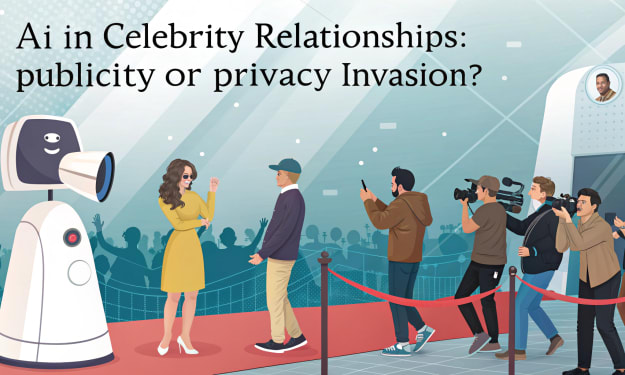
AI in Celebrity Relationships: Publicity or Privacy Invasion?. AI-Generated.
Introduction In the digital age, the lives of celebrities are under constant scrutiny, and their relationships are no exception. The recent saga involving Bill Belichick and Cam Newton's ex-girlfriend, Erica Hudson, has brought the issue of privacy invasion in celebrity relationships to the forefront. This article explores how AI and social media amplify public interest in celebrity relationships, the ethical implications of such scrutiny, and the potential consequences for both celebrities and their personal lives.
By roc chiangabout a year ago in Education
The Human Being: A Fragile Body with an Infinite Soul
What is a human? Is he merely a walking collection of cells, nerves, and bones? Or is there something deeper—something invisible yet eternal—that gives him meaning and value? This question has been asked for centuries, from ancient prophets to modern philosophers, and yet the mystery remains as captivating as ever. From the dust of the earth, man was created. Soft, fragile, and helpless. And yet, within this frame of dust lives a soul that reflects divine breath. This paradox is the essence of being human—a balance between weakness and strength, limitation and potential, death and immortality. Born Weak, Destined for Greatness A human child is born unable to walk, talk, or feed itself. But within just a few years, he begins to question the universe. He builds homes, writes poetry, creates art, splits atoms, and even dares to fly. From a cradle to the cosmos, his journey is filled with wonders. This journey is not just physical. It is deeply spiritual. For every invention he makes, there is a hunger for peace. For every mountain he climbs, there is an abyss inside him he still doesn't understand. Man lives in two worlds: one outside him, and one within. The Heart That Feels, The Mind That Thinks What makes a human more than an animal is not just intelligence. It is emotion. A man cries not because he is weak, but because he can feel. He loves, he fears, he hopes. A mother sacrifices her sleep for her child. A stranger donates blood for someone he may never meet. These are not instincts; they are choices of the soul. Likewise, man is capable of destruction. Wars, cruelty, lies, betrayal—these too are uniquely human. The same mind that heals can also hurt. The same heart that loves can also hate. This duality is what makes mankind both beautiful and dangerous. The Mirror of Morality Every human has a mirror inside—called conscience. It whispers when we do wrong, and it sings when we do right. Unlike animals, humans have the power to choose. We are not driven only by hunger or fear. We are driven by meaning. Even in the darkest prison, a man may shine like a star if he holds on to truth. And even in a palace, a man may rot in misery if he sells his soul. True richness is not gold; it is goodness. True success is not fame; it is faith. Man's Search for Purpose From ancient times, man has looked to the stars, asking: “Why am I here?” This question has driven religion, science, art, and even war. Some find their answer in worship, others in work, some in love, and some in silence. But one truth is clear: man was not made to merely eat, sleep, and die. He was made to rise, fall, learn, and rise again. He was made to connect—to his Creator, to others, and to himself. A human is not complete when he fills his stomach, but when he fills his heart. He is not alive when he breathes, but when he believes. The True Strength of a Human It is not in the muscles or money, but in mercy. The strongest man is he who forgives when he can destroy. The bravest is he who speaks the truth when it is dangerous. The most successful is he who lifts others when he himself is broken. We live in a world that often forgets the soul. We polish our shoes more than our hearts. But the human being, at his core, is a spiritual traveler. His body will die, but his deeds will echo. His soul will return to the One who created him. Conclusion: A Reminder to Remember You are a human—not just a name or a number. You are a reflection of divine mercy, walking on earth. You carry within you the power to heal or hurt, to build or break, to love or destroy. But above all, you carry the responsibility to be more than what the world expects. So be kind, be wise, be humble. You are temporary, but your choices are eternal. The stars are not far—they are within you.
By Noman Afridiabout a year ago in Education
Unlocking the Power Within: How to Sharpen Your Mind and Awaken Mental Brilliance
In a world where speed, precision, and creativity are more valuable than ever, a sharp mind is your greatest weapon. Whether you’re a student trying to excel in exams, a professional aiming for success, or simply someone striving for a more focused and productive life—an agile, alert brain can change everything. But how does one sharpen the mind? Is it only a matter of genetics, or can anyone train their brain to think faster and clearer? The truth is, your brain is like a muscle. The more you train it, the sharper it becomes. Just like physical fitness, mental fitness requires regular effort, smart habits, and conscious choices. Let’s explore how you can awaken the hidden brilliance of your brain and keep it razor-sharp throughout your life. --- 1. Nourish Your Brain with the Right Fuel You are what you eat—and so is your brain. A nutrient-rich diet is the foundation of a sharp mind. Omega-3 fatty acids (found in fish, walnuts, and flaxseeds), antioxidants (found in berries, green tea, and dark chocolate), and vitamins like B12, D, and E are essential for brain health. Avoid excessive sugar and processed foods, as they can dull your thinking and lead to mental fatigue. Hydration is equally crucial; your brain is 75% water, and even mild dehydration can impair concentration and memory. --- 2. Exercise: Move Your Body, Empower Your Mind Physical exercise doesn't just tone your body—it transforms your mind. Regular aerobic activity increases blood flow to the brain, promotes the growth of new neurons, and boosts memory and mood. Even a 30-minute walk daily can improve cognitive function. Yoga and stretching also reduce stress and increase oxygen supply to the brain, enhancing focus and emotional clarity. --- 3. Mental Workouts: Challenge Your Brain Just like your muscles need resistance training, your brain needs challenges to grow stronger. Engage in puzzles, logic games, riddles, or brain-training apps. Learn a new language, take up a musical instrument, or dive into unfamiliar subjects. Reading books outside your usual interests stretches your thinking and introduces new mental patterns. The more you challenge your brain, the more powerful it becomes. --- 4. Master the Art of Focus and Mindfulness In the age of constant distractions, attention is a rare treasure. Multitasking might seem productive, but it actually reduces efficiency and increases mental clutter. Train yourself to focus on one task at a time. Mindfulness meditation is a powerful tool to declutter the mind, reduce anxiety, and increase awareness. Just 10 minutes of daily mindfulness can improve decision-making, creativity, and emotional intelligence. --- 5. Get Proper Sleep: The Silent Brain Booster Sleep is not a luxury—it’s a necessity. During sleep, your brain consolidates memories, processes information, and removes toxins. Chronic sleep deprivation impairs judgment, memory, and attention. Aim for 7–9 hours of quality sleep per night. Avoid screens before bedtime and create a calm, dark, and cool sleep environment to enhance rest. --- 6. Limit Digital Overload Constant scrolling, notifications, and screen time can fragment your attention and drain your mental energy. Set boundaries with technology. Use focus timers, turn off non-essential notifications, and allow yourself screen-free zones during the day. Digital detox, even for a few hours daily, can restore mental clarity and spark original thinking. --- 7. Cultivate Positive Thinking and Emotional Resilience Negativity shrinks the brain's capacity to function at its best. Train your mind to focus on solutions rather than problems. Gratitude journaling, positive affirmations, and surrounding yourself with uplifting people can dramatically impact your mental sharpness. Resilience—the ability to bounce back from setbacks—keeps your brain strong even in times of stress. --- 8. Stay Curious and Never Stop Learning The most brilliant minds in history shared one trait: relentless curiosity. Ask questions. Seek answers. Stay fascinated. Whether you're 16 or 60, a curious mind is a young mind. Attend workshops, watch documentaries, explore new cultures—learning fuels growth and keeps the brain agile. --- Conclusion: Your Mind, Your Masterpiece Sharpening your mind is not a one-time effort—it’s a lifestyle. Every decision you make, every habit you build, either strengthens or dulls your mind. Begin today. Choose nourishing foods, embrace daily movement, challenge your brain, and protect your focus. Be kind to your mind and train it with purpose. Over time, you’ll not only think better—you’ll live better. Because a sharp mind doesn’t just change the way you think. It changes everything.
By Noman Afridiabout a year ago in Education
How Can You Measure Your Bust Size for Accurate Bra Sizing?
Introduction In the apparel industry, particularly within lingerie and intimate wear segments, accurate sizing is a cornerstone of customer satisfaction and retention. Understanding how to measure the body precisely not only supports product development but also plays a critical role in reducing returns and improving brand reputation. One of the most fundamental measurements in this process is the bust size, which directly influences bra fit, comfort, and support. Knowing how to measure your bust size correctly is therefore essential for businesses involved in retail, product design, and customer service.
By Bra Size Converterabout a year ago in Education
Do Janitorial Services Provide ROI for Small Businesses?
Yes, janitorial services offer strong returns by cutting future costs and protecting business assets. Most small businesses look at cleaning as a cost, but that mindset is outdated. Today, smart owners see it as an investment that keeps their space running longer, safer, and cheaper over time.
By Journey Junkieabout a year ago in Education
How to Make Your Business More Sustainable with Solar. AI-Generated.
In today’s business landscape, sustainability is no longer just a trend—it’s a necessity. Companies across the UK are under increasing pressure to reduce their carbon footprint, lower operational costs, and demonstrate environmental responsibility through sustainable business practices that align with community and regulatory values like local job creation. One of the most effective ways to achieve these goals is by adopting solar energy for business, leveraging advanced solar technology and infrastructure. By harnessing the power of the sun, businesses can achieve reduced operational costs with 20–70% lower electricity bills, reduce reliance on fossil fuels, and enhance their green credentials, boosting employee and customer appeal by 10–20% through a customer preference boost for sustainable brands.
By Solar Panel Installationabout a year ago in Education
Mastering Time Management
Time these days is getting away from us. There's work, school, family, and life goals to juggle. It's no wonder you feel stuck and not very productive. The truth is, though, that we all have the same 24 hours in a day—it's what you do with them that will determine success. That's where time management comes in.
By Logan Bennettabout a year ago in Education
Why Blood Tests Matter in Diagnosing Dengue Fever
Dengue fever is a mosquito-borne viral infection that can range from a mild flu-like illness to severe, life-threatening disease. Early and accurate diagnosis is critical, not only to ensure proper treatment and monitoring but also to prevent complications and limit the spread of the virus. Blood tests are central to this process, providing confirmation of infection, assessing disease severity, and guiding clinical decisions.
By Prakriti Negiabout a year ago in Education