how to
How tos for the learners and the learned; tips and tricks to help you study effectively, survive your school years, impress your teachers and more.
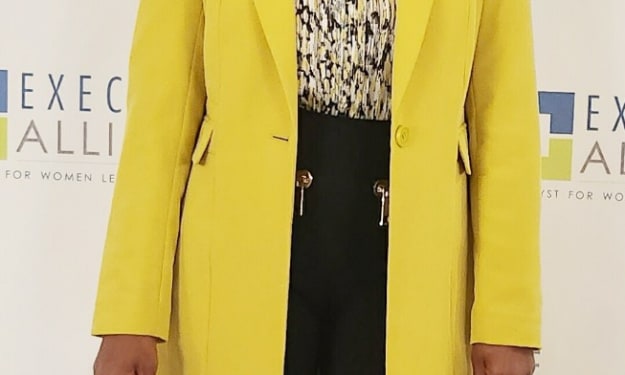
The Diverse Career of Andrea King-Chang
In an ever-changing business landscape, few individuals are able to navigate projects with such grace and success as Andrea King-Chang. Andrea’s journey from her roots in Maryland to senior corporate leadership is a testament to her versatility, resilience and unwavering commitment to excellence.
By Andrea King Chang3 years ago in Education
Getting Ahead in the Digital Age:
The digital age is characterized by rapid change and high speed, making upskilling and continual learning crucial for individuals as well as corporations. A new era is being shaped by technological breakthroughs, industry upheavals, and shifting consumer habits; those who embrace the philosophy of never-ending learning will be better positioned to prosper. The secret to success in the digital age is mastering the art of upskilling, whether you're an individual looking to advance personally or a business trying to maintain its competitiveness.
By Alao Johnson3 years ago in Education
Focus on your Communication skills. Content Warning.
Introduction Mastering Communication Skills for Success Communication is the cornerstone of human interaction. It's the bridge that connects us, transcending barriers and fostering understanding. Whether you're navigating the intricacies of personal relationships or aiming to excel in the professional world, effective communication is a skill that can make all the difference. Welcome to "Communication Skills," an eBook designed to empower you with the tools and knowledge to harness the power of communication and enhance your personal and professional life.
By Ayantoyinbo Samuel Ayantayo3 years ago in Education
Hyperboosting Intelligence
Everybody wants to be more intelligent, there's no denying that. So where do people get stuck? Some may try to debate this, but here are the facts: although genetics do play a part in cognitive development, for the most part, humans are born a tabula rasa, a clean slate. This means individuals are born without innate knowledge or predispositions, and all knowledge is acquired through experience and learning. Your brain is like a muscle; the more you train it, the more intelligent it becomes. In this article, we will explore 15 daily habits to hyperboost your intelligence.
By Isaac Kwame Bio3 years ago in Education
Python's Healing Touch: Transforming Healthcare with AI Applications
The healthcare industry is in the midst of a digital transformation, with Python emerging as a powerful tool for revolutionizing hospitals through AI applications. Python's versatility and ease of use have made it a preferred choice among developers and data scientists, enabling them to create innovative solutions that enhance patient care, streamline operations, and improve overall hospital efficiency. In this article, we will explore how Python is making a significant impact in healthcare, particularly within hospital settings.
By Soumya Raj3 years ago in Education
A street artist who uses his graffiti skills to expose the corruption and injustice in his city, and becomes a target of the authorities. . Content Warning.
In the heart of the city's concrete jungle, where the skyscrapers loom like giants and the streets echo with the symphony of urban life, there lived a street artist known simply as Phoenix. I am Phoenix, and my art serves a purpose beyond the aesthetics of color and form. It tells a story—one of corruption, injustice, and the silent cries of the oppressed.
By Nexus Narrator3 years ago in Education
How to defend yourself in English
"Hi. Yeah. Okay. Hi." - Greetings and simple responses are exchanged. "Today, I want to teach you some English for self-defense in a way, like karate, jiu jitsu, Krav Maga." - I will be instructing you on using English for self-protection, similar to martial arts. "I know it's... People think it's not a martial art, but it is." - Although some people may not consider it a martial art, it actually is. "And he's wearing his black belt from doing karate." - He is displaying his black belt earned in karate. "Ah. Why? Once a long time ago... Well, not that long ago, but I had a student, and although I had many great stories to tell about students, this one was a sad story because I really liked this student." - I had a student I deeply cared about, and although I have many positive experiences with students, this particular one saddened me. "He was one day in the subway, and he said he noticed someone... trying to ask for help from one of the workers at the subway." - One day, he observed someone seeking assistance from a subway staff member. "And that person, he could tell was being rude to them, but he didn't know what to say." - He recognized that the person was being impolite, but he wasn't sure how to respond. "He didn't have the words because, unfortunately, in his English classes, we were teaching... how to use them in proper speech and context, and nobody taught him the skills that he would naturally have in his own language, and that we naturally have, we all have when you speak the language." - In his English classes, he was taught vocabulary and grammar but never learned the everyday language skills present in his culture and our shared language. "I'm going to use a common word, like a comeback, but really it's a... It's a phrase or a sentence to let someone know that just because I'm learning the language doesn't mean I'm ignorant, I mean, I don't know." - I will demonstrate the use of a common word, such as a comeback, as a means to convey that even though I am still learning the language, it doesn't mean I lack knowledge or understanding. "I don't know you're being rude to me and you're being disrespectful, and I don't like it." - I am unaware of your disrespectful behavior towards me, and I find it unpleasant. "So this lesson is to teach five ways that you can engage with people to let them know, 'Hey, I may not be, you know, perfect in your language, but I understand you're being disrespectful or you're not being intelligent at this point in time, and I want to let you know.'" - The purpose of this lesson is to provide you with five methods of addressing individuals who are disrespectful or lacking in intelligence, without me being fluent in their language. "The best thing about it is if your language skills in English are a little bit weak and you say something like this, they're going to be so shocked that I doubt most of them will want to do anything disrespectful to you in the future because they'll be afraid of what might come out of your mouth next." - Interestingly, if your English proficiency is limited and you respond in this manner, they will be taken aback, potentially deterring them from engaging in disrespectful conduct in the future due to fear of your potential response. "Cool? Now, if you're ready for that, let's go to the board. We've got Mr. E going to 'Hiya', and the first one is about respect." - Are you ready for this? If so, let's move on. On the board, Mr. E will demonstrate a self-defense move, and the first technique focuses on respect. "So what I want to do here, oops, is I want to put a point down, because we want to talk about boundaries and kindness." - Here, I will make a note to discuss boundaries and kindness. "Okay? So, what I'm doing with this one, I'm going to say something like, I'm going to say, 'I'm not used to being talked to in that way. I don't... I don't like... Sorry. I don't like being spoken to in a disrespectful way, but I do feel that whatever's happening is making you upset or sad, and I'd like to talk about it. Can we do that?'" - To address a disrespectful comment, I would express, "I am not accustomed to being spoken to in such a manner. I don't appreciate being treated disrespectfully. However, I recognize that something may be bothering you, and I am open to discussing it. Would you be willing to engage in a conversation?" "Now, what I just said was two things... I'm saying as long as you respect my boundary and don't speak to me in that way, I will help you or try to help you feel better or try and make this work." - In my previous statement, I conveyed two points: by respecting my boundary and not using disrespectful language, I will willingly assist you and strive to improve the situation. "So it talks about respect, respect for the other person and respect for yourself. You're asking them to respect you, and you will respect them and help resolve the problem or situation." - This approach emphasizes the significance of respect for both oneself and the other person involved, ultimately aiming to resolve the issue by mutually acknowledging and valuing each other's boundaries. "Okay, now number three... Sometimes when people are being rude, they're trying to put responsibility or blame on you, because they don't want to take blame for something." - In certain instances, when someone behaves rudely, they attempt to shift responsibility or assign blame to you as a means to avoid acknowledging their own faults. "So, like, 'I didn't do it, it was your fault, it was your responsibility, blah, blah, blah', and they can be very rude." - For example, they might say, "I didn't do it. It was your fault or your responsibility," expressing their refusal to accept accountability, which can be coupled with impoliteness. "In fact, I know a situation that happened recently with someone I work with, someone came to them and said, 'Don't tell people that I did this. I'm not responsible when they actually did it.' And the other person was like, 'Back up. Don't try and get me in trouble for what you have done.'" - Recently, a colleague of mine encountered a scenario where someone claimed, "Don't reveal that I committed this act. I can't be held accountable," despite actually being responsible. Understandably, the recipient of this comment firmly responded, "Stop attempting to implicate me in your actions."
By PANGDAP EVARISTUS MUANDZE3 years ago in Education