
Explore the Key Types of Artificial Intelligence
Artificial Intelligence

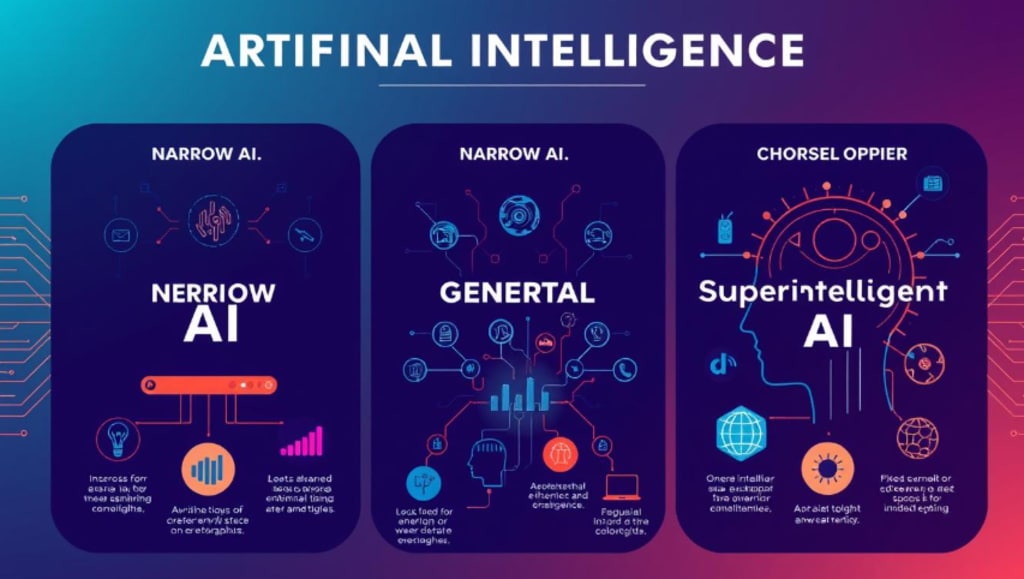
Explore the Key Types of Artificial Intelligence
As I sat in my local coffee shop, I watched a self-driving food delivery robot. It was amazing to see how artificial intelligence has changed our lives. Now, AI is not just a concept but a part of our daily lives, changing how we use technology.
Artificial intelligence is more than just automation. It includes smart assistants and complex algorithms. These advancements are making machines smarter and more capable than ever before.
Our exploration of AI will show you the amazing capabilities of technology. We'll see how AI is changing industries like healthcare and finance. It's a journey into the future of how machines and humans interact.
Key Takeaways
AI technologies are rapidly transforming multiple industry sectors
Different types of AI intelligence serve unique technological purposes
Machine learning remains a critical foundation for AI development
Understanding AI categories helps predict future technological trends
Ethical considerations are crucial in AI implementation
Understanding the Evolution of Artificial Intelligence
The journey of artificial intelligence is a fascinating story. It has changed how we use machines. From simple ideas to advanced narrow AI, it has grown a lot over the years.
AI has gone through many important stages. Each stage brought new discoveries and big steps forward. These early ideas set the stage for a technology that could solve hard problems.
The Historical Development of AI Technology
The start of AI goes back to the 1950s. Computer scientists were trying to make machines smart like humans. Their work started a big change in how we think about computers.
1950s: Initial theoretical frameworks for machine intelligence
1960s: First experimental AI programming languages
1970s: Expert systems emerge
1980s: Machine learning foundations established
Key Milestones in AI Advancement
Big breakthroughs made AI real and useful. Neural networks and new algorithms let machines understand and use information better.
Decade Major AI Breakthrough Impact
1990s Advanced Neural Networks Pattern Recognition
2000s Machine Learning Algorithms Predictive Analytics
2010s Deep Learning Complex Problem Solving
Current State of AI Implementation
Today, AI is more advanced than before. It's used in many fields like healthcare and finance. It helps make things better and more efficient.
"The future of artificial intelligence lies not just in technological advancement, but in its ability to solve real-world challenges." - AI Research Expert
Even though we still dream of artificial general intelligence, narrow AI is doing great things. It's getting better at handling data, recognizing patterns, and making decisions.
Types of AI Intelligence: From Narrow to General
https://youtube.com/watch?v=_7JyuA1nAKk
Artificial intelligence covers a wide range, from narrow AI to the dream of artificial general intelligence. Knowing about these types helps us understand today's tech and what's possible in the future.
Narrow AI is the most common type today. Specialized systems designed for specific tasks are everywhere in tech. They're great at things like recognizing images, translating languages, and making recommendations.
"AI is not about replacing human intelligence, but extending our capabilities through targeted technological solutions." - AI Research Institute
Narrow AI focuses on single-task performance
Artificial general intelligence aims for human-like cognitive flexibility
Adaptive learning defines advanced AI systems
The move from narrow AI to artificial general intelligence is a big step forward. Today's AI is amazing at what it's made to do. But it still can't handle complex, multi-faceted tasks like humans do.
AI Type Key Characteristics Current Applications
Narrow AI Task-specific intelligence Virtual assistants, recommendation systems
Artificial General Intelligence Broad cognitive capabilities Emerging research, theoretical frameworks
Researchers keep working to make AI smarter. They're creating systems that can learn, adapt, and think like humans in many areas.
Artificial Narrow Intelligence (ANI): The Current Standard
Narrow AI is the most common type of artificial intelligence today. It is great at doing specific tasks with high precision and speed. It works well in many industries.
Artificial narrow intelligence works within set limits. It is very good at solving specific computational problems. Unlike other AI types, narrow AI is made to solve certain problems very accurately.
Real-world Applications of ANI
Customer service chatbots
Recommendation algorithms on streaming platforms
Predictive maintenance in manufacturing
Financial trading systems
Medical diagnostic tools
Limitations and Capabilities
Capabilities Limitations
High-speed data processing Cannot adapt beyond programmed tasks
Precise pattern recognition Limited contextual understanding
Consistent performance Lacks general intelligence
Business Impact of Narrow AI
Narrow AI changes how businesses work by automating complex tasks and giving insights from data. Companies use narrow AI to work better, save money, and make smarter choices.
"Narrow AI is not about replacing human intelligence, but augmenting our capabilities in specific domains." - AI Research Institute
Using narrow AI wisely helps businesses run smoother, guess market trends, and offer custom experiences. This all happens with great speed and efficiency.
Artificial General Intelligence (AGI): The Next Frontier
Artificial general intelligence is a big step forward in technology. It's different from narrow AI, which only does one thing. AGI wants to make machines that can think like humans, in many areas.
The goal of AGI is to create systems that can:
Understand complex situations
Learn and change on their own
Solve problems in many fields
Think like humans
"Artificial general intelligence could be the most significant technological breakthrough in human history." - AI Research Consortium
Scientists are trying many ways to make AGI happen. They're working on better neural networks, smarter machine learning, and systems that share knowledge.
But, there are big challenges in AGI research:
Creating flexible learning systems
Understanding everything deeply
Making sure AI is safe and ethical
Handling the big changes it might bring
The effects of AGI could change many things. It could improve healthcare, science, the economy, and how we solve problems.
Machine Learning: The Foundation of Modern AI
Machine learning is a game-changer in artificial intelligence. It lets computers learn and get better over time without being told exactly what to do. This tech is amazing at finding patterns in data, predicting outcomes, and adjusting to new info.
At its heart, machine learning gives AI systems the power to do many things well. They can go through lots of data to find patterns and insights that old computers can't.
Supervised Learning Systems
Supervised learning is a key part of machine learning. It uses labeled data to train algorithms. It's all about:
Predefined input and output data
Clear training objectives
Predictive modeling capabilities
Accurate classification and regression tasks
Unsupervised Learning Applications
Unsupervised learning is different. It looks at data without labels to find hidden patterns. It's great for:
Clustering complex datasets
Identifying unexpected patterns
Detecting anomalies
Generating insights without predefined parameters
Reinforcement Learning Technologies
Reinforcement learning is like how we learn by trying and getting feedback. AI systems make choices and get rewards or feedback. This helps them get better in changing situations.
"Machine learning is not just about algorithms, but about creating intelligent systems that can learn, adapt, and evolve." - AI Research Expert
Machine learning keeps getting better, leading to new discoveries in many fields. This includes healthcare, finance, and even making things like self-driving cars and personalized services.
Deep Learning and Neural Networks
Deep learning is a new way in artificial intelligence that works like our brains. It uses neural networks to handle complex data well. This makes machines very smart and flexible.
Artificial neural networks are at the heart of deep learning. They are complex systems that find patterns and make smart choices. They can learn from data that isn't organized, changing how computers deal with information.
Processes complex, multi-layered data inputs
Enables advanced pattern recognition
Supports breakthrough AI applications
Deep learning is used in many areas:
Image recognition technologies
Natural language processing
Autonomous vehicle navigation
Medical diagnostic systems
"Deep learning is not just an algorithm, it's a fundamental shift in how machines understand complex information." - AI Research Expert
Neural networks use many layers to find important features in data. This lets AI systems understand things deeply. It makes machines smarter than before.
But, deep learning still has problems. Scientists are trying to make it faster and fairer. They want to fix biases in neural networks.
The future of deep learning looks bright. We might see huge leaps in artificial intelligence. Machines could understand us better and solve complex problems.
Natural Language Processing and Computer Vision
Artificial intelligence has changed how machines talk to us and see the world. Natural language processing and computer vision are key areas. They make technology better in many fields.
These AI tools help machines understand and analyze what we say and see. Scientists are working hard to make computers better at getting language and images.
Speech Recognition Advances
Natural language processing has made speech recognition much better. Today's AI can:
Transcribe spoken words with 95% accuracy
Understand different accents and dialects
Translate conversations in real-time
Get the context of what's being said
Image Processing Technologies
Computer vision has changed how machines see things. AI can now:
Spot detailed patterns
Identify complex objects accurately
Read medical images like experts
Help self-driving cars navigate
Text Analysis Capabilities
Natural language processing makes text analysis better in many areas. Machines can now:
Find important insights in big documents
Do sentiment analysis
Write like humans
Get the context of text
"AI is transforming how we interact with technology, making communication more intuitive and seamless."
These advances in natural language processing and computer vision are changing what AI can do.
Robotics and Physical AI Systems
Robotics is a new frontier where AI meets physical interaction. Modern robotics systems are changing industries. They use advanced AI to see, analyze, and act in complex environments.
Robotics is growing in many areas:
Industrial automation
Autonomous vehicles
Healthcare assistive technologies
Exploration and research robotics
AI-powered robots are changing how machines interact with the world. Intelligent robots can do complex tasks with great precision. They learn and adapt in real-time with advanced sensors and algorithms.
"Robotics is not just about creating machines, but about expanding human potential through intelligent systems." - Dr. Rodney Brooks, Robotics Expert
Robotics shows amazing abilities in different fields:
Robotics Domain AI Capabilities
Manufacturing Precision movement, predictive maintenance
Medical Surgery Microsurgical precision, diagnostic support
Space Exploration Environmental adaptation, autonomous navigation
The future of robotics looks bright. Machines will get smarter, more adaptable, and able to make complex decisions in many places.
Cognitive Computing and Expert Systems
Cognitive computing is a new way to think about artificial intelligence. It's like how humans think. These systems use machine learning, natural language, and data analysis to solve problems in smart ways.
At the heart of cognitive computing is its ability to handle complex information like humans do. It's different from old computers because it can:
Interpret unstructured data
Recognize contextual patterns
Learn from previous interactions
Provide adaptive responses
Decision Support Systems
Decision support systems powered by cognitive computing change how companies make big decisions. These smart platforms look at lots of data. They give insights that help leaders make better choices in many fields.
Knowledge-Based AI Solutions
Knowledge-based AI solutions use big databases and learning algorithms to solve tough problems. Cognitive computing lets these systems understand and handle information in detailed ways.
Industry Cognitive Computing Application Key Benefits
Healthcare Medical Diagnosis Support Improved Diagnostic Accuracy
Finance Risk Assessment Enhanced Predictive Analytics
Customer Service Intelligent Chatbots Personalized User Experience
Intelligent Automation Platforms
Intelligent automation platforms are at the forefront of cognitive computing. They use many AI technologies to make business processes easier. This reduces mistakes and boosts efficiency.
"Cognitive computing is not about replacing human intelligence, but about augmenting and enhancing our cognitive capabilities." - AI Research Expert
Conclusion
The world of AI intelligence is changing fast. From simple AI in our daily lives to the big dreams of Artificial General Intelligence, it's all about pushing limits. Knowing about these AI types is key for businesses, researchers, and anyone wanting to use smart tech.
Machine learning, deep learning, and cognitive computing are at the heart of AI. They help solve complex problems in many fields. Neural networks and natural language processing make machines talk and understand us better, making them smarter and more helpful.
As AI grows, we'll see more robots and advanced tech. People and companies need to keep learning about new AI. This will help us use these smart systems in new and exciting ways.
Exploring AI shows its huge potential and the challenges we still face. Today's AI is great at certain things, but we dream of AI that can do it all. This AI will learn, think, and talk with us in amazing ways.
FAQ
What are the main types of artificial intelligence?
Artificial Intelligence (AI) has three main types. Artificial Narrow Intelligence (ANI) focuses on one task. Artificial General Intelligence (AGI) aims to be as smart as humans in many areas. Theoretical Artificial Super Intelligence (ASI) could be even smarter than humans.
How does machine learning differ from traditional programming?
Machine learning is different from traditional programming. Instead of following set instructions, it learns from data. It finds patterns and makes decisions on its own, getting better over time.
What is the difference between narrow AI and general AI?
Narrow AI does one thing well, like recognizing voices or images. Artificial General Intelligence (AGI) wants to do anything a human can. Most AI today is narrow, but AGI is the goal for the future.
Can AI truly understand natural language?
Yes, AI can understand and create human language through Natural Language Processing (NLP). It uses advanced algorithms to grasp context and feelings. But, fully understanding human language is still a big challenge.
What are the primary applications of computer vision?
Computer vision is used in many areas. It helps with facial recognition, medical images, self-driving cars, security, and checking product quality. It lets machines see and understand the world like we do.
How do neural networks work?
Neural networks are like the brain, made of nodes that process information. They learn by changing how these nodes connect. This lets them recognize patterns and make decisions in many areas.
What are the ethical concerns surrounding AI development?
There are many ethical worries about AI. These include losing jobs, privacy issues, bias in algorithms, and the danger of AI weapons. It's important to think about these issues when developing AI.
Is artificial general intelligence achievable in the near future?
Getting Artificial General Intelligence (AGI) is a big challenge. Some think it's far off, while others are hopeful about new discoveries. It depends on how fast AI research and technology advance.
About the Creator
Jesmin
Explores words to create worlds with poetry, nonfiction, and fiction. Writes content that permeates then
Enjoyed the story? Support the Creator.
Subscribe for free to receive all their stories in your feed.
Comments
There are no comments for this story
Be the first to respond and start the conversation.