
Why Activist-Run Sea Sanctuaries Aren’t Automatically the Answer For Captive Whales
The deaths of four beluga whales relocated from Marineland Canada are heartbreaking. They should also force us to have a more honest conversation about what responsible cetacean welfare actually looks like.

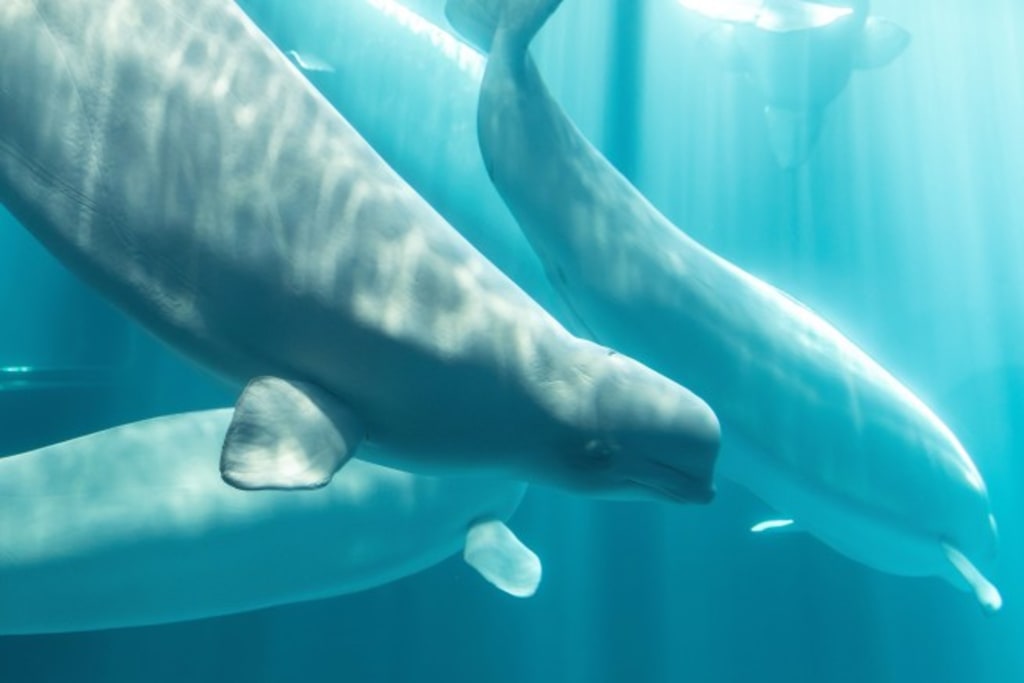
The latest loss of multiple belugas that had been relocated from the former Marineland Canada site is genuinely heartbreaking.
It appears these events have intensified the ongoing controversy surrounding the fate of cetaceans held in captivity. With facilities now slated to shut down, where will these whales and dolphins ultimately be placed?
Four belugas formerly housed at Marineland have perished following this relocation effort — three at Chicago's Shedd Aquarium and one, a young female called Jelly Bean, at Oceanogràfic in Valencia, Spain, where authorities intend to perform a necropsy to determine her cause of death. Shedd is likewise looking into the deaths of the three belugas transferred there. During this same span, a long-standing Shedd beluga resident, Beethoven, also passed away, though that loss was unconnected to the Marineland transfer.
At this point, several crucial questions about these deaths demand our attention:
Were these animals in a suitable condition to be transported?
Had the moment arrived when these transfers should have been carried out?
What veterinary assessments had been performed prior to relocating them to their new residences?
To what extent did the stress and disruption of the journey contribute to their deaths?
Yet this, I believe, raises a far more significant question: if ordinary aquariums and oceanariums cannot serve as adequate homes for such highly intelligent beings, would sea sanctuaries operated by activists truly offer something better?
Unfortunately, judging by everything I have observed up to now, the answer is emphatically no.
A Sanctuary Isn’t The Same As The Open Ocean
Although the term sanctuary carries a wealth of positive associations—comfort, safety, freedom. Protection from exploitation—the actual situation for long-term captives or whales born in aquariums looks quite different. Relocating a cetacean to a sea sanctuary is not equivalent to releasing it into the wild.
According to Jason Bruck, writing in The Conversation, cetacean sanctuaries typically consist of netted pens in the ocean. Consequently, even though the animals being relocated may have spent their lives in captivity, they remain entirely reliant on human care for their survival.
This point matters, since it demonstrates that simply transferring a beluga whale that was born and raised in captivity to an ocean sanctuary does not make it a free, wild whale. It continues to depend on the same attentive maintenance, medical treatment, and diet it had in the aquarium. Beyond the clear hazards and stress that transportation involves, putting these animals into coastal waters would expose them to a host of new stressors and threats that a contained facility would not typically pose, including shifting ocean conditions:
Challenges in controlling water quality
Contact with unfamiliar diseases and wildlife
The danger of becoming entangled in nets
And a diminished capacity to deliver prompt, specialized medical attention when injury or illness occurs
None of this suggests that ocean sanctuaries are unachievable—only that their feasibility has yet to be demonstrated. And that distinction matters a great deal.
Bigger Doesn’t Automatically Mean Better
Although the wish for additional room is certainly a valid justification for establishing ocean sanctuaries for these animals, and while space, enrichment, and freedom do matter greatly to animal wellbeing, animal welfare involves considerably more than just the number of square feet available.
Even though a larger territory can offer numerous advantages to the animals, it likewise comes with a considerable set of drawbacks.
Conventional aquariums offer significantly greater control over the animals' surroundings and enable quicker treatment when an animal needs medical care. Permit medical staff to track vitals, appetite, and behaviors within controlled treatment pools.
At the same time, ocean sanctuaries bring a host of logistical and medical difficulties, as noted by Bruck, including infection risk, parasitic infestation, and encounters with unfamiliar species. Entanglement in nets, all of which can impede the ability of medical professionals to treat the animals swiftly and safely.
These are certainly not impossible situations, yet they are avoidable complications that a contained aquarium setting could have prevented with ease. I am in no way arguing that larger is superior or that animals should be denied the freedom to roam wherever they wish. Animal wellbeing simply cannot be quantified in square feet.
We Shouldn’t Overlook The Facilities That Already Exist
In the ongoing discussion about whether aquariums or sanctuaries are better, one possibility that frequently is ignored is how much good can come from enhancing the facilities that already care for cetaceans.
Assuming that the only good choices are either confining every whale and dolphin to conventional aquariums or releasing them all into sea sanctuaries overlooks the many ways we could upgrade the settings these animals already know.
For the animals living in them, improving these familiar settings tends to produce better results than relocating them somewhere else.
That could mean modernizing the pool, adding more enrichment and chances to engage in natural behaviors, and enhancing overall water quality. Designing spaces that give animals greater control over how they live.
Many people believe concrete pools are simply harmful to a cetacean's well-being, but in reality, these facilities can be improved by enlarging and diversifying the pool, installing advanced life-support systems to safeguard water quality, and boosting enrichment and opportunities for natural behaviors. Reshaping the setting so that the animals enjoy more freedom and influence over their living conditions.
An open-ocean setting may look attractive, yet it carries its own dangers, including threats from other animals and the difficulty of monitoring the animal's health. That is why numerous facilities today have been upgraded, making room for larger habitats that can accommodate whales and dolphins while preserving proper water quality and providing immediate medical care when necessary.
That said, not every facility suits every animal, just as not every animal is suited to life in a particular facility. Every situation ought to be judged individually, with the animal's overall well-being as the guiding concern.
When an animal is flourishing where it is, surrounded by familiar staff and regular social contact. Dependable medical care, moving it to a "sanctuary" is not necessarily the wisest choice. More often than not, upgrading the facility where it already lives delivers better outcomes.
Bettering the lives of whales and dolphins is not about picking a pool over the sea or the sea over a pool; it is about determining which environment would serve each individual animal best and supplying the resources needed to make that happen.
The Sanctuary Model Needs Evidence, Too
This conversation centers on its single most important component.
An organization might craft a stirring mission statement, win a devoted fan base, pull in millions of dollars in contributions, and attract widespread press attention.
By itself, none of that says anything about whether it can actually deliver care for a whale or dolphin over the animal's entire life.
Bruck takes care to emphasize that the template for open-ocean sanctuaries remains unverified—these facilities would run with minimal oversight and would prohibit breeding and human contact. Would face pressure from financial backers eager to maximize the number of animals housed, even at the cost of the animals' well-being.
Nothing shows that facilities of this kind can function well enough to take in hundreds of stranded animals.
The public deserves answers to these fundamental operational questions:
Veterinary Care: How are veterinary services and emergency care handled?
Environmental Threats: What risks come from shifts in water quality, weather, algae blooms, parasites, diseases, and nets?
Socialization: How are social groups formed, and how are they managed?
Sustainability: Over the long haul, how will the costs be covered, and who steps in with funding if donations dry up or the organization fails financially?
Raising these questions is entirely reasonable.
Every organization that assumes responsibility for a living being must be ready to answer them.
Activism Isn’t The Same Thing As Animal Care Expertise
At the heart of this discussion lies its single most essential component.
An organization might craft an inspiring mission statement, build a devoted base of supporters, bring in millions in donations, and earn itself a prominent spot in the media.
Yet none of these answers the fundamental question: can it actually care for a whale or dolphin that is bound to outlive whatever value it holds for them?
Bruck takes care to point out that open-ocean sanctuaries remain an unproven model — such facilities would run under only the barest oversight, prohibit breeding, and limit contact with the animals. Would probably face donor pressure to take in as many animals as possible, even at the risk of animal suffering.
Nothing suggests that a system like this could manage hundreds of stranded animals.
Even so, the public deserves answers to these practical questions:
Veterinary Care: How will medical care for the animals be delivered, and what happens if they get hurt or need emergency treatment?
Environmental Threats: What if water quality deteriorates, the weather turns hostile, or algae blooms, parasites, diseases, or nets put the animals at risk?
Socialization: How will social groups be created, and how will they be overseen?
Sustainability: What are the long-term prospects, and who foots the bill once donations dry up or the organization can no longer meet its costs?
Raising these questions is entirely reasonable.
Every organization that takes on the responsibility of keeping a living creature must be ready to answer them.
The Marineland Transfers Show Why Relocation Is So Complicated
The situation surrounding Marineland Canada was especially difficult.
Shutting down did not resolve the issue, since the animals stayed in place and still required feeding, care, suitable social groupings, and safe housing.
Government documents show that Marineland said the remaining cetaceans would be euthanized if no new home could be found for them.
Once all required tests and veterinary inspections were completed, the authorities chose to permit the animals' export.
This became the biggest transfer of captive whales ever recorded, with 30 belugas and 4 dolphins departing Canada for five separate facilities across Spain and the United States.
Operations like this demand a considerable degree of organizational skill.
What is more, the animals being relocated were not in optimal health, given that cetacean deaths at Marineland had been confirmed months before any transfers occurred.
Consequently, these factors must be taken into account when establishing what caused the deaths.
They ought not to be regarded merely as the product of stress the animals endured while traveling.
Establishing the precise cause of death for the deceased marine mammals demands deeper analysis, along with veterinary expertise.
Even so, it is clear that moving the whales was no simple undertaking.
That Lesson Matters for Wikie and Keijo, Too
This matter becomes especially important when considering what happens to the other captive cetaceans held in facilities that are closing down or whose future remains unclear.
In my piece last week on Wikie and Keijo, the captive-born orcas formerly kept at the now-shuttered Marineland Antibes in France, I explained that shutting the place down does not automatically bring their suffering to an end, since they continue to need proper care.
They must be fed, given medical treatment, provided with housing, and allowed to interact socially with other cetaceans.
Because of this, the French and Spanish authorities ought to work out a plan for Wikie and Keijo.
Still, when deciding where to send them, suitable accommodation should come first, provided the location is safe and offers the best possible conditions for the orcas' well-being.
It should not simply be whichever sea sanctuary happens to be closest and able to take the animals immediately.
Instead, the sanctuary ought to be chosen as the best available option that fits what the orcas need.
Conversely, if there is a strong possibility of improving the local aquarium so that it offers cetaceans better and safer conditions, that idea should not be dismissed just because it involves an aquarium.
Lastly, upgrading the existing facility could also be weighed as a way to steer clear of the dangers associated with transporting the animals.
Good Intentions Aren’t Enough
Although establishing sea sanctuaries is clearly a worthwhile notion that plenty of people would get behind, it is still necessary to grasp the full extent of the practical consequences such an undertaking would bring. It is simple to endorse the notion of providing captured whales and dolphins with improved living conditions and greater room. A setting that more closely mirrors their natural habitat.
However, these creatures do not inhabit the abstract realms of theoretical physics. They occupy actual physical space, which means the genuine value of such a project would hinge on factors such as veterinary attention, facilities, the surrounding environment, and financial backing. Plans for handling emergencies.
If any one of these elements falls short in any respect, the sanctuary becomes less likely to successfully keep these animals alive and well. Every kind of organization, whether independent, government-run, profit-driven, or something else entirely, can run into operational breakdowns. Even the process of relocating the animals can go wrong.
Moreover, for animals that cannot simply be set free into the surrounding area, there is no fallback, which leaves long-term financial sustainability as the sole sensible criterion for calling the whole thing off.
Any group able to shoulder the financial burden of caring for a particular animal over its entire life would need a strategy that covers that animal's requirements for as long as it lives.
No individual charity ought to rely completely on donations to fund a campaign spanning several years; rather, it should possess a workable economic strategy for maintaining its operations for the full lifespan of the creatures in its care. In the section on maintenance costs, Jason Bruck points out that housing a whale or dolphin in an open habitat can come with extraordinarily steep expenses.
He cites Keiko, the orca made famous by Free Willy, whose upkeep and care had already run into tens of millions of dollars prior to his return to the ocean.
The argument is not that spending money on these animals is in any way unjustified. Rather, any arrangement involving a lifetime commitment to an animal demands an equally lifelong commitment from those providing care, in terms of financial duty.
We Shouldn’t Turn This Into An Ideological Battle
The argument surrounding whether whales should be kept in captivity appears to have no end. Some people find it impossible to accept that marine parks amount to a kind of slavery, whereas others hold that these animals require a level of care that only humans are able to give. Either way, theoretical discussions will do nothing to make life better for the whales, so that the whales might live peacefully and comfortably.
We need to pause and consider what can realistically be done at this moment to keep the animals safe and lower their stress.
Rather than insisting on answers before every examination of the dead whales has been finished, the wisest approach would be to let the findings guide us. Their deaths could stem from a number of causes, for instance:
pre-existing medical conditions,
Stress brought on by transport,
How well the animal adapts,
Difficulties in social interaction,
Or some mix of these elements.
Even so, these deaths must not be overlooked, and any further steps should involve setting rigorous benchmarks for relocation efforts going forward. To protect the animals and ensure their well-being, options such as improving facilities, moving the whales into private care, or establishing sea sanctuaries ought to be explored.
Every option on the table needs to be studied closely and weighed against the others, so that the best possible answer can be found and future tragedies avoided.
Can This Organization Realistically Care For This Animal For The Rest Of Its Life?
Rather than arguing over whether a facility is a sanctuary, an aquarium, or a rescue center, we should turn our attention to which one can offer a safe place for the animal to remain for the rest of its life.
Each possibility deserves scrutiny, and any that fails to satisfy the following requirements should be removed from the list:
Proposed Sanctuaries: must be secure, properly staffed, financially well-supported, suited to the local ecology, and able to deliver veterinary care.
Existing Aquariums: should improve the comfort of the animals' surroundings and offer care for their entire lives.
If not, they should be ruled out, and our search should continue.
These Whales Deserve Evidence, Not Slogans
The loss of the four belugas that perished during their transfer from Marineland is a sorrowful event, yet rather than intensifying the controversy over keeping whales in captivity, it ought to teach us how animals should be handled during transfers and transitions when a facility shuts down.
Although sea sanctuaries, when run well, can offer whales an appropriate setting, moving an animal into an ocean enclosure may prove no better—or possibly far worse—than the other option. We ought not to reject outright the possibility that existing facilities can markedly enhance animal care and housing.
Similar conditions, which would make a sanctuary unnecessary and lower the risks involved in moving the animal to a different facility.
The major goal ought not to be putting these animals into a sanctuary, no matter what the circumstances are. Rather, securing their well-being by placing each one in whichever facility is best equipped to care for it.
The wisest path forward might involve:
Relocating the animal to a different facility
Placing the animal in a sanctuary
Strengthening the program at the receiving facility
Or keeping the animal where it currently is when moving it would create more risk than benefit.
Having endured so much already, these animals deserve to be placed somewhere that offers them the finest possible care and the greatest chance to survive and flourish. That place may indeed be another facility, but managers have a duty to acknowledge that moving an animal is not something to be decided casually.
Whichever path is chosen, it has to serve the animal's best interests. This requires giving the animal skilled, compassionate, and capable care, along with proper nutrition and feeding practices, social contact, and medical attention.
A suitable environment within the boundaries of its permanent or temporary home. It also requires a solid management plan and policy for the animal's long-term care. When the life – or death – of an animal under human care is at stake, good intentions alone will not do.
About the Creator
Jenna Deedy
Just a New England Mando passionate about wildlife, nerd stuff & cosplay! 🐾✨🎭 Get 20% off @davidsonsteas (https://www.davidsonstea.com/) with code JENNA20-Based in Nashua, NH.
Instagram: @jennacostadeedy
Enjoyed the story? Support the Creator.
Subscribe for free to receive all their stories in your feed. You could also become a paid subscriber, letting them know you appreciate their work.
Comments
There are no comments for this story
Be the first to respond and start the conversation.