Sustainability
Massive Milkweed Restoration Could Help Save the Monarch Butterfly
Common milkweed isn’t a particularly finicky plant—it has “weed” in its name for a reason and can be found growing on roadsides, empty lots, and old fields. But over the last two decades, Asclepias syriaca, which is primarily found in the Midwest and eastern United States, has disappeared from most agricultural landscapes. Along with it, the population of the iconic migratory monarch butterfly, Danaus plexippus plexippus, which relies on the plant for reproduction, has also crashed, so much so that it is being considered for endangered status. Assuming the key to saving the monarch is bringing back milkweed, a new study in the journal Environmental Research Letters looks at exactly where conservationists need to plant Asclepias to revive the dwindling butterfly population.
By lupu alexandra4 years ago in Earth
New Independent Study Confirms PFAS in Thinx, Other Products
You might know me as the person who reported in January 2020 that I mailed my Thinx leakproof, organic menstrual underwear to Professor Graham Peaslee, a nuclear physicist at Notre Dame University. He found toxic chemicals, including PFAS, in it. At the time, I was working on a response to a reader who wanted to know what the best ways were to minimize the environmental impact of their period, and I had been contacting companies like Thinx to find out which products were the least toxic for the environment and for human health. Peaslee and his team found that the inside of the crotch in my organic Thinx organic brief had 3,264 parts per million (ppm) of flourine, and their organic Shorty for teens had 2,053 ppm. That’s high enough to suggest they were intentionally manufactured with PFAS. All PFAS have fluorine. Since the world hasn’t found a way to test which of 9,000 PFAS are in products, the best current test methods look for fluorine.
By lupu alexandra4 years ago in Earth
Low-Carbon Diets Are Good for the Planet, and Your Health
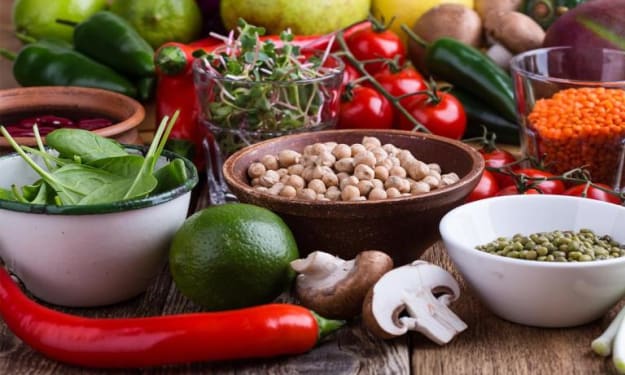
For most of human history, sticking to a diet was pretty simple—you ate whatever you could get your hands on. But in this era of dietary excess, things have gotten extremely complicated. Conscious consumers need to consider the health implications of the foods they eat as well as the types of chemicals used in their production, the exploitation of farm labor, whether food animals are treated humanely, and just how much damage their afternoon snack is doing to the climate. Untangling the web of food choices is daunting, but a new study makes things a little bit easier. A paper in the American Journal of Clinical Nutrition shows that low-carbon diets that are good for the climate are, as a general rule, much better for human health as well.
By lupu alexandra4 years ago in Earth
An Earth Loving God: 5 Reasons to be an Eco-Friendly Christian and How to Become One
Denying global climate change. The flat Earth movement. Anti-evolutionists. There are several scientific debates that have not shed a positive light on some very conservative folk out there. I suppose that shouldn’t be that big a deal. We’re all allowed to think what we want so long as we’re not hurting anyone, right?
By Selys Rivera4 years ago in Earth
How To Start Your Own Mushroom Farming Business
I have been doing a lot of research in regards to the business side of mushroom farming and I thought the information I’m about to share with my readers today should be publicized as it can help future mushroom farmers fulfill the market’s supply & demand of mushrooms anywhere in the world. First of all, let’s talk about the cost of materials that you will need in order to start a mushroom farming business. So, the items you will need can be bought from one or more sources but for simplicity’s sake, I will use amazon as an example. You will have to first get a pressure cooker which is going to cost about $100 or more minimum. Then you will need to get some glass jars preferably a 12 pack of 24oz jars (~$33), High temp Silicone (~$13), 100 Canning Lids/100 Rings (~$35), 50lbs of Whole grain/Rye grain (~$70, good for use on 33 24oz jars), 4 shelf storage shelves (~$119)
By Hobbies • Skills • Talents • Passion • Profession4 years ago in Earth
Jurunxin Microwave Medical Waste Equipment Offers Solution to Waste Treatment
As the world is combatting the COVID-19 pandemic, we’re seeing a surge in the volume of medical waste. Where do these bio hazardous wastes go? How can hospitals better dispose of medical waste?
By Chuhaiyi Overseadia4 years ago in Earth
eBikes are the Rage
With the introduction of a new program that will compensate people for switching to electric bikes, France hopes to have a significant impact on the transportation industry. If participants in the "E-Bike Revolution" initiative decide to upgrade their current bicycle to an electric one, they will receive 4,000 euros. The objective is to reduce pollution and persuade individuals to switch from gas-guzzling automobiles to more ecologically friendly modes of transportation. If this effort is effective, it might represent a significant step toward weaning the nation off of conventional modes of transportation.
By Jerry Nelson4 years ago in Earth
Tonga before the blast
Smoke fills the air. Not the smoke of a volcanic eruption but the cookfires of hundreds of family huts. It was 1986, and I visited Tonga on an Earthwatch expedition. Our task was to map the growing fields identifying the types of vegetation–taro, plantains, papaya, and coconut made up some of the target crops. Our direct observation used ground-truth satellite imagery. Once identified on our maps, we transferred the information to the satellite photographs of the island. This, in turn, allowed researchers to extrapolate the key colors to other islands in the South Pacific.
By Jim DeLillo4 years ago in Earth