Sustainability
Maintenance and Longevity of Aluminum Formwork
Aluminium formwork has become a widely preferred choice in the construction industry due to its exceptional durability, efficiency, and cost-effectiveness. However, to ensure its longevity and consistent performance, proper maintenance is crucial. In this article, we explore the key factors influencing the lifespan of aluminium formwork and the best practices for its maintenance.
By Knest Manufacturers LLP2 years ago in Earth
A promise carved in the world
In a small village nestled between mountains and the vast wilderness, there was a legend that had been passed down for generations. It spoke of a promise carved into the very fabric of the world itself. The promise, however, was not made by gods or kings but by a humble woman who had been known throughout the land as Lira.
By Badhan Sen2 years ago in Earth
The Hidden Cost of Hilsa Fishing: Bycatch and Why We Must Save It
Hilsa is the cornerstone of Bangladesh’s fisheries sector. It is one of the leading countries producing Hilsa with a large percentage of the total Hilsa production originating from Bangladesh every year. It is the national fish of our country, but it is not just a source of protein, it is intertwined with the ecology, economy, society and tradition of our country. However, beneath the surface of Hilsa Gillnet fishing, there is an urgent environmental concern: bycatch in Hilsa gillnet fishing.
By KEYA CHAKMA2 years ago in Earth
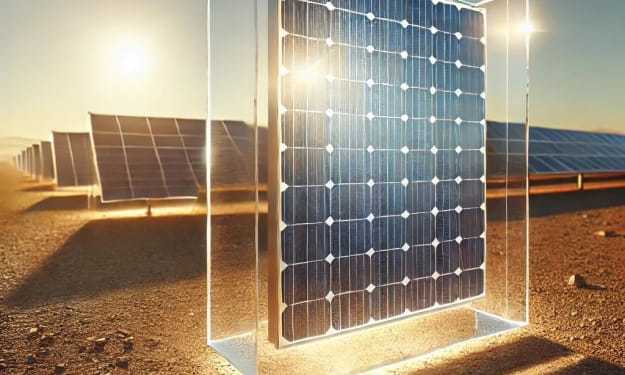
What Are Bifacial Solar Panels
As India continues its ambitious journey toward renewable energy adoption, innovative solar technologies are emerging as game-changers in the power generation landscape. Among these advancements, bifacial solar panels have garnered significant attention for their enhanced efficiency and improved energy yield. Let's delve into what makes these panels special and why they're becoming increasingly popular in the Indian market.
By Shop Waaree 2 years ago in Earth
Solar-Powered Data Centers:
In an era where sustainable energy solutions are becoming increasingly crucial, space-based solar power (SBSP) emerges as a groundbreaking concept that could transform how we harness and distribute energy globally. This innovative technology, once confined to science fiction, is now gaining serious attention from space agencies and energy experts worldwide.
By Waaree Energies2 years ago in Earth
Asteroid Hitting Earth: NASA’s Role in Planetary Defense and What You Need to Know
What Are Asteroids and Why Are They a Threat? Asteroids are rocky remnants left over from the early formation of the solar system about 4.6 billion years ago. Most of them orbit the Sun in the asteroid belt between Mars and Jupiter, but some have orbits that bring them closer to Earth. These are known as Near-Earth Objects (NEOs), and they are the primary focus of NASA’s planetary defense efforts.
By denizan Lawyer2 years ago in Earth
SHORELINE OVERFLOW CAUTION
Understanding the Risks and Preparing for the The most serious Shoreline overflow, also known as coastal flooding, occurs when the ocean's water level rises above the normal high tide mark, causing water to spill onto land. This natural phenomenon can have devastating effects on coastal communities, causing damage to properties, disrupting businesses, and threatening human life. In this article, we will explore the causes and effects of shoreline overflow, discuss the importance of shoreline overflow caution, and provide tips on how to prepare for and respond to this type of emergency.
By Promise Chukwuka Bucks2 years ago in Earth
The Invisible Crisis: Climate Change and Soil Health
Introduction: The Role of Soil in Climate Resilience Soil is often overlooked, yet it is one of the planet’s most critical resources. It serves as the foundation for agriculture, supports biodiversity, and regulates essential cycles like water and nutrients. More importantly, soil acts as a major carbon sink, holding more carbon than the atmosphere and all vegetation combined. Healthy soil plays a vital role in mitigating climate change by sequestering carbon dioxide (CO2) and ensuring agricultural productivity for a growing population. However, climate change is pushing this natural system to its limits. Rising global temperatures, erratic rainfall patterns, and extreme weather events are degrading soil health at an alarming rate. The consequences extend far beyond soil itself—affecting food security, water availability, and efforts to combat climate change. Recognizing the intricate relationship between soil and the climate is essential for building a resilient future. Impact of Climate Change on Soil Health 1. Soil Erosion and Degradation Climate change amplifies soil erosion through heavier and more frequent rainfall events. Intense storms wash away the nutrient-rich topsoil that sustains crops, leaving behind barren land. According to a report by the Food and Agriculture Organization (FAO, 2019), an estimated 75 billion tonnes of soil are lost globally each year due to erosion. This degradation not only reduces agricultural productivity but also increases sedimentation in rivers, disrupting ecosystems downstream. In arid and semi-arid regions, rising temperatures exacerbate desertification. Prolonged droughts dry out soils, causing them to lose structure and become more prone to wind erosion. This is particularly evident in regions like Sub-Saharan Africa, where desertification threatens livelihoods dependent on agriculture. 2. Loss of Soil Organic Matter (SOM) Soil organic matter (SOM) is crucial for maintaining soil fertility, water retention, and microbial activity. However, climate change accelerates SOM loss by speeding up the decomposition of organic materials. Higher temperatures stimulate microbial activity, releasing stored carbon as CO2 into the atmosphere. This creates a feedback loop: soil releases more carbon, contributing to global warming, which further degrades soil health. Research published in Nature Climate Change (Crowther et al., 2016) estimates that soils could release up to 55 billion tonnes of carbon by 2050 due to global warming, undermining efforts to limit temperature rise to 1.5°C. 3. Impact on Soil Carbon Sequestration Healthy soils are essential for carbon sequestration—capturing and storing atmospheric carbon. However, climate change is disrupting this balance. In peatlands, which are among the most efficient natural carbon stores, rising temperatures and human activities like draining and agriculture are causing significant carbon release. Similarly, the thawing of permafrost in Arctic regions is releasing methane and CO2, further contributing to global warming.
By Shreyansh Singh2 years ago in Earth