Science
Unraveling the Mysteries of Our Galactic Home
Introduction The Milky Way, our home galaxy, has always been a source of wonder and fascination for astronomers and stargazers alike. Shaping our perception of a vast pinwheel rotating gracefully in space, this spiral galaxy has existed for approximately 14 billion years and is teeming with a plethora of celestial wonders, including stars, nebulae, planets, asteroids, and even life forms like you and me. However, despite centuries of observation and exploration, the Milky Way continues to surprise us with its hidden enigmas. In recent times, international teams of scientists have stumbled upon remarkable discoveries hidden within the galactic center, igniting new speculations and shedding light on the complexities of our cosmic abode. A Celestial Morse Code Among the most intriguing findings are the unique filamentary structures that grace the Milky Way's core. First observed in the early 1980s, these giant one-dimensional filaments, near Sagittarius A*, the central supermassive black hole, have captured the imagination of researchers. More recently, a new type of filament has been discovered, lying horizontally or radially, resembling the dashes and dots of Morse code. Although the vertical and horizontal filaments share certain similarities, they likely have different origins and roles within the galactic center. The Vertical Filaments: Stretching impressively up to 150 light years in height, the vertical filaments stand tall and magnetic, acting as harp-like strings clustered in pairs and groups. Researchers have connected these filaments to the outflow of the central black hole, enabling them to study the black hole's spin and the orientation of its accretion disk. Their majestic presence and behavior make them a critical piece in understanding the dynamics of the galactic center. The Horizontal Filaments: In stark contrast, the horizontal filaments emit thermal radiation and have a more radial orientation, pointing towards the center of the Milky Way and its black hole. These filaments are younger, clocking in at approximately 6 million years old, and are significantly smaller, spanning 5 to 10 light years at most. Although less numerous than their vertical counterparts, the horizontal filaments still captivate researchers with their unique characteristics and potential insights into the galactic center's mysteries. The Spooky Radio Energy Object: Beyond the enigmatic filaments, another cosmic mystery lurks in the Milky Way. Australian researchers made a perplexing discovery of a spinning object unlike anything seen before. This celestial entity releases massive bursts of radio energy every 20 minutes, a frequency never observed in any known object. Theories about its origin range from the possibility of an ultra-long period magnetar, a white dwarf, or even an entirely new type of celestial body. While the source remains enigmatic, astronomers are certain of its natural origin, ruling out artificial interference. The Glowing Center: One of the most confounding puzzles in the Milky Way revolves around its gamma-ray emissions. The center of the galaxy emits far more gamma radiation than its outskirts, leaving scientists baffled for nearly a decade. While some speculated the glow resulted from the annihilation of dark matter, the clumpy distribution of gamma-ray particles contradicted this theory. An alternative explanation involves millisecond pulsars, neutron stars spinning at astonishing speeds, which could explain the clumpy nature of the light. Yet, this theory has not convinced all scientists, and further research is needed to unlock the truth behind this extraordinary glow. Conclusion: The Milky Way, our cosmic abode, continues to astound and challenge our understanding of the universe. From its mesmerizing spiral structure to the enigmatic filaments and peculiar celestial objects hidden within its core, our galaxy holds secrets yet to be fully unraveled. As astronomers and researchers delve deeper into these mysteries, humanity's understanding of the cosmos is certain to expand, providing us with a more profound appreciation of the vast and captivating universe we call home. As we peer into the night sky, let us remember that our galactic journey is far from over, and there is still so much left to explore, discover, and marvel at in this vast and mysterious Milky Way.
By GRACE OKEDIJI3 years ago in Earth
When Pain Demands the Expertise of a Pain Management Specialist
Pain is a widespread experience, affecting everyone at some point. It is estimated that approximately 20% or more of the population may endure chronic pain, and this can vary depending on different factors. While pain serves as a warning mechanism from the body that prepares us to address or avoid potential harm, the type of pain that is being discussed below is the one that fundamentally hinders usefulness and, in many cases, weakens individuals. This is the sort of pain that requires pain management to help individuals regain their quality of life or adapt to a new one, equipped with strategies to improve their usefulness.
By peter mwakughu3 years ago in Earth
Escape from the Inferno: Tourists Flee Rhodes Wildfires in Greece's Largest-Ever Evacuation
Paradise Turned to Peril On a serene summer day, the Greek island of Rhodes boasted its usual postcard-perfect beauty. The azure sea gently caressed the golden shores, and the scent of olive trees permeated the air. Tourists from around the globe had flocked to this idyllic paradise to bask in the Mediterranean sun and immerse themselves in the island's rich history.
By Zeeshan May3 years ago in Earth
Discovering the Wonders of the Milky Way Galaxy
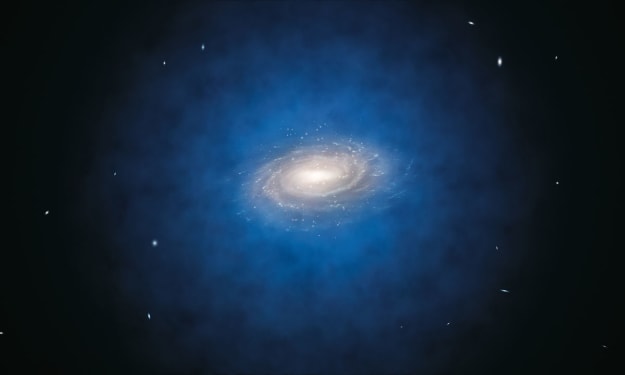
The Milky Way, our celestial home, showcases a breathtaking spectacle resembling an enormous pinwheel gracefully spinning through space. Classified as a spiral galaxy, it came into existence approximately 14 billion years ago and is a thriving habitat filled with an array of celestial marvels. Stars, nebulae (clouds of dust and gas), planets, asteroids, and even beings like ourselves, alongside the quirky neighbors down the street, form a vibrant tapestry that radiates outward from the heart of the Galaxy in its long, spiraling arms – an awe-inspiring view indeed.
By Harindra Abeysinghe3 years ago in Earth
Turn Trash into Fuel
Every year, an astonishing 1.3 billion tons of food is discarded worldwide, contributing to the mounting trash problem and exacerbating environmental challenges. However, amid this wasteful reality, innovative entrepreneurs across the globe have been finding ingenious ways to transform this waste into valuable fuel sources. From Argentina to Sierra Leone, from Indonesia to India, communities are harnessing the power of food waste to generate energy, reduce landfill waste, and mitigate greenhouse gas emissions. In this blog, we will delve into four captivating stories of individuals and communities who are not only finding solutions to the global waste crisis but also contributing to a more sustainable and greener future.
By Ally Allany3 years ago in Earth
J. Robert Oppenheimer: The Complex Legacy of the Father of the Atomic Bomb
In the annals of history, few individuals have left as indelible a mark on the world as J. Robert Oppenheimer. Born on April 22, 1904, in New York City to wealthy German Jewish immigrants, Oppenheimer's remarkable intellect and prodigious knack for science and literature set him on a path that would eventually shape the course of human history. As the driving force behind the Manhattan Project, he played a pivotal role in the development of the atomic bomb during World War II. However, beneath the surface of Oppenheimer's achievements lay a life fraught with deep-seated conflicts and ethical dilemmas.
By Rohit Singh3 years ago in Earth
"Do Non-Human Animals Grieve? Unraveling the Emotional Landscapes of the Animal Kingdom"
Introduction: In 2018, an orca named Tahlequah gave birth, but her daughter died within an hour. What followed was a remarkable display of behavior as Tahlequah refused to leave her body, keeping it afloat atop her own for the next 17 days and 1,600 kilometers. She would dive to retrieve the body whenever it slipped away, even after it began deteriorating. Tahlequah's actions altered her feeding and travel patterns, raising questions about whether she was mourning or just confused.
By Sadra Maleki3 years ago in Earth
"Clash of Giants: Arsenal vs. Man United Preseason Showdown - Unveiling the Starting 11s!"
The eagerly anticipated preseason friendly between Arsenal and Manchester United has fans buzzing with excitement. One of the most intriguing aspects of any match is the starting 11, as it sets the tone for the entire game. Fans are eagerly awaiting the announcement of the lineups for both teams, as they speculate on which players will make the cut and how they will perform on the pitch.
By prachi yadav3 years ago in Earth
WHAT COUNTRIES WOULD LOOK LIKE AFTER WW3. Content Warning.
World War III is over; the planet will never be the same. The southern United States now belongs to Mexico. Europe is the newest administrative province of Russia. Japan, Taiwan, and Australia are governed by Beijing.
By Ndikubwimana Potien3 years ago in Earth