Science
Heating up: Unraveled
The sun hung low in the sky, casting an orange glow over the horizon. In the quaint coastal town of Harmony Bay, Sarah stood on the shore, her heart heavy with memories. This was the place where her childhood dreams had taken root, where the waves had whispered secrets to her and the ocean breeze had carried her hopes. But now, the landscape had changed, mirroring the shifting tides of a world grappling with the complexities of global climate change.
By Temjenungla Imchen3 years ago in Earth
Earth's Countdown. Content Warning.
Once upon a time, in the not-too-distant future, Earth faced an unprecedented crisis. The effects of climate change had reached a tipping point, and the world teetered on the brink of disaster. Rising sea levels threatened coastal cities, extreme weather events became the norm, and ecosystems began to crumble under the strain. It was a time of great urgency, where the very existence of humanity hung in the balance.
By Mbunka Salim3 years ago in Earth
How Long You'd Last On Distant Planets
Mars is cold, it needs a little less than two years to rotate around the sun or 687 days to be precise. Almost like Earth, it has 25 hours in a day and an atmosphere that is very thin but unbreathable. The planet also sports loads of dust storms covering the entire planet and polar caps covered in carbon dioxide. You won't freeze in your spot on Mars, but you'd need some thick clothing to keep warm. It's possible to last as long as you can hold your breath on the bright side though you'd get to see some incredible views.
By Samuel Obagbemi3 years ago in Earth
Echoes of Change: Canada's Unraveled Seasons.
In the sprawling landscape of Canada, where vast forests meet towering mountains and pristine lakes, a story of poignant transformation unfolded over the past five decades. The heart-rending effects of climate change have slowly woven their way into the fabric of this majestic country, leaving behind a trail of poignant memories and a desperate call for action.
By Md Aminur Rashid Khan3 years ago in Earth
Tragedy's Embrace: The Heartbreaking Tale of the 2023 Maui Wildfire
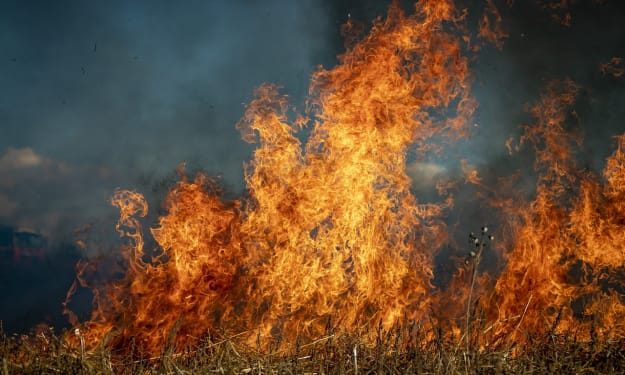
Introduction In the scenic paradise of Maui, where lush landscapes meet cerulean waters, a devastating event unfolded in the summer of 2023—a wildfire that scarred both the land and the hearts of its inhabitants. The story of the 2023 Maui wildfire is one of loss, resilience, and the enduring spirit of a community that stood united in the face of overwhelming tragedy. In this somber narrative, we explore the heart-wrenching journey of individuals whose lives were forever altered by the merciless flames.
By Jahnection Official3 years ago in Earth
Battling the Blaze: Unraveling the Devastation of the Yellowknife Wildfire
Introduction Nature's fury can strike with a vengeance, leaving behind a trail of destruction that challenges communities to their core. The Yellowknife wildfire stands as a stark testament to this truth. In the summer of 2023, the northern city of Yellowknife, nestled in Canada's Northwest Territories, found itself in the throes of an unprecedented wildfire that tested its resilience and resourcefulness. This article delves into the harrowing account of the Yellowknife wildfire, its impact on the community, and the efforts undertaken to battle the blaze.
By Jahnection Official3 years ago in Earth
Extreme Weather's Toll
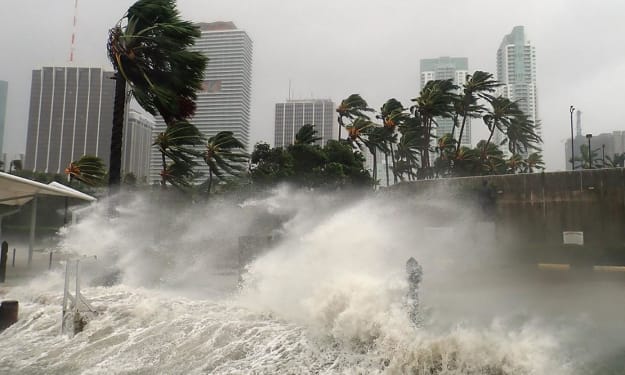
In the quiet seaside town of Havenbrook, life was calm, like gentle waves crashing on the sand. While the weather was unpredictable, it seldom exceeded normal weather conditions, and the family felt safe throughout the day. But within their fateful week, that relief was shattered when a massive hurricane called Seraph swept in from the sea.
By Doreen Alemarumo3 years ago in Earth
The Silent Forest's Lament:. Content Warning.
In a land where lush forests once whispered secrets of ancient times, a tale of sorrow and devastation emerged—a tale that intertwined the horrors of war with the heart-wrenching cries of nature herself. The forest of Eldora, a pristine sanctuary between two warring nations, became the unwilling canvas for a story that would forever resonate as a tragic reminder of the symbiotic bond between human conflict and environmental destruction.
By paul josiah3 years ago in Earth
What is the Eventual Fate of our Universe?
WHAT IS THE EVENTUAL FATE OF OUR UNIVERSE? Most people have heard of the Big Bang, which is the event that started everything again. However, some scientists believe that our universe began with a massive burst of energy, and opinions on how everything will one day come to an end remain divided. There are several theories about how the universe will eventually come to an end, such as the Big Crunch, but the most likely scenario is called the Big Crunch. According to the Big Crunch Theory, everything in life follows an ebb and flow. If one event occurs, the reverse is likely to occur after hitting the extreme. The theory also has its roots in Einstein's theory of general relativity. Interestingly, observations of the universe show that things aren't behaving as we would expect. For example, galaxies are moving further apart from each other and outer reaches of the universe are expanding faster than those closer to us. However, there are still some unknowns that will affect our ultimate fate. Scientists are currently grappling with an enigmatic force known as "dark energy," which is exerting a powerful influence on the expansion of the universe. This phenomenon presents two potential outcomes for the universe's future: a continuous and eternal expansion that eventually leads to a freeze, or a scenario known as the "Big Crunch," wherein the force of gravity triumphs over dark energy and the universe collapses in on itself. Some researchers hypothesize that dark energy might be the trigger for the Big Crunch, but a report from 2015 suggests an alternative perspective – that the universe's expansion might gradually diminish over billions of years. In the absence of a significant presence of dark energy, the mechanics of the Big Crunch would differ considerably from the dramatic event of the Big Bang. This suggests that the universe's ultimate fate hinges on the intricate interplay between the relentless expansion driven by dark energy and the gravitational forces generated by both regular and dark matter. The prevailing theory until recently was that the gravitational forces would eventually slow down the expansion and potentially lead to a contraction of the universe. However, the discovery of dark energy's counterintuitive effect on expansion has introduced a new level of complexity to these predictions. The allusion to a 2015 report forecasting a gradual diminishment of the universe's expansion within the span of billions of years underscores the ongoing efforts of cosmologists to refine their understanding of the long-term evolution of the universe. It is worth acknowledging that the field of cosmology is dynamic and continually evolving as fresh observations and novel theories come to light. Therefore, for the most current and precise insights into these matters, consulting the latest scientific literature is highly recommended.Scientists The universe's even contraction will initiate, propelled by the relatively consistent distribution of matter. This gradual process will accelerate as galaxies draw closer under the influence of gravity. In about a hundred billion years, escalating temperatures will trigger stellar explosions and vaporization, reducing objects to constituent atoms that will further disintegrate. As matter compacts into a small space, extreme chaos will reign. Predictions suggest space-time could warp to the point of shattering, rendering concepts of time, distance, and direction meaningless. Survival for any living organism would be impossible, as this cataclysmic scenario unfolds. With our limited comprehension of universal processes, the ultimate outcome remains uncertain. One prospect is the "Big Crunch," wherein all matter converges back to its origin, culminating in an immense black hole. What transpires afterward is speculative, potentially leading to the emergence of a new universe. It's also plausible that these cycles of expansion and contraction have occurred repeatedly, making our existence just another episode in this cosmic sequence.
By Agatha Akro3 years ago in Earth