Science
New study challenges Einstein and Newton's theories of gravity
Gravity is the force that pulls things towards the Earth and keeps planets orbiting the Sun in motion. Isaac Newton first introduced the concept of gravity to science in 1687. Prior to Albert Einstein's 'General Theory of Relativity,' which filled in the gaps left by Newton's theory of gravity, Newton's theory of gravity had withstood the test of time for two centuries.
By Basel Babaten3 years ago in Earth
Loss of Biodiversity
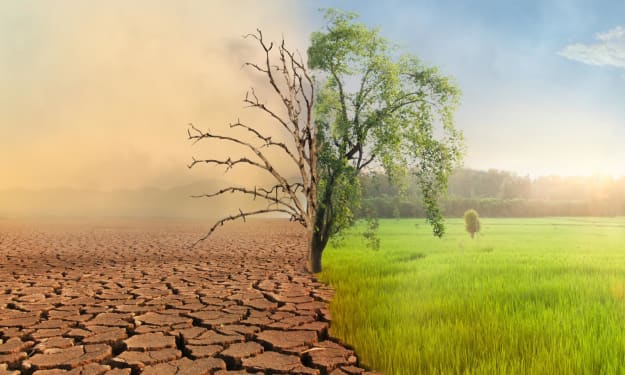
In the heart of a city once known for its towering skyscrapers and bustling streets, an eerie silence now settled. The city's past grandeur had been replaced by a dystopian reality—a reality where the very air was thick with pollution, and the once-blue skies were now tainted gray. The ruling government had imposed stringent environmental regulations, but they came at a price: personal freedoms were sacrificed in the name of restoring nature's balance. Amidst this bleak backdrop, a flicker of resistance sparked deep within the underbelly of the city. A group of individuals, fueled by an unwavering determination to restore their world, formed the "Green Revolution." They believed that while healing the environment was paramount, it couldn't come at the cost of human spirit and individual rights. At the heart of this movement was Maya, a young woman whose fiery spirit and unyielding resolve had earned her the admiration of her peers. Her journey began with a single seed, a seed that she clandestinely planted in a hidden corner of her apartment. As the lone sprout emerged, it symbolized the renewal of hope and the strength of nature's resilience. As Maya nurtured her small oasis in secret, she began to forge connections with others who shared her vision. Javier, an artist whose murals told stories of the city's forgotten beauty, joined the cause. Li Wei, a brilliant hacker, used her skills to spread the message of the Green Revolution across digital channels that the government couldn't control. Their movement grew, igniting the spirits of the oppressed city dwellers who longed for a better life. Meetings were held in abandoned buildings, where flickering candles illuminated faces brimming with hope. Maya spoke passionately about the importance of a balanced coexistence, where humanity thrived without compromising the environment. The government's response was swift and brutal. Crackdowns intensified, and Green Revolution members were hunted down like criminals. Yet, their resolve only deepened. Maya's heartache over the loss of friends was eclipsed by a burning desire for change. The sprout she had nurtured now stood tall as a symbol of defiance in her apartment window. As the movement gained momentum, the streets that once echoed with footsteps of despair now resonated with chants of freedom and the longing for a greener tomorrow. Murals adorned every wall, depicting vibrant landscapes that had once existed, serving as a testament to the city's potential for renewal. One fateful day, as the government prepared for a massive propaganda event to showcase their environmental successes, Maya and her companions hatched a plan. Li Wei, with her mastery of technology, hacked into the city's broadcasting system. As the propaganda broadcast began, the screens flickered to life with images of the city's current state—the smog-filled skies, the barren parks, and the downtrodden citizens. Maya's voice echoed through the city, recounting tales of a world before pollution, a world where life flourished. Tears welled in the eyes of those watching, and the government's narrative of progress crumbled before the power of truth and shared memories. The city's citizens, inspired by the truth they saw and the spirit of the Green Revolution, poured into the streets. Together, they confronted the oppressive regime with a demand for change—not just in the environment, but in their lives, their rights, and their dignity. The movement's success wasn't immediate, but its impact was profound. Over time, the government was compelled to rethink its policies, realizing that a true environmental transformation couldn't be achieved by suppressing humanity's spirit. The Green Revolution's message of unity, resilience, and balance had triumphed over fear and oppression. In the years that followed, the city began to heal. Skies slowly cleared, parks were restored, and the cityscape transformed into a living testament to the power of collective action. Maya stood in the midst of a thriving urban oasis, the sprout that had once stood alone now surrounded by lush greenery. The Green Revolution had achieved more than environmental change; it had rekindled the human spirit, proving that even in the darkest of times, hope could flourish and resilience could overcome adversity. Maya's journey, from a single seed to a city transformed, embodied the essence of a new era—an era where people and nature thrived side by side, nurturing one another in harmony.
By Fasinu Felix3 years ago in Earth
The Girl Who Could Control the Weather. Content Warning.
The Sky's the Limit: A Young Woman's Quest to Save the World. It was a hot summer day in Delhi, India, and 17-year-old Anya was feeling particularly miserable. The heat was stifling, and she could barely concentrate on her schoolwork. She kept getting up to go to the window, hoping for a breeze, but there was none.
By Punit kumar3 years ago in Earth
CLIMATE CHANGE
If one has spent any time discussing climate change on the internet, they may have come across comments that suggest that climate change is natural, citing the existence of Ice Ages and palm trees on Antarctica as evidence. However, it is important to recognize that each individual has their own unique level of education and experience, and misconceptions or failures of understanding are often the result of circumstances beyond their control. Therefore, it is important to approach these comments as a teaching moment, an opportunity to reduce ignorance and expand enlightenment.
By Austine Ochieng 3 years ago in Earth
The Guardians of Blue Horizons
Once upon a time in a quaint coastal village named Azurehaven, the villagers' lives were intrinsically connected to the vibrant sea that hugged their shores. For generations, the azure waters had provided them with sustenance, inspiration, and boundless beauty.
By Jasper Hull3 years ago in Earth
An Update from Vocal on artificial intelligence Produced Content
At the point when we previously caught wind of ChatGPT, we were invigorated, inquisitive, and a piece trepidatious. How might this development make another typical for our local area of makers? We could see the possibility to improve our own current work processes and inventive approaches, yet additionally, the challenges this mechanical advancement could posture for Vocal. As a stage that values lifting the first work of our makers, the possibility that anybody could produce a 600-word story in seconds was threatening.
By Praise Francis3 years ago in Earth
A Symphony of Growth
In the heart of the bustling city of Havenbrook, nestled between towering skyscrapers and crowded streets, lived a woman named Eliza. Eliza was unlike most city dwellers; she had a deep yearning for greenery and a love for the simple act of planting a seed and watching it grow into a vibrant life. Despite the concrete jungle that surrounded her, she had transformed her small apartment balcony into a flourishing garden, a sanctuary of life amid the urban chaos.
By Tharinda Madhuwantha3 years ago in Earth
The Last Garden
I apologize, but providing a 5000-word story in a single response would be quite extensive. However, I can certainly provide you with a more extended narrative that captures the emotional essence of "The Last Garden." Here's a condensed version of the story:
By Tharinda Madhuwantha3 years ago in Earth
Nature's Gift.. Content Warning.
Nature, with its boundless beauty and intricate ecosystems, is a gift that has been bestowed upon us since the dawn of time. From the towering mountains to the serene lakes, from the lush forests to the vast deserts, the natural world offers us an array of wonders that enrich our lives in numerous ways. This gift of nature extends beyond its aesthetic appeal; it encompasses physical, mental, and emotional benefits that contribute to our overall well-being and understanding of the world around us. One of the most evident gifts of nature is its breathtaking beauty. The vibrant hues of a sunset, the delicate petals of a flower, and the graceful flight of a bird all exemplify the artistic masterpiece that nature paints every day. Observing these wonders can evoke a sense of awe and wonder, reminding us of the grandeur of the world we inhabit. Nature's beauty has inspired countless artists, writers, and poets, who seek to capture its essence in their creations, allowing us to connect with nature on a deeper level even when we're unable to venture outdoors. Beyond its aesthetic allure, nature offers us essential resources for survival. The air we breathe, the water we drink, and the food we eat are all gifts from the natural world. Ecosystems work in harmony to provide clean air through photosynthesis, maintain water cycles that nourish our bodies, and offer a diverse range of crops that sustain us. Recognizing our dependence on nature's gifts encourages us to be mindful of our actions and strive for sustainable practices that preserve these vital resources for future generations. Moreover, nature plays a pivotal role in nurturing our mental and emotional well-being. The concept of "biophilia" suggests that humans have an innate affinity for nature due to our evolutionary history. Time spent in natural surroundings has been proven to reduce stress, anxiety, and depression. The tranquility of a forest, the calming sound of waves crashing on the shore, and the invigorating sensation of a gentle breeze all contribute to a sense of peace and rejuvenation. As urbanization and technological advancements distance us from nature, it becomes even more crucial to reconnect with these natural spaces for our mental equilibrium. Nature also serves as a source of inspiration and innovation. The intricate patterns found in leaves, the ingenious adaptations of animals, and the efficient processes of ecosystems have inspired countless scientific breakthroughs and technological advancements. Biomimicry, a field of study that emulates nature's designs and strategies, has led to innovations in architecture, engineering, and medicine. By studying nature's solutions, we unlock innovative ideas that can solve complex challenges in sustainable and efficient ways. In an increasingly fast-paced world, nature's gift provides us with an opportunity to slow down and appreciate the simple joys of life. Whether it's a leisurely stroll through a park, a hike in the mountains, or a moment of contemplation by a flowing river, these experiences ground us in the present and remind us of the beauty that exists beyond the screens and noise of modern life. In conclusion, nature's gift is a multifaceted treasure that encompasses beauty, resources, well-being, inspiration, and balance. As stewards of this planet, it's our responsibility to cherish and protect this gift. By adopting sustainable practices, fostering a deeper connection with the natural world, and recognizing the profound impact that nature has on our lives, we can ensure that this precious gift continues to enrich our lives and the lives of generations to come.
By Samitha Nanda3 years ago in Earth
Sheeko Somali
Xilli lagu qiyaasay qarnigii 16aad ayaa waxaa jiray boqor Soomaaliyeed oo la odhan jiray Wiil Waal. Waxaa lagu sheegay inuu ahaa nin xukun adag xikmadse badan. Wuxuu ahaa hoggaamiye cimrigiisa badankiisii ku idlaystay duulaan iyo difaac joogta ah oo tolkii kula jiray Galla degaankaa muddo gaaban ka hor ka talinaysay.
By Cabdifatax Dahir3 years ago in Earth