Science
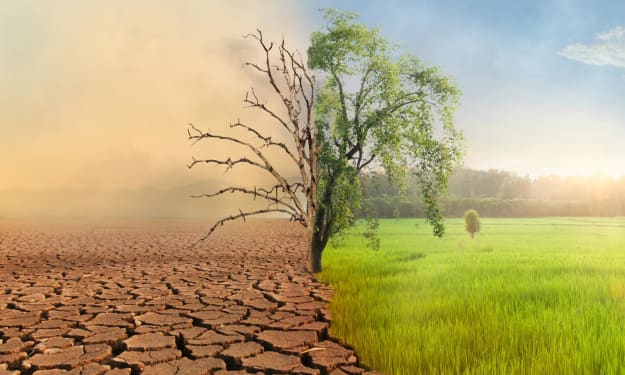
Climate change and its impacts on ecosystems . Content Warning.
[8/23, 8:56 AM] Masters: Climate change refers to long-term shifts in temperature and weather patterns, primarily caused by human activities such as the burning of fossil fuels and deforestation. The science behind climate change is grounded in the understanding of greenhouse gases and their role in the Earth's atmosphere.
By okere bright3 years ago in Earth
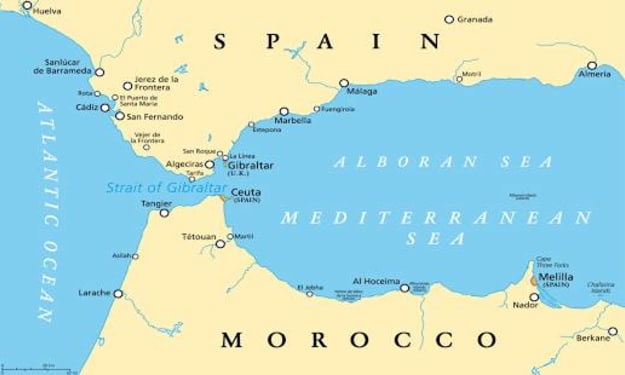
Bridging Continents: Exploring the Potential Europe-Africa Crossing
Africa and Europe, two vast continents, lie just a stone's throw away from each other, separated by the Strait of Gibraltar. This narrow waterway serves as the gateway between the Mediterranean Sea and the Atlantic Ocean, bordering Spain, Morocco, and the British Overseas Territory of Gibraltar. The notion of constructing a bridge to connect these continents seems tantalizingly within reach, yet remains a complex endeavor. This ambitious concept is intricately interwoven with territorial claims, international agreements, and geopolitical intricacies that have shaped the region's history.
By Kenneilia Thompson 3 years ago in Earth
Tropical storm Harold
Tropical storms have the power to leave a lasting impact on the lives of those in their path, and Tropical Storm Harold was no exception. With its strong winds, heavy rainfall, and destructive potential, the storm left a trail of emotional, physical, and economic devastation in its wake. From the Caribbean to the East Coast, the impact of Tropical Storm Harold was felt deeply by individuals, families, and entire communities.
By MKPUCHI ZEPHANIAH DESTINY3 years ago in Earth
Navigating the Landscape of Geographical Topology. Content Warning.
In the vast tapestry of Earth's terrain, the interconnectedness of geographical features is an intricate web that has captivated human minds for centuries. This intricate network of spatial relationships, known as geographical topology, unveils a profound understanding of how landscapes and natural formations interact and influence one another. In this article, we delve into the fascinating world of geographical topology, exploring its significance, applications, and the insights it offers into the Earth's dynamic forces. Understanding Geographical Topology Geographical topology is a branch of geography that focuses on the spatial relationships and connections between various physical features on the Earth's surface. It delves into how different landforms, such as mountains, rivers, valleys, and plateaus, are interlinked and influence one another. This discipline seeks to decode the intricate patterns and interactions that shape the planet's surface, unveiling a deeper understanding of the Earth's dynamic processes. Significance of Geographical Topology Environmental Understanding: Geographical topology provides invaluable insights into the ways in which natural elements interact. It helps researchers and geographers comprehend how landforms impact ecosystems, climate patterns, and the distribution of flora and fauna. This understanding is vital for making informed decisions about land use, conservation efforts, and disaster management. Geological Evolution: The Earth's surface is an ever-changing canvas shaped by tectonic movements, erosion, and other geological processes. Geographical topology enables scientists to reconstruct the evolution of landscapes, track the movement of continents, and unravel the history of geological transformations. Resource Distribution: The interconnectedness of geographical features influences the distribution of valuable resources like minerals, water, and fertile soil. By studying the topological relationships, experts can predict the locations where these resources are likely to be found, aiding resource exploration and extraction efforts. Land Use Planning: Urban planners, architects, and policymakers leverage geographical topology to make informed decisions about urban development and infrastructure projects. Understanding how natural features interact helps minimize environmental impact and optimize land utilization. Applications of Geographical Topology Geomorphology: Geographical topology plays a pivotal role in geomorphology, the study of the Earth's surface landforms and their evolution. Geomorphologists analyze the relationships between mountains, valleys, and rivers to decipher the forces that have shaped landscapes over millions of years. Hydrology: The flow of water across landscapes is deeply influenced by geographical topology. Hydrologists study the topographical connections between watersheds, rivers, and lakes to model water movement, predict flooding, and manage water resources effectively. Cartography: Cartographers use geographical topology to create accurate maps that reflect the real-world relationships between geographical features. Topographic maps, for instance, highlight elevation changes through contour lines, allowing for a better understanding of terrain variations. Ecosystem Studies: Ecologists and biologists rely on geographical topology to comprehend how different ecosystems are connected. By analyzing how rivers, mountains, and valleys influence the distribution of species and habitats, they can devise effective conservation strategies. Unveiling the Earth's Stories Through Topology Plate Tectonics: Geographical topology is instrumental in understanding plate tectonics—the movement of Earth's lithospheric plates. The relationships between mountains, trenches, and fault lines offer a glimpse into the powerful forces that shape the planet's surface. River Networks: The intricate networks of rivers and their tributaries are a testament to geographical topology. By studying river systems, scientists gain insights into erosion patterns, sediment transport, and the evolution of landscapes. Volcanic Connections: Volcanic activity is closely tied to geographical topology. Volcanoes often form along tectonic plate boundaries, and their locations provide clues about the Earth's internal processes and the movement of molten rock. Conclusion Geographical topology is more than just a scientific discipline; it's a key to unraveling the mysteries of the Earth's surface and the forces that have shaped it over eons. By studying the interplay between mountains, rivers, valleys, and other landforms, experts gain profound insights into the dynamic processes that continue to shape our planet. From informing conservation efforts to aiding resource exploration and urban planning, geographical topology plays a pivotal role in understanding our world and making informed decisions for its sustainable future.
By ochungbrian8 Miami3 years ago in Earth
Drones in Agriculture: The High-Tech Farming Revolution
In the heartlands of agriculture, a silent revolution is taking place. It's not the work of tractors or plows, but an army of drones that are rewriting the script of modern farming. This is not your grandfather's agriculture; this is the high-tech farming revolution that's poised to transform the way we grow our food. Buckle up, because we're about to soar into the future of farming with drones that promise to make your jaw drop and your taste buds dance.
By Peter Odele3 years ago in Earth
Evidence of 700,000-Year-old Humans Found in the Philippines
History of human species and their migrations, which is mostly accurate. Let me provide some more details: 1. Orrorin tugenensis: Orrorin tugenensis is indeed one of the earliest known hominins, dating back to around 5.8 million years ago. It's considered an important candidate in the human evolutionary tree.
By Jhon Efren Berbano3 years ago in Earth
Discovery of Draining Niagara Falls
The act of draining Niagara Falls is a remarkable event that occurred in 1969. During the summer and fall of that year, the American side of Niagara Falls was completely dry, which lasted for six months. The purpose of this was to allow researchers to study the rock face of the falls, as they were concerned about its stability due to erosion. Erosion is a natural process where forces such as water and wind wear away Earthen materials. Niagara Falls is made up of three waterfalls that cross the international border between Canada and the United States, namely the Horseshoe Falls, the American Falls, and the Bridal Veil Falls. The American Falls are fully on the American side, while the Horseshoe Falls are primarily on the Canadian side, divided by Goat Island. The Bridal Veil Falls, the smallest of them all, are on the American side but separated from the others by Luna Island.
By thomas J Pilarczyk3 years ago in Earth
The Suns Evil Twin
The Sun's Lost Twin It is a well-known fact that our sun, as far as stars go, is rather unremarkable. It is a yellow dwarf, one of millions in the universe. However, despite its lack of uniqueness, we hold it in high regard as it is the only star we have and it provides us with life. Nevertheless, it was not always this way. Once upon a time, the sun had a twin, possibly an evil one. What became of it? Let us explore.
By thomas J Pilarczyk3 years ago in Earth
A Breath of Change
The sun hung low in the sky, casting long shadows across the city as Emma walked down the bustling street. She felt the familiar rush of the urban environment, but something was different today. The air felt heavy, suffocating, as if the city itself was gasping for a breath. The rising temperatures had transformed the once vibrant city into a heat-soaked concrete jungle, and the health impacts of climate change were becoming impossible to ignore.
By Richmond Chintoh3 years ago in Earth
Loss of Cultural Heritage
In the heart of a vast and untouched wilderness, the Awanaki tribe had thrived for centuries. Their traditions were as ancient as the towering trees that surrounded their village, and their connection to the land ran as deep as the roots that anchored them to their ancestral home.
By Clement odunayo ojo3 years ago in Earth
Scientists Terrifying New Discovery Under Antarctica's Ice
Antarctica, a continent cloaked in secrecy, unveils a trove of mesmerizing mysteries that have yet to be fully unraveled. Among these enigmas, one of the most profound lies beneath the icy blanket that veils this frozen land. Imagine a scenario where the ice that has held its grip for eons suddenly melts away – what hidden secrets would be unearthed from the sub-zero depths? Antarctica's relentless cold and unforgiving conditions have limited our explorations, resulting in a collection of discoveries that are both captivating and deeply unsettling. From the discovery of extraordinary life forms to encountering previously unseen phenomena, Antarctica holds the promise of uncharted territory waiting to be explored. Join us on a journey as we unveil 15 startling revelations that have reshaped our understanding of Antarctica. Stay with us until the end for a glimpse of some truly astonishing discoveries.
By Yong Yi Ting3 years ago in Earth
SHARKY
AI Content. **Sharky: The Aquatic Avenger of Oral Health** In the depths of the enchanting underwater city of Coralville, a unique superhero is making waves, not just for his incredible deeds but for his unusual choice of costume. Meet Sharky, the tooth-brushing shark superhero, who has taken it upon himself to protect the ocean's diverse creatures from dental disasters.
By Tesla Movement3 years ago in Earth