
Discovery of Draining Niagara Falls
What The Scientists Found
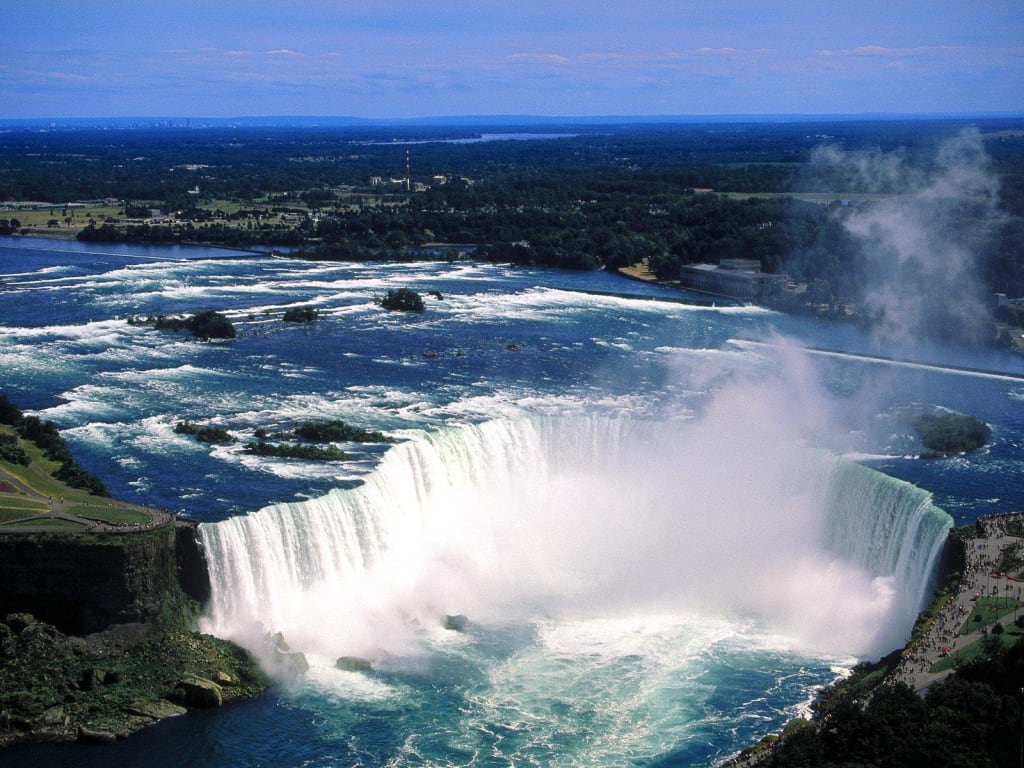
The act of draining Niagara Falls is a remarkable event that occurred in 1969. During the summer and fall of that year, the American side of Niagara Falls was completely dry, which lasted for six months. The purpose of this was to allow researchers to study the rock face of the falls, as they were concerned about its stability due to erosion. Erosion is a natural process where forces such as water and wind wear away Earthen materials. Niagara Falls is made up of three waterfalls that cross the international border between Canada and the United States, namely the Horseshoe Falls, the American Falls, and the Bridal Veil Falls. The American Falls are fully on the American side, while the Horseshoe Falls are primarily on the Canadian side, divided by Goat Island. The Bridal Veil Falls, the smallest of them all, are on the American side but separated from the others by Luna Island.
The construction of a 600-foot dam across the enormous Niagara River was necessary to shut down these astonishing Falls. This required the diversion of sixty thousand gallons of water every second so that the remaining flow traveled over the biggest Horseshoe Falls, which are completely on the Canadian side of the border. Over twenty-seven thousand tons of rock were used to construct that dam, and more than a thousand trucks carried that rock back in the hot summer of 1969. On June 12th, the American Falls stopped after their continuous flow for more than twelve thousand years. The Horseshoe Falls then took the extra flow and absorbed it so that research could be done.
Although tourists continued to visit the area during this period, locals were still worried about the possibility of a catastrophic flood. They knew it was impossible to control such amounts of water, and they were afraid that the water might take a different route. However, the idea of removing all the water and turning Niagara Falls into a desert proved to be possible. In fact, a temporary walkway was even built only 20 feet away from the edge of the now-dry Falls to help workers clean the bottom of what used to be a river so tourists could explore the wild landscape of the falls that was usually under the water.
The Niagara River is part of the Great Lakes Basin, which appeared after the last ice age. Eighteen thousand years ago, ice sheets covered the area of Southern Ontario, which were one to two miles thick. As the ice sheets moved southward, they created the Basin of the Great Lakes. When they melted, they released enormous amounts of water into the basins. Generally, the water we drink is fossil water, with only one percent of it renewing through the year, and the remaining 99 coming from ice sheets. The Niagara Peninsula hasn't been beneath the ice for nearly 12,500 years. As the ice melted, the resulting water started to flow down through what later turned into Niagara River, Lake Erie, and Lake Ontario. It took a lot of time, but the water eventually eroded cliffs and formed these spectacular Falls.
Niagara Falls is famous, precious, and breathtaking, but when it comes to hype, there are nearly 500 other waterfalls across the globe that are taller than Niagara. However, what makes Niagara Falls so special among other waterfalls is the amount of water that flows over them. Very high waterfalls don't usually have great amounts of water. The combination of all those huge amounts of water and the height is what makes Niagara Falls so breathtaking. Also, they might be some of the fastest-moving waterfalls on our planet.
Over a million people who have access to the area use the waters of Niagara River for different purposes, such as fishing, getting drinking water, doing recreational activities, including swimming, boating, and bird watching, producing hydroelectric power, and so much more. The first hydroelectric generating station in the world was built at the end of the 19th century, right next to the falls. Today, several Niagara Falls power plants provide over 2 million kilowatts of power.
In conclusion, the act of draining Niagara Falls in 1969 was a remarkable event that allowed researchers to study the rock face of the falls. Although locals were worried about the possibility of a catastrophic flood, tourists continued to visit the area during this period and got a unique chance to see something no one had ever seen before or after. Niagara Falls is famous, precious, and breathtaking, and although there are nearly 500 other waterfalls across the globe that are taller than Niagara, what makes it so special is the amount of water that flows over them.
About the Creator
Enjoyed the story? Support the Creator.
Subscribe for free to receive all their stories in your feed.
Comments
There are no comments for this story
Be the first to respond and start the conversation.