Science
What happens when you fall into piranha-infested waters?
Imagine you're gazing into the depths of the Amazon River when, unexpectedly, you lose your footing and plunge into the water. As you fall, you notice piranhas darting around in the swiftly approaching water. The question arises: are you in peril? Will your plunge trigger a deadly feeding frenzy among these voracious creatures? To predict your fate, let's delve into what we know about these intriguing fish.
By Cameron Mcfarland3 years ago in Earth
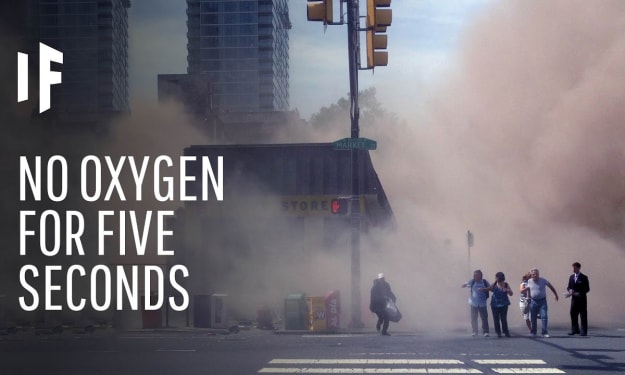
What Would Happen If the World Was Without Oxygen for Five Seconds?
Imagine that oxygen is no longer present on Earth. If so, would we only do it for five seconds? disappeared, but not completely. If the weather changed, what would happen? How would the atmosphere change? What would occur if the planet were to end? Breathe in five full seconds of oxygen. Taking a deep breath and appreciating how satisfying that is The cost of giving you the oxygen and other gases you breathe represents about 21% of our total budget. About 78% of the atmosphere is made up of N2. Despite not being the most frequent, it is the gas that is found in our atmosphere the most.
By Kismat Thapa3 years ago in Earth
The Integration of Technology in Science Education
Science has frequently been viewed as a difficult subject for some understudies. It includes dynamic ideas, mind boggling hypotheses, and frequently requires active trial and error. Notwithstanding, innovation can possibly overcome any barrier between the intricacy of science and understudies' comprehension.
By Emmanuel Marli Campbell3 years ago in Earth
Loss of Biodiversity
Biodiversity, the vast tapestry of life on Earth, is unraveling at an alarming rate. It is a silent crisis, one that often lurks in the shadow of more immediate environmental concerns like climate change. Yet, its consequences are profound, affecting not only the natural world but also the very foundation of human existence. In this essay, we will explore the causes, consequences, and potential solutions to the loss of biodiversity, shedding light on a crisis that demands our urgent attention.
By Emmanuel Marli Campbell3 years ago in Earth
The Power of Connection: Loneliness and Its Impact on Mental Health
In a world more connected than ever through digital devices and social media, the paradox of loneliness looms large. Loneliness is not just a fleeting feeling; it's a pervasive, silent epidemic that affects people across ages, genders, and backgrounds. The impact of loneliness on mental health is profound, often underestimated, and merits closer examination. This essay explores the intricate relationship between loneliness and mental health, shedding light on the devastating consequences of isolation and the healing power of meaningful human connection.
By Emmanuel Marli Campbell3 years ago in Earth
EARTH SPECIES PROJECT TALKS TO ANIMALS USING AI
Growing up, one of the first movies I remember seeing at our local theatre was Doctor Dolittle. It was a musical starring Rex Harrison as a veterinarian who discovered how communicate with a wide range of animals.
By David Morton Rintoul3 years ago in Earth
Climate Change article Egypt. Content Warning.
article about climate change and our response: Climate change is a global challenge that affects everyone, especially vulnerable countries like Egypt. Egypt faces many risks from climate change, such as water scarcity, droughts, rising sea levels, and extreme weather events. These impacts can threaten the livelihoods of millions of people, especially in the agriculture, tourism, and coastal sectors.
By Sohayb Mohammed3 years ago in Earth
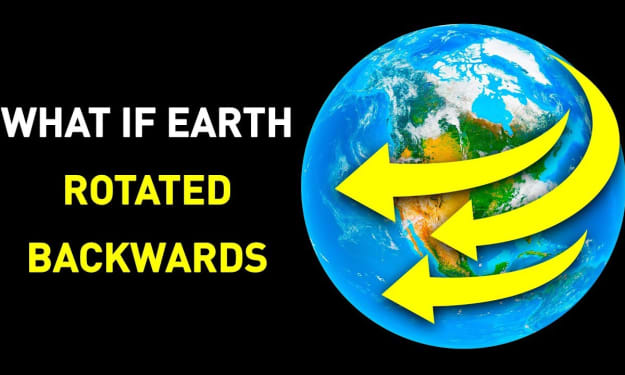
"Reversing Earth's Rotation"
In this intriguing thought experiment, we have explored the astonishing consequences of a reversed Earth rotation, which would undoubtedly reshape our planet in profound ways. As we continue to delve into the intricate changes that would occur under this hypothetical scenario, let's further expand upon the potential impacts and their far-reaching implications.
By Μarilena Κont3 years ago in Earth
"Earth Spinning at the Speed of Light"
Have you ever taken a moment to contemplate the slow and steady pace at which our planet completes a full rotation in a single day? The 24-hour cycle of day and night may seem unremarkable, but have you ever wondered what would transpire if we were to dramatically alter this fundamental aspect of our existence? What if the Earth were to spin at the astounding speed of light? In this captivating thought experiment, we'll delve into the profound implications of Earth rotating at a velocity that defies imagination.
By Μarilena Κont3 years ago in Earth
"Earth's Sudden Halt"
Prepare yourselves for a mind-boggling scenario that defies our everyday understanding of the world we live in. Imagine, for a fleeting five seconds, the Earth's rotation comes to a sudden and unprecedented halt. What cataclysmic events would unfold? How would this affect people across the globe? And if the Earth were to resume its rotation, could we still call it a habitable planet? In this speculative exploration, we will not only delve into the immediate consequences of such an event but also ponder the long-term implications.
By Μarilena Κont3 years ago in Earth
The Quest for Artificial Planets: Fact or Fiction?
Is human activity akin to a colossal meteor hurtling toward Earth, destined to someday bring our planet's existence to a close? As we ponder this cosmic uncertainty, the logical course of action appears to be expanding our reach into the universe, establishing colonies beyond our terrestrial boundaries. Yet, the complexities of space travel loom large, and the feasibility of reaching another solar system remains shrouded in uncertainty. What if we could construct an entirely new planet, as often envisioned in science fiction, from the Death Star of Star Wars to the planet-building facility in Hitchhiker's Guide to the Galaxy? While such feats require advanced civilizations, let's explore what it might truly entail.
By B.Ballentyne3 years ago in Earth
Artificial intelligence for Calamity Alleviation: Further developing Productivity and Adequacy in Crisis Reaction
Artificial intelligence for Calamity Alleviation: Further developing Productivity and Adequacy in Crisis Reaction The utilization of man-made brainpower (computer based intelligence) in a fiasco the executives has changed the manner in which crisis reaction groups handle cataclysmic events. With progressions in innovation, simulated intelligence controlled arrangements have arisen as an essential part in further developing proficiency and viability during these basic circumstances. By outfitting the force of artificial intelligence, catastrophe reaction groups are furnished with inventive instruments and systems to alleviate the effect of fiascos and improve generally debacle readiness.
By Mukesh Kamati3 years ago in Earth