Science
Effects of an exploded nuclear atom bomb underwater
Effects of an exploded nuclear atom bomb underwater The detonation of a nuclear atom bomb underwater can result in severe and wide-ranging consequences, causing a variety of harmful effects on the environment, marine life, and human health. Here are some potential negative impacts:
By Engr kawsar Ahmed3 years ago in Earth
Dangerous Rift Splitting Africa Continent
In less than twenty years in the past the ground began to cut up open in Africa with fractures commencing up across distinct countries even splitting a person’s house. since then it’s been obvious that Africa is present process a continental Rift. The sort of rift happens when a continent is ready to interrupt into two or greater. When this occurs new continents islands and oceans could be shaped and our world will in no way be the same again. Why is Africa splitting up? What’s causing the land to be reduce open what’s the implication on Africans and the sector in widespread. Africa is splitting into continents and the majority don’t even realize about it. In 2005 photos and reviews commenced to emerge of a continental Rift taking place in East Africa. A continental Rift is a time period given to conditions in which a continent seems to be breaking aside or separating into two or greater this is a regular prevalence anywhere within the world in truth each unmarried continent in our global today came as a result of Rifts and transferring of tectonic plates. To apprehend what’s going on in Africa you need to understand what took place masses of hundreds of thousands of years in the past. Loads of million years in the past the planet Earth was simply a singular solid piece of land surrounded via a unmarried body of water. It changed into just one continent called Pangea and one ocean known as panthelasa. Over the subsequent million years the Earth’s outer crust got heated and cooled and broke up aside into what we see today. This is what caused the formation of continents Islands oceans and seas. Although it might appear like the Earth is desk bound the Earth is surely In a regular nation of movement and alternate the Earth’s crust which is from time to time called the lithosphere is what you and I stand on each day. This lithosphere is made of about 15 to twenty tectonic plates that are continuously shifting apart or towards each other. These plates are the huge land hundreds that shape the distinct continents and Islands. Whilst you suppose of these plates think about them as portions of a cracked shell that lay on the extremely hot sea of melted rock interior our planet’s center. These plates are carefully joined to every other because of the sizzling temperature of the Earth’s center acting on the plates those plates are constantly moving once in a while towards or far from every other. This movement is known as plate movement or tectonic shift. Have you ever noticed how South america’s east coast and Africa’s West Coast in shape collectively while you examine a globe? They in reality had been as soon as together. Distinctive continents and oceans were fashioned when the widespread one continent break up aside in keeping with NASA’s Earth Observatory. The Somalian plate within the East is shifting Eastward away from the bigger and older part of the continent, the Nubian plate. The Somalian plate is every so often referred to as the Somali plate whilst the Nubian plate is every so often called the African plate. Interestingly each the Somalian and Nubian plates also are shifting away from the Arabian plate within the north. These plates all meet within the afar vicinity of Ethiopia forming a y-formed Rift machine according to the Geological Society of London. This separation of the Somalian plate from the Nubian plate is likewise referred to as the East African Rift. The East African Rift Is a network of valleys that stretches approximately 2175 miles long from the crimson Sea to Mozambique. If the Somalian tectonic plate does detach itself completely from the bigger Nubian plate the end result might be the splitting of the arena’s 2d largest continent in . this would be an interesting phenomenon for geologists and every different scientist as there’s been not anything close to this when you consider that South the united states and Africa were divided into specific continents masses of tens of millions of years ago. Hwever, if it does occur, it can’t appear in our lifetime as it’d take about five to 10 million years for there to be a clean separation. A smooth Breakaway of the Somalian plate from the Nubian plate won’t be the most effective feasible situation right here, one possibility is having most of the Somalian plates separated from the rest of the continent. This partial separation will lead to the formation of a brand new sea among the two land masses. This new land mass will include Somalia, Eritrea, Djibouti, and the eastern components of Ethiopia, Kenya, Tanzania and Mozambique. There is additionally the possibility of handiest eastern Tanzania and Mozambique isolating. Countries on the way to gain from this Rift are those which can be presently landlocked like Ethiopia and Uganda. The creation of a coastline from the emergence of a brand new ocean will enhance their economy substantially with new opportunities for trade and manufacturing consistent with Ken McDonald, a marine geophysicist and a professor emeritus on the college of California Santa Barbara, the Gulf of Aden and the red Sea will flood in over the afar place and into the East African Rift Valley and turn out to be a brand new ocean. And that part of East Africa becomes its separate small continent. Reviews show that despite the fact that the rift is obvious to the eyes it isn’t always developing rapid sufficient for there to be a whole Rift right now. It’s growing aside at approximately 1 / 4 of an inch every 12 months. Ken McDonald further says that the rifting proper now could be very gradual about the charge that one’s toenails grow.
By Manasi Douglas3 years ago in Earth
Embracing Sustainable Living:
Introduction: In an era marked by pressing climate concerns and a growing need for environmental preservation, sustainable living has emerged as a paramount solution. With the world facing the daunting challenges of climate change, it is crucial that we adopt eco-friendly practices, harness green technologies, and embrace a sustainable way of life. This article sheds light on why sustainable living is more important than ever, and offers practical insights into making meaningful changes.
By ekeigbo jessi3 years ago in Earth
Harmful effects on environment due to drying up of Euphrates River
Harmful effects on environment due to drying up of Euphrates River The evaporation of the Euphrates Waterway can have huge and expansive destructive consequences for the climate, affecting both normal environments and human networks. The Euphrates Stream is an urgent water source in the Middle East, coursing through Turkey, Syria, and Iraq, and its downfall can prompt different natural outcomes: The evaporation of the Euphrates Waterway presents a basic danger to biodiversity in the locale. As a help for different biological systems traversing Turkey, Syria, and Iraq, the Euphrates supports a rich embroidery of plant and creature life. The repercussions of its reduced stream are significant. Natural surroundings obliteration is an essential worry, as the stream and its neighboring wetlands give fundamental living spaces to various species. The decrease in water levels brings about the deficiency of these pivotal living spaces, affecting oceanic and earthly life forms alike. Fish populations, vital to the stream's environment, face critical decay. Decreased water streams and environmental debasement upset reproducing and taking care of grounds, representing a danger to the fragile harmony between sea-going life and influencing the livelihoods of networks subject to fishing. Wetland vegetation, particularly adjusted to the Euphrates climate, faces debasement. The deficiency of water prompts the decay of these biological systems, influencing the assorted plant species that rely upon the stream's circumstances. Transient bird courses are upset, influencing species that depend on the Euphrates as a pathway and wintering ground. This unsettling influence can prompt a decrease in avian biodiversity, as transient examples are essential for the endurance of many bird species. Invertebrate species, crucial parts of freshwater biological systems, are delicate to changes in water quality and quantity. The evaporation of the Euphrates brings about the deficiency of assorted invertebrate populations, affecting the whole oceanic food web. The results reach out past amphibian conditions, as the wellbeing of the Euphrates directly impacts contiguous earthly environments. The drying stream influences vegetation along its banks, upsetting herbivores and hunters, causing a gradually expanding influence all through the interconnected snare of life. Addressing the deficiency of biodiversity caused by the evaporation of the Euphrates Waterway requires earnest and facilitated protection endeavors. Reasonable water the executives rehearse, living space reclamation, and global participation are crucial for shielding the one-of-a kind biological systems and species that depend on this important water source. The Euphrates provides fundamental water to the water system, supporting agribusiness in the locale. A decrease in water accessibility can prompt soil corruption and decreased horticultural efficiency, influencing food security for networks that depend on the stream for cultivation. The evaporation of the Euphrates contributes to the general water shortage in the district. This can strengthen rivalry for restricted water assets, prompting clashes between farming, modern, and homegrown clients. As water becomes more difficult to find, networks that rely on the Euphrates for their occupations might be compelled to migrate. This can prompt social and financial difficulties, remembering the expanded rivalry for assets in regions where uprooted populations settle. The Euphrates Waterway holds authentic and social importance, and its evaporation can affect archeological locales and the social legacy in the area. Lower water levels might uncover and harm verifiable designs and relics that were recently lowered. A decreased water stream from the Euphrates can contribute to the development of parched and semi-bone-dry locales, prompting desertification. This has suggestions for the general soundness of the climate and can intensify existing difficulties connected with environmental change. Nations downstream from the Euphrates, like Iraq, intensely rely upon the stream for water supply. A diminishing water stream can prompt water deficiencies, influencing a great many individuals and compounding existing social, monetary, and political difficulties. Tending to the evaporating of the Euphrates Stream requires facilitated endeavors among the nations sharing its waters, supportable water management practices, and global participation to alleviate the natural and social results.
By Engr kawsar Ahmed3 years ago in Earth
Evidence of Earth's Collision with Theia Found on Buried Planet
Geologists discovered two enormous continent-sized masses in the 1980s while scanning at a depth of 1,800 miles (2,900 km) below the surface of the Earth. The mantle is a solid region of silicate rock that sits between the Earth's crust and the molten inner core.
By Francis Dami3 years ago in Earth
Effects on the environment and climate change due to carbon emissions from fighter jets and passenger planes.
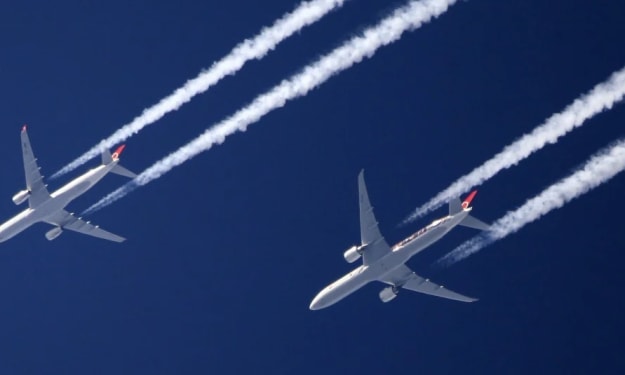
The natural and environmental impacts of fossil fuel byproducts from contender and travel planes are critical, adding to the more extensive issue of anthropogenic environmental change. Here are a few central issues to think about in this conversation: The activity of warrior planes and traveler planes contributes significantly to ozone-depleting substance discharges, basically carbon dioxide (CO2). These outflows emerge from the ignition of non-renewable energy sources, prevalently avionics-grade lamp oil, controlling the airplane's gas-powered motors. The high-height nature of air travel escalates the effect of these discharges on the world's environment, intensifying the nursery impact and adding to a dangerous atmospheric devastation. Notwithstanding CO2, airplane outflows incorporate water fume, framing contrails that intricately affect the environment—both cooling (by reflecting daylight) and warming (by catching infrared radiation). Nitrogen oxides (NOx) delivered during burning further add to air contamination, influencing both air quality and environmental change. Endeavors to address these ecological difficulties include continuous innovative work for the avionics business, investigating elective energizers, further developing eco-friendliness, and taking into account electric and half-drive frameworks. Worldwide associations like the Global Common Flying Association (ICAO) are carrying out measures, for example, CORSIA, to counterbalance flight emanations, and a few carriers are making deliberate strides, remembering effective financial planning for carbon offset programs. Public attention to the natural effects of air travel is developing, impacting customer decisions and empowering businesses to take on additional feasible practices. The journey for greener aeronautics arrangements remains urgent in relieving the carbon impression related to warrior planes and traveler planes. The fossil fuel byproducts from warrior planes and traveler planes contribute altogether to the worldwide temperature alteration potential, enhancing the continuous test of environmental change. Working fundamentally on non-renewable energy sources like aeronautics-grade lamp oil, these airplanes discharge significant amounts of carbon dioxide (CO2) and other ozone-harming substances into the air. The remarkable part of aeronautic discharges is the elevation at which they happen, improving their effect on the world's environment. Discharges at high heights have a more powerful warming impact than those at ground level. Notwithstanding CO2, water fume and contrails delivered via airplane further add to the nursery impact, with contrails having a double effect of reflecting daylight (cooling) and catching infrared radiation (warming). The flying business' job in an unnatural weather change is a basic concern, provoking continuous endeavors to foster all the more harmless ecosystem innovations. Innovative work drives center around elective powers, headways in motor productivity, and the investigation of electric and cross-breed impetus frameworks. Perceiving the earnestness of the environmental emergency, global bodies like the Worldwide Common Aeronautics Association (ICAO) have carried out measures, for example, CORSIA, to address and balance avionics discharges. Furthermore, a few carriers are finding willful ways to put resources into carbon offset programs, intending to adjust their natural effects. As open attention to environmental change develops, there is expanding tension in the flight business to embrace feasible practices. Voyagers are turning out to be more aware of the natural impression of air travel, affecting both buyer decisions and the business' obligation to moderate the dangerous atmospheric deviation potential related to warrior planes and traveler planes. Contrails, the noticeable lines of consolidated water fume left following an airplane, can have both cooling and warming impacts. They reflect daylight back into space, prompting cooling, yet they likewise trap active infrared radiation, adding to warming. The general effect of contrails on the environment is intricate and relies upon different factors like elevation, atmospheric conditions, and the hour of day. Other than environmental change, flight emanations likewise influence air quality at ground level, particularly around air terminals. Nitrogen oxides (NOx) and particulate matter can antagonistically affect nearby air quality and human wellbeing. Progressing endeavors inside the avionics business are pointed toward growing more eco-friendly and harmless to the ecosystem. This incorporates the investigation of elective powers, enhancements in motor effectiveness, and the advancement of electric and half-drive frameworks. Worldwide associations and state-run administrations are chipping away at guidelines and arrangements to restrict avionics emanations. The Global Common Aeronautics Association (ICAO) has laid out measures, for example, the Carbon Balancing and Decrease Plan for Worldwide Flying (CORSIA), to address emanations from worldwide flights. A few carriers and flying organizations are putting resources into carbon offset projects to relieve their natural effects. These projects include, for example, reforestation and sustainable power activities to adjust the fossil fuel byproducts delivered by flights. As open familiarity with environmental change develops, there is expanding tension in the avionics business to embrace more manageable practices. Customers are likewise considering the natural effects of air travel in their decisions and may select all the more harmless methods of transportation whenever the situation allows. All in all, while air travel is urgent for the worldwide network, it likewise presents natural difficulties because of fossil fuel byproducts. Endeavors to address these difficulties incorporate mechanical developments, administrative measures, and public mindfulness drives to advance a more feasible flight industry.
By Engr kawsar Ahmed3 years ago in Earth
The World of Birdsong
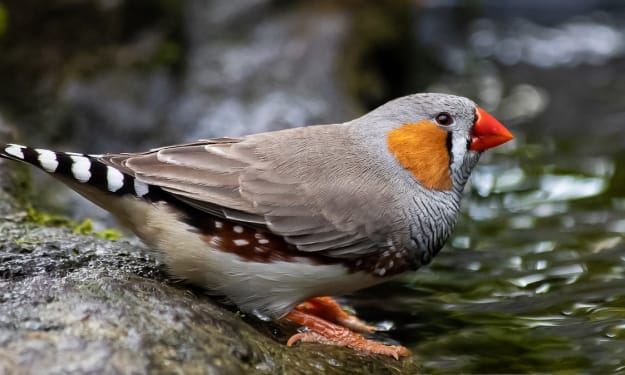
The world of birds is full of amazing singing talent, from the lemur's rich repertoire to the wood thrush's ability to harmonize her two notes at once. Mockingbirds are known for their uncanny ability to imitate various sounds, including car alarms. Australian lyrebirds go a step further and dazzle with intricate song and dance performances. These amazing abilities are just a glimpse into the diverse world of over 4,000 species of songbirds.
By Resian Sankei3 years ago in Earth