Science
Future Climate Predictions: The Role of Greenhouse Gas Emissions. AI-Generated.
Overview: Rising greenhouse gas concentrations are expected to significantly impact the climate. Anticipated changes include warmer air and oceans, higher sea levels, more acidic oceans, and altered precipitation patterns. The extent of future climate changes hinges on our current efforts to reduce emissions.
By ALCHEMY26122 years ago in Earth
On the Viability of Viruses
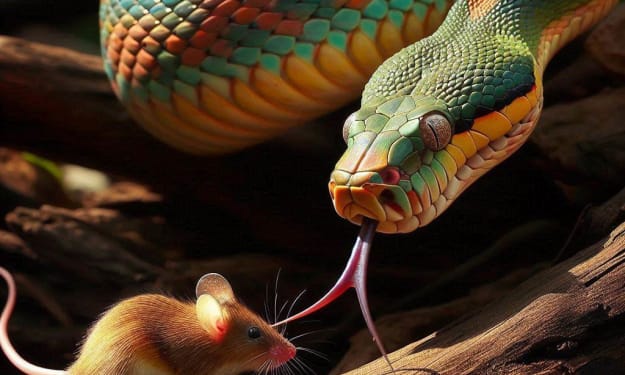
I was taught in undergrad and graduate school that viruses are not alive as they fail several of the key tests typically required for something to qualify as being alive. There are seven main characteristics biologists like myself generally agree that living organisms must possess. They are 1. The ability to respire. 2. The ability to grow 3. The ability to excrete (waste), 4. The ability to reproduce. 5. The ability to metabolize (nutrients for energy), 6. Movement. 7. Responsiveness to the environment.
By Everyday Junglist2 years ago in Earth
WHAT HAPPENS WHEN A BLACK HOLE MEETS THE SUN. AI-Generated.
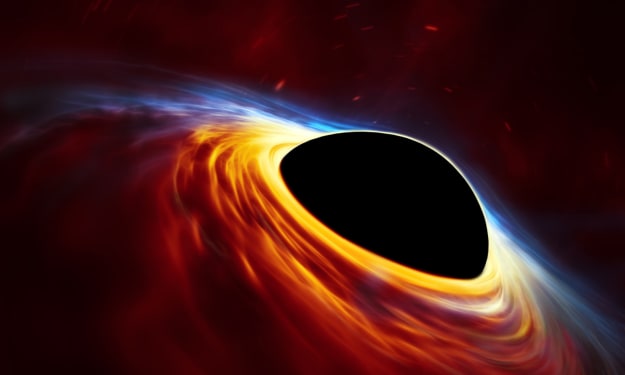
A black hole is a region of space where gravity is so strong that nothing, not even light can escape. Like a cosmic vacuum cleaner, it sucks up anything that gets too close. It's so massive that it warps the fabric
By April Tenorio2 years ago in Earth
Global Tunnel Boring Machine An Underground Revolution
The Mechanized Digging Revolution Tunnel boring machines (TBMs) have revolutionized the way underground infrastructure projects are carried out around the world. Powerful, mechanized devices capable of excavating through virtually any ground condition, TBMs have allowed tunneling projects to be completed faster, safer, and at a lower cost compared to traditional drilling and blasting methods. They have become indispensable for ambitious underground transportation and utility projects.
By Nishant Sherkhane2 years ago in Earth
Possible processes for the generation of intermediate-mass black holes in globular clusters are illustrated by simulations. . Content Warning.
The properties of intermediate-mass black holes, or IMBHs, have long captivated astronomers. With masses ranging from hundreds to thousands of solar masses, IMBHs are a more elusive class of black holes than stellar-mass black holes, which are formed when huge stars collapse, and supermassive black holes, which are found at the centers of galaxies.
By RAMZAN ALI2 years ago in Earth
TOP 10 COMPANIES IN SPEECH-TO-TEXT API MARKET
The Speech-to-text API Market is projected to reach $10 billion by 2030, growing at a CAGR of 17.3% from 2023 to 2030. This market's expansion is fueled by the widespread use of voice-enabled devices, increasing applications of voice and speech technologies for transcription, technological advancements, and the rising adoption of connected devices. However, the market's growth is restrained by the lack of accuracy in recognizing regional accents and dialects in speech-to-text API solutions.
By Bhavana Meti2 years ago in Earth
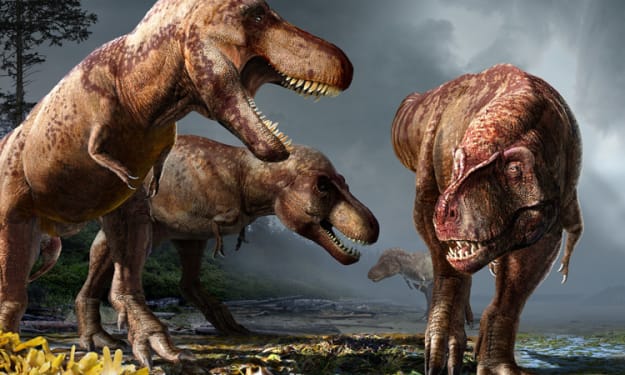
Unveiling the Mysteries of the Dinosaurs. Content Warning.
In the annals of paleontology, the rediscovery of the Danasaurus marks a significant milestone, illuminating new facets of our planet's distant past. Originally discovered during the fervent "Bone Wars" of the late 19th century, the Danasaurus was long misclassified and overlooked. However, recent advancements in technology and a renewed investigative spirit among modern paleontologists have brought this remarkable dinosaur back into the scientific spotlight, providing new insights into the diversity and evolution of ancient life on Earth.
By Hamza Bashir2 years ago in Earth
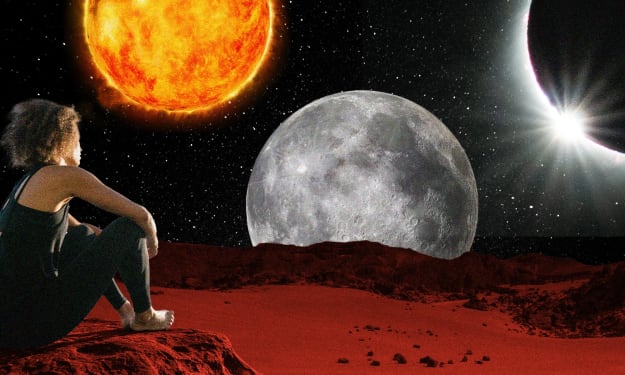
Sun Or Moon
The sun and the moon, celestial companions that illuminate our skies, have captivated human imagination and inspired awe since the dawn of civilization. The sun, a blazing sphere of incandescent gas at the heart of our solar system, is the ultimate source of light, warmth, and energy for all life on Earth. Its radiant brilliance fills the heavens with a dazzling display of colors each day, as it rises in the east and sets in the west, marking the passage of time with unwavering precision. Revered by ancient cultures as a symbol of power, vitality, and divinity, the sun has been worshipped as a god in countless mythologies, from the fiery charioteer of Greek mythology, Helios, to the life-giving deity of ancient Egypt, Ra. Its annual journey through the zodiac constellations, known as the ecliptic, shapes the changing seasons and the rhythms of life on Earth, from the lush bloom of spring to the golden harvest of autumn. Yet, despite its seemingly unchanging nature, the sun is a dynamic and tumultuous star, constantly roiling with magnetic activity and erupting in spectacular solar flares and coronal mass ejections that can disrupt communications, satellites, and power grids on Earth.
By Mystery man2 years ago in Earth