
Gaining Insight into Daily Life in a Type II Civilization
Exploring the Habits, Challenges, and Innovations of an Advanced Society

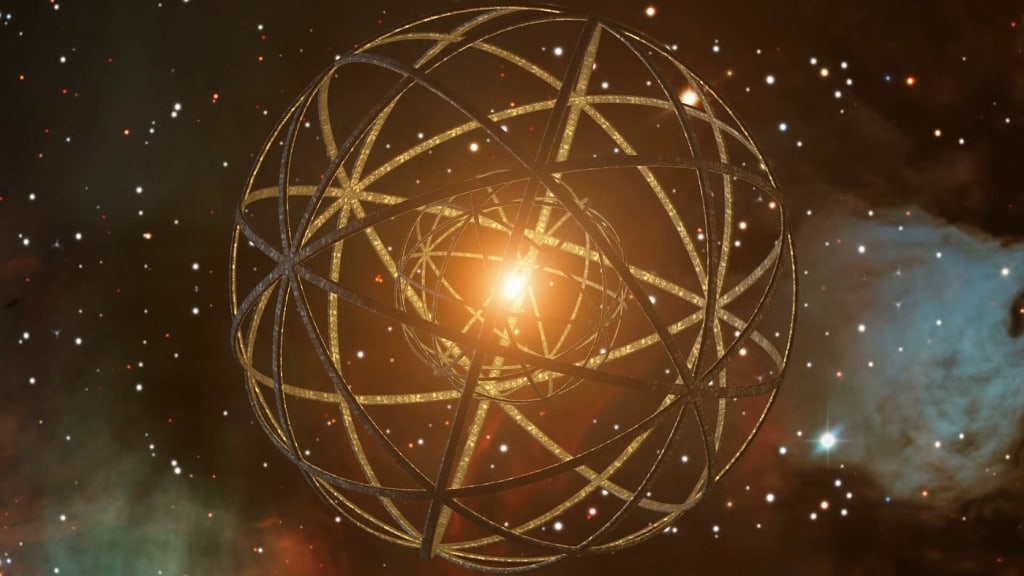
The sun is the essential ingredient for life on Earth. Without it, our world would be a frigid, hostile, and almost certainly lifeless place. However, we currently utilize only a minuscule fraction of the sun's potential. So, what if that were to change? Let's explore what everyday life might be like in a Type II civilization.
A Type II civilization, according to the Kardashev Scale, is one that has harnessed the entire energy output of its home star. To put it into perspective, a Type I civilization can control all the energy available on its planet, while a Type III civilization can control energy on a galactic scale. Type II represents the intermediate stage where a civilization can fully exploit the energy of its home star—in our case, the sun.
Humans already rely on the sun for nearly everything we do. It supports growth, provides light, powers energy systems, helps keep time, and heats our bodies, all from about ninety-three million miles away. Because of Earth’s rotation, only one side of our planet receives sunlight at any time, giving us day and night cycles. However, the vast majority of the sun's energy radiates into space, far beyond our reach. In a Type II civilization, this would fundamentally change.
Currently, Earth receives only about a billionth of the sun’s total energy. Of that, over fifty percent is either reflected back into space or absorbed by the atmosphere before reaching the ground. A tiny fraction of this energy is used by plants for photosynthesis, yet this process is crucial for life as we know it. Despite our limited usage, we still receive approximately 10,000 times more energy from the sun than we need. In just one hour, we get enough energy to power the planet for a year, but we lack the means to capture it all.
This shows how far modern humans are from reaching Type II status. At Type II, a civilization would harness all the sun's energy, not just a fraction, and distribute it with maximum efficiency, ensuring no energy is wasted. This would bring about significant changes, even altering the concept of "everyday life."
For starters, the distinction between night and day might disappear. Even if the Earth continues to rotate, a Type II civilization could redirect solar energy to wherever it’s needed, regardless of time. The sun's energy could be available around the clock, creating a society that is "always on." This constant energy flow has its benefits, such as peak functionality at all times, but also poses risks, like potential burnout for Type II beings. Continuous life and energy may seem ideal, but what about the need for rest?
As such, a Type II being would likely be very different from current humans. They would be enhanced physically, possibly through gene editing and advanced technology. Think of unbreakable skeletons, dense muscle layers, digitally enhanced organs, and super-sensitive sensory systems. The human brain would also undergo significant changes to cope with the fast-paced Type II life, possibly with implants to eliminate the need for sleep, expand memory, and control stimuli. The brain, already considered the most complex structure in the universe, would be mastered and controlled.
While we can imagine Earth at Type II, it’s probable that humanity would have left Earth by then. With the sun’s energy harvested by structures like a Dyson Sphere, space travel across the solar system would be routine. Many journeys would be robotic, with AI-controlled ships ferrying goods between planets. If Type II beings have overcome biological limits like the need for sleep, they might also conquer aging, making even the longest space journeys feasible.
In such a world, "waking up" might be obsolete. Bodies would operate close to full power all the time. There might be periods when parts of the brain shut down for recuperation, like dolphins do, but generally, beings would be ultra-efficient machines. Taking care of oneself would involve running system checks, reconnecting to servers, and debugging software. Type II civilizations wouldn't have achieved a true hive mind, but they would be highly interconnected, at least physically.
Emotionally, the changes are harder to predict. Emotions can be seen as inefficient; anger can cause long-term problems, fear can result in missed opportunities, and overconfidence can lead to mistakes. By Type II, these "errors" might be nearly eradicated. But would this be for the best, or would something vital be lost?
Economically, a Type II civilization might be more egalitarian. With abundant energy, competition for resources would diminish, and traditional jobs might transform into social roles, perhaps without the need for money. Crucial roles would include managing the Dyson Sphere, likely overseen by indestructible, self-replicating machines. However, maintaining control over these machines would be essential, as a Type II civilization still aims to advance further.
In summary, Type II represents a significant crossover point. It transitions from power struggles to limitless energy, from a single planet to multiple worlds, from organic to post-biological life, and from inevitable death to potential immortality. These transitions pave the way for the next stage: Type III, where a civilization not only controls a star system but aims for galactic dominance. In many ways, Type II is a tech utopia, but it’s also a stepping stone towards an even loftier goal: complete rule of the universe.
About the Creator
Solomon
Curious Explorer 🌍🔍 | Passionate about vibrant discussions on science, culture, tech, and more. Let's unravel ideas together! 🚀 #CuriousConversations
Enjoyed the story? Support the Creator.
Subscribe for free to receive all their stories in your feed.
Comments
There are no comments for this story
Be the first to respond and start the conversation.