Science
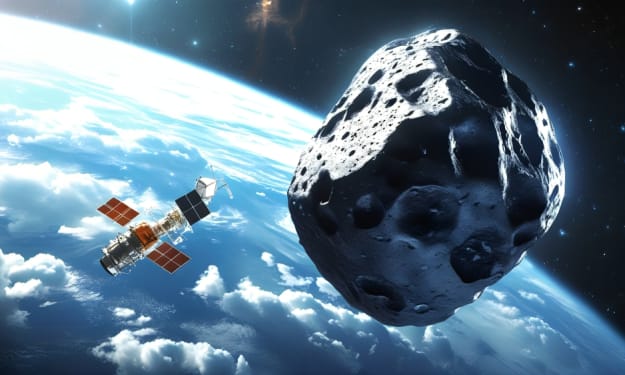
NASA tracks 120-foot asteroid 2024 XN1 nearing Earth on Christmas eve
On Christmas Eve, December 24, 2024, the celestial skies will host a fascinating event. NASA has been closely monitoring an asteroid named 2024 XN1, which is set to pass Earth at a safe yet intriguingly close distance. This asteroid, measuring approximately 120 feet in diameter, will not only add excitement to the holiday season but also offer scientists a unique opportunity to observe and study a near-Earth object (NEO).
By Prashant Sharma2 years ago in Earth
Unmanned aerial vehicle - Aircraft type
"The Future Is Here: Unmanned Aerial Vehicles Are Revolutionizing Aviation!" Imagine an aircraft soaring high in the sky, completing complex missions, delivering packages, and even saving lives—without a single human on board. Intrigued? Welcome to the era of Unmanned Aerial Vehicles (UAVs), also known as drones. These marvels of technology are not just futuristic concepts; they are transforming industries, redefining warfare, and opening up new possibilities in countless fields. So, what makes UAVs so special? How are they shaping our world, and what does the future hold for this groundbreaking aircraft type? Let’s dive in. --- What Are UAVs? The Basics Unmanned Aerial Vehicles are aircraft that operate without a human pilot onboard. Controlled either remotely by operators or autonomously through pre-programmed algorithms, these machines have become the backbone of modern aerial technology. UAVs come in various shapes and sizes, ranging from tiny quadcopters that fit in the palm of your hand to massive drones capable of long-range flights and carrying heavy payloads. Unlike traditional aircraft, UAVs are designed for specific missions where manned flight may be impractical, dangerous, or too costly. From reconnaissance in military operations to monitoring agricultural fields, UAVs have carved out their niche in aviation. --- Intriguing Applications of UAVs While UAVs were initially developed for military purposes, their applications have rapidly expanded into civilian and commercial domains. Here are some fascinating ways these aircraft are making an impact: 1. Disaster Response and Search-and-Rescue Missions Picture this: A natural disaster strikes, leaving communities stranded and inaccessible by road. Enter UAVs equipped with thermal imaging cameras and GPS technology. These drones can locate survivors, deliver emergency supplies, and map disaster zones, all while keeping rescue teams out of harm’s way. Case in Point: During the 2023 earthquake in Turkey, UAVs played a pivotal role in locating victims trapped under rubble, significantly speeding up rescue efforts. 2. Revolutionizing Agriculture Farmers are harnessing the power of UAVs to optimize crop production. Equipped with sensors, drones can analyze soil health, monitor plant growth, and even spray fertilizers or pesticides with pinpoint accuracy. This technology is not just increasing yields but also reducing waste and environmental impact. UAVs are turning farms into high-tech hubs of efficiency. 3. Transforming Delivery Services Remember the days when you had to wait for weeks to get a package delivered? Thanks to UAVs, companies like Amazon and DHL are testing drone delivery services that promise to get your goods to your doorstep in minutes. Whether it’s delivering medical supplies to remote areas or bringing hot food to your home, drones are reshaping the logistics industry. 4. A Game-Changer in Media and Entertainment From breathtaking aerial shots in movies to live event coverage, drones have unlocked new creative possibilities for filmmakers and photographers. The days of relying on helicopters for aerial footage are fading fast, thanks to these agile and cost-effective aircraft. --- Military Evolution: From Surveillance to Combat UAVs originated as tools for military surveillance, but they have evolved into powerful instruments of modern warfare. Armed drones, such as the MQ-9 Reaper, are capable of precision strikes, reducing the need for risky manned combat missions. Their ability to gather real-time intelligence, track targets, and execute operations autonomously has made them indispensable to modern defense strategies. However, their use has also sparked ethical debates, particularly concerning civilian casualties and the implications of autonomous warfare. --- How UAVs Work: A Peek Under the Hood What makes UAVs so effective is their advanced technology. Here are some key components that make these aircraft tick: 1. Flight Control Systems: These systems ensure stability and navigation. They use gyroscopes, accelerometers, and GPS to control altitude, direction, and speed. 2. Sensors and Cameras: UAVs can be equipped with infrared cameras, LiDAR, and multispectral sensors to capture detailed data. 3. Communication Systems: UAVs are either controlled via remote operators using radio signals or operate autonomously based on pre-programmed software. 4. Power Systems: Depending on the type, UAVs may use rechargeable batteries, solar panels, or internal combustion engines for power. --- Challenges and Concerns While the potential of UAVs is immense, their widespread use brings several challenges: Privacy Concerns: The ability of drones to capture images and videos raises questions about privacy and surveillance. Safety Risks: Unauthorized or reckless drone operations can interfere with commercial aviation, leading to safety hazards. Regulatory Hurdles: Many countries are still figuring out how to integrate UAVs into their airspace without compromising safety and security. --- The Future of UAVs: What Lies Ahead? As technology continues to advance, UAVs are set to become even more versatile and capable. Here’s what we can expect in the near future: Urban Air Mobility: UAVs could soon be used for passenger transport, creating “flying taxis” that ease urban congestion. Advanced AI Integration: Future drones may rely on AI for better decision-making, navigation, and real-time adaptation to challenges. Environmentally Friendly Designs: Solar-powered and hybrid UAVs could minimize environmental impact, making them sustainable options for various applications. --- Engaging the Reader: What’s Your Take? As we stand on the brink of an aviation revolution, the possibilities seem endless. Whether it’s delivering lifesaving medicines, capturing cinematic visuals, or protecting borders, UAVs are shaping a future we could only dream of a decade ago. But with great power comes great responsibility. How do we ensure UAVs are used ethically and safely? What role do governments, industries, and individuals play in shaping this narrative? The skies are no longer the limit—UAVs are proving that innovation can take us far beyond. The question is: Are we ready to embrace this new age of aviation? --- Final Note: As UAVs continue to soar into new horizons, one thing is clear: the world of aviation will never be the same again. What role will you play in this unfolding story?
By Gideon Polycarp2 years ago in Earth
How Many Nepalese Are There in Australia? Understanding Nepalese Economic Characteristics
Blog Post: Understanding Nepalese Global Presence and Economic Characteristics Introduction Nepalese people have a significant presence globally, and the economic, social, and cultural dynamics of their diaspora contribute to Nepal’s identity. In this blog, we’ll explore intriguing questions such as how many Nepalese live abroad, visa policies for Nepalese citizens, and unique aspects of the Nepalese economy. How Many Nepalese Are There in Australia? Australia has become a favored destination for Nepalese immigrants seeking education, work, and a better lifestyle. As of 2023, it is estimated that there are over 100,000 Nepalese in Australia. This number reflects the growing Nepalese community in Australian cities like Sydney, Melbourne, and Brisbane. Which Countries Have Visa-on-Arrival for Nepalese Citizens? For Nepalese travelers, visa-on-arrival is available in several countries, primarily in Africa, Southeast Asia, and the Caribbean. Some notable countries include: MaldivesCambodiaMadagascar These destinations facilitate Nepalese travelers with hassle-free entry requirements. How Many Nepalese Are Working Abroad in 2023? The number of Nepalese working abroad is substantial, with estimates suggesting over 3 million individuals. Major destinations include: 1) Gulf Countries (such as Qatar, UAE, and Saudi Arabia) 2) Malaysia 3) south Korea Their contributions are a cornerstone of Nepal's economy, especially through remittances. -Why is Government Borrowing Important for the Nepalese Economy? Government borrowing plays a critical role in Nepal's economic development by: 1. Funding Infrastructure Projects: Investment in roads, bridges, and hydropower projects boosts national growth. 2. Stabilizing the Economy: Borrowing supports budget deficits, especially during crises like natural disasters or pandemics. Which Country is Best for a Working Visa for Nepalese? Countries like Japan and South Korea offer favorable working visa options for Nepalese citizens. Their structured programs provide opportunities in industries like agriculture, construction, and technology. How Can Nepalese Students Get Information About U.S.-Based Colleges? Nepalese students can access details about U.S. colleges through: Education Consultancies in Nepal Official Websites of Colleges EducationUSA Centers These platforms help students navigate admissions, scholarships, and visa requirements. Which Country is Easy to Get PR for Nepalese? Canada and Australia are popular among Nepalese for obtaining Permanent Residency (PR). Their transparent immigration systems and demand for skilled workers make them top choices. -- What Are the Characteristics of the Nepalese Economy? The Nepalese economy exhibits these key features: 1. Agriculture-Driven: Approximately 60% of the population relies on farming. 2. Remittance-Based: Remittances contribute nearly 30% to Nepal’s GDP.
By Unfiltered Guy2 years ago in Earth
The Super Story: The Rise of Everyday Heroes
In the bustling city of Cedarvale, where skyscrapers kissed the clouds and the streets thrummed with endless motion, lived a young boy named Liam. At twelve years old, Liam was a dreamer. He spent his days sketching superheroes in his worn notebook, imagining worlds where caped crusaders saved the day. But his world was far from the heroic tales he drew.
By oluwatoba ayomikun2 years ago in Earth
Is Earth in Danger? NASA’s Warning on the 84-Foot Asteroid That Is Close to Hitting Earth
Introduction: In recent months space agencies like NASA have remained on high alert regarding the potential threat posed by asteroids capable of crossing Earth’s orbit. One of those objects, a hulking 84-foot asteroid, is attracting media coverage because of how close it is. This asteroid is zooming through space — but should we be worried? How does NASA monitor these objects, and what is it doing to protect us? In this article, we describe what NASA’s asteroid warning systems are, why this particular asteroid is a close flyby worth paying attention to and what the asteroid could mean for Earth.
By Vinay Singh2 years ago in Earth
10 facts about space that might really surprise you
In this article, we will take you on a journey through 10 astonishing facts about space, where you will encounter ideas that will amaze you and provoke your curiosity. While you may think you know everything about the universe, you will discover new dimensions and hidden knowledge beyond your sight. These facts may prompt you to reconsider your understanding of time and space, and open new windows of insight that will allow you to see the universe in a way you have never imagined before.
By samy elpalshy2 years ago in Earth
SOLSTICE: Uncovering the Secrets of Io and New Perspectives on Solar Systems Most Volcanic World
Cracking the Code of Io: Fresh Insights on the Most Volcanic World in Our Solar System The mysteries of our solar system are often hidden in its outer reaches — and for decades, Jupiter’s moon Io has been a tantalizing riddle. Called the most volcanically active object in the solar system, Io’s hellish landscape has baffled scientists since Voyager 1 first closely observed it in 1979. Recent advances in observations and research have revealed new details on this hellish moon and answered mysteries that had remained unanswered for more than 40 years.
By Vinay Singh2 years ago in Earth
Unlocking Edgenuity Earth Science Answers: A Comprehensive Guide for Success
The digital education platform Edgenuity has revolutionized the way students approach learning, particularly in subjects like Earth Science. Its self-paced, interactive modules provide a thorough understanding of topics, but some students find themselves struggling to keep up with the curriculum. The key to overcoming these challenges lies in adopting strategic methods that enhance comprehension and application. This guide will help you unlock Edgenuity Earth Science answers and achieve academic success.
By infoflective2 years ago in Earth
What If the Earth Stopped Spinning for 5 Seconds?
Imagine the Earth screeching to a halt for just five seconds. It’s a scenario that sounds straight out of a disaster movie, but the consequences would be catastrophic. Let’s explore what would happen, from the unimaginable winds to the reshaping of our planet, and whether Earth would remain habitable after such a jarring event.
By Fred Oliver2 years ago in Earth