
10 facts about space that might really surprise you
Facts and curiosities about space that raise astonishment
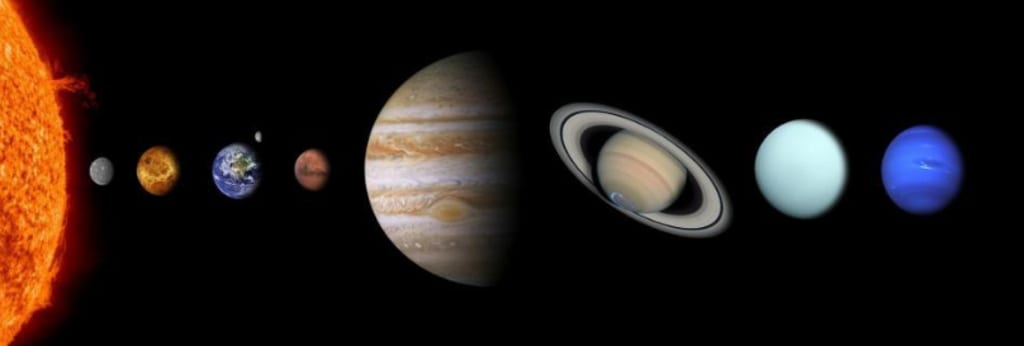
In this article, we will take you on a journey through 10 astonishing facts about space, where you will encounter ideas that will amaze you and provoke your curiosity. While you may think you know everything about the universe, you will discover new dimensions and hidden knowledge beyond your sight. These facts may prompt you to reconsider your understanding of time and space, and open new windows of insight that will allow you to see the universe in a way you have never imagined before.
Fact One: Space is Not Truly Empty
Have you ever imagined that the great silence of space is not truly silence? That void, which seems lifeless, is nothing but a hidden stage teeming with whispers. There is no emptiness there, but rather a story unseen by the naked eye, told through infinitesimal particles and dancing particles that move in an eternal cosmic melody.
In the depths of darkness, there are particles scattered like ancient dust, bearing witness to the beginning of everything. Electromagnetic waves traverse the void like hidden love messages between the stars. Each atom, each beam of light, carries a tale from a distant time, as if the universe is writing its messages to us through a silence only the contemplative heart can hear.
Space is not empty; it is full of life—life of a different kind, life that we cannot perceive with our eyes but feel when we gaze at the sky and contemplate its vastness. In that stillness, there is a sound too faint to be heard, yet stronger than anything that can be forgotten.
Space is not a void… it is a promise; a promise that everything, no matter how small or forgotten, has its place in this vast universe.
In that space, where silence reigns, every particle carries the spirit of the past, like invisible footprints on the sands of time. Can you imagine that these minute particles may once have been part of a star that exploded in a moment of glory? Or perhaps they once lived in the heart of a galaxy before leaving it to drift in the unknown?
Space whispers to us, but we need clear hearts to hear it. It speaks of the beginning of everything, of the birth of the universe when all was contained in a small grasp, only to explode and scatter into infinity. Those particles drifting in nothingness are part of the song of life, flowing between the stars like morning dew on leaves at dawn.
There, far from the noise of Earth, the universe lives in its own way. Light roams the void like a lover searching for its beloved, and electromagnetic waves dance endlessly, carrying news from distant universes, and messages from times unknown to us.
Contemplate space, and you will find a mirror of what lies within you. We, too, are not empty. Inside us are particles of light and darkness, dreams and memories, sounds that still echo deep within us.
Space teaches us that nothingness may be everything, that silence holds the deepest stories, and that in every void, there is fullness waiting to be discovered.
In the depths of that majestic expanse, space seems like an unfinished canvas, painted with the shadows of stars and the remnants of extinguished light. Yet, despite that, it is complete in its magnificence, in its silence, in those voids that tell endless stories. It is as if the universe whispers to all who ponder it: do not search for perfection, for greatness lies in imperfection.
Do you not see that the stars, despite their solitude in the sky, seem like old friends? They shine shyly, then disappear as if bidding us farewell quietly, perhaps tired from their long vigil, or perhaps weary of watching Earth and its sorrows. Yet they leave us a trace of light, awakening in us a longing for dreams, love, and the return to our forgotten selves.
Imagine yourself there, alone at the heart of space… far from the clamor of cities, far from time, where hours are not measured in minutes but in the distances of light. How beautiful it is for a person to lose themselves in this stillness, only to find themselves anew, as if, when we distance ourselves from everything, we draw closer to the truth
Fact Two: The Sun Is Not Yellow
The Sun... that star that brings our day to life every morning, filling the universe with warmth and granting us life. How many times have we looked at it in admiration, thinking it was yellow? As if it were a flame of gold adorning the sky, a symbol of happiness and joy. But the truth is more astonishing, more beautiful.
The Sun is not yellow. It is pure white, as if it were a piece of light from the heavens itself. Its true color reflects the full spectrum of colors, blending together to create this radiant whiteness. But our eyes, accustomed to the secrets of Earth, deceive us. The atmosphere captures the light, scatters it, and colors the edges, presenting us with this warm yellow hue.
Imagine this... seeing something your entire life in a particular color, only to discover that its reality is entirely different. It's as if the Sun is whispering to us, "Not everything your eyes see is the truth." Sometimes, you need to look with your heart to see things as they truly are.
The Sun, in its white form, reminds us that purity does not need adornment. It sends us its light without hesitation, without limits, indifferent to how we perceive it. As if it is saying: "What matters is what I give to you, not how you see me." And when the Sun sets on the horizon, it leaves us a sky embroidered with colors... orange, pink, and red. As if it ends its day with a love letter, telling us that true beauty lies in diversity, in change, and in being yourself without fear.
The Sun is not yellow, but does this diminish its magic? On the contrary, it makes it more mysterious, more poetic. It is not merely a ball of fire burning in the sky; it is a poem written by nature, pulsing with life, reminding us that the world is full of beautiful surprises if we look closely. In the end, the Sun is more than just a color. It is a symbol of hope, of light that never fades, of the truth that hides behind what we see. And when we dive into its details, we realize that the Sun is not just a distant star in the sky; it is the beating heart of the universe around us, pouring light onto the Earth like rain nurtures spring flowers. It is the mother who never tires of giving, rising every morning without expecting thanks or recognition, as if saying: "I am here... I light your paths even on the toughest days."
And in the moment of sunset, when it turns into a blazing ball of fire and dreams, it takes with it the fatigue of the day and gifts it to the sea or the mountains on the horizon. Have you ever seen how the Sun sets with dignity and silence, without complaint or hesitation? It is as if it teaches us that departure is part of the journey, and that there must be absence for light to be reborn again.
Fact Three: A Day on Venus Is Longer Than Its Year
Venus, the second planet from the Sun, has a truly fascinating and perplexing feature: a day on Venus lasts longer than its year. Yes, this is a mind-boggling truth! A day on Venus, defined as the time it takes for the planet to complete a full rotation on its axis, lasts about 243 Earth days, while its year, the time it takes to orbit the Sun, is only about 225 Earth days. This means that Venus rotates extremely slowly on its axis in comparison to its orbit around the Sun, making its day longer than its year. Additionally, Venus has a retrograde rotation, meaning it spins in the opposite direction to most other planets in our solar system, from east to west rather than west to east.
This slow and reversed rotation of Venus creates several unique phenomena:
Strange Sunrises and Sunsets: On Venus, the Sun rises in the west and sets in the east due to its retrograde rotation.
Thick Atmosphere: Venus has a dense and thick atmosphere composed primarily of carbon dioxide, leading to a runaway greenhouse effect, making it the hottest planet in the solar system, with an average surface temperature of around 475°C.
Fast Winds: Despite its slow rotation, the atmosphere moves at incredible speeds, with winds reaching up to 360 km/h—much faster than the planet’s actual rotation.
Solar Day: If we measure a solar day on Venus (the period between two consecutive sunrises), it lasts about 117 Earth days. This happens because as Venus orbits the Sun, it moves in such a way that the solar day is shorter than its sidereal day of 243 Earth days.
Harsh Surface Conditions: The surface of Venus is barren and covered with active volcanoes, mountains, and frozen volcanic plains. The atmospheric pressure on its surface is about 90 times greater than Earth's, equivalent to being 900 meters underwater on Earth.
Toxic Clouds: Venus is shrouded in thick clouds of sulfuric acid, rendering its surface invisible to optical telescopes. These clouds reflect about 75% of sunlight, making Venus extremely bright in Earth’s sky and earning it the nickname “Morning Star” or “Evening Star.”
Exploring Venus: Despite its challenging and hostile conditions, Venus has been one of the most explored planets in our solar system. Notable missions include:
Soviet Venera Probes: The first successful landers on Venus, which sent back images before their instruments failed due to the intense heat and pressure.
NASA’s Magellan Mission: It mapped the planet's surface using radar.
The Upcoming VERITAS Mission: Aims to study Venus’ geology and potential climate changes.
Why Does Venus Rotate So Slowly?
Scientists are still unsure why Venus has such a slow and retrograde rotation. Some theories suggest:
A massive collision in the distant past may have altered its rotational direction.
Complex gravitational interactions with the Sun and nearby planets may have contributed.
Fascinating Fact: If you were on Venus, you would only experience one full day (from sunrise to sunset) every 117 Earth days, which would completely change your perception of time compared to how we experience it on Earth!
Fact Four: There Are More Stars Than Grains of Sand
When we stand on a sandy beach, the number of grains slipping between our fingers seems endless. However, the truly astonishing fact is that the number of stars in the observable universe far exceeds the number of those tiny grains scattered across all the beaches and deserts on Earth combined. This scientific truth, though hard to grasp, underscores the immense vastness of the universe, stretching far beyond our imagination.
According to the latest astronomical estimates, the observable universe contains at least 2 trillion galaxies, a number derived from in-depth studies using advanced space telescopes like the Hubble Telescope. Within each of these galaxies, hundreds of billions of stars of various sizes and colors glow, scattered across an unfathomably vast space.
Take our own Milky Way galaxy, for example. It alone contains about 200 to 400 billion stars, each one possibly the center of planets and moons yet to be discovered. When we combine these staggering numbers, we get an estimated total of over 200 sextillion stars (200,000,000,000,000,000,000,000)!
Stars vs. Grains of Sand
But what about grains of sand? According to geologists, Earth contains approximately 7.5 quintillion grains of sand (7,500,000,000,000,000,000). This massive number, despite its size, pales in comparison to the enormous number of stars in the universe.
Contemplating the Vastness of the Universe
When we look up at the night sky on a clear evening, we might see a few thousand twinkling stars. Yet, what we see is merely a tiny dot in an immense ocean full of galaxies and stars, most of which are too far to be seen with the naked eye. This breathtaking sight calls us to reflect on the insignificance of our world compared to the vast expanse of the universe.
These astonishing numbers are not just static statistics but serve as a testament to the grandeur of the cosmos and its mysteries that continue to stir human curiosity. Each star tells a story, and each grain of sand holds a memory. Between them stands humanity, in a perpetual state of awe, wondering about its place in this boundless universe.
Fact 5: Space Has a Smell
Although outer space, by its very nature as a vast vacuum, does not contain air molecules or substances that can stimulate our sense of smell, humanity’s journey to the boundaries of this infinite universe has revealed unusual phenomena. Space itself, with its vast dimensions, remains odorless, but astronauts’ experiences in its environment have shown something different when they return to their spacecraft after exiting.
Many astronauts who have experienced spacewalks outside the spacecraft describe the smells they perceive upon reentering the enclosed space. Among these smells, which may seem odd at first, are those resembling burnt metal or even the scent of welding. This is not just a psychological effect, but the result of a chemical interaction between the light molecules in space and the surfaces of astronauts' equipment or suits. These molecules interact with the air inside the spacecraft, producing distinct odors.
So, space may not have a smell in the traditional sense, but within this boundless vacuum, new facets of the human experience emerge, showing that each space journey carries unique details that surpass what was once thought.
This phenomenon opens a window for a deeper understanding of the unique nature that astronauts face during their missions. Despite the advanced technology that allows humans to live and work in space, some details, like the smells that emerge upon returning to the spacecraft, reveal how the human experience remains intertwined with the natural laws we live by on Earth. These odors, although seemingly simple or unnoticed at first, carry indications of the interaction between the human body and the complex space environment.
In this way, space becomes more than just a dark void between stars and planets; it is a realm filled with subtle phenomena that seep into our world, testing the boundaries between what we know and what we have yet to discover. These sensory experiences may also be another indication that no matter how advanced humanity becomes scientifically, we remain in constant interaction with the environment that still surrounds us, even in the deepest reaches of the universe.
Furthermore, these phenomena raise deeper questions about how we perceive the world around us in unfamiliar contexts. The existence of smells in space after returning to the spacecraft highlights the limitations of our senses in understanding the infinite universe. As human beings, we tend to rely on our senses as primary tools for understanding the reality around us. Yet, it becomes clear that some experiences in environments like space surpass these traditional senses, forcing us to reevaluate what we know about reality.
The smells perceived by astronauts remain a vivid example of this interaction between humans and space. They are not mere physical effects, but sensory signals that contribute to the formation of the unique human experience of space exploration. Such subtle details may seem trivial, but they illustrate how science, art, and the senses can intertwine to create rich experiences filled with wonder and challenges.
In the end, we can say that space is not just an empty void with no meaning, but an invisible world that opens new doors for understanding both the world and humanity on a deeper level. As we continue to explore this boundless space, those unconventional smells and sensations remain a testament to the fact that space, despite its apparent tranquility, carries with it lessons and knowledge that are yet to be discovered.
Fact 6: Rain on Other Planets is Not Like Earth's Water
Although rain is one of the natural phenomena we are familiar with on Earth, rain on other planets takes bizarre and completely different forms. While we see it fall on Earth as drops of fresh water that nourish the land and sustain life, the rain on other planets does not share the same composition or nature. Each planet, with its unique environment, reflects a rainy phenomenon that is completely different from what we witness in the skies of our planet.
For instance, on Venus, which has temperatures exceeding 460°C and atmospheric pressure more than 90 times that of Earth, rain becomes a purely chemical experience. On this planet, rain does not consist of water, but rather liquid sulfuric acid. The clouds enveloping Venus contain this acid, and as they condense, droplets of the acidic liquid fall onto the planet's surface. However, due to the extreme heat, these droplets evaporate before reaching the surface, making this rain, at its core, an illusory chemical phenomenon that is threatening.
In the coldest corners of our solar system, on Titan, one of Saturn's moons, rain becomes another chemical substance: liquid methane. In this cold environment, where temperatures drop below -180°C, rain forms from methane, a hydrocarbon gas that turns into liquid under these conditions. The methane cycle on Titan, resembling the water cycle on Earth, involves the falling of liquid methane that fills rivers and lakes on the moon's surface. Here, chemical elements converge to create a scene far removed from anything we know on Earth.
On Jupiter, a planet characterized by its thick atmosphere and violent storms, the "rain" that falls is not made of liquids as on Earth, but of gases and rocks, where frozen materials are pulled from the deep layers into the violent cloud storms. These materials sometimes become part of massive thunderstorm systems that generate enormous electrical discharges across the sky.
Thus, rain does not fall on other planets as we see it on Earth. Each planet or moon in the solar system has its own distinctive components and conditions that create exceptional forms of rain that completely surpass our usual concepts. This diversity in meteorological phenomena reflects the profound diversity of the universe and offers us a glimpse into the countless wonders of unique environments, waiting for us to discover and understand.
This cosmic diversity in weather phenomena opens a new horizon for understanding life and the conditions that might support it on other planets. While rain as we know it here on Earth primarily relies on water, this concept seems narrow when comparing it to the environments of other planets. The formation of rain from different chemicals, such as sulfuric acid on Venus or methane on Titan, suggests that life—if it exists—may have evolved under completely different conditions than those we experience here.
Studying these weather phenomena contributes to expanding our understanding of what it might mean for life to exist elsewhere. Perhaps, in a distant place far from Earth, life could thrive based on other chemical components, with "rain" composed of substances we don’t use in our daily lives. These discoveries raise profound philosophical and scientific questions about the boundaries of life and existence. Are we limited only by the conditions provided by Earth? Or does the universe hide endless possibilities for us?
In light of these discoveries, the need for further research into environmental conditions on other planets becomes apparent. If we can understand how rain forms from unfamiliar gases and chemicals, we might be able to predict other environments that may be conducive to life, opening a new window toward exploring planets far beyond our current knowledge. These studies represent not just a scientific journey, but a call to rethink how we understand the world around us and how life may vary across the vast cosmos.
Fact 7: There Are Diamond Planets in Space
Diamond planets are one of the most astonishing discoveries in modern astronomy. Scientists have revealed the existence of exoplanets that contain vast amounts of carbon, which can exist in either gas or solid form under certain conditions. When these planets are exposed to tremendous pressure and extreme heat, carbon turns into diamond, leading to the formation of "oceans" of diamonds on the planet's surface or deep within its layers.
These planets are often composed of elements such as carbon and silicon, some of which are similar in composition to Earth in terms of having an atmosphere. However, the conditions on these planets make them unique environments. For example, scientists believe that the exoplanet "55 Cancri e"—discovered in 2004—could be a giant diamond planet, containing massive amounts of carbon that could transform into diamond under the harsh atmospheric conditions of the planet.
This discovery raises fascinating questions about the commercial value of diamonds should these planets be discovered in the near future. But more importantly, these planets open the door to a better understanding of how stars and planets form in different parts of the universe and how environmental conditions can lead to the creation of materials and substances that are unimaginable on Earth.
The idea of diamond planets in space adds a new dimension to the outer space world, where the universe becomes filled with wonders that go beyond imagination. Even on these planets, nature may have created, under incredible pressures and temperatures, diamonds as a testament to the power of cosmic elements.
However, the idea of diamond planets is not just about wealth-laden materials; it is an exciting window into understanding the physical and chemical processes occurring deep in the universe. These planets offer a rare opportunity to study how pressure and heat affect materials and how these extreme conditions can transform chemistry into entirely new forms. Such planets may contain strange environments where diamonds are formed in unusual ways, making them rich sources for scientific understanding.
Moreover, these discoveries may hold lessons that could change the course of applied science on Earth. Studying the formation of diamond planets might reveal new ways to extract valuable materials from unexpected places or even provide a better understanding of planetary and stellar formation processes.
While the idea of diamond planets remains at the forefront of astronomical interest, it serves as a reminder that the universe is full of wonders that exceed the limits of our imaginations. These diamond-filled worlds may, at their core, be alien entities that challenge our traditional concepts of wealth and natural elements, opening new horizons for reimagining the place we live in this boundless universe
Truth Eight: The Infinite Expansion of the Universe
The universe, that infinite expanse surrounding us, is not as static as we once thought; it is in a constant state of expansion. The idea that the universe is expanding is not just a theoretical concept, but a scientific fact supported by astronomical evidence provided by astronomer Edwin Hubble in the early 20th century. In 1929, Hubble discovered that galaxies are moving away from each other, a discovery that changed the course of astronomical history. It revealed that the universe is not stationary, but in perpetual motion. This discovery was the key to understanding what is called "the expansion of the universe."
This expansion is not merely the movement of galaxies away from one another, but a deeper truth that relates to the expansion of space itself. Initially, the universe was compressed into a point of extreme density and temperature, then began to expand after the Big Bang around 13.8 billion years ago. What makes this phenomenon even more fascinating is that this expansion does not stop or slow down, but accelerates. In 1998, a study of distant supernovae showed that the universe is not only expanding, but it is accelerating in its expansion due to the mysterious "dark energy."
Dark energy, that enigmatic force whose nature scientists still do not fully understand, has become the main driver of this cosmic acceleration. Ongoing research into this phenomenon offers clues that the universe will continue expanding, potentially leading to a "heat death" far in the future where the universe becomes cold and dark, stars burn out, and galaxies drift apart, leaving the sky empty except for cosmic void.
Nevertheless, this cosmic phenomenon remains a source of wonder and questioning. The expansion of the universe is not merely a physical phenomenon; it is a key to a deeper understanding of the nature of time and space, and it raises questions about the distant future of the universe. As we continue to explore this astonishing phenomenon, we realize that the universe, with all its secrets and truths, is in a state of continuous motion, and no force or idea can halt its infinite expansion.
Truth Nine: Black Holes Are Not Completely Empty
Black holes, those cosmic entities that have long captured human imagination, are not, as some might think, simply "empty" cosmic voids. They are, in fact, much more complex and mysterious than that. Despite their reputation as regions from which nothing can escape, not even light, they hold within them some of the greatest secrets of the universe, revealing the nature of reality in ways beyond comprehension.
Imagine, dear reader, that a black hole is not merely a point in space that absorbs everything that enters it, but a region that manipulates both time and space, bending them in ways that make us rethink our very concept of reality. Black holes are areas of infinite density, where matter and energy collapse into a single point, causing the laws of physics as we know them to break down. This point, which we call the "singularity," is not just a gap in space, but the essence of what we know about the universe, and it represents a boundary that we cannot cross or fully understand.
Yet, despite this bleak picture, black holes are not empty as they may seem. Inside them, there is likely a mixture of "dark matter" and "hot gases," those substances that remain mysterious and invisible, but influence the universe in ways that are not entirely understood. This matter, which we cannot see with our eyes or touch, shapes the characteristics of these cosmic entities in ways that may be deeper and more profound than just the idea of absorption.
In a moment of contemplation, we might find that black holes are not merely holes in space, but keys to a deeper understanding of the universe. They are places where the boundaries of knowledge intersect, where the distinctions between matter and energy, between thought and experience, fade away. Black holes, at their core, may be places where the universe redefines itself. They are not just endpoints but gateways to understanding the "infinite," that state where time and space merge, and the boundaries between what we know and what we do not know become mere illusions.
Thus, black holes might not be "ends" as we imagine them, but perhaps they are the beginning of a deeper understanding of the world we live in. Through them, we may learn how the universe works at a level we cannot yet fully comprehend. While we gaze into their pitch-black darkness, black holes continue to hold secrets that could change everything we know about existence itself.
Truth Ten: Space Is the Coldest Thing in the Universe
Space, this infinite expanse that surrounds us on every side, is undoubtedly the coldest place in the universe. At first, this may seem strange—how can a space filled with thousands of stars and planets be this cold? But, as with all things in the universe, the truth reveals itself in the subtle details that often go unnoticed.
In this profound stillness, where air particles do not touch one another and heat is not transferred in the same way as it is in Earth's atmosphere, the space between stars and galaxies floats at temperatures close to absolute zero. The distances between celestial bodies are not just geometric measurements, but are defined by an intense cold that is difficult to imagine. In these dark realms, the temperature approaches -270.45°C, a temperature extremely close to absolute zero, where particles cease to move, and matter sinks into complete stillness.
- Even though the sun and other stars emit radiation into space, this "cosmic vacuum" remains cold because heat cannot transfer through it in the same way it does in Earth's atmosphere. Space lacks the physical medium needed to transfer heat, which makes this vast universe a place that challenges our familiar concepts. It not only contains the infinite but also the eternal cold that fills the distances between the stars.
Yet, within this cosmic cold, we might find a kind of philosophical beauty. It serves as a reminder that the universe is not just a place of heat and movement; it is also a space for absolute stillness, where time and space transcend. In this harsh environment, where there is no place for warmth or comfort, we realize that the universe, in all its grandeur, exists in a delicate balance between heat and cold, motion and stillness. And it is in this balance that lie the greatest secrets of the universe, which we have not yet fully understood but are slowly drawing closer to comprehending.
About the Creator
Enjoyed the story? Support the Creator.
Subscribe for free to receive all their stories in your feed.
Comments
There are no comments for this story
Be the first to respond and start the conversation.