Science
Fascinating Fact About Our World
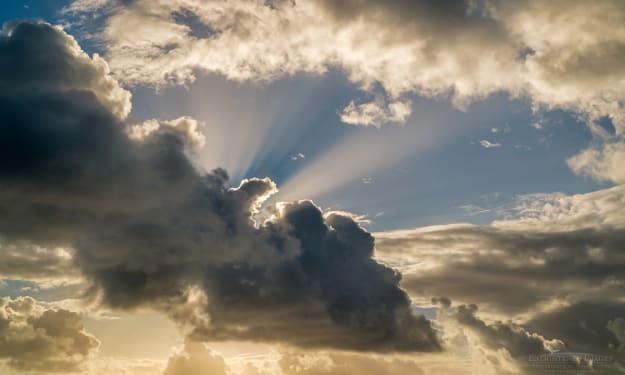
Fascinating Facts About Our World That Will Blow Your Mind The world around us is filled with mysteries, natural phenomena, and facts that seem too incredible to be true. From the surprising weight of clouds to the oldest animals on Earth, the truths about our planet can be just as baffling as they are fascinating. Let’s dive into some of the most mind-blowing facts that will make you look at the world in a whole new way. The Weight of Clouds Those fluffy cumulus clouds that dot the sky on a bright day may look light and airy, but in reality, they can weigh as much as a Boeing 747 or 100 elephants. Sounds unbelievable, right? But scientists have calculated that the density of water inside a typical cumulus cloud is about half a gram per cubic meter. Now, while clouds come in different sizes, let’s take the average cumulus cloud, which has a volume of around 1 billion cubic meters. When you multiply the density by the volume, you get a weight of slightly over a million pounds. So, how do they stay afloat? Well, despite their massive weight, clouds stay suspended because their density is lower than the air surrounding them, allowing them to defy gravity for a while. Giraffes and Lightning Giraffes, the tallest land animals on Earth, have an unfortunate vulnerability when it comes to thunderstorms. In fact, they are 30 times more likely to be struck by lightning than humans. Between 1996 and 2010, there were five fatal cases of giraffes being struck by lightning. Considering the worldwide population of giraffes is around 140,000, this makes the fatality rate relatively high. The reason behind this is simple: lightning is drawn to tall objects, and giraffes are prime targets. However, scientists believe that giraffes may have learned to adapt to their environment, seeking shelter or moving to areas with thick vegetation when thunderstorms approach, giving them a better chance of avoiding lightning strikes. The Oldest Living Animals: Glass Sponges When we think about ancient creatures, we often think of dinosaurs, but the real oldest living animals on Earth are glass sponges. These fascinating creatures can live for up to 15,000 years. Scientists have discovered the oldest known glass sponge in the Ross Sea, part of Antarctica. Other findings in the East China Sea revealed a sponge that had lived for about 11,000 years. Glass sponges spend their entire lives anchored to hard surfaces on the ocean floor, filtering water for bacteria and plankton. These sponges have survived for millennia, long outlasting many other forms of life, including the dinosaurs. Earth’s Slowing Spin and Longer Days Did you know that Earth’s rotation is gradually slowing down? Over millions of years, this has led to longer days. In fact, billions of years ago, a day on Earth was only about 19 hours long. This change has occurred because the Moon’s gravity pulls on Earth, gradually slowing its spin. While the slowing of Earth’s spin happens over a long period, it’s still fascinating to consider the difference in the length of a day over geological time. Interestingly, certain events, such as earthquakes, can alter Earth’s spin temporarily. For example, the 2010 earthquake in Chile caused a brief shortening of the day. Since 2020, however, the Earth’s days have been getting longer again. The Wetness of Water A surprisingly debated topic among scientists is whether water is “wet.” Some argue that water itself is not wet but can make other substances wet when it adheres to them. Others believe that water is inherently wet because it is a liquid with moisture. The answer to this debate lies in understanding two important forces: cohesive and adhesive forces. Cohesive forces allow water molecules to stick together, while adhesive forces enable water to stick to other surfaces. This explains why waterproof materials remain dry; the cohesive forces of water are stronger than its adhesive forces, preventing it from sticking to those surfaces. The Problem with Maps Have you ever thought about how accurate the world maps we use are? It turns out that no map can be 100% accurate—unless it’s life-sized. Our planet is round, but maps are flat, which leads to distortion. In the 16th century, the Dutch cartographer Gerardus Mercator designed a cylindrical map projection that is still used today. While this map is great for navigation (since it keeps north at the top), it distorts the size of landmasses. For example, Greenland appears 14 times larger than it really is, and Alaska is the size of Brazil when, in reality, it’s much smaller. The Role of Volcanoes in Earth’s Atmosphere About 4 billion years ago, Earth’s atmosphere was vastly different from what it is today. The early atmosphere was mainly composed of carbon dioxide, released by countless volcanoes erupting all over the planet. This carbon dioxide-rich atmosphere allowed tiny plants to grow through photosynthesis, eventually giving rise to the oxygen we breathe today. It took about 2 billion years for enough oxygen to accumulate in the atmosphere to support the evolution of animals, marking a pivotal moment in Earth’s history. Bacteria Could Stretch for 10 Billion Light Years It’s hard to fathom the sheer number of germs and bacteria on Earth. If you were to stack all the bacteria on the planet on top of one another, the pile would stretch for an astonishing 10 billion light years. And while this may seem like an unfathomable distance, the pile would be incredibly thin—about 75 times thinner than a human hair. If this bacterial thread were wrapped around our galaxy, the Milky Way, it would circle the galaxy more than 20,000 times. Rust on the Moon Yes, there’s rust on the Moon! While rust typically forms in the presence of water and oxygen, conditions on the Moon are far from ideal for rust formation. So, how did it happen? When the Moon passes through Earth’s magnetotail (a region of space influenced by Earth’s magnetic field), oxygen from our planet can reach the Moon’s surface. This oxygen, combined with traces of water and iron on the Moon’s surface, forms rust. It’s a surprising discovery, considering the harsh conditions of the Moon’s surface. Cosmic Dust: A Constant Rain from Space Every year, around 5,000 tons of cosmic dust rain down on Earth from space. These tiny particles, often smaller than a grain of sand, come primarily from comets and other space bodies. Scientists have even traveled to Antarctica, where there’s little snow and even less pollution, to collect and study this dust. Although you can’t see it, this constant influx of cosmic dust is a reminder that our planet is always in contact with the wider universe. The Surprising Geography of Greenland If you’re an introvert looking for solitude, Greenland might be the perfect place for you. With a population density of only 0.1 person per square mile, it’s the least densely populated area in the world. Most of Greenland is covered in ice, so people mainly live along the west coast. Despite its remote and icy landscape, Greenland has been inhabited for over 4,500 years, proving that even the most extreme environments can support human life. Earth’s Recycled Rocks The ground you walk on is essentially recycled rock. Magma from deep within the Earth cools and hardens to form solid rock. Over time, tectonic forces push this rock to the surface, where it is weathered by wind, rain, and other natural processes. This weathering breaks the rock into smaller pieces, which settle and form sedimentary rocks. These rocks can undergo further transformation under heat and pressure, becoming metamorphic rocks. This ongoing cycle of rock formation and erosion is a constant process that shapes the Earth’s surface. Life on Earth Could Have Been Purple Could life on Earth have been purple instead of green? Scientists believe that early microbes may have used a molecule called retinal to capture sunlight, which gave them a purple hue. Today, plants are green because they use chlorophyll to absorb sunlight, but before chlorophyll evolved, retinal molecules might have been the primary method for photosynthesis. These early microbes likely reflected red and purple light, giving them a violet appearance. --- From the heavy weight of clouds to the possibility that life on Earth was once purple, our planet is full of strange and incredible facts. These phenomena highlight the wonder of our natural world, reminding us that science is full of endless discovery and mysteries yet to be solved. So, the next time you look at the sky or the ground beneath your feet, remember that there’s more to our world than meets the eye.
By Jatia Pradhan2 years ago in Earth
Exploring the Mysterious Underworld of Antarctica
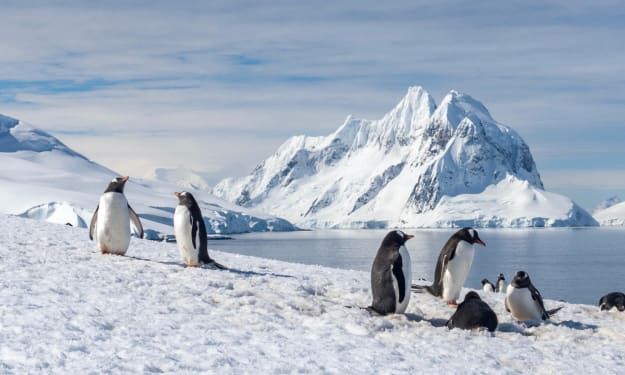
Exploring the Mysterious Underworld of Antarctica: A Hidden Ghost World Beneath the Ice Antarctica, the southernmost continent on Earth, is often associated with endless snow, freezing temperatures, and adorable penguins. But beneath its icy exterior lies a hidden "Ghost World," a mysterious ancient landscape that tells the story of a time long before the ice came. A Frozen Continent Shrouded in Mystery Antarctica is unlike any other place on Earth. The ice sheet covering the continent is between 1 to 3 miles thick—equivalent to stacking up to 16 Eiffel Towers. This massive ice blanket conceals Antarctica’s true terrain, making it one of the most mysterious and least understood continents on the planet. Mapping its features without breaking through the ice is an incredible challenge. Fortunately, satellites equipped with advanced imaging technology have begun to penetrate the ice, revealing an extraordinary ancient landscape buried beneath. Beneath the layers of snow and ice lies a dramatic terrain, complete with rivers, valleys, and land formations from millions of years ago. A Rainforest of the Past Approximately 90 million years ago, Antarctica was far from the frozen wasteland it is today. It was a lush rainforest teeming with life, with flowing rivers and abundant vegetation. This warm, vibrant ecosystem began to change about 34 million years ago during the transition from the Eocene to the Oligocene epoch. During this time, the Earth cooled significantly, ushering in one of its ice ages. Over millions of years, ice and snow engulfed the continent, altering its landscape and hiding its past. Yet, in certain areas like East Antarctica, the ice has acted as a protective blanket, preserving the ancient terrain beneath. In this region, near the Aurora and Schmidt subglacial basins, scientists have discovered the “ghost” of Antarctica’s landscape—a place frozen in time for over 34 million years. Beneath the ice, they found traces of ancient rivers, valleys, and even three large landmasses shaped like the letter “U.” The Shifting Continent Antarctica’s hidden features are a testament to the forces of tectonic activity. Millions of years ago, the continents we know today were part of a supercontinent called Gondwana. When Gondwana broke apart, Antarctica was stretched and pulled by tectonic forces, leaving behind the unique land formations now buried under ice. Scientists are eager to learn more about this hidden landscape. By drilling through the thick ice sheet, they hope to collect samples of rock and sediment that could provide insights into the Earth's history and climate. A Frozen World Full of Secrets Antarctica is the fifth-largest continent in the world, larger than Europe or Australia, and its icy expanse remains less explored than the surface of Mars. Beneath the ice lies a rugged landscape of mountains, canyons, and even volcanoes. West Antarctica alone hosts at least 138 volcanoes, though only a handful are currently active. Mount Erebus, the southernmost active volcano, rises to a height of 12,448 feet and contains sub-volcanic caves with temperatures warm enough for humans to wear t-shirts. The Antarctic Peninsula, or Lesser Antarctica, is a region of mountainous islands with volcanic rocks that are part of the Pacific Ring of Fire. Meanwhile, Greater Antarctica, which includes East Antarctica and the South Pole, is home to some of the oldest rocks on Earth. Life Beneath the Ice Despite its harsh climate, life has found a way to thrive in Antarctica. In 2017, scientists discovered traces of DNA from algae, moss, and potentially unknown microorganisms in subglacial caves. These ecosystems, isolated in warm pockets beneath the ice, demonstrate that life can survive in even the most extreme conditions. Another groundbreaking discovery was made beneath the Ross Ice Shelf, where researchers found a freshwater river teeming with tiny shrimp-like creatures called amphipods. These ecosystems hint at the possibility of even more hidden life forms waiting to be discovered in Antarctica’s underworld. The Doomsday Glacier Antarctica also plays a crucial role in the Earth’s climate. The continent holds about 60% of the planet's freshwater, locked in its ice sheets. However, climate change is causing this ice to melt. The Thwaites Glacier, often referred to as the “Doomsday Glacier,” is melting at an alarming rate, contributing to rising sea levels. If it were to melt completely, global sea levels could rise by 2 feet, with catastrophic consequences for coastal regions. Unveiling the Future Antarctica remains a frozen enigma, hiding a treasure trove of scientific discoveries beneath its icy surface. From ancient landscapes and volcanic caves to thriving ecosystems and climate mysteries, this vast, icy continent continues to captivate researchers and adventurers alike. As scientists dig deeper—both literally and figuratively—into Antarctica’s secrets, they are uncovering a world unlike any other. Whether it's the ghostly traces of ancient rivers or the shrimp swarms in hidden rivers, Antarctica proves that even the coldest, most remote corners of our planet are full of wonder.
By Jatia Pradhan2 years ago in Earth
The Hidden Stories of Earth's Cosmic Collisions. AI-Generated.
66 million years ago, Earth experienced an apocalyptic event. A massive asteroid, known as the Chicxulub impactor, struck our planet with unimaginable force, creating a 90-mile-wide crater in what is now Mexico's Yucatán Peninsula. This collision brought the age of dinosaurs to a dramatic end, setting the stage for the rise of mammals—and eventually, us. But in a twist of cosmic history, new evidence suggests that Chicxulub wasn't the only asteroid wreaking havoc during that era.
By Georgia M.2 years ago in Earth
The Saga of Pangaea. AI-Generated.
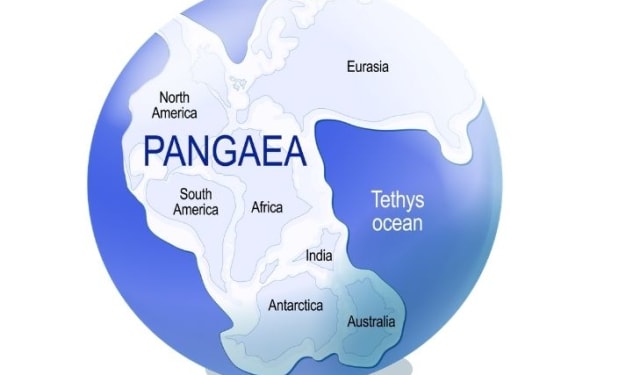
Imagine Earth 300 million years ago—a place where all continents were best friends, united in one massive supercontinent called Pangaea. This colossal landmass was surrounded by an equally gigantic ocean, Panthalassa. Together, they created a world like no other—a sprawling, unbroken expanse of land, bordered by an endless sea. But just like any legendary crew, this union couldn’t last forever.
By Georgia M.2 years ago in Earth
The Earth’s Secret Dance. AI-Generated.
At first glance, our continents might seem like massive rafts adrift on an ocean of molten lava, waiting to collide like bumper cars. But the truth is far more intricate—and fascinating. Let’s dive into Earth’s layers, tectonic tango, and the tantalizing future of our ever-shifting world.
By Georgia M.2 years ago in Earth
A Mind-Bending Exploration of Black Hole Cosmology. AI-Generated.
Imagine looking up at the night sky, marveling at the vast expanse of stars, galaxies, and cosmic wonders, only to learn that everything you see, including the universe itself, might be nestled inside a colossal black hole. This seemingly science-fiction idea, known as Black Hole Cosmology, is a captivating theory proposed by scientists seeking to unravel the mysteries of existence. Could our universe be one of many in a multiverse of black holes? Let’s dive into this mind-boggling concept.
By Georgia M.2 years ago in Earth
The Ghost of an Ancient World Found Under Antarctica. AI-Generated.
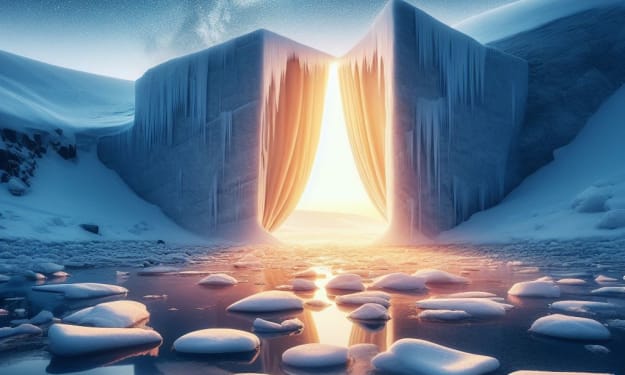
Antarctica, the frozen continent at the bottom of the globe, is often associated with penguins, endless snow, and bone-chilling cold. Yet, beneath its thick ice sheet lies a hidden world—a "ghost world"—that offers tantalizing glimpses into an ancient past.
By Georgia M.2 years ago in Earth
The Development of Artificial Intelligence: A Journey of Innovation and Transformation
Man-made brainpower (artificial intelligence) is one of the most extraordinary advancements of the 21st hundred years, reforming ventures, upgrading day to day existence, and modifying the manner in which people cooperate with machines. The improvement of computer based intelligence has been a long and complex excursion, set apart by various leap forwards, mishaps, and invigorating progressions. From its initial starting points during the 1950s to its ongoing applications in medical services, business, schooling, and then some, man-made intelligence has developed to turn into a main impetus in forming the eventual fate of innovation.
By Zain Khawaja 2 years ago in Earth
Advanced Robots: The Frontier of Technology and Innovation
Robots have progressed significantly since their conceptualization in sci-fi. Today, high level robots are a reality as well as a fundamental piece of enterprises, medical services, military, and, surprisingly, day to day existence. These machines, fueled by state of the art innovations like man-made consciousness (simulated intelligence), AI, and high level sensors, have changed the manner in which we work, live, and cooperate with our general surroundings.
By Zain Khawaja 2 years ago in Earth
They Found a Moon Crystal
As of late Chinese researchers found something fascinating on the moon an uncommon Gem besides they figured out that this Gem contains a component that can in a real sense supplant atomic fuel we should figure out more the sythesis of the moon has extended stayed a secret to us 50 years has proactively passed since the Apollo Mission tragically we haven't headed out to the Moon much from that point forward so it's not shocking that it's not so natural for us to concentrate on it yet as of late we've made a leap forward around here
By Adu Olusayo Michael2 years ago in Earth