
The Development of Artificial Intelligence: A Journey of Innovation and Transformation
This article is about Development of AI
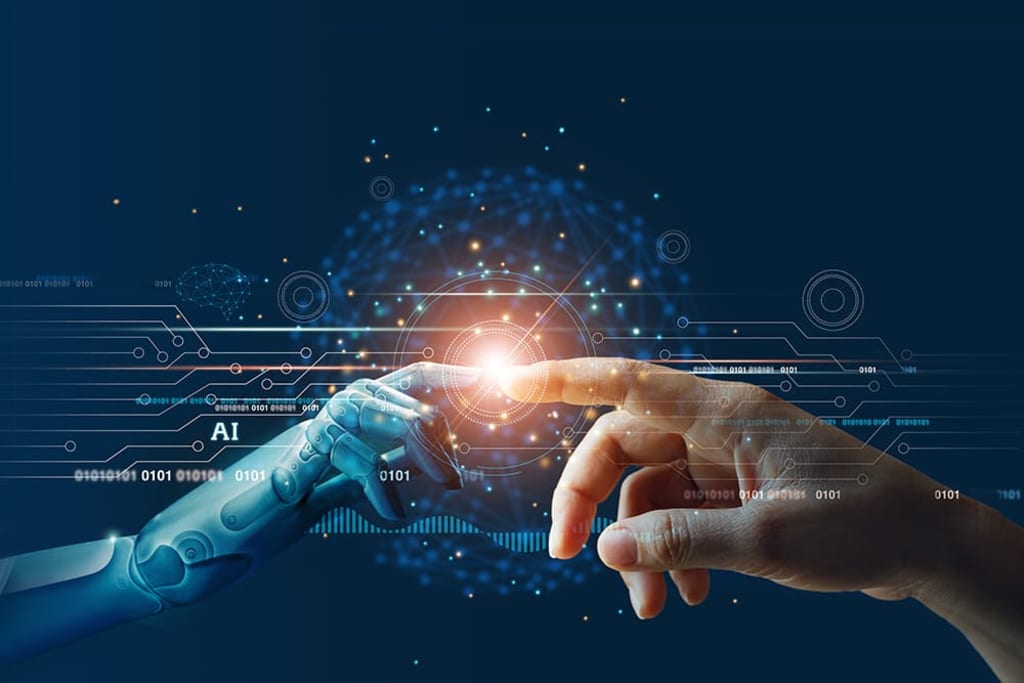
Man-made brainpower (artificial intelligence) is one of the most extraordinary advancements of the 21st hundred years, reforming ventures, upgrading day to day existence, and modifying the manner in which people cooperate with machines. The improvement of computer based intelligence has been a long and complex excursion, set apart by various leap forwards, mishaps, and invigorating progressions. From its initial starting points during the 1950s to its ongoing applications in medical services, business, schooling, and then some, man-made intelligence has developed to turn into a main impetus in forming the eventual fate of innovation.
The Starting points of artificial intelligence: Conceptualization and Early Speculations
The idea of man-made brainpower traces all the way back to antiquated times when logicians envisioned machines or creatures that could mirror human idea and conduct. Nonetheless, it was exclusively during the twentieth century that computer based intelligence started to come to fruition as a conventional field of study. In 1956, the expression "man-made reasoning" was begat by John McCarthy, who coordinated the well known Dartmouth Meeting, the main scholarly get-together committed to investigating the capability of machines that could reenact human knowledge. The meeting laid the basis for man-made intelligence as an unmistakable discipline inside software engineering.
During the 1950s and 1960s, early man-made intelligence research was centered around representative thinking and critical thinking, with scientists like Allen Newell and Herbert A. Simon fostering the Rationale Scholar, a program equipped for tackling numerical hypotheses. In the mean time, Alan Turing, an English mathematician, proposed the "Turing Test" in 1950, which turned into a primary idea in artificial intelligence research. The test assessed a machine's capacity to show smart way of behaving undefined from that of a human, making way for future man-made intelligence improvement.
Early Difficulties and the simulated intelligence Winter
Regardless of the early positive thinking encompassing computer based intelligence research, the field confronted huge difficulties all through the 1970s and 1980s. The intricacy of imitating human insight ended up being more troublesome than at first expected, prompting a time of slow advancement and diminished financing. This period, known as the "Computer based intelligence Winter," was described by disappointment among scientists and a decrease in revenue from states and confidential financial backers.
A significant mishap came as "master frameworks," which were intended to impersonate the thinking skill of human specialists in unambiguous spaces. Albeit master frameworks were fruitful in specific regions, for example, clinical analysis, they were unbending and unfit to adjust to new, unexpected issues. These constraints, alongside the developing acknowledgment that genuine fake general knowledge (AGI) was a far off objective, prompted distrust about the eventual fate of simulated intelligence.
The Ascent of AI and Brain Organizations
Artificial intelligence research encountered a restoration during the 1990s and mid 2000s, because of the resurgence of AI methods, which zeroed in on empowering PCs to gain from information as opposed to depending exclusively on customized rules. One of the significant forward leaps during this time was the improvement of brain organizations, a computational model roused by the human cerebrum. Brain networks were intended to perceive designs and gain from models, making them more adaptable and equipped for taking care of mind boggling assignments.
In the last part of the 2000s, profound learning — a subset of AI that uses diverse brain organizations — arose as an incredible asset for taking care of issues in regions, for example, PC vision, normal language handling, and discourse acknowledgment. The accessibility of enormous datasets, joined with progresses in figuring power, permitted profound learning calculations to flourish. Organizations like Google, Facebook, and Microsoft started putting vigorously in man-made intelligence research, perceiving its capability to alter ventures and further develop administrations.
Key Forward leaps in man-made intelligence Improvement
A few vital leap forwards in artificial intelligence have moved the innovation into the standard:
Discourse Acknowledgment and Regular Language Handling (NLP): artificial intelligence controlled discourse acknowledgment frameworks, like Apple's Siri, Amazon's Alexa, and Google Associate, have become easily recognized names. These menial helpers are controlled by NLP calculations, which permit machines to comprehend and handle human language. Propels in profound learning and huge language models, like OpenAI's GPT series, have pushed NLP higher than ever, empowering man-made intelligence frameworks to create human-like text, decipher dialects, and even participate in complex discussions.
PC Vision: PC vision, a field of simulated intelligence that empowers machines to decipher and figure out visual data, has taken critical steps as of late. Profound learning calculations have empowered artificial intelligence frameworks to perceive objects, recognize faces, and even determine ailments from pictures to have amazing exactness. This has prompted the boundless utilization of man-made intelligence in applications like independent vehicles, facial acknowledgment frameworks, and medical services diagnostics.
Independent Frameworks and Mechanical technology: simulated intelligence has been a main impetus behind the improvement of independent frameworks, including self-driving vehicles, robots, and robots. Propels in AI, PC vision, and sensor advances have empowered these frameworks to explore complex conditions, pursue choices progressively, and cooperate with people and items in their environmental factors. Organizations like Tesla, Waymo, and Boston Elements are driving the charge in creating independent vehicles and robots for different businesses.
Artificial intelligence in Medical services: computer based intelligence can possibly reform medical services by further developing diagnostics, customizing therapies, and smoothing out authoritative errands. AI calculations can break down clinical pictures, like X-beams and X-rays, to identify sicknesses like malignant growth with more noteworthy exactness than human specialists. Simulated intelligence driven apparatuses are additionally being utilized to foster new medications, anticipate patient results, and aid mechanical medical procedures. The Coronavirus pandemic further sped up the reception of computer based intelligence in medical services, with man-made intelligence being utilized to follow infection spread, foresee flare-ups, and aid antibody improvement.
Moral Contemplations and Difficulties in computer based intelligence Advancement
As man-made intelligence keeps on advancing, so too do the moral and cultural difficulties related with its turn of events. One of the most squeezing concerns is the potential for computer based intelligence to dislodge occupations, especially in enterprises like assembling, transportation, and client support. The feeling of dread toward far and wide employment cutback has ignited banters about the requirement for retraining laborers and guaranteeing that the advantages of artificial intelligence are circulated impartially.
Another worry is the potential for predisposition in artificial intelligence calculations. Since AI models gain from verifiable information, they can unintentionally propagate predispositions present in that information. This has raised worries about simulated intelligence frameworks pursuing one-sided choices in regions, for example, recruiting, loaning, and law enforcement. Tending to these predispositions and guaranteeing decency and straightforwardness in computer based intelligence frameworks is basic to their dependable turn of events.
Protection and security are additionally main issues, particularly as simulated intelligence frameworks gather huge measures of information to work on their exhibition. There are developing feelings of dread about the abuse of individual information, reconnaissance, and the potential for artificial intelligence situation to be hacked or controlled for pernicious purposes.
The Eventual fate of computer based intelligence
The eventual fate of computer based intelligence is both invigorating and unsure. As man-made intelligence frameworks keep on working on in their capacity to reason, learn, and communicate with the world, they will progressively become coordinated into regular day to day existence. We might see the ascent of counterfeit general knowledge (AGI) — machines that can play out any educated undertaking that a human would be able — however this stays a drawn out objective.
Artificial intelligence is likewise expected to assume a huge part in tending to worldwide difficulties, for example, environmental change, medical services, and neediness. For instance, computer based intelligence could assist with enhancing energy utilization, work on rural yields, and give customized schooling. Notwithstanding, accomplishing these objectives will require cautious thought of moral ramifications and a pledge to guaranteeing that computer based intelligence benefits mankind all in all.
All in all, the improvement of computer based intelligence has been an excursion set apart by both striking accomplishments and critical difficulties. From its beginning of hypothetical investigation to its ongoing applications in a great many enterprises, computer based intelligence has shown to be an amazing asset for development and change. As the field keeps on advancing, it is fundamental that scientists, policymakers, and society all in all work together to guarantee that computer based intelligence is created and conveyed capably, with an eye toward a future where its advantages are acknowledged by all.
About the Creator
Enjoyed the story? Support the Creator.
Subscribe for free to receive all their stories in your feed.
Comments
There are no comments for this story
Be the first to respond and start the conversation.