Science
From stardust to life
How did life begin on Earth? Was it a divine spark, an alien seed, or something else entirely? The question of life's origin has captivated humanity for millennia. While we may never have a definitive answer, scientific inquiry has revealed a fascinating story of gradual transformation, from non-living matter to the complex life we see today.
By Kamran Khan2 years ago in Earth
NASA’s Search for Aliens. AI-Generated.
Are we alone in the universe? It's a question humans have pondered for centuries, and perhaps extraterrestrial civilizations wonder the same. NASA's Voyager program, launched in 1977, aimed not only to explore our solar system but also to send a message to any potential alien life.
By Kamran Khan2 years ago in Earth
Ms Noordam Cruise Ship Cancels Stops At Jakarta
Jakarta - January 29th : The magnificent Dutch-flagged cruise ship owned by the Holland America Line company, MS Noordam, had to canceled its visit to Jakarta on Wednesday (29/1/2025) due to bad weather. This was conveyed through a short email sent by the ship manager at around 09.30 AM, with the ship's position in the waters of Jakarta Bay.
By Hardingferrent2 years ago in Earth
The Science of Happiness: How Your Brain is Wired for Joy
Happiness is more than just a fleeting emotion—it’s a complex interplay of biology, psychology, and environment. Over the past few decades, scientists have made significant strides in understanding what makes us happy and how we can cultivate lasting joy. Let’s explore the fascinating science behind happiness and how you can use it to improve your well-being.
By Pure Crown2 years ago in Earth
A Farmer’s Last Harvest An elderly farmer struggles to keep his land alive as droughts and unpredictable weather patterns ruin his crops.
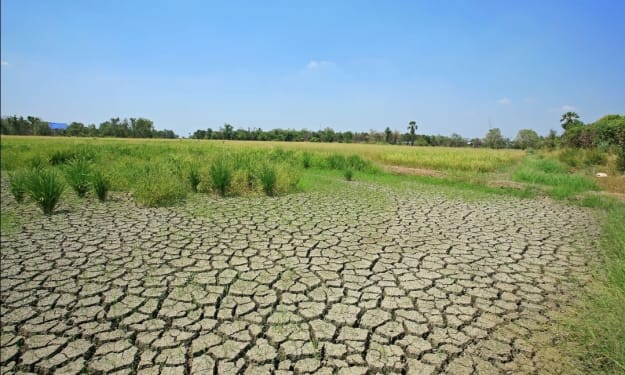
Eli Miller’s hands trembled as he gripped the worn leather reins, the horse beneath him slowly trudging through the dry, cracked earth of his family’s land. The once-thriving farm was now a shadow of what it had been. What had once been a patchwork of lush fields, tall cornstalks, and golden wheat, was now a dust bowl. His crops had shriveled in the oppressive heat, the soil too parched to nourish them anymore.
By Kharl Yamut2 years ago in Earth
Stranger Than Fiction: The Universe’s Most Bizarre and Extreme Worlds
The universe is a vast, mind-bending place filled with wonders that defy everything we consider normal. While Earth has its fair share of strange weather patterns and extreme environments, our home planet seems almost tame compared to what exists beyond our solar system. From worlds that rain liquid rock to planets covered in endless oceans, let's explore some of the most bizarre and extreme places ever discovered. A World of Two Shadows Here on Earth, we are used to having only one shadow. This is because our planet orbits a single star—the Sun. But imagine standing on a planet where you cast not one, but two shadows. This isn't science fiction; it's a reality on Kepler-16b, a planet that orbits two stars. Kepler-16b is a real-life version of the iconic world of Tatooine from Star Wars, where twin sunsets grace the sky. The presence of two suns means that light comes from two different directions, resulting in multiple shadows. While this world is a gas giant and uninhabitable for humans, its existence proves that binary star systems can host planets, challenging our previous understanding of planetary formation. An Endless Ocean Planet Water covers about 70% of Earth’s surface, but it makes up a tiny fraction—just 0.005%—of our planet’s total mass. Now imagine a world where water isn't just on the surface but extends hundreds of kilometers deep. That’s GJ1214-b, an exoplanet believed to be entirely covered by a global ocean. This ocean planet dwarfs Earth, making even our mighty Pacific Ocean look like a puddle in comparison. With depths possibly over 100 kilometers, the creatures lurking in its waters could be unlike anything we’ve ever seen. What’s even stranger is that, at extreme depths, the pressure is so intense that water turns into an exotic form of solid ice known as Ice VII. This type of ice isn’t like the frozen water we know—it remains solid even at scorching temperatures. The Planet Where It Rains Rocks On Earth, rain is just water falling from the sky, but on COROT-7b, a distant exoplanet, rain takes on a terrifying form—it’s made of molten rock. This hellish world has one side facing its star at a blistering 2,600°C, hot enough to vaporize rock. The atmosphere absorbs these rock vapors, which then condense into clouds—just like water on Earth. But instead of water droplets, these clouds rain molten rock, which cools and hardens into solid stones before hitting the ground. This makes COROT-7b one of the most extreme and inhospitable planets ever discovered. The Glass Storms of HD189773-b If you thought rock rain was bad, imagine a storm where razor-sharp glass shards are hurled sideways at thousands of kilometers per hour. That’s what happens on HD189773-b, a massive exoplanet located 63 light-years away. The planet's deep blue color might make it look inviting, but its atmosphere is anything but. It contains silicate particles that reflect blue light, giving it a stunning appearance. But those same silicates form glass-like material, which, combined with the planet’s extreme winds—blasting at 8,700 km/h (5,400 mph)—creates deadly storms of flying glass. These storms are so intense that they could travel around Earth’s entire equator in just five hours, leaving a shredded wasteland in their wake. The Fastest Winds in the Universe Even the glass storms of HD189773-b seem tame compared to the winds on another exoplanet: HD189733-b. This gas giant has winds reaching an unimaginable 22,000 mph (36,000 km/h), nearly 29 times the speed of sound. For comparison, the fastest wind ever recorded on Earth was 484 km/h (301 mph) during a tornado in Oklahoma. The winds on HD189733-b are over 70 times stronger. If you could somehow survive there and build a kite, you’d be able to circle the entire Earth in just over an hour. The Oil-Rich Moon Where You Could Fly Closer to home, one of the strangest places in the solar system is Saturn’s largest moon, Titan. It has a thick atmosphere, rivers, lakes, and even rainfall—just like Earth. But instead of water, Titan’s lakes and rivers are filled with liquid methane. The temperatures on Titan are so cold (-179°C) that water is as hard as rock, and methane, which is normally a gas on Earth, exists as a liquid. Incredibly, Titan has more natural gas and oil than all of Earth’s reserves combined. If humans ever develop the technology to extract it, Titan could become the ultimate energy source. But perhaps the most fascinating thing about Titan is that, because of its thick atmosphere and low gravity, you could theoretically fly there. If you had a pair of wings attached to your arms and jumped, you could flap around like a bird, soaring above its alien landscapes. The Universe’s Endless Surprises The worlds we've explored are just a tiny fraction of what’s out there. The universe is filled with planets and moons so strange that they defy imagination. From twin sunsets to glass storms, rock rain to endless oceans, and even moons where humans could fly, these places remind us that the cosmos is far stranger than anything we could dream up. With new telescopes and space missions constantly discovering more, who knows what other bizarre and incredible worlds await us in the great cosmic expanse?
By Lisa Ann Bastiaan2 years ago in Earth
15 Scientifically Impossible Places That Actually Exist
Our world is filled with places so strange that they challenge the laws of science. These locations defy logic, leaving scientists puzzled and travelers in awe. From rivers that boil without volcanic activity to mountains that seem to touch the sky, these places prove that reality is sometimes stranger than fiction. Buckle up as we explore 15 scientifically impossible places that actually exist. 1. The Boiling River, Peru Deep in the Amazon rainforest, the Shanay-Timpishka, or Boiling River, reaches temperatures as high as 93°C (200°F). The water is so hot that animals falling in are instantly cooked. Scientists believe geothermal activity may be the cause, but no active volcano is nearby. 2. The Sargasso Sea, Atlantic Ocean Unlike any other sea, the Sargasso Sea has no shores—it is defined only by ocean currents. This eerie, calm expanse is filled with floating golden seaweed, creating an ecosystem unlike any other on Earth. 3. The Great Blue Hole, Belize This enormous underwater sinkhole, over 300 meters (984 feet) wide and 125 meters (410 feet) deep, is a diver's paradise. It contains ancient stalactites, evidence that it was once a dry cave before sea levels rose. 4. Racetrack Playa, USA In Death Valley, massive rocks move across the dry lakebed, leaving long trails behind them. Scientists discovered that thin ice sheets and strong winds help push the stones, but the phenomenon remains mesmerizing. 5. Magnetic Hill, Canada In New Brunswick, a car in neutral appears to roll uphill on Magnetic Hill. The effect is a powerful optical illusion caused by the surrounding landscape, confusing even the most skeptical visitors. 6. The Sea of Stars, Maldives On Vaadhoo Island, tiny bioluminescent phytoplankton light up the waves at night, making the ocean glow like a starry sky. The result is a breathtaking natural wonder. 7. Devil’s Pool, Australia Located in Queensland, Devil’s Pool is a mysterious swimming hole surrounded by granite boulders. It is notorious for pulling swimmers under with unseen currents. Legends claim the pool is haunted. 8. Mount Roraima, Venezuela This flat-topped mountain, known as a "tepui," looks like a lost world. Rising 2,810 meters (9,219 feet) high, it hosts rare plants and animals that exist nowhere else. 9. The Devil’s Kettle, USA A river in Minnesota splits at Devil’s Kettle, with half of it vanishing into a mysterious hole. Despite attempts to track the water’s destination, scientists are still puzzled. 10. Rainbow Mountain, Peru This stunning mountain, striped in vibrant colors, is a result of different mineral deposits layered over millions of years. Its rainbow-like appearance seems almost too perfect to be real. 11. The Zone of Silence, Mexico In this remote desert, radio signals mysteriously disappear, and compasses stop working. Some believe it’s due to magnetic anomalies, while others suspect extraterrestrial activity. 12. The Hessdalen Lights, Norway Since the 1980s, glowing orbs of light have appeared in Norway’s Hessdalen Valley. Scientists theorize ionized gases or plasma may be responsible, but no one knows for sure. 13. Eternal Flame Falls, USA Behind a small waterfall in New York, a flickering flame burns continuously. It is fueled by natural gas escaping from underground, but how it stays lit despite the water remains a mystery. 14. Eisriesenwelt Ice Cave, Austria Stretching over 40 km (25 miles), Eisriesenwelt is the largest ice cave in the world. Stunning ice formations, created by freezing air currents, make it look like a frozen wonderland. 15. The Bermuda Triangle Perhaps the most famous mystery of all, the Bermuda Triangle has been linked to unexplained disappearances of ships and planes. While many theories exist, from rogue waves to magnetic anomalies, no single explanation fully solves its mystery. These places prove that nature still holds secrets beyond human comprehension. If you're looking for real-world magic, these destinations should be on your bucket list.
By Lisa Ann Bastiaan2 years ago in Earth
The Cosmic Journey: Exploring the Vastness of Our Universe
Earth, our home, is a small blue world floating in the vastness of space. It is where every human who ever lived took their first steps, where every story ever told unfolded. But as we move beyond our atmosphere and venture outward, we begin an extraordinary journey—one that reveals the immense scale of the cosmos. The First Steps Beyond Earth Our first milestone in space is the Moon, Earth's only natural satellite. It lies about 384,000 kilometers away, a distance so great that driving at a steady 100 km per hour would take over 160 days to reach it. From the Moon, Earth appears as a delicate sphere, a fragile oasis of life against the darkness of space. Moving farther, we reach the Sun, our source of warmth and energy. It sits approximately 150 million kilometers from Earth—one astronomical unit (AU). Light from the Sun, traveling at 300,000 kilometers per second, takes about 8 minutes and 20 seconds to reach us. If a commercial jet were to make the journey, it would take 19 years to arrive at the Sun. This immense distance highlights the vastness of space, even within our own solar system. The Journey to Mars and the Outer Planets Next, we set our sights on Mars, the Red Planet, which at its closest is about 54.6 million kilometers from Earth. However, when Earth and Mars are on opposite sides of the Sun, this distance stretches to over 400 million kilometers. Traveling to Mars in a commercial jet would take upwards of 50 years, making human exploration a significant challenge. Beyond Mars lie the gas giants—Jupiter and Saturn—followed by the ice giants, Uranus and Neptune. Neptune, the farthest known planet in our solar system, is about 4.5 billion kilometers from Earth. Sunlight takes over four hours to reach Neptune, emphasizing the sheer scale of our solar neighborhood. Voyager 1: Humanity's Farthest Explorer In 1977, NASA launched Voyager 1, a spacecraft designed to explore the outer planets. Over four decades later, Voyager 1 has traveled more than 22 billion kilometers, making it the most distant human-made object. In 1990, at the suggestion of astronomer Carl Sagan, Voyager 1 turned its camera back toward Earth and captured the now-iconic "Pale Blue Dot" image. From a distance of 6 billion kilometers, Earth appeared as a tiny, faint speck—reminding us of our smallness in the grand cosmos. Beyond Voyager 1 lies the Oort Cloud, a vast theoretical sphere of icy objects that marks the boundary of our solar system. This region extends up to 100,000 AU, nearly two light-years away. Here, the Sun's influence fades, and interstellar space begins. The Nearest Stars and the Milky Way Galaxy Moving beyond our solar system, we reach Alpha Centauri, the closest star system to our Sun. It lies 4.4 light-years away, or about 41.3 trillion kilometers. Even at Voyager 1’s speed of 17 km per second, it would take over 70,000 years to reach this neighboring star system—highlighting the immense distances between stars. Zooming out further, we encounter the Milky Way, our home galaxy, a vast spiral structure spanning about 100,000 light-years. Within it, hundreds of billions of stars, each potentially hosting planets, form a complex celestial tapestry. Surrounding Earth is a 100-light-year-wide sphere known as the human radio bubble—the farthest distance our radio and television signals have traveled. Beyond this, it is as if humanity never existed, as our signals have yet to reach most of the galaxy. Beyond the Milky Way: The Universe on a Grand Scale Leaving the Milky Way, we enter intergalactic space, where galaxies drift like islands in a cosmic ocean. Our galaxy belongs to the Local Group, a cluster of more than 50 galaxies spanning about 10 million light-years. The Local Group is just a small part of the Virgo Supercluster, a massive collection of thousands of galaxies spread across 110 million light-years. Yet, even the Virgo Supercluster is just a piece of something larger—the Laniakea Supercluster, a vast structure encompassing hundreds of thousands of galaxies and stretching over 500 million light-years. At its heart lies the Great Attractor, a mysterious region exerting a massive gravitational pull on surrounding galaxies. The Observable Universe: A Limitless Horizon At the ultimate edge of our journey lies the observable universe, spanning 93 billion light-years. Despite the universe being only 13.8 billion years old, cosmic expansion has stretched space to this incredible scale. Beyond this observable boundary, galaxies are moving away faster than the speed of light, forever beyond our reach. The true size of the universe remains unknown—possibly infinite. As we stand on Earth, gazing at the night sky, we are reminded of our place in this vast and mysterious cosmos. Our journey through space has shown us the staggering scale of the universe, from our small blue planet to the boundless depths beyond. Yet, amidst this grandeur, Earth remains our only home—a tiny, precious world in the immense expanse of space.
By Lisa Ann Bastiaan2 years ago in Earth
A Decade of Decline: Navigating Global Challenges and the Path Forward
A Decade of Decline The past decade has been one marked by various socio-economic, political, and environmental challenges, painting a picture of decline in several aspects of global society. While some may argue that there have been significant advancements in technology and innovation, the broader picture shows that the world has been grappling with issues that seem to have worsened over time. This article aims to explore the reasons behind this decline, the factors that have contributed to it, and the consequences that have been felt across nations, industries, and communities. The most glaring aspect of the past decade's decline has been the increasing economic inequality that has spread globally. The rich have continued to get richer, while the poor remain trapped in cycles of poverty with limited opportunities for upward mobility. Technological advancements and the globalization of markets have brought about economic growth in certain sectors, but this growth has been highly uneven. For example, tech giants, financial institutions, and multinational corporations have seen exponential profits, while workers in traditional industries and the gig economy have been left behind. The rise of automation and artificial intelligence has further exacerbated these issues, as jobs that once sustained millions have been replaced by machines and algorithms. The result has been an increasing number of people struggling to find stable employment, leading to the erosion of the middle class in many parts of the world. The divide between the wealthy elite and the working poor has never been so pronounced, and the social fabric that once held communities together is fraying at the edges. Politically, the past decade has seen a rise in populism and nationalism, both of which have contributed to a decline in global cooperation and collaboration. Leaders who espouse anti-immigrant rhetoric and promise to put their country’s interests first have gained traction in many nations, leading to a more fragmented and divided world. This shift has resulted in the weakening of international institutions such as the United Nations, the European Union, and the World Trade Organization, which were once seen as pillars of global governance. In the United States, for example, the election of Donald Trump in 2016 marked a turning point in global politics. Trump's “America First” agenda was seen by many as a rejection of globalism and multilateralism. Similarly, the United Kingdom's decision to leave the European Union, known as Brexit, was a manifestation of growing discontent with globalization and the loss of national sovereignty. These political movements have led to increased political polarization and a breakdown of diplomatic relations between countries. The decline in trust in political institutions has also been evident in many democracies, where voter turnout has decreased and political engagement has waned. This erosion of confidence in leadership has led to widespread frustration and disillusionment, with many people feeling that their voices are no longer being heard. The result has been an increase in civil unrest and protests, as citizens demand change and accountability from their governments. Environmental decline has been another major issue over the past decade, with climate change becoming an increasingly urgent crisis. Despite the growing body of evidence that human activity is contributing to the warming of the planet, global efforts to mitigate the effects of climate change have been insufficient. In fact, some countries have actively rolled back environmental protections in favor of economic growth, even though this has led to long-term damage to ecosystems and communities. Extreme weather events, such as hurricanes, wildfires, and droughts, have become more frequent and more severe, with devastating consequences for local populations. The Arctic ice sheets are melting at an alarming rate, while sea levels continue to rise, threatening coastal cities and entire island nations. Biodiversity is being lost at an unprecedented rate, with species extinction rates higher than ever before. These environmental changes are not only affecting the natural world but are also contributing to the displacement of millions of people, particularly in vulnerable regions such as sub-Saharan Africa, Southeast Asia, and Central America. Another facet of environmental decline has been the widespread pollution of air, water, and land. Plastic waste has become a major problem, with oceans now containing millions of tons of plastic debris. This pollution is not only harming marine life but is also making its way into the food chain, as microplastics are found in seafood consumed by humans. The overuse of pesticides and fertilizers has led to soil degradation and the contamination of water supplies, further compromising food security. Technological progress, while beneficial in many ways, has also contributed to the decline of privacy and personal freedoms. The rapid growth of social media platforms, surveillance technologies, and data collection has created a digital landscape where individuals are constantly monitored and their personal information is commodified. Governments and corporations alike have used technology to track the movements, behaviors, and preferences of individuals, often without their knowledge or consent. The rise of “big data” has led to concerns about the erosion of privacy and the potential for misuse of personal information. In some countries, authoritarian governments have used technology to suppress dissent, monitor opposition groups, and control the flow of information. In democracies, the spread of misinformation and fake news through social media has undermined trust in institutions and made it more difficult for people to discern truth from falsehoods. Additionally, the impact of the COVID-19 pandemic has added to the sense of global decline. The pandemic, which began in late 2019, exposed the fragility of healthcare systems, the inequality in access to resources, and the global interdependence that has made it difficult for countries to act independently. The social, economic, and psychological effects of the pandemic are still being felt in many parts of the world, with millions of people losing their jobs, their homes, and their lives. The pandemic also highlighted the challenges of global cooperation in times of crisis. While some countries were able to respond quickly and effectively to the outbreak, others struggled to contain the virus due to inadequate healthcare infrastructure and a lack of coordinated international support. The unequal distribution of vaccines and medical supplies further exacerbated existing inequalities, leaving vulnerable populations without the resources they needed to protect themselves. Looking ahead, it is clear that the decline of the past decade has not been without consequences. The challenges we face are interconnected and require a coordinated response from governments, businesses, and individuals. The task at hand is to reverse the trends of economic inequality, political polarization, environmental degradation, and technological surveillance, and to work toward creating a more equitable and sustainable future.
By Nora Ariana2 years ago in Earth
How Long Before Earth Dies?
How long the Earth will last is both a scientific inquiry and a deeply philosophical one. We often hear about climate change, natural disasters, and the threats posed by humanity's activities, but how close are we to the end of our planet’s habitability? And, more importantly, how long can Earth really survive in the vast expanse of space?
By Maloy Gayen2 years ago in Earth