Science
Inside Earth, there is enough gold to coat the entire planet.
Enough Gold to Cover the Earth? The Astonishing Truth About Our Planet's Riches Gold has always been a symbol of wealth and rarity. Have you ever wondered how much gold exists beneath our feet? It may surprise you to learn that there’s enough gold inside the Earth to cover the entire planet in a thin layer. This intriguing claim raises questions about the origins, distribution, and potential of gold within our planet.
By Story silver book 2 years ago in Earth
Our shared home and responsibility
The Earth community is a vast, interconnected network of living beings and natural systems, where each element plays a vital role in maintaining balance and harmony. From towering forests to sprawling oceans, from bustling human cities to the quiet hum of microbial life in the soil, Earth is a home shared by all forms of life. It’s a community built not on human borders or divisions but on the unity of existence. Yet, this community is fragile, and its future depends on how well we understand and respect the delicate balance that sustains it. A Planet of Connections The concept of an Earth community is rooted in connection—between people, animals, plants, and ecosystems. Every action taken by one part of the community has a ripple effect on the rest. The air we breathe is provided by the forests and oceans. The food we eat relies on healthy soils, pollinators like bees, and favorable climates. Rivers, lakes, and glaciers provide freshwater essential for life, connecting distant ecosystems in ways often unseen. The Earth’s ecosystems form a complex web, and humans are an integral part of it. For centuries, indigenous communities around the world have lived in harmony with nature, understanding that their well-being is tied directly to the health of the land, water, and wildlife. This relationship is a reminder that the Earth community is not just an abstract idea; it’s a reality we live in every day. The Fragility of Balance However, in recent decades, the balance of the Earth community has been threatened. Industrialization, deforestation, pollution, and climate change have disrupted natural systems at an unprecedented scale. Coral reefs, once vibrant and teeming with life, are bleaching and dying. Forests, the lungs of the Earth, are being cleared at alarming rates. Species are disappearing, with scientists warning that we are in the midst of the sixth mass extinction. These changes are not isolated incidents; they are symptoms of a deeper issue—a lack of respect and care for the Earth community. For too long, humans have acted as though they stand apart from nature, exploiting its resources without considering the long-term consequences. But nature is resilient, and if given a chance, it can recover. A Call for Stewardship The solution lies in embracing our role as stewards of the Earth. Stewardship means taking responsibility for the well-being of the entire community, not just for ourselves. It means recognizing that our actions—no matter how small—have an impact on the larger whole. In recent years, there has been a growing movement toward sustainability and environmental awareness. People around the world are working to protect endangered species, restore ecosystems, and reduce their carbon footprint. Communities are turning to renewable energy, adopting sustainable agriculture, and finding innovative ways to reduce waste. These efforts are a testament to the power of collective action. The youth, in particular, are leading the charge. Climate activists like Greta Thunberg and countless others are raising their voices, demanding that world leaders take urgent action to protect the planet. Their message is clear: the time to act is now. Rebuilding the Earth Community Rebuilding the Earth community requires more than just environmental policies and technological solutions. It demands a shift in perspective—a recognition that we are all part of something larger than ourselves. It requires compassion, cooperation, and a deep respect for all forms of life. Every individual has a role to play in this effort. Whether it’s reducing plastic use, conserving water, planting trees, or supporting organizations that protect the environment, small actions add up. Communities can work together to create greener cities, preserve natural habitats, and promote sustainable practices. Reconnecting with nature is another crucial step. When people spend time in nature, they develop a deeper appreciation for its beauty and complexity. This connection fosters a sense of responsibility and a desire to protect it. A Shared Future The Earth community is not just a concept—it is our reality. It is the air we breathe, the water we drink, and the food we eat. It is the animals, plants, and landscapes that inspire us and sustain us. We are all part of this community, and our collective future depends on how we treat it. In the end, protecting the Earth is not about saving the planet—it’s about saving ourselves. The Earth will endure, as it always has, but the question remains: what kind of community will we leave for future generations? Will it be one of destruction and loss, or one of hope and renewal? The choice is ours. ---
By Your aurthor2 years ago in Earth
The Hidden Threat: Why We Struggle to Detect Dangerous Asteroids Before They Strike
The Chelyabinsk Incident: A Wake-Up Call On February 15, 2013, an asteroid heavier than the Eiffel Tower entered Earth's atmosphere over Chelyabinsk, Russia. Moving at an astonishing speed of 19 kilometers per second, it exploded 30 kilometers above the ground, creating a blinding flash that outshone the sun. For a full 90 seconds, the explosion remained eerily silent, giving people just enough time to rush to their windows, curious about the strange event they had just witnessed. Then, without warning, the shockwave struck. It shattered windows, blew doors off their hinges, and sent glass shards flying into the faces of onlookers. Over 1,500 people were injured, and thousands of buildings sustained damage. What made this event even more astonishing was that scientists had predicted an asteroid fly-by on the very same day. An asteroid named Duende, roughly the same size as the Chelyabinsk impactor, passed within 27,000 kilometers of Earth—closer than some satellites in orbit. And yet, despite their success in predicting that near miss, astronomers completely missed the asteroid that actually hit. This was a sobering reminder of how difficult it is to detect incoming space rocks, especially smaller ones. If an asteroid that caused so much damage could slip by unnoticed, how many others might be out there, heading our way? Why Are Asteroids So Hard to Detect? Asteroids are the leftover building blocks of the solar system, composed of rock, metal, or loose rubble. While most remain in the asteroid belt between Mars and Jupiter, thousands have drifted into near-Earth orbits. These near-Earth objects (NEOs) pose the greatest potential threat to our planet. Despite our advanced telescopes, tracking asteroids is a formidable challenge for several reasons: 1. They Are Small and Dark Most asteroids don’t reflect much sunlight. Unlike the bright stars and planets, they only reflect about 15% of the light that hits them. This makes them difficult to spot, even with powerful telescopes. The smaller the asteroid, the harder it is to see—yet even small ones can be devastating. The Chelyabinsk meteor, for instance, was only about 20 meters wide—roughly the size of two school buses—but still caused significant destruction. 2. They Can Approach from the Sun’s Direction Astronomers primarily detect asteroids by spotting them against the dark backdrop of space. But any asteroid coming from the direction of the sun is virtually invisible. The Chelyabinsk meteor came from this blind spot, giving no warning before impact. This highlights a major flaw in our asteroid detection capabilities. 3. Their Orbits Are Unpredictable Asteroids don’t travel in perfect, unchanging paths. The gravitational pull of planets—especially giant ones like Jupiter—constantly nudges them off course. Even a tiny shift in trajectory can have massive consequences over time. Because of this dynamical chaos, our ability to predict asteroid paths beyond 100 years into the future is limited. To date, we have cataloged over 1 million asteroids, with around 24,000 classified as near-Earth objects. However, many smaller but still dangerous asteroids remain undetected. What If a Large Asteroid Hit Earth? While Hollywood loves depicting asteroid impacts as world-ending events, the reality depends largely on the asteroid’s size. Small Asteroids (Under 50 meters wide) Asteroids smaller than 50 meters tend to explode in the atmosphere rather than hitting the ground. The Chelyabinsk event is an example of this. While these airbursts can cause injuries and damage, they do not pose an extinction-level threat. Medium-Sized Asteroids (50 meters to 1 kilometer wide) An asteroid in this size range could destroy an entire city or region. The Barringer Crater in Arizona, a 1.2-kilometer-wide impact site, was formed by a 50-meter-wide asteroid hitting the Earth 50,000 years ago. The impact released energy equivalent to 10 megatons of TNT—600 times more powerful than the Hiroshima bomb. Large Asteroids (1–10 kilometers wide) Asteroids of this size would wipe out entire countries or cause widespread destruction. If a 1-kilometer asteroid hit the Earth, it could create a blast capable of flattening an area the size of France or Germany. Extinction-Level Asteroids (Over 10 kilometers wide) A 10-kilometer asteroid impact, like the one that wiped out the dinosaurs 66 million years ago, would cause a global catastrophe. The impact would send debris into orbit, setting the sky ablaze as it rained down, boiling everything alive. It would also trigger massive wildfires, block sunlight for years, and cause a global climate collapse. The good news? We’ve ruled out any extinction-level impacts in the next 100 years. However, city-destroying asteroids remain a real and unpredictable threat. Could We Stop an Incoming Asteroid? Right now, we have no reliable method of stopping an asteroid from hitting Earth. Several ideas have been proposed, but each has significant challenges: 1. Nuking the Asteroid Blowing up an asteroid with nuclear weapons sounds dramatic, but it may not work. Many asteroids are rubble piles—collections of loosely held rocks. A nuclear explosion might simply scatter them, creating multiple impactors instead of one. Worse, gravity might pull them back together. 2. Pushing It with Rockets Attaching rockets to an asteroid to push it off course is another idea. The problem? We don’t have rockets powerful enough, and keeping them attached to a spinning asteroid for years would be nearly impossible. 3. Using a Gravity Tractor
By Lisa Ann Bastiaan2 years ago in Earth
Conservation Job Boards
Job boards are becoming the go-to source for job searchers trying to find their next chance in the current digital era. These platforms provide a handy way to search for job openings, connect with companies, and even submit applications with a few clicks, thanks to their hundreds of postings across multiple industries. However, it can be difficult to know where to begin given the abundance of job boards accessible, which range from broad websites like Indeed and LinkedIn to specialized platforms designed for particular industries. In this post, we’ll explore my top 6 favorite job boards for the conservation field, in no particular order.
By Briar Rose2 years ago in Earth
Ecoverva's Guide to Sustainable E-waste Management
Ecoverva's Guide to Sustainable E-Waste Management: Protecting the Planet One Device at a Time Have you ever considered what happens to your electronic devices that get damaged or outdated? Whether it is kitchen gadgets or mobile phones, every device that isn’t used is considered e-waste. That is why it is important to perform sustainable e-waste management to protect our planet from this waste.
By Shiv Nandan2 years ago in Earth
Climate Change and Environmental Sustainability Understanding the Challenges and Solutions for a Sustainable Future
### **Introduction** Climate change and environmental sustainability have become two of the most pressing global issues in the 21st century. The Earth's climate is changing at an alarming rate due to human activities such as deforestation, industrial pollution, and excessive carbon emissions. Rising temperatures, extreme weather events, and loss of biodiversity threaten ecosystems, economies, and human livelihoods. While climate change presents a formidable challenge, environmental sustainability offers a roadmap to mitigate its effects and build a greener, more resilient future. This article explores the causes and impacts of climate change, the importance of sustainability, and the solutions necessary to address these challenges. ### **Understanding Climate Change** Climate change refers to long-term shifts in temperatures and weather patterns, primarily driven by human activities. The primary cause is the increase in greenhouse gases (GHGs) such as carbon dioxide (CO₂), methane (CH₄), and nitrous oxide (N₂O). These gases trap heat in the Earth's atmosphere, leading to global warming. #### **1. Causes of Climate Change** - **Burning Fossil Fuels**: Coal, oil, and natural gas combustion for energy and transportation releases vast amounts of CO₂. - **Deforestation**: Cutting down forests reduces the planet’s ability to absorb CO₂, worsening the greenhouse effect. - **Industrial Pollution**: Factories emit harmful pollutants, including GHGs and particulate matter, which contribute to atmospheric warming. - **Agricultural Practices**: Livestock farming releases methane, while excessive fertilizer use emits nitrous oxide. - **Waste Management**: Landfills produce methane as organic waste decomposes. #### **2. Consequences of Climate Change** - **Rising Global Temperatures**: The Earth's average temperature has increased by over 1°C since the industrial revolution. - **Extreme Weather Events**: More frequent hurricanes, wildfires, droughts, and floods. - **Melting Ice Caps and Rising Sea Levels**: Threatening coastal cities and island nations. - **Biodiversity Loss**: Many species face extinction due to habitat destruction. - **Food and Water Insecurity**: Changing weather patterns disrupt agriculture and freshwater supplies. ### **Environmental Sustainability: A Solution to Climate Change** Environmental sustainability focuses on meeting present needs without compromising the ability of future generations to meet theirs. It emphasizes responsible resource consumption, conservation, and the reduction of pollution. #### **1. Key Principles of Sustainability** - **Renewable Energy**: Transitioning to solar, wind, and hydroelectric power reduces reliance on fossil fuels. - **Conservation of Natural Resources**: Protecting forests, oceans, and freshwater sources to maintain ecological balance. - **Sustainable Agriculture**: Implementing eco-friendly farming practices like organic farming and crop rotation. - **Waste Reduction and Recycling**: Promoting a circular economy where products are reused and recycled. - **Green Infrastructure**: Developing cities with energy-efficient buildings, sustainable transport, and green spaces. ### **Global Efforts to Combat Climate Change** Countries and organizations worldwide are taking steps to combat climate change through policies, agreements, and innovative solutions. #### **1. The Paris Agreement** Adopted in 2015, this international treaty aims to limit global warming to well below 2°C, with a goal of 1.5°C. Nations commit to reducing emissions and enhancing climate resilience. #### **2. Sustainable Development Goals (SDGs)** The United Nations’ SDGs include goals like clean energy, climate action, and responsible consumption to promote sustainability. #### **3. Green Technology and Innovations** - **Electric Vehicles (EVs)**: Reducing dependence on gasoline and lowering emissions. - **Carbon Capture and Storage (CCS)**: Technologies that capture CO₂ emissions before they enter the atmosphere. - **Smart Grids and Energy Efficiency**: Improving electricity distribution and reducing waste. ### **The Role of Individuals in Sustainability** While governments and corporations play significant roles, individuals can also contribute to sustainability. #### **1. Adopting a Low-Carbon Lifestyle** - **Using Public Transport or Cycling**: Reducing carbon footprint from personal vehicles. - **Eating a Plant-Based Diet**: Reducing meat consumption can lower methane emissions. - **Reducing Energy Consumption**: Using energy-efficient appliances and switching off lights when not in use. #### **2. Supporting Sustainable Products and Businesses** - **Choosing Eco-Friendly Brands**: Supporting companies committed to sustainability. - **Avoiding Single-Use Plastics**: Using reusable bags, bottles, and containers. #### **3. Raising Awareness and Advocacy** Educating others about climate change and advocating for policies that promote sustainability. ### **Conclusion** Climate change and environmental sustainability are interconnected issues that require urgent action. Through a combination of policy changes, technological innovation, corporate responsibility, and individual efforts, we can mitigate the effects of climate change and create a more sustainable world. The choices we make today will shape the future of our planet, making sustainability a responsibility that belongs to everyone.
By Dipayan Biswas2 years ago in Earth
Winter Storm Watch Issued for 8 N.J. Counties: Up to 6 Inches of Snow Expected
Winter Storm Watch Issued for 8 N.J. Counties: Up to 6 Inches of Snow Expected A winter storm is set to hit New Jersey, prompting the National Weather Service (NWS) to issue a Winter Storm Watch for eight counties. Forecasters predict 4 to 6 inches of snow, with higher localized totals possible, as well as dangerous travel conditions. The storm is expected to begin late Tuesday and continue into Wednesday morning, impacting both the evening and morning commutes.
By Mahalakshmi2 years ago in Earth
The Echoes of Eternity
In the year 2150, humanity had achieved what was once thought impossible: interstellar travel. The vast expanse of space was no longer a distant dream but a tangible reality. Amidst this era of discovery, Dr. Elara Quinn, a brilliant astrophysicist, found herself at the forefront of a groundbreaking project known as "Echo."
By Saroj Kumar Senapati2 years ago in Earth
Sacred Natural sites (Uluru, Mount Kailash)
Sacred natural sites are landscapes, mountains, rivers, and other natural formations that hold deep spiritual, cultural, and religious significance for various communities around the world. Many of these sites have been revered for thousands of years and continue to be important places of pilgrimage, worship, and conservation. Two of the most famous sacred natural sites are Uluru in Australia and Mount Kailash in Tibet. Both sites hold profound meaning for indigenous and Religious communities and symbolize the connection between humanity and Nature.
By Badhan Sen2 years ago in Earth
Empowering Access to Clean Energy: How Solstice is Making Solar Affordable for All Through Community Solar Initiatives
Introduction As the world shifts towards renewable energy sources to combat climate change, one of the most promising solutions is solar energy. However, the high upfront costs and logistical challenges associated with installing solar panels often make it inaccessible for many, especially renters and those with limited financial resources. Solstice, a leader in community solar initiatives, is addressing these barriers by making solar power accessible and affordable for all. Through innovative programs that connect individuals, businesses, and communities to solar energy projects, Solstice is empowering people to take control of their energy usage while contributing to a cleaner, more sustainable future.
By Ninette Ferriera 2 years ago in Earth
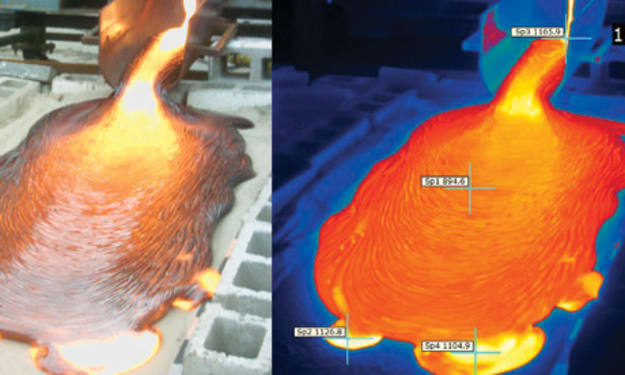
Exploring Innovative Methods to Predict Lava Flow Using DIY Experiments and Scientific Insight
Introduction Lava flow prediction is a critical aspect of volcanic hazard management, helping to mitigate risks to life and property. The unpredictable nature of volcanic eruptions poses significant challenges to scientists working to develop more accurate and effective forecasting methods. Recent advancements in the field have introduced innovative approaches to understanding lava flow behavior, blending traditional scientific research with do-it-yourself (DIY) experiments. Researchers at Syracuse University have been at the forefront of these efforts, exploring new methods of predicting lava flows through both laboratory experiments and field studies. This combination of scientific insight and practical experimentation offers valuable tools for improving volcanic risk assessment worldwide.
By Ninette Ferriera 2 years ago in Earth