Science
Kepler 22-B: The Search for a Second Earth
A Glimpse of Kepler 22-B Kepler 22-B is classified as a "super-Earth," which means it is larger than our home planet, Earth, but not quite as massive as Neptune. The planet orbits its host star, a Sun-like star known as Kepler 22, within what’s called the "habitable zone" — the region around a star where conditions might be right for liquid water to exist on the planet's surface.
By Shamsudduha shipu2 years ago in Earth
The Impact of TikTok on the Music Industry
TikTok, the short-form video platform that has rapidly grown in popularity, has had a profound impact on various industries, including the music industry. Launched in 2016 by the Chinese tech company ByteDance, TikTok has transformed how music is discovered, shared, and consumed.
By Nora Ariana2 years ago in Earth
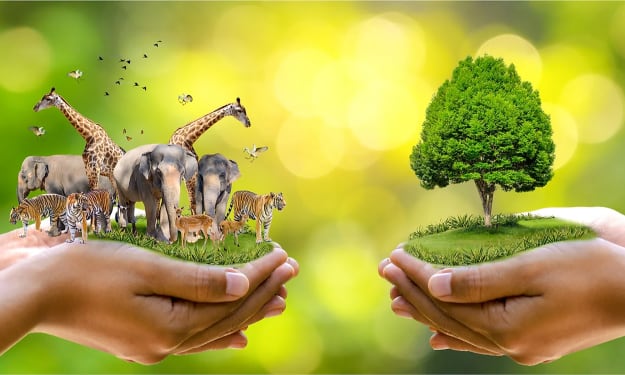
How to Help Protect Endangered Species
Endangered species are a crucial part of our planet's biodiversity, and their protection is a responsibility we all share. These species, whether animals or plants, are at risk of extinction due to factors like habitat loss, poaching, climate change, and pollution. When a species becomes endangered, it is not just an isolated event; it has broader implications for the environment and the ecosystems that depend on these species for balance.
By Nora Ariana2 years ago in Earth
The Science Behind Climate Change Denial
Climate change has become one of the most pressing global issues of the 21st century. As scientific evidence overwhelmingly supports the reality of human-induced climate change, with rising temperatures, increasing sea levels, and more frequent extreme weather events, there remains a significant number of individuals who deny the existence or severity of climate change.
By Nora Ariana2 years ago in Earth
The Future of Space Exploration: What's Next
Space exploration has always captured the human imagination. From the early days of observing the stars to the monumental achievements of the space race, humanity’s curiosity about what lies beyond Earth has driven technological advances and scientific discoveries.
By Nora Ariana2 years ago in Earth
Understanding the Science of Ocean Conservation
Ocean conservation is one of the most pressing environmental issues of our time. As the largest and most diverse ecosystem on Earth, the oceans cover about 71% of the planet’s surface and play a crucial role in regulating the climate, supporting biodiversity, and providing resources for human survival. However, over the past century, human activities have dramatically altered the health of the oceans, leading to a wide array of environmental challenges. Understanding the science behind ocean conservation is essential for developing strategies to protect this vital ecosystem and ensure its sustainability for future generations. The first step in understanding ocean conservation is recognizing the key components of ocean ecosystems. Oceans are not just vast bodies of water; they are complex systems composed of physical, chemical, and biological elements that work together to sustain life. The oceans are home to a wide variety of organisms, from microscopic plankton to the largest animals on Earth, such as whales. These organisms form intricate food webs, with each species playing a specific role in maintaining ecological balance. One of the most important functions of the oceans is their role in regulating the Earth’s climate. The oceans absorb large amounts of carbon dioxide from the atmosphere, helping to reduce the impact of greenhouse gases and slow the rate of climate change. They also act as heat sinks, absorbing excess heat from the sun and distributing it around the globe, which helps to moderate temperature extremes. This process, known as ocean circulation, is crucial for maintaining the stability of the planet’s climate. In addition to their climate-regulating role, the oceans provide numerous resources that humans depend on for survival. Oceans are a primary source of food for billions of people, particularly through fishing. They also supply valuable minerals, oil, and gas, and support industries such as shipping and tourism. Coastal ecosystems, such as coral reefs, mangroves, and wetlands, provide vital services, including shoreline protection, water filtration, and habitat for many species.
By Nora Ariana2 years ago in Earth
USDA Ordered To Remove Climate Change From Internet
The U.S. Department of Agriculture (USDA) is quietly scrubbing its websites of climate change references, raising concerns about the future of climate-focused agricultural programs. According to an internal email obtained by Politico, agency employees have been directed to delete landing pages discussing climate change and to document any remaining references for further review. While the department hasn’t made an official statement explaining the decision, the move signals a potential shift in priorities under the new administration.
By Rootbound Homestead2 years ago in Earth
What's up overhead? February 2025 arrangement of planets, eye-getting arrangements .
In February 2025, skywatchers in the USA can expect an exceptional divine occasion: an uncommon planetary arrangement including seven planets.n the night of February 28, 2025, soon after dusk, Saturn, Mercury, Neptune, Venus, Uranus, Jupiter, and Mars will adjust in the sky.our of these planets — Mercury, Venus, Jupiter, and Mars — will be effectively noticeable to the unaided eye, while Uranus and Neptune will require optics or a telescope for observation.aturn will be the most difficult to detect because of its nearness to the Sun during this period.citeturn0search0 o view this arrangement, find an area with a reasonable western skyline and negligible light pollution.egin seeing when the Sun sets, as certain planets will set in practically no time after.sing a stargazing application or star graph can help with distinguishing every planet's situation in the sky.his occasion offers a remarkable chance to observe a huge heavenly arrangement, so write in your schedule and plan for a night of stargazing.
By Masaddeque al Shishir2 years ago in Earth
The Gravity Defiers: 15 Places on Earth Where Gravity Seems to Lose Its Grip
Gravity is the invisible force that keeps us grounded, ensuring that we walk instead of float, and that objects fall to the ground rather than hover in mid-air. But what if this constant, reassuring force began to waver? Across the globe, there are astonishing locations where gravity appears to behave oddly, creating inexplicable phenomena that fascinate scientists and thrill-seekers alike. Here are 15 mesmerizing places where gravity seems to defy logic and leave visitors scratching their heads.
By David Iliya2 years ago in Earth