Nature
A Journey Through Time: The History of Life on Earth
Introduction: Welcome to a captivating journey through the annals of time, where we will delve into the rich tapestry of life on Earth. From the ancient oceans of the Cambrian Period to the modern landscapes of the Holocene Epoch, we will witness the incredible evolution, diversification, and challenges faced by the diverse array of organisms that once inhabited our planet. So, fasten your seatbelts as we embark on this enthralling adventure.
By Rohit Singh3 years ago in Earth
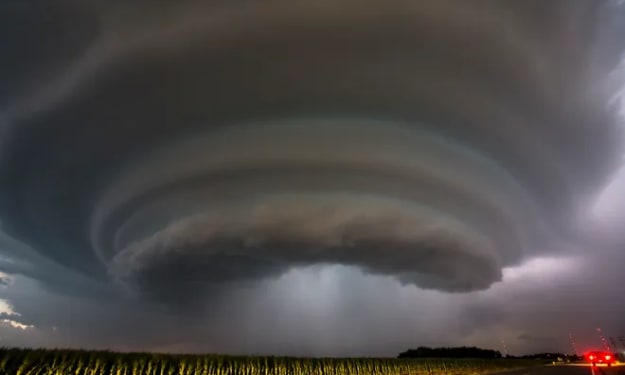
Craziest Tornadoes Ever Caught on Camera - Unpredictable Natural Agents of Destruction
Introduction: Tornadoes are awe-inspiring yet deadly forces of nature that strike fear into the hearts of many. With wind speeds exceeding 300 kilometres per hour, these powerful whirlwinds can devastate entire communities within seconds. Despite their destructive potential, many people are fascinated by the raw power of tornadoes and seek to capture their fury on camera. In this blog, we will delve deeper into six of the craziest tornadoes ever caught on camera, highlighting their immense force and emphasising the importance of safety during such natural disasters.
By Rohit Singh3 years ago in Earth
Creating more Bermuda Triangles
The Bermuda Triangle remains one of the Earth's most enigmatic places, steeped in mystery. Although the National Oceanic and Atmospheric Administration does not officially acknowledge it as a real location, legend has it that Miami, Florida; San Juan, Puerto Rico; and the island of Bermuda form the points of a perilous stretch of water. Covering an area of 1,300,000 to 3,900,000 square kilometers in the Atlantic Ocean, this region is said to be linked to numerous unexplained ship and plane disappearances, attributing them to phenomena ranging from alien abductions to interdimensional voids. While these theories lack substantiation, the fear and fascination surrounding the Bermuda Triangle must have arisen from somewhere.
By Rasika Pathirana3 years ago in Earth
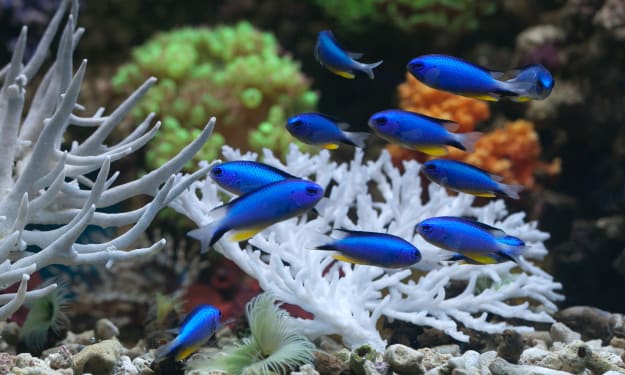
Aquascaping Tips: Using Rocks
Aquascaping is a captivating art that allows aquarium enthusiasts to transform their tanks into stunning underwater landscapes, mimicking the beauty and harmony of nature's aquatic environments. Among the key elements that contribute to the success of aquascaping are rocks. These versatile components not only enhance the visual appeal of your aquarium but also serve practical purposes, providing hiding spots, territorial boundaries, and beneficial bacteria colonization areas. Incorporating the best rocks for aquarium design can elevate your aquarium to a whole new level, creating a mesmerizing underwater paradise that delights both you and your aquatic inhabitants.
By Carolyn Renner3 years ago in Earth
Embers of Resilience
Amidst the raging wildfires that engulfed the once verdant forests, there stood a close-knit community called greenridge. For generations, its people had lived in harmony with nature, drawing strength from the lush landscape that surrounded them. However, when the flames licked at their homes and livelihoods, they found themselves battling not only the inferno but also the heartache that followed.
By maxwell kamau3 years ago in Earth
Exploring Antarctica's extremes
In case you want to study the earth's past present and future Antarctica is the best place to go, bon voyage! One thing that amazes me is these giant ping pong balls, also known as snow, the beautiful landscapes, glaciers, and its incredible snow mountains, also I learned that it has a very simple ecosystem which means it's easy to notice even its small changes that occur for example glacier melting which can cause immense changes in earth climate.
By mmindspeaks3 years ago in Earth
HOW A GIRL CAN HAVE A CURSH ON A BOY
Once upon a time in a small town, lived a shy and introverted girl named Emma. She was a diligent student with a passion for art. Her life was centered around her studies and her creative pursuits, leaving little room for romantic thoughts. But everything changed when she met Alex, a new boy who had just moved into town.
By Awobusuyi Ololade3 years ago in Earth
Gigantic Wonders
Welcome to the captivating realm of colossal creatures that inhabit our planet! We extend an invitation to embark on a mesmerizing journey as we acquaint you with 15 abnormally large animals that truly exist. From the enchanting depths of the ocean to the verdant rainforests and the vast savannas of Africa, these majestic beings have held human fascination for generations, owing to their remarkable size and unparalleled adaptations.
By Christina Moody3 years ago in Earth
The World's Deadliest Toxins
The plot is right out of a Bond movie. Georgi Markov, a communist defector from Bulgaria who worked for the BBC, felt a minor sting in his right thigh on September 7, 1978, as he crossed Waterloo Bridge in London. A man was picking up an umbrella off the ground when he turned to look behind him. He'd gotten a temperature by that evening. He died four days later. Poisoning was the cause of death. An umbrella modified to launch a pellet laced with ricin, one of the most potent naturally occurring toxins in the world, has been used to kill Markov. Unfound in animals, ricin is one of the most lethal natural chemicals. It is located in castor plant beans. Just 500 micrograms of this substance, or 5/10 000 the weight of a paperclip, is sufficient to kill an adult male. And despite its strength, ricin isn't anywhere close to becoming the most lethal natural poison on the planet. It's not just in exotic, tropical locations or, say, 1970s London where poisons can be found; they can be found everywhere in bacteria, plants, and fungus. They are essentially everywhere, and they are there for excellent reasons. But what about their molecular composition makes them so toxic? How do their chemicals assault the human body so effectively and fatally? Why does my leg start to tingle out of nowhere? Is that an umbrella? It would be morbid and all but impossible to enumerate the most lethal toxins found in nature. There are numerous plants, fungi, and bacteria that can kill you if consumed, inhaled, or injected. Additionally, there are many variables, making it challenging to determine an object's exact level of poisonousness. The potency of a chemical might vary depending on a variety of factors, including the victim's age and the presence of antibodies in your body. One exception does exist, though. There is no denying that the minuscule bacteria Clostridium botulinum produces the most deadly chemical known to man, natural or otherwise. The sickness it produces, botulism, is usually what you know about it. How dangerous is botulinum toxin? One technique used by professionals to gauge a poison's lethality is the "Lethal dose 50%" method, which determines the dose needed to kill 50% of the test population. Since it should go without saying that humans cannot be used for these experiments, toxicologists typically utilize the laboratory mouse to determine this value, which is frequently referred to as the LD50. The botulinum toxin's LD50, which is calculated as milligrams of toxin per kilogram of body weight, is around one nanogram, or a billionth of a gram, per kilogram. It follows that 9,600 people might be killed by a single sand-sized botulinum crystal. The bacteria are quite widespread, and the spores they release are found in water and soil all over the planet. They become an issue once they become active cells because at this moment they start to create seven different poisons, four of which are fatal to humans. The ten to thirty cases of C. botulinum reported annually in the United States are typically brought on by eating inadequately canned food because canning eliminates air from food to preserve it. The spores, however, may linger and establish a home in that can of Texas chili if the meal is not heated through thoroughly. Additionally, botulinum spores can be discovered in honey, where they can find a cozy spot in your body with no oxygen to keep them company. Children and adults can fight off these spores before they germinate, however, infants are unable to do so, thus babies under the age of 12 months should never consume honey. Because they release a neurotoxic as a waste product, the spores are toxic. It inhibits the release of acetylcholine, a neurotransmitter that regulates muscular contractions, to operate. This causes the victim's entire body to effectively become limp. Without antitoxin, the person will asphyxiate within a few days from a lack of oxygen. However, an antitoxin does exist, thanks to science and all those unlucky lab mice. But why, in Mathieu Orfila's name, would a bacterium evolve to fart the most lethal poison into its host? The solution is still unknown. One hypothesis is that the poisons target rival microorganisms rather than the host. They produce conditions where good bacteria cannot survive, allowing the bad bacteria to proliferate. This process is frequently simply impeded by the host, in this case, a human. Cyanide is thus similar to eating play dough in comparison to botulinum toxins. Not really, I guess. Never consume cyanide! It is one of the world's fastest-acting toxins and will not just kill your face. A surprising amount of natural foods, like almonds and the seeds of apricots and apples, as well as burning plastics and cigarette smoke also contain it. 6.4 mg per kg of body weight, or over 6 million times less lethal than botulinum, is the lethal dose (LD50) of sodium cyanide, a typical type. However, from Agatha Christie to Emperor Nero, it has been a well-liked and reliable means of execution. A triple connection between a carbon atom and a nitrogen atom forms cyanide. It binds to proteins in your cells' mitochondria, the microscopic power plants that keep your cells functioning, and prevents them from utilizing oxygen, thus asphyxiating the body at the molecular level. This is what makes it such a quick killer. The presence of cyanide in various fruits and nuts is true. For instance, the chemical included in apple seeds reacts with digestive enzymes to release cyanide. If you're a fruit, this is a great strategy to prevent animals from eating all of your seeds, but there isn't sufficient poison to kill either the animals or us. However, I suppose I wouldn't deliberately consume anything like a bowl of apple seeds. The positive aspect is that there is always vitamin B12 available if you end up with cyanide poisoning. High dosages of a precursor to the vitamin can physically pull the cyanide off of your poisoned mitochondria, after which you merely pee out the poison in the form of B12, which is why the B12 that you buy at the store contains cyanide as part of its fabulously intricate molecular structure. We will now return to our Bulgarian friend. The castor plant that caused his death is the next item on our list. Although it is indigenous to East Africa, it can be found growing in most warm climates, including the southwest United States. Castor beans contain ricin, a toxin that is produced by them. However, the actual poison is made from the mash that remains after the beans are ground into the oil. The ricin protein changes shape or denature when the oil is heated, rendering it harmless. This prevents the poison from getting into the oil, which is commonly used as a laxative. maybe it once was. not as much any longer. Result gross. Untreated ricin, however, quickly enters the body's cells when inhaled, consumed, or injected. When it gets inside, it deactivates the ribosomes, which generate the proteins your cells require to survive and multiply. When the protein train comes to an end, life comes to an end. As it kills the cell, a single ricin molecule can inactivate 1,500 ribosomes each minute. Although you might see the effects right away, ricin typically has a gradual poisoning impact that takes one to three days to kill you. Because of this, it has become popular among assassins over the years who seek to absolve themselves of their crimes. There were two extremely small passages bored into the tiny platinum plug that was discovered in Markov's leg, and each one could store roughly 1/5 of a milligram of the poison. To eliminate Markov or any other person, however, that was more than enough. And ricin's toxicity might vary based on how it reaches the body. Its lethal dose (LD50) when consumed orally is approximately 20 milligrams per kilogram of body weight or the equivalent of 8 castor beans, but when administered intravenously, as Markov did, it is only 1 minuscule microgram per kilogram. Since ricin takes several days to kill, chemicals that can prevent it from reaching ribosomes in newly formed cells in the body are being researched. Sadly, there are currently no effective antidotes for ricin. And interestingly enough, ricin is also being researched as a potential cancer treatment due to its capacity to drive cells, including cancer cells of course, to self-destruct by activating a protein-stopping mechanism. presently, if you ever come into a strychnine tree—yes, there is such a thing—stay as far away from it as you can. It is a native of Southeast Asia and India, and while its bark contains the poison brucine, the main lethality of the tree comes from its spherical, green to orange fruit, which includes the alkaloid strychnine. Strychnine's fatal dose (LD50) when taken orally has been determined through tests on sad pigeons and sad rats, putting it at the same level of lethality as ricin. The danger here, however, comes from a neurotoxin that affects the spinal cord nerves that regulate muscular contraction. Fundamentally, it suppresses the molecules that regulate nerve messages to muscles. Strychnine works by preventing that chemical, which causes your muscles to be constantly stimulated and cause convulsions that can lead to exhaustion as well as respiratory failure in as little as 30 minutes. This does not seem like a good way to go. A trip to the kingdom of fungi would round out any list of natural poisons, even if only a small portion of its hundreds of species are deadly. These poisonous species contain amatoxins, which are toxins that rival botulism in potency. The two most hazardous of these mushrooms have the not-exactly cryptic names of Death Cap and Destroying Angel, and they carry the most deadly poison of its kind, known as amanitin. Mushrooms that contain amanitin have an oral LD50 of 0.1 to 0.2 milligrams per kilogram. Thus, the amount of death is at least 30 times more than strychnine. In essence, amatoxins are rings of amino acids that obstruct the enzymes that, once again, are in charge of producing the proteins that provide life to your cells. However, in this case, they exclusively target the liver and kidney cells. They are particularly dangerous because victims don't experience symptoms for 6 to 24 hours after ingesting them; instead, they wait until their liver and kidneys start to fail and cause vomiting and diarrhea, which are frequently misdiagnosed as the flu in emergency rooms and contribute to the poisoning's high mortality rate. Immigration from Asia, where these specific species of fungi aren't found and instead have quite edible lookalikes, is to blame for the majority of these fatalities in the United States. Massive dosages of milk thistle extract, which include compounds that prevent the toxin from being absorbed by liver cells, can avert the worst harm in instances that are detected in time. But in the worst circumstances, a liver transplant is the only thing that can save the victim. I should stop now since I'm simply absolutely nervous about everything, from odd men with umbrellas to all of the once-beautiful mushrooms in the globe. The good thing is that scientists have been hard at work creating anti-toxins for these most dangerous natural compounds, and lab mice have been studying them, so if we do come upon one of them, we might not die. And in a small number of circumstances, these incredibly poisonous compounds might potentially be employed to save humans in the future by destroying cancer cells.
By Ian Sankan3 years ago in Earth
Whispers of the Wind
Amidst the ever-changing landscapes of the world, a gentle whisper of the wind carried with it a tale of sorrow and resilience. In a quaint village nestled at the edge of a vast forest, lived a young girl named Aria. Her heart, like the beating wings of the migratory birds that graced their skies, was filled with wonder and curiosity. Each year, as the seasons danced, she eagerly awaited the arrival of the migratory birds that adorned the azure canvas with their vibrant plumage and enchanting melodies.But as time went on, Aria noticed something amiss. The once exuberant symphony of the birds began to dwindle, and their once vivid colors turned muted, much like the fading memories of an old painting. Troubled, she sought solace in her grandmother, a wise and weathered woman who held the secrets of the forest in her eyes."Dear child," her grandmother said, "the winds have changed, and so have the songs of the birds. The earth weeps, and the birds feel its sorrow. Climate change has altered the paths they once traveled, making it harder for them to find their way home."Aria's heart sank with sadness, and a fierce determination took root within her. She couldn't bear the thought of these ethereal creatures losing their way and their songs fading into silence. And so, with the guidance of her grandmother, she embarked on a journey to understand and protect the migratory birds.As the seasons passed, Aria delved into the heart of the forest, immersing herself in its beauty and embracing its secrets. Along her journey, she encountered kindred spirits who shared her love for the birds. Among them was a young artist named Kai, who used his paintings to capture the essence of the disappearing birds and their songs.Together, Aria and Kai forged a bond, combining her passion for the birds and his talent for art to raise awareness about the plight of these beautiful creatures. They organized workshops, exhibitions, and gatherings to celebrate the migratory birds, inviting people from far and wide to witness their enchanting presence and understand the urgent need to protect them.As the winds continued to whisper their stories, Aria and Kai's message echoed far beyond the village. People from different corners of the world joined hands, recognizing the significance of preserving the migratory birds and their songs. Governments took action, setting up sanctuaries and protected habitats along the birds' migratory routes. Researchers and environmentalists collaborated to study the birds' behavior and find solutions to combat the effects of climate change.Yet, amidst their efforts, challenges emerged. Some dismissed the urgency of the birds' predicament, while others were burdened by the enormity of the task. Aria and Kai, however, held on to hope and remained steadfast in their mission.In the midst of their journey, they encountered an elderly man named Elias, a once renowned ornithologist whose eyes now held a hint of melancholy. He had spent a lifetime studying migratory birds and was deeply pained by the changes he witnessed."Young ones," Elias said, his voice carrying the weight of wisdom, "I have seen these birds soar across skies untouched by human interference. Their songs filled the air like magical harmonies, but now, they struggle to find their way back home. Do not let the world forget the songs of the birds, for they hold the key to the harmony of nature."Inspired by Elias's words, Aria and Kai intensified their efforts. They traveled to international conferences and spoke passionately about the disappearing songs, using the power of storytelling to touch hearts and ignite a global movement. Their dedication bore fruit, as people from all walks of life came together in a symphony of unity, protecting the migratory birds and the planet they called home.Through determination and perseverance, the winds began to carry a new melody—one of hope and resilience. The migratory birds, once on the brink of fading away, found strength in the collective efforts of humanity. Slowly but steadily, their numbers started to rise, and their songs began to echo through the forests once again.As the years passed, Aria, Kai, and their allies witnessed the fruits of their labor. The skies were once more adorned with a kaleidoscope of colors as the migratory birds returned in greater numbers, their songs filling the air like a grand symphony of nature's triumph over adversity.And so, the story of Aria and Kai's journey to protect the disappearing songs of migratory birds became a tale etched in the hearts of generations to come. It served as a reminder of the power of unity and resilience, a testament to how the whispers of the wind can carry a melody of hope, even in the face of the greatest challenges posed by climate change.
By Wisdom Bam 3 years ago in Earth