
Creating more Bermuda Triangles
human impact on the Sargassum ecosystem

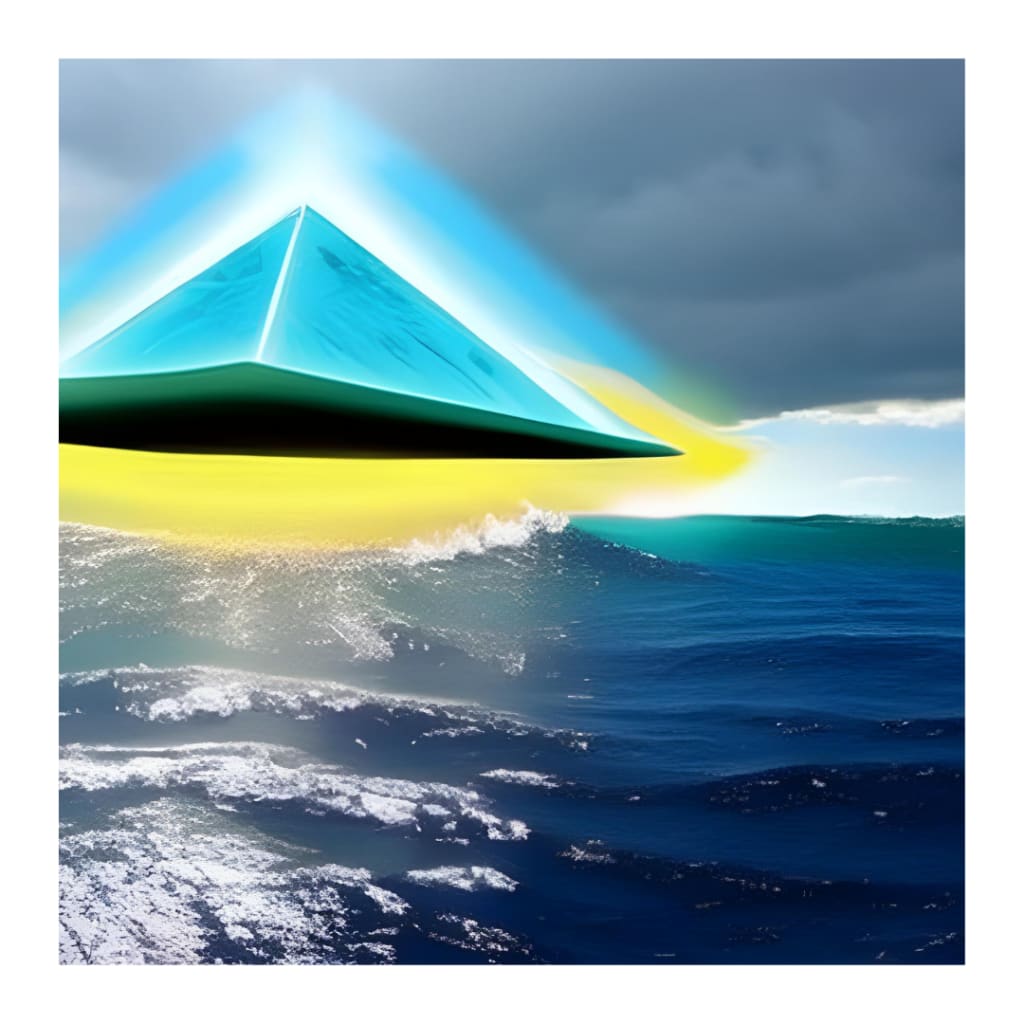
The Bermuda Triangle remains one of the Earth's most enigmatic places, steeped in mystery. Although the National Oceanic and Atmospheric Administration does not officially acknowledge it as a real location, legend has it that Miami, Florida; San Juan, Puerto Rico; and the island of Bermuda form the points of a perilous stretch of water. Covering an area of 1,300,000 to 3,900,000 square kilometers in the Atlantic Ocean, this region is said to be linked to numerous unexplained ship and plane disappearances, attributing them to phenomena ranging from alien abductions to interdimensional voids. While these theories lack substantiation, the fear and fascination surrounding the Bermuda Triangle must have arisen from somewhere.
The mystique surrounding the Bermuda Triangle may be connected to the abundant seaweed that dominates its waters. This particular seaweed, known as Sargassum, thrives in a real area of the Atlantic Ocean called the Sargasso Sea. The Sargasso Sea is unique as it lacks any land borders and is characterized by five circular currents, leaving it calm like the eye of a hurricane. The floating golden Sargassum forest serves as a haven for biodiversity, providing essential habitats, breeding grounds, and sustenance for various marine life, from shrimp to sharks. However, its dense and thick mats can prove deadly for small boats, earning the seaweed meadow a centuries-old reputation of fear among sailors.
Interestingly, the Sargassum found in the Sargasso Sea differs from typical seaweed since it begins its life and reproduces in the high seas, not on the seafloor. This allows it to travel vast distances, creating dense seaweed forests in different locations, including within the Bermuda Triangle. Since the 1970s, the Sargassum has been spreading with unprecedented growth, extending its treacherous grasp across the Atlantic and causing disruptions as far as West Africa. The immense blooms of Sargassum are fueled, in part, by human activities. Human sewage and agricultural run-off containing nitrogen and phosphorus are abundant in rivers that flow into the ocean, providing ample nutrients for the Sargassum. The use of synthetic fertilizers has significantly increased, exacerbating the situation and leading to a 35% rise in Sargassum's nitrogen content over the years.
Additionally, deforestation in the Amazon may contribute to the seaweed's proliferation due to increased nitrogen and phosphorus in the soil, washed into the Amazon river by heavy rainfall. Coupled with the effects of the global climate crisis, such as extreme flooding, more nutrients end up in the water, further supporting the growth of Sargassum. The seaweed is also believed to benefit from blowing winds carrying smoke from burning vegetation in Africa across the Atlantic, delivering additional nutrients.
As Sargassum expands, it poses several problems. The tangled masses that accumulate along beaches and in the water can trap sea turtle hatchlings, hindering their journey to the sea. Moreover, these growing seaweed blankets absorb oxygen, leading to dead zones where marine life struggles to survive.
The human impact on the Sargassum ecosystem is substantial, underscoring the need for greater environmental awareness and action. To prevent the Bermuda Triangle from further expanding and causing harm, individuals can contribute to conservation efforts. The world's collective effort in promoting responsible practices can help safeguard the delicate balance of our planet's marine ecosystems. As technology and scientific understanding continue to advance, it is possible that we may gain more insights into the phenomena occurring within the Bermuda Triangle. However, it is crucial to approach any claims or theories about the Bermuda Triangle with skepticism and critical thinking, as many of the popular explanations are not supported by scientific evidence.
The future of the Bermuda Triangle will likely involve ongoing research and exploration to understand its unique environmental characteristics, but any predictions regarding its effects or behavior remain speculative. As with any scientific investigation, it is essential to rely on peer-reviewed research and factual evidence rather than sensational claims or unfounded theories.
About the Creator
Enjoyed the story? Support the Creator.
Subscribe for free to receive all their stories in your feed.
Comments
There are no comments for this story
Be the first to respond and start the conversation.