Nature
Riding the Winds of Change
In a world once shrouded in fossil fuel emissions and the looming threat of climate change, a transformative journey towards a cleaner, greener future began. The heroes of this tale? Renewable energy technologies – solar, wind, hydroelectric, and geothermal power. These innovative solutions ignited a flame of hope, sparking a revolution that would reshape the energy landscape and combat the looming specter of carbon emissions.
By AINAMANI DICKSON3 years ago in Earth
Whisper in the wilderness . Content Warning.
Title: "Whispers in the Wilderness: A Tale of Loss and Hope"In the heart of the Amazon rainforest, where ancient trees stretched their colossal limbs towards the heavens, lived a community of scientists and conservationists dedicated to preserving the world's most precious biodiversity. Among them was Dr. Amelia Turner, a brilliant biologist whose passion for nature was only rivaled by her love for the enigmatic jaguars that prowled the dense undergrowth.Amelia's heart ached as she gazed at the elusive creatures through her binoculars. These magnificent cats, with their golden fur marked by obsidian rosettes, had long been on the brink of extinction. Each day, she witnessed the dwindling population, and it was an emotional torment she shared with her fellow scientists.The emotional impact of losing endangered species weighed heavily on them all. The daily struggle to protect these animals from poachers, deforestation, and habitat destruction left scars that ran deeper than the cuts and bruises they endured in their relentless efforts.One evening, as Amelia sat by the fire with her colleagues, their faces illuminated by the flickering flames, she confided in Dr. Carlos Ramirez, a seasoned conservationist known for his resilience. "Carlos," she began, her voice heavy with emotion, "I can't bear to think that someday these jaguars might only exist in stories and faded photographs. It's as if a part of me is slipping away with every one of them lost."Carlos nodded, his eyes reflecting the same sadness. "Amelia, you're not alone in feeling this way. We all carry the weight of these losses in our hearts. It's what drives us to keep fighting, no matter how challenging the battle becomes."Their conversation was interrupted by the distant howl of a jaguar. It was a haunting reminder of the fragility of the creatures they cherished. That night, Amelia lay awake, staring at the canopy above, haunted by the whispers of the wilderness.Over the next few weeks, Amelia and her team faced relentless challenges. They confronted illegal loggers, fought to preserve endangered habitats, and raced against time to rescue injured animals. Each success was a bittersweet victory, a reminder of how much was at stake.One morning, as they patrolled the rainforest, they stumbled upon a heart-wrenching sight: a lifeless jaguar cub, its once vibrant eyes now dulled by death. It was a devastating blow, and tears welled up in Amelia's eyes. She knelt beside the lifeless body, whispering words of apology and sorrow.The emotional toll of such losses was undeniable, but it also fueled their determination to demand more from the government. They knew that lasting change could only come through policy reform and increased funding for conservation efforts.Back at their research station, Amelia and her team drafted a heartfelt letter addressed to the government, detailing their experiences and the urgent need for stronger protection measures. They spoke of the profound emotional toll that losing these species had on them as scientists and conservationists.Their letter caught the attention of the media, and soon, their story was being shared across the nation. Public outcry grew, and pressure mounted on the government to take action. The emotional impact of their plea resonated with people from all walks of life, stirring a collective sense of responsibility.Amelia was invited to address the government officials in a televised session. With unwavering determination, she spoke of the emotional turmoil that came with losing irreplaceable species, of the pain that echoed in the hearts of scientists and conservationists alike. Her words struck a chord with the nation, and for the first time, the government acknowledged its responsibility in protecting biodiversity.In response to the growing demand for action, the government pledged increased funding for conservation efforts, stricter penalties for poaching and habitat destruction, and a commitment to international agreements aimed at preserving biodiversity. It was a moment of hope that had been born from the depths of despair.As the years passed, the rainforest began to show signs of recovery. The jaguars, once on the brink of extinction, began to thrive again, their haunting calls echoing through the trees. It was a testament to the resilience of nature and the unwavering dedication of those who had fought so hard to protect it.Amelia and her colleagues continued their work, their hearts filled with a renewed sense of purpose. The emotional scars of loss remained, but they were now accompanied by the knowledge that their efforts had made a difference. The government had stepped up, and the world had taken notice.In the end, "Whispers in the Wilderness" was a story of loss, but also of resilience, determination, and the power of emotional connection. It was a reminder that the responsibility of preserving biodiversity rested not only on the shoulders of scientists and conservationists but on governments and societies as a whole. The emotional impact of losing endangered species had catalyzed change, proving that even in the darkest of times, there was hope for a brighter future for our planet and all the magnificent creatures that called it home.
By Joseph Imasuen 3 years ago in Earth
Echoes of Enchantment
In the year 2055, humanity found itself on the cusp of a profound transformation. A series of inexplicable events rippled across the globe, bringing with them the resurgence of forgotten legends and creatures that once only existed in stories and imagination.
By Dharmesh P3 years ago in Earth
Resilience in Unity
In a world where the relentless waves of climate change were eroding coastlines and flooding communities, a global alliance of coastal cities emerged as beacons of hope. United by a common purpose and a shared determination to combat the rising tides, these urban centers embarked on a remarkable journey of resilience and innovation.
By Akorigho Victor3 years ago in Earth
The emotional symphony of sounds unfolds as the day transitions into night.
As the sun gracefully dips below the horizon, relinquishing its hold on the sky, a remarkable transformation begins to unfold – an intricate symphony of sounds that emerges as the day seamlessly transitions into the enchanting embrace of night. This symphony, composed of the rhythms of nature and conducted by the changing elements, weaves together a tapestry of emotions that captivate the senses and evoke a profound connection to the world around us.
By Korey Ebrima3 years ago in Earth
How soul part ways from the body
The soul within a person's body is said to be immortal. It only experiences death in the sense that the physical body perishes. The soul residing within a person's body does not perish. Instead, it experiences the sensation of death. What perishes is the physical body. This is the truth. The soul will taste death as it departs from the earthly realm, transitioning from one form of existence to another. That is all. However, a person retains their consciousness, thoughts, and ability to perceive the world even after the soul departs from the human body.The soul transitions from this worldly existence to the afterlife in six stages, as described in the Quran. Firstly, when a person is about to die, Allah sends angels to extract their soul. These angels work under the command of the Angel of Death. In the Quran, there are six stages that we will discuss.
By Oaseka Choudhury3 years ago in Earth
Whispers Of Eternity
Amidst the quiet tranquility of the small village of Willowbrook, where time seemed to stand still, lived a woman named Evelyn. With eyes like pools of amber and a heart that overflowed with compassion, she was a figure of solace and support for everyone who knew her. Willowbrook was a place where stories were shared under the shade of ancient oak trees, where laughter echoed through the cobblestone streets, and where the bonds of friendship were unbreakable.
By Isaac Naro3 years ago in Earth
Singapore's Liquid Gold: The Water Revolution
Singapore, a gleaming city-state known for its skyscrapers and bustling ports, has always been a hub of innovation. But in 2003, it embarked on one of its most audacious projects yet. Amidst concerns of dwindling freshwater resources and a backdrop of an ever-changing global climate, this island nation decided to challenge the status quo and look inwards, or more precisely, downwards - to its wastewater.
By Ifeoma Odumodu 3 years ago in Earth
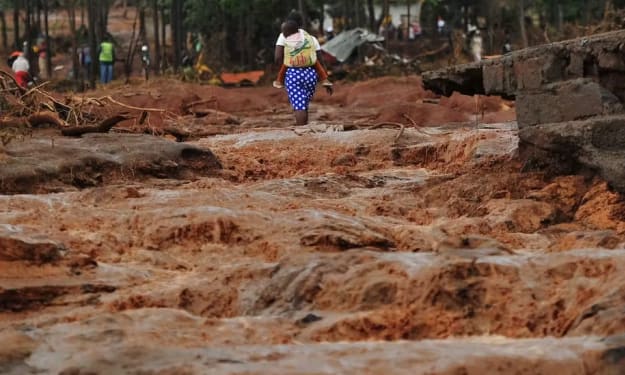
Africa's Resilience Amidst Crisis: A Struggle for Survival and Hope
Africa, a single word laden with complex imagery, evokes a narrative of a people grappling with adversity. The continent's populace stands inadequately safeguarded against external upheavals triggered by natural calamities, adverse climate conditions, wars, and conflicts. These multifaceted predicaments have sparked a dichotomy of reactions; while some take offense at the media's portrayal of Africa as besieged by myriad issues that cripple its capacity to secure food and nutritional stability for its citizens, others see a distressing pattern repeating itself annually.
By Ess Ravner 3 years ago in Earth
How the Sahara is going to turn green again
In ancient Greek mythology, there exists a tale called "Phaethon and the Sun." This narrative follows Phaethon, the young son of Helios, the god of the sun. Each day, Phaethon would embark on a journey across the sky in his chariot, bringing warmth and vitality to the Earth. Driven by a deep desire to prove his father's divinity, Phaethon visits Helios' temple. After confirming their familial relationship, Helios, wanting to grant his son a favour, allows Phaethon to make a request. Acted impulsively, Phaethon boldly asks to personally take control of his father's chariot and guide it across the heavens. Despite Helios' attempts to dissuade him, his promise compels him to relinquish control to the determined Phaethon. However, as soon as Phaethon takes charge, he loses control of the chariot, causing it to veer off course. Recklessly, the chariot hurtles through the sky, descending dangerously close to the ground and scorching the Earth's surface. According to Greek mythology, this catastrophic event resulted in the bleaching of Libya's hills into desert, the retreat of the Nile, and the darkening of the Ethiopian people's skin, Although this tale is purely mythical, it subtly suggests a more significant truth: the deserts of Libya and other Saharan countries were not always the desolate wastelands they are now.
By zitouni sofiane3 years ago in Earth