Nature
A Garden of Second Chances
Amelia gazed out of her kitchen window at the overgrown mess that was once a vibrant garden. Weeds sprouted defiantly between cracked pathways, and the once-beautiful flower beds lay in disarray. Just like the neglected garden, Amelia's heart harbored wounds that hadn't healed properly.
By Daniel Funminiyi3 years ago in Earth
Seeds Of Change
Title: "Seeds of Change: The Green Jobs Revolution" In the rolling hills of Montclair, a picturesque town nestled on the edge of a lush forest, lived a woman named Maria. She was a single mother, her life a testament to resilience and determination. Montclair had always been her home, a place where her family had deep roots in the community. But like many, Maria had seen economic hardships and struggled to make ends meet.
By Joseph Imasuen 3 years ago in Earth
Global Climate Report
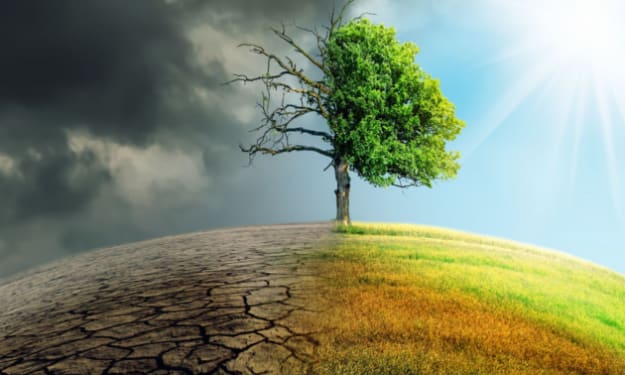
The world is facing an unprecedented environmental crisis as climate change accelerates and ecosystems continue to degrade at an alarming rate. Scientists and experts are sounding the alarm, emphasizing that immediate and collective action is essential to mitigate the impacts of these changes and secure a sustainable future for our planet.
By John Michaels3 years ago in Earth
Strangers in the Night
Amidst the rolling hills of a quaint countryside, a fierce thunderstorm raged on a dark and stormy night. The rain splattered against the windows of a small roadside diner, its neon sign flickering intermittently. Inside, the warm glow of fluorescent lights cast a cozy atmosphere, a stark contrast to the tempest outside.
By Aristide Mpoze - Hirwa3 years ago in Earth
Climate in Crisis
The sun dipped below the horizon, casting a warm, golden hue over the tranquil coastal town of Havenbrook. For years, its residents had lived in harmony with nature, drawing sustenance from the bounties of the land and sea. But as the years went by, the town began to witness the subtle yet profound changes that were sweeping across the world.
By KAYODE PRECIOUS SAMUEL3 years ago in Earth
Harmony in blossom
In the heart of a bustling city, nestled amidst towering skyscrapers and honking traffic, lay a forgotten space — a rooftop. It was an unremarkable expanse of concrete and gravel, overlooked by most as they went about their busy lives. But in the hidden corners of this urban landscape, a transformation was about to unfold, one that would mirror the intertwined responsibilities of individuals and government in the fight against climate change. Greenbrook, once a tight-knit neighborhood, had seen its sense of community waver in the face of modernity. The changing climate brought erratic weather patterns that left local farmers struggling to yield crops, leading to a creeping food scarcity. People grew distant, engrossed in their daily routines, their connection to nature fading like a forgotten memory. Mia, Alex, Sam, and Maya were lifelong friends who had witnessed the shifts in their community with heavy hearts. They were bound by memories of a time when children played in the streets, when laughter echoed through the parks, and when gardens thrived. Amidst the concrete and chaos, they longed to recapture the lost spirit of Greenbrook. One evening, as they gathered in Mia's cozy apartment, an idea sparked in Mia's eyes. She spoke of the barren rooftop that had sat untouched for years, its potential wasted. The friends exchanged excited glances, recognizing an opportunity to revive both the forgotten space and the sense of unity that had once defined their neighborhood. Thus began their journey of transformation. Alex, an engineer with a knack for innovation, devised a rainwater collection system that converted storm runoff into a lifeline for their rooftop garden. Sam, an artist with a vision, scavenged discarded materials to craft whimsical planters that adorned the space. Maya, a permaculture enthusiast, used her knowledge to carefully select native plants that could thrive in the rooftop's microclimate. Days turned into weeks, as the friends toiled to prepare the rooftop for its new purpose. Each plank of wood they laid, each seed they sowed, was a testament to their shared vision. Their hands in the soil mirrored the interconnectedness of their roles as individuals, the tendrils of their efforts weaving a tapestry of change. Soon, the rooftop began to transform. Tender shoots broke through the soil, reaching towards the sun like determined hands seeking connection. The vibrant greenery contrasted with the surrounding concrete, a living testament to what could bloom even in the most unexpected of places. But the true transformation wasn't just in the plants; it was in the hearts of the people who tended to them. Word spread across Greenbrook like wildfire. Neighbors peeked over the edge of the rooftop, curiosity piqued. Soon, a patchwork of people, young and old, came together, drawn by the allure of life amidst the urban sprawl. As they watered, weeded, and watched, connections began to rekindle. Conversations flowed, laughter rang out, and a sense of shared purpose grew. The rooftop garden was more than just a collection of plants; it was a symbol of hope, a sanctuary of unity. Just as the plants relied on each other for growth, the community depended on these moments of connection for nourishment of a different kind. It was a reminder that the fight against climate change was not a solitary battle, but a collective endeavor. The government, too, began to take notice. Local officials admired the rooftop garden's ingenuity and recognized its potential to inspire change. Encouraged by this recognition, the friends reached out to their representatives, advocating for policies that promoted sustainability and green initiatives. Their efforts mirrored the dedication they poured into their garden, and it wasn't long before the government began to implement incentives for rooftop gardens and stricter emissions regulations. As the garden flourished, so did the community's resilience. The friends organized workshops on sustainable living, inviting experts to share knowledge that echoed through the rows of plants. Just as pollinators danced among the flowers, ideas took flight, spreading a sense of empowerment that extended beyond the garden walls. Seasons changed, and the rooftop garden weathered challenges much like the neighborhood it called home. Through storms and sunrises, the friends' commitment remained unwavering. Just as plants adapted to their environment, the community adapted to a new reality where unity and sustainability went hand in hand. Years later, Greenbrook was transformed. Rooftop gardens dotted the skyline, much like the friendships that had been rekindled. The city's landscape had shifted, and the heart of the neighborhood beat with renewed vitality. The garden had sown the seeds of change, reminding everyone that they had a role to play, that the strength of unity could defy even the most daunting challenges. In the heart of Greenbrook, amidst the rustling leaves and the whispered conversations, a harmony had blossomed. The rooftop garden stood as a living monument to the intertwined responsibilities of individuals and the government in the face of climate change. Just as the community's efforts nurtured the garden, so did the government's support nurture the community. And in that harmony, a resounding truth emerged — that in the fight against climate change, the power of unity could transform even the most barren of landscapes into flourishing gardens of hope.
By Awhansu Abosede Mary 3 years ago in Earth
Whispers of the Vanishing Ice
In the remote village of Frosthaven, nestled at the foot of the mighty Glacial Peaks, the timeless tranquility of the icy giants stood as a testament to the Earth's ancient rhythms. Generations had lived here, drawing sustenance from the melting glacial waters that nourished their fields. But beneath the serene façade lay a story of transformation, one that echoed the urgent whispers of the vanishing ice. Evelyn, a young woman with a heart as deep as the glacial lakes, had grown up hearing tales of the ice's majesty from her grandmother. She would listen, wide-eyed, as her grandmother described the sparkling glaciers that once kissed the sky. Yet, with each passing year, Evelyn watched as the glaciers receded, like the ebbing tide of a fading memory. One summer morning, as Evelyn stood by the village's shimmering lake, she noticed a change in the air. The breeze carried a strange sadness, as if the glaciers were whispering their secrets to her. She knew she had to heed the call, to embark on a journey to witness the glacial retreat firsthand. Guided by her grandmother's stories, Evelyn embarked on a trek up the Glacial Peaks. The path was treacherous, winding through towering pines and babbling brooks. As she ascended, the magnitude of the landscape unfolded before her like a sacred tapestry. But the breathtaking beauty was tinged with a sense of urgency, an unspoken plea for help. At last, Evelyn reached the edge of the glacier. What should have been a majestic expanse of ice was now a shadow of its former self. The once-grand ice sheets had retreated, leaving behind a barren expanse marked by yawning crevasses. It was a stark reminder that nature's balance was unraveling before her very eyes. Tears welled in Evelyn's eyes as she traced her fingers along the ice's jagged edge. She felt a profound connection to the glacier, as if it held the memories of her ancestors and the hopes of generations yet to come. She knew she had to bear witness to this transformation, to be a voice for the vanishing ice. Evelyn returned to Frosthaven, her heart heavy with the weight of what she had seen. She gathered the villagers, sharing her experience and the urgency she felt. The once-thriving community had already begun to feel the impact of the changing climate – erratic weather patterns, unpredictable crop yields, and the encroaching threat of rising sea levels. Together, the villagers formed the "Ice Guardians," a group committed to raising awareness about the glacial retreat and its implications. They held workshops, organized expeditions to the peaks, and reached out to neighboring communities to join their cause. The village square, once a place of leisurely gatherings, became a hub of activism and solidarity. Evelyn's voice echoed far beyond Frosthaven. Her impassioned speeches resonated with people worldwide, igniting a global movement to address climate change. News of the Ice Guardians spread like wildfire, drawing scientists, activists, and leaders to Frosthaven to witness the glacial retreat firsthand. The village, once forgotten on the map, became a symbol of resilience and hope. As the years passed, the Ice Guardians' efforts bore fruit. Policy changes were implemented, industries transitioned to cleaner practices, and the world rallied to slow down the effects of climate change. Glacial monitoring systems were established, and communities joined forces to restore their delicate ecosystems. In Frosthaven, the glacial retreat had transformed from a source of anxiety to a rallying cry for collective action. Evelyn stood on the shores of the village lake, her grandmother's stories echoing in her heart. The glaciers were still retreating, but Evelyn knew that their whispers had been heard, that the world was finally coming together to heal the wounds inflicted on the Earth. The glacial peaks, though diminished, still held a timeless beauty. The Ice Guardians had not only preserved the memory of the vanishing ice but had also ignited a movement that united the world in the fight against climate change. Evelyn's journey, like the glaciers' retreat, was a testament to the resilience of the human spirit and the power of unity in the face of an ever-changing world. As the Ice Guardians' movement gained momentum, Frosthaven became a center of innovation and collaboration. Scientists from various fields gathered to study the glacial retreat, analyzing its impact on weather patterns, sea levels, and ecosystems. The village's once-quiet streets now buzzed with discussions and debates, as experts and villagers brainstormed solutions to mitigate the effects of climate change. Evelyn's small village transformed into a beacon of inspiration, drawing curious minds and passionate souls from around the globe. Visitors, young and old, arrived to hear her speak, to witness the profound change that a dedicated group of individuals could bring about. The village school, once a modest building, now served as an international center for climate education, where children learned about the Earth's delicate balance and their role in preserving it. The village lake, once considered the lifeblood of the community, became a living classroom. Students donned waders and gathered water samples, learning about the interconnectedness of water systems and how their preservation could impact the planet. The ripples they created in the water mirrored the ripple effect of change that Frosthaven had ignited. The global response to Frosthaven's plight was overwhelming. Artists created exhibitions to capture the beauty of the vanishing ice, musicians composed melodies that echoed the glaciers' whispers, and writers penned stories that carried the urgency of the changing climate. Funds poured in to support the village's initiatives, creating a sustainable model for other communities to emulate. One fateful day, an international summit was convened in Frosthaven, bringing together world leaders, scientists, activists, and artists. Against the backdrop of the glacial peaks, discussions centered on collective strategies to combat climate change. Policies were shaped, agreements were reached, and a renewed commitment to preserving the Earth for future generations was solidified. Evelyn stood before the gathering, her voice echoing with the weight of the glaciers she had witnessed retreating. She spoke not just for her village but for the millions who had joined the cause. Her words were a reminder that the Earth's beauty was fragile, that the vanishing ice was but a harbinger of the greater challenges facing the planet. The summit concluded with a solemn promise – a commitment to work together, to enact policies that reduced emissions, protected natural habitats, and nurtured a global consciousness of stewardship. The participants departed with a newfound sense of purpose, carrying Frosthaven's story with them to their respective corners of the world. Years later, the glacial retreat had slowed, thanks to the concerted efforts of communities worldwide. Frosthaven stood not just as a testament to resilience but as a reminder of what could be achieved when hearts united for a common cause. The village's lake, once a mirror of calm, now reflected a world forever changed – a world that had awakened to the urgency of climate action. Evelyn, now older and wiser, stood on the shores of the lake, watching as children played in its crystal-clear waters. The memory of the retreating glaciers was etched in her heart, a reminder of the journey that had led to this moment of hope. The legacy of the Ice Guardians lived on, a legacy of unity, determination, and the power of individuals to shape the course of history. Frosthaven, a village once on the brink of losing its identity, had transformed into a symbol of global transformation. The vanishing ice had served as a catalyst for change, propelling humanity towards a future where the scars of climate change could be healed through collective action. And as the sun set behind the glacial peaks, casting a golden hue over the village, it illuminated the truth that the power to preserve the planet lay in the hands of those willing to stand as guardians of the Earth.
By Awhansu Abosede Mary 3 years ago in Earth
Beautiful unknowns of nature
The hasty naming of the seven wonders of the natural world may have overlooked some truly awe-inspiring places. While iconic landmarks like the Grand Canyon and Victoria Falls are undeniably impressive due to their sheer size, there are other locations on our planet that possess a strange and almost alien quality. These places seem to defy the laws of science and leave scientists struggling to comprehend their formation. Not only are these places beautiful, but they also challenge our understanding of the natural world.
By Oaseka Choudhury3 years ago in Earth
A Symphony of Change
In a world not too far from our own, where the effects of climate change were more pronounced with each passing day, there lived a young woman named Maya. Maya had always been deeply connected to nature, finding solace and inspiration in the beauty of the Earth. As she grew older, the reality of the deteriorating environment weighed heavily on her heart.
By Omotoba Matthew 3 years ago in Earth
Resilience in the Fields of Hope: Nurturing Life and Unity in the Face of Climate Chaos
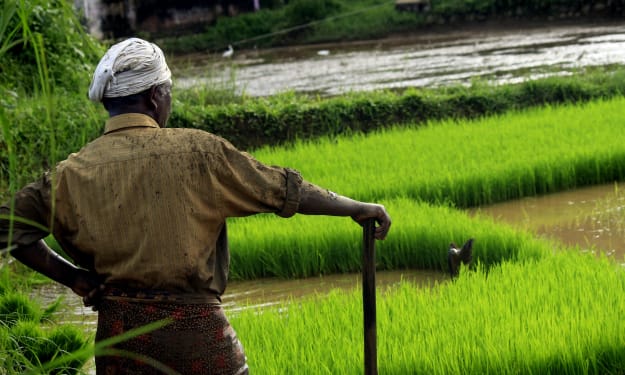
In a small village nestled between the rolling hills of East Africa, a tight-knit community thrived on the sweat of their brows and the yield of their fields. The rhythm of life was orchestrated by the changing seasons, the dance of raindrops, and the caress of the sun. Generation after generation, they tilled the earth, sowed seeds of hope, and reaped the rewards of their labor.
By Confidence Chibueze3 years ago in Earth
Whispers of the Last Tree
In the aftermath of a world forever changed by the relentless forces of climate change, a small community clung to existence in a hidden valley, shielded by towering cliffs and forgotten by time. Maya, a young woman with eyes that held the weight of the world, was a part of this community. She had grown up amidst the barren landscapes, where once-thriving ecosystems had been reduced to dust and memories.
By Nigel Harrison3 years ago in Earth