Nature
Something is happening inside the Earth scientists say.
Something is happening inside the Earth, scientists say. The Earth our home is a dynamic and ever changing planet with processes occurring deep within its interior that continue to surprise and intrigue scientists. Recent research has revealed that the Earth’s inner core a solid sphere of iron and nickel located approximately 3,000 miles beneath the surface is undergoing unexpected structural changes. These changes are not only altering the physical nature of the core but may also be influencing the length of our days albeit in subtle ways. This discovery has opened up new avenues for understanding the complex and mysterious workings of our planet’s interior. For decades scientists have been aware that the Earth’s inner core is not static. Most of the research conducted so far has focused on the core’s rotation which is believed to be slightly out of sync with the rest of the planet. However a new study has shifted the focus to other types of activity occurring within the core revealing that it is not just rotating but also undergoing significant structural transformations. These changes are thought to be driven by the immense pressures and temperatures found at such depths as well as the gravitational forces exerted by the surrounding molten outer core.
By Adnan Rasheed2 years ago in Earth
Urban Sustainability Initiatives: Transforming Cities for Environmental Resilience with Leaders such as Rasha Anayah (JHU)
As urban populations continue to swell, the pressures on infrastructure, resources, and the environment become increasingly pronounced. Climate change exacerbates these challenges, making it imperative for cities to adopt sustainable practices. Urban sustainability initiatives aim to create resilient environments that can withstand the impacts of climate change while enhancing the quality of life for residents. These initiatives encompass a wide array of strategies, from improving public transportation to enhancing green spaces, all of which contribute to more sustainable urban living.
By Dr. Rasha Anayah2 years ago in Earth
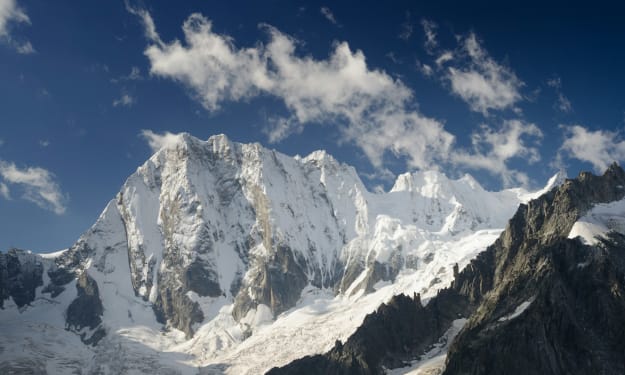
Chulu West Peak: A Challenging Himalayan Climb. AI-Generated.
Chulu West Peak (6,419m) is one of Nepal’s most exciting trekking peaks, offering a blend of high-altitude adventure, technical climbing, and stunning scenery. Situated in the Annapurna region, this peak attracts climbers who want to push their limits while enjoying breathtaking views of the Annapurna and Dhaulagiri ranges. The journey to the summit is challenging, but the reward of standing atop one of Nepal’s iconic peaks makes it a truly unforgettable experience.
By Oliver Backman2 years ago in Earth
Water's Wild Side: Unveiling the World's Strangest Aquatic Phenomena
Water, the lifeblood of our planet, often presents itself as a calm and predictable substance. Yet, beneath its familiar surface lies a world of bizarre and bewildering phenomena. From trees that "leak" to oceans that glow in the dark, water can defy expectations and astound us with its strange behavior. Prepare to be amazed as we dive into some of the weirdest, most wonderful, and occasionally dangerous water phenomena on Earth.
By Lisa Ann Bastiaan2 years ago in Earth
Inside Earth, there is enough gold to coat the entire planet.
Enough Gold to Cover the Earth? The Astonishing Truth About Our Planet's Riches Gold has always been a symbol of wealth and rarity. Have you ever wondered how much gold exists beneath our feet? It may surprise you to learn that there’s enough gold inside the Earth to cover the entire planet in a thin layer. This intriguing claim raises questions about the origins, distribution, and potential of gold within our planet.
By Story silver book 2 years ago in Earth
Our shared home and responsibility
The Earth community is a vast, interconnected network of living beings and natural systems, where each element plays a vital role in maintaining balance and harmony. From towering forests to sprawling oceans, from bustling human cities to the quiet hum of microbial life in the soil, Earth is a home shared by all forms of life. It’s a community built not on human borders or divisions but on the unity of existence. Yet, this community is fragile, and its future depends on how well we understand and respect the delicate balance that sustains it. A Planet of Connections The concept of an Earth community is rooted in connection—between people, animals, plants, and ecosystems. Every action taken by one part of the community has a ripple effect on the rest. The air we breathe is provided by the forests and oceans. The food we eat relies on healthy soils, pollinators like bees, and favorable climates. Rivers, lakes, and glaciers provide freshwater essential for life, connecting distant ecosystems in ways often unseen. The Earth’s ecosystems form a complex web, and humans are an integral part of it. For centuries, indigenous communities around the world have lived in harmony with nature, understanding that their well-being is tied directly to the health of the land, water, and wildlife. This relationship is a reminder that the Earth community is not just an abstract idea; it’s a reality we live in every day. The Fragility of Balance However, in recent decades, the balance of the Earth community has been threatened. Industrialization, deforestation, pollution, and climate change have disrupted natural systems at an unprecedented scale. Coral reefs, once vibrant and teeming with life, are bleaching and dying. Forests, the lungs of the Earth, are being cleared at alarming rates. Species are disappearing, with scientists warning that we are in the midst of the sixth mass extinction. These changes are not isolated incidents; they are symptoms of a deeper issue—a lack of respect and care for the Earth community. For too long, humans have acted as though they stand apart from nature, exploiting its resources without considering the long-term consequences. But nature is resilient, and if given a chance, it can recover. A Call for Stewardship The solution lies in embracing our role as stewards of the Earth. Stewardship means taking responsibility for the well-being of the entire community, not just for ourselves. It means recognizing that our actions—no matter how small—have an impact on the larger whole. In recent years, there has been a growing movement toward sustainability and environmental awareness. People around the world are working to protect endangered species, restore ecosystems, and reduce their carbon footprint. Communities are turning to renewable energy, adopting sustainable agriculture, and finding innovative ways to reduce waste. These efforts are a testament to the power of collective action. The youth, in particular, are leading the charge. Climate activists like Greta Thunberg and countless others are raising their voices, demanding that world leaders take urgent action to protect the planet. Their message is clear: the time to act is now. Rebuilding the Earth Community Rebuilding the Earth community requires more than just environmental policies and technological solutions. It demands a shift in perspective—a recognition that we are all part of something larger than ourselves. It requires compassion, cooperation, and a deep respect for all forms of life. Every individual has a role to play in this effort. Whether it’s reducing plastic use, conserving water, planting trees, or supporting organizations that protect the environment, small actions add up. Communities can work together to create greener cities, preserve natural habitats, and promote sustainable practices. Reconnecting with nature is another crucial step. When people spend time in nature, they develop a deeper appreciation for its beauty and complexity. This connection fosters a sense of responsibility and a desire to protect it. A Shared Future The Earth community is not just a concept—it is our reality. It is the air we breathe, the water we drink, and the food we eat. It is the animals, plants, and landscapes that inspire us and sustain us. We are all part of this community, and our collective future depends on how we treat it. In the end, protecting the Earth is not about saving the planet—it’s about saving ourselves. The Earth will endure, as it always has, but the question remains: what kind of community will we leave for future generations? Will it be one of destruction and loss, or one of hope and renewal? The choice is ours. ---
By Your aurthor2 years ago in Earth