Nature
A Memorable Experience of The Nature
As a toddler growing up in the city, I had continually been interested in the memories of the outdoors. I might frequently listen tales from my grandparents approximately the lush green forests and crystal clean lakes that they used to go to once they had been younger. These testimonies constantly stirred a longing in my coronary heart to revel in the wonders of nature for myself.
By Ahmed khizer3 years ago in Earth
"Rays of Hope: The Majestic Beauty of a Sunrise"
The sun rises at the horizon, casting golden colorings across the sky. The international awakens because the mild spreads, casting apart the darkness of night time. The rays of hope that emanate from the sunrise are like a warm embrace, wrapping the whole lot in a sense of peace and tranquility.
By Ahmed khizer3 years ago in Earth
Rotation of Earth
The way our planet works and how we experience time and seasons depend on the Earth's rotation. Day and night cycles are caused by the Earth's rotation on its axis, which completes one full rotation every 24 hours. The Earth's rotation is not as simple as it may appear, though. It is influenced by several things, including the gravitational pull of the Sun and Moon and the interior structure of the Earth. In this essay, we'll go more into the Earth's rotation, its minimal consequences, and its relevance to the environment and our daily lives.
By Haseeb Ahmad Khan3 years ago in Earth
The Mysterious Disappearance of the S.S. Baychimo and the Ghost Ship that Refused to Sink
rious Disappearance of the S.S. Baychimo and the Ghost Ship that Refused to Sink In 1931, the S.S. Baychimo, a steel-hulled cargo steamship, became trapped in ice off the coast of Alaska. The crew abandoned the ship, expecting it to sink, but the Baychimo refused to go down. Instead, it broke free from the ice and disappeared into the fog. Over the next several decades, the Baychimo was sighted multiple times, drifting aimlessly across the Arctic Ocean, even as far as the waters near Siberia. Despite numerous attempts to salvage the ship, it remained elusive, earning a reputation as a ghost ship that defied all attempts to be captured. The Baychimo was built in Sweden in 1914 and initially served as a trading vessel between Europe and the United States. In 1921, it was purchased by the Hudson's Bay Company and used to transport furs, supplies, and other goods to remote trading posts in the Canadian Arctic. For ten years, the Baychimo plied these icy waters, navigating treacherous channels and battling fierce storms. In October 1931, the Baychimo was making its way back to Vancouver after delivering a shipment of furs to the small settlement of Herschel Island. As it neared the Alaskan coast, the ship became trapped in a sudden and unexpected ice pack. The crew attempted to break free, but the ice was too thick, and the Baychimo was soon frozen in place. The crew, led by Captain Hugh Polson, abandoned the ship, taking with them as much of the cargo as they could carry. They left behind the Baychimo, expecting it to sink beneath the ice and be lost forever. But the Baychimo refused to go down. Weeks later, a passing Inuit hunter spotted the ship floating in the distance, freed from the ice and adrift in the open sea. The crew of the ship that rescued the Inuit hunter attempted to salvage the Baychimo, but the ice closed in once again, and they were forced to abandon their efforts. Over the next several years, the Baychimo was sighted numerous times, drifting aimlessly across the Arctic Ocean. In 1932, a group of traders encountered the ship and attempted to tow it back to civilization, but their efforts were in vain. The Baychimo broke free and disappeared into the fog once again. In 1933, the Baychimo was sighted off the coast of Alaska by a group of fur traders. They boarded the ship and attempted to salvage it, but the ice closed in once again, and they were forced to abandon the Baychimo to its fate. Over the next several decades, the Baychimo continued to drift across the Arctic Ocean, earning a reputation as a ghost ship that defied all attempts to be captured. In 1969, the ship was spotted by a group of Inuit hunters off the coast of Alaska, nearly 40 years after it was abandoned. By this point, the Baychimo was in a state of severe disrepair, with its hull severely rusted and its deck partially collapsed. Despite this, the ship refused to sink, continuing to drift across the Arctic Ocean and inspiring tales of its ghostly haunting. Over the years, sailors reported strange lights and eerie sounds coming from the Baychimo. Some even claimed to have seen the ghostly figure of a woman walking on deck. The mystery of the Baychimo's fate only added to its legend, with many speculating that it was cursed or haunted.
By vishnu brock3 years ago in Earth
How Plants Grow?
Plants are an essential component of our ecosystem, providing food, oxygen, and shelter for countless organisms. But have you ever wondered how they grow? The process of plant growth is complex, but in this article, we will break it down into simpler terms.
By Tamseela Arooj3 years ago in Earth
THE DARKEST EVENING
The sun was already setting by the time Olivia arrived at her family’s cottage in the woods. She had decided to take a break from her hectic city life and spend a few weeks in the serene surroundings of the forest. The last time she had been here was almost a year ago, and it felt good to be back.
By Prasanna S3 years ago in Earth
Extended Producer Responsibility: A Sustainable Approach to Environmental Protection
Extended Producer Responsibility (EPR) is a policy approach that makes producers responsible for the environmental impact of their products throughout the product's life cycle. This policy approach has gained significant attention in recent years due to the increase in waste generation and the negative impact of waste on the environment. The EPR approach encourages producers to design products that are environmentally friendly and to take responsibility for the waste they generate.
By Dora Domino3 years ago in Earth
The Day the Earth Stands Still: What Happens if the Planet Suddenly Stops Rotating
The Earth is a dynamic and ever-changing planet that has been rotating on its axis for billions of years. This rotation is what gives us our day and night cycle, as well as our seasons, ocean currents, and weather patterns. But have you ever wondered what would happen if the Earth suddenly stopped rotating? Would the consequences be catastrophic, or would life continue as normal? In this essay, we will explore the many effects that would result if the Earth stopped rotating.
By The Truth Speaks3 years ago in Earth
top 10 dangerous stairs in the world
Stairs are a basic necessity in our daily lives.Stairs have been a part of human architecture for thousands of years, and while they serve as a convenient means of accessing different levels of a building or structure, some can be quite dangerous They help us reach higher places, and they’re an essential part of many buildings. However, some stairs can be dangerous, and they can cause severe accidents. Here are the top 10 dangerous stairs in the world.
By ANEESHA RIZWAN3 years ago in Earth
Is Summers Joy Of Flowers ?
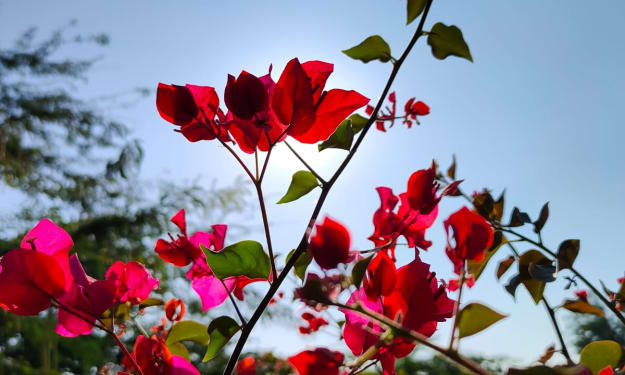
As the blazing heat of summer envelopes the world, the natural beauty of summer flowers emerges as a refreshing oasis of tranquility and elegance. With their vibrant hues, delicate shapes, and sweet fragrances, summer flowers bring a sense of joy and serenity to the senses.
By abhinandan sharma3 years ago in Earth
top 10 most expensive cities in the world
When it comes to the cost of living, some cities around the world can be notoriously expensive. From housing and food to transportation and entertainment, the expenses can add up quickly, leaving many residents struggling to make ends meet. In this article, we'll take a look at the top 10 most expensive cities in the world based on the cost of living index.
By ANEESHA RIZWAN3 years ago in Earth