Humanity
Bermuda Triangle: Solved Mysteries, Real Discoveries, and Lasting Legends
The Bermuda Triangle—that stretch of the Atlantic Ocean between Miami, Bermuda, and Puerto Rico—has fascinated the world for nearly a century. Tales of vanishing ships and disappearing airplanes have sparked imaginations, books, and conspiracy theories. But has the mystery finally been solved? What secrets does this notorious patch of ocean really hold? And is it truly so dangerous that planes avoid flying overhead?
By Reframerootsabout a year ago in Earth
Is the announcement of a 50 percent tariff on India a golden opportunity for Pakistan to increase exports to the United States?
If you’ve ever visited a South Asian grocery store in the US—perhaps with a friend or relative living in a Pakistani or Indian community—you’ve probably seen shelves lined with jars of pickles, packets of ready-made spice mixes, tins of leafy greens, and sacks of fragrant basmati rice. In New York and other US cities, there are many such stores selling every kind of Pakistani and Indian product. In addition to these community-based shops, major American retailers like Target, Walmart, and Costco also have “Indian sections” where you’ll find Haldiram spice mixes, basmati rice, dry fruits, and other South Asian goods. The large US retail chains are also stocked with clothing and textile products made in India, China, Bangladesh, and Pakistan. Now, the US has imposed tariffs of up to 50% on Indian products. This raises concerns that Indian goods will become more expensive for American consumers, but analysts believe it could also open new opportunities in US markets for countries like Pakistan. Aiza Irfan, who lives in New York, says she and her family prefer South Asian food. “We do most of our kitchen and grocery shopping from Indian stores, and around 50% to 60% of these products are imported from India,” she said. By comparison, Pakistani goods are subject to only a 19% US tariff, giving Pakistani officials hope that their products could gain better access to American markets. The Reality vs. Expectations – Can Pakistan Take a Share of the US Market in This ‘Tariff War’? Do Idia and the US Trade With Each Other? Former President Donald Trump initially imposed a 25% tariff on Indian products, and later added another 25%—citing India’s oil imports from Russia—bringing the total tariff to 50%. Starting at the end of this month, the higher tariffs will take effect, potentially making Indian products less competitive in US markets. Economists and credit rating agencies warn that these tariffs could impact India’s GDP. Bilateral trade between the US and India exceeds $128 billion. According to the US Census Bureau, India exports to the US in large quantities: raw materials for pharmaceuticals, textiles, precious stones, gold and silver jewelry, rice, spices, tea, and petrochemicals. In 2024, India exported $87 billion worth of goods to the US, while importing $41.5 billion worth from the US. The trade balance tilts in India’s favor, with a $45.8 billion trade surplus in goods alone. Can Pakistani Goods Replace Indian Products? Donald Trump once said that India is a friend of the US, “but the trade partnership is not on fair terms.” In February, Indian Prime Minister Narendra Modi visited the US, and both countries agreed to aim for $500 billion in trade by 2030. Aiza Irfan said she usually buys spices, basmati rice, and ingredients for South Asian dishes from “desi stores” like Patel Brothers and Apna Bazaar—Indian-American retail chains spread across the US that import goods directly from India and sell them at lower prices. However, she fears that after the tariff hike, Indian products will become too expensive, forcing her to switch to cheaper alternatives. Economists say the new tariffs on China and India have created more space for Pakistani goods in the US market. In 2025, Pakistan’s total exports were $35.9 billion. US trade data shows total bilateral trade between Pakistan and the US at $7.2 billion. In 2024, Pakistan exported $5 billion worth of goods to the US while importing $2 billion worth from it. The US is one of the few countries with which Pakistan enjoys a trade surplus. 50% Tariff on India – A ‘Rare’ Opportunity for Pakistan? Former Pakistani ambassador to the World Trade Organization (WTO) Dr. Manzoor Ahmad says Pakistan’s exports have been stagnant for years, but now the “tariff war” offers a chance to increase market share. A member of Pakistan’s Tariff Reforms Committee, Dr. Ahmad believes that in sectors like textiles, leather goods, sports equipment, and food products, Pakistan has the capacity and experience to capture some of India’s market share. However, India is a major trade partner for the US. Such high tariffs could hurt not only India but also US businesses. Some business circles believe both countries will eventually try to resolve the dispute. India accounts for 18% of total US imports. Challenges for Pakistani Exporter Pakistan’s biggest export to the US is textiles, but industry reactions have been mixed. Interloop, one of Pakistan’s largest exporters to the US, says big US retailers will likely wait a few weeks to see if a tariff-reduction deal happens before shifting orders. According to Interloop’s CEO, Musaddiq Zulqarnain, if the 25% additional tariff on India stays, Pakistan could benefit most in home textiles. In garments, the first choice for order shifts would be Bangladesh, then Vietnam, and then Pakistan. If Pakistan captures 10–15% of India’s market share, that could mean an additional $500–750 million in exports—but only if Pakistani prices are close to India’s. Textile exporter Masood Naqi says India’s share of the US textile market is 8%, while Pakistan’s is only 2.5%. Of Pakistan’s $17 billion total textile exports, about $4 billion go to the US. Naqi points out that Pakistan and India are not always direct competitors in textiles—Pakistan’s main rivals are China and Bangladesh, both of which have much larger production capacity. Trump has imposed 30% tariffs on China and 20% on Bangladesh. Naqi notes that some textile units are already moving out of China, and if Pakistan can create a favorable environment—especially in terms of security—it could benefit in the long term. However, he warns that if US consumers find products too expensive, they might stop buying them altogether, hurting both India and Pakistan. Dr. Manzoor Ahmad says Pakistan’s recent tariff reforms now allow easier machinery imports, making it possible for big tech companies like Apple and Samsung to invest in Pakistan—something that wasn’t feasible before. Economist Uzair Younus, based in the US, says Pakistan now has a better competitive position than India in textiles because of the lower 19% tariff, but it’s important to complete IMF-backed energy reforms to reduce production costs. A Big Opportunity for Pakistani Basmati Rice Basmati rice is grown in both India and Pakistan and is very popular in the US and Europe. In the US, most basmati rice sold is Indian, with Pakistani exports relatively small. According to S.M. Sabeer-ur-Rehman of the Pakistan Rice Exporters Association, India’s basmati rice exports to the US are three times higher than Pakistan’s. With the tariff on India, Pakistan now has a strong opportunity to increase its exports—but the next three weeks will be crucial. Pakistan exported $3.93 billion worth of rice in FY2025, of which basmati accounted for $830 million. Sabeer says he is in contact with US buyers, but most are waiting to see if Trump’s decision holds, as his policies have been unpredictable. He says Pakistan can absolutely increase its exports, but new orders will take time. In New York, Aiza Irfan says that while the US offers many rice varieties, biryani only tastes right with basmati. If Indian basmati becomes too expensive, she believes Pakistani basmati will be a good alternative since both have the same aroma and flavor.
By Real contentabout a year ago in Earth
Trending Cultural Events in Europe (August 2025)
A powerful exhibition at Paris’s Institut du Monde Arabe showcases over 5,000 years of Gaza’s rich history. Featuring over 100 artifacts—from Byzantine mosaics to Roman-era statuettes—this show explores Gaza's deep heritage as a crossroads of civilizations. It remains open until November 2, 2025, drawing considerable international attention.
By Muhammad Ibrahimabout a year ago in Earth
Copenhagen's Heat-and-Harbour Climate Strategy
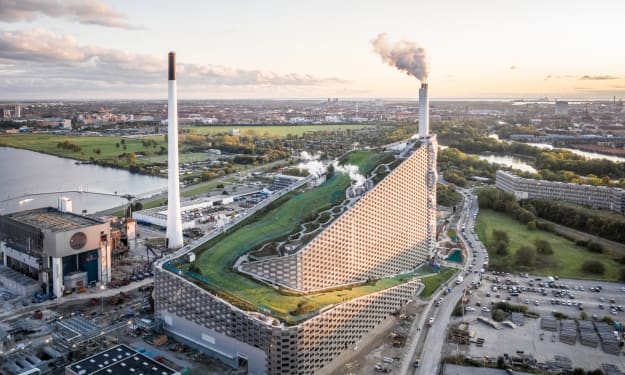
by Futoshi Tachino In a city built on islands and inlets, the wind off the Øresund smells faintly of salt and cycling grease. Copenhagen’s answer to climate change is not a single icon so much as a choreography: heat the homes with shared pipes, cool the business core with seawater, turn rainstorms into parks, and turn trash into watts—then capture the carbon on the way out. The system hums in buried mains and pump rooms, but its logic is legible on the street.
By Futoshi Tachinoabout a year ago in Earth
Singapore's Water-Linked Climate Strategy
by Futoshi Tachino In equatorial Singapore, the late-afternoon thunderheads pile up like mountains, then dissolve into warm rain that runs from green roofs to canals and finally to the sea. The city’s response to climate change is not a single showpiece but an interlocking loop: cool the homes, power the water, harden the shores, and close the carbon cycle. The hum here is chilled water in buried pipes, biogas in co-digesters, and solar panels riding the reservoir’s skin. The strategy is small-state pragmatism at system scale.
By Futoshi Tachinoabout a year ago in Earth
Bright Horizons: Celebrating the Breakthroughs of 2025
Bright Horizons: Celebrating the Breakthroughs of 2025 How Innovation, Unity, and Progress Are Shaping a Better Tomorrow Today As the sun rises on 2025, the world stands at the cusp of remarkable change. What once seemed like distant dreams are now vibrant realities, transforming how we live, work, and connect. Across continents and cultures, innovation is fueling progress, while unity among people drives solutions to some of humanity’s biggest challenges. This year is a testament to human ingenuity and resilience, offering hope and inspiration for a brighter future. A Leap Forward in Clean Energy One of the most exciting developments in 2025 is the dramatic expansion of clean energy. Solar and wind power, once supplementary sources, now dominate global energy grids. Thanks to advancements in energy storage technologies, such as ultra-efficient solid-state batteries and green hydrogen solutions, renewable energy is reliable and accessible—even in regions that previously struggled with power shortages. In cities worldwide, solar panels glitter on rooftops, while wind farms span coastlines and open plains. The result? A significant reduction in carbon emissions and cleaner air, making cities healthier places to live. Governments and private sectors have partnered in unprecedented ways to accelerate this green revolution, proving that economic growth and environmental responsibility can go hand in hand. Technology Bridging Distances The leaps in technology this year are nothing short of extraordinary. Artificial intelligence (AI) has become more intuitive and ethical, assisting in everything from healthcare diagnostics to personalized education. Telepresence robots and holographic communication have made remote work and virtual meetings feel more natural and engaging than ever before, effectively shrinking the world and connecting people regardless of location. Smart cities equipped with sensors and AI systems optimize everything from traffic flow to waste management, enhancing urban living while reducing environmental footprints. Autonomous electric vehicles glide through streets, improving safety and cutting pollution. In rural areas, internet connectivity has reached previously isolated communities, opening doors to education, commerce, and healthcare that were unimaginable just a few years ago. Health and Wellness Innovations 2025 marks a milestone in global health advancements. Breakthroughs in gene therapy and personalized medicine are helping patients manage chronic diseases with greater precision and fewer side effects. Vaccines for emerging illnesses have been developed and distributed faster than ever, thanks to AI-driven research and international collaboration. Mental health is also gaining the attention it deserves. Virtual reality therapy and AI-powered counseling apps provide accessible, stigma-free support for millions, promoting emotional wellbeing on a global scale. Communities are becoming more aware of holistic health approaches, integrating nutrition, exercise, and mindfulness into daily routines. Education for a New Era Education systems worldwide are evolving to prepare learners for the future. Interactive digital platforms, immersive simulations, and AI tutors personalize learning experiences, catering to diverse needs and paces. Lifelong learning is now a norm, with adults continually upskilling to adapt to rapidly changing job markets. Collaboration across borders allows students to engage in global projects, fostering cultural understanding and shared problem-solving skills. Schools emphasize creativity, critical thinking, and emotional intelligence—skills essential for navigating a complex and interconnected world. Global Cooperation and Social Progress Perhaps most inspiring is the growing spirit of global cooperation. Countries and organizations are working together to tackle climate change, poverty, and inequality with renewed determination. International agreements now include enforceable commitments and innovative funding mechanisms, ensuring sustained progress. Social movements are thriving, driven by awareness and technology. Communities advocate for human rights, gender equality, and inclusive policies that celebrate diversity and empower marginalized voices. The result is a more just and compassionate world where people feel seen, heard, and valued. The Path Ahead While challenges remain, the progress of 2025 is a powerful reminder of what can be achieved when humanity chooses hope and collaboration over division and despair. The breakthroughs in energy, technology, health, education, and social justice are not just stories of innovation—they are stories of people coming together to build a future that works for all. As we move forward, the collective effort to sustain this momentum is vital. Every individual, community, and nation plays a role in shaping the world we want to live in. With the tools and spirit now at our disposal, the horizon has never looked brighter.
By Muhammad Saad about a year ago in Earth
NASA Is Already Prepping To Build Trump A Nuclear Reactor On The Moon
This week NASA administrator Sean Duffy declared the Trump Administration's intention to land a working nuclear fission reactor on the moon by the end of the decade. “We're in a race to the moon, in a race with China to the moon,” Duffy said.
By Muhammad Sabeelabout a year ago in Earth
Pakistan's Vast Oil Reserves: oil Locations and Cost Breakdown and affects on India
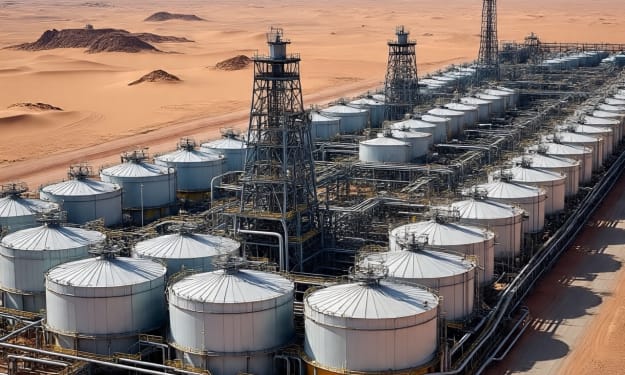
US President Donald Trump says that a deal has been reached between the US and Pakistan to extract Pakistan’s vast oil reserves. In a message released on his social media website ‘Truth Social’ last week, the US president said that Washington has reached an agreement with Islamabad, under which the two countries will work together to convert Pakistan’s vast oil reserves into recoverable reserves. He said that currently, “we are in the process of selecting the oil company that will lead this partnership.” He added that “who knows, maybe one day they will be selling oil to India.” According to data released by Pakistan Petroleum Information Services, domestic oil production fell by 11 percent in the first nine months of the current fiscal year. According to the data, production in Pakistan’s major oil and gas fields decreased during this period. In these fields, apart from the major fields like Kadapur Field, Sui Field, Uch Field, Mari Field, other fields also recorded a decrease. The local production of major oil and gas exploration and production companies operating in Pakistan also recorded a decrease. In such a situation, after this statement was made by the US President, many users were seen asking the question, where are the reserves that are being talked about? Also, in which areas oil exploration was done in Pakistan and can the announcement of US partnership in this sector affect China's investment in Pakistan? many oil reserves does Pakistan have? Various companies are working in the oil exploration sector in Pakistan, but no significant increase has been seen in the exploration and production of oil in the country in the last few decades. Pakistan's Petroleum Minister Ali Pervez Malik says that international studies have proven that Pakistan has vast reserves of oil and gas. On the other hand, according to data released by the Pakistan Petroleum Information Services, the country's oil reserves were up to 23.8 million barrels as of December 2024. Muhammad Wasi Khan, an energy expert who has held senior positions in several oil companies, said that the oil produced locally in Pakistan meets only 10 to 15 percent of the country's needs, while the rest 80 to 85 percent is imported from abroad. He said that according to an assessment by the US Energy Information Administration, Pakistan has petroleum reserves of up to nine billion barrels, but according to him, they cannot be considered proven reserves until they become commercially viable. Muhammad Wasi said that past efforts to explore oil in Pakistan have not been very successful due to lack of investment in this work and the required technology. He said that under the announcement made by the US President, it appears that the US government will ask a major oil company to work to extract oil reserves in Pakistan. Where is oil exploration taking place in Pakistan? Pakistan’s Petroleum Minister Ali Pervez Malik said that Pakistan has invited bids for auction in different blocks for offshore oil and gas exploration. Speaking to local media, he said that auctions will be held for drilling wells in two blocks for offshore oil and gas exploration. The Petroleum Minister said that tenders have been issued for the auction of 26 blocks in the Indus Basin and 14 blocks in the Makran Basin for offshore oil and gas exploration. He said that domestic and international companies will submit expressions of interest or expressions of interest by October this year. Ali Pervez Malik said that companies from the United States, Turkey, China and Kuwait want to come and work in Pakistan. The Petroleum Minister said that 33 blocks should be auctioned on those offshore and a Turkish company wants to invest in Pakistan. Pakistan has not yet achieved significant success in offshore oil and gas exploration, and the country's production depends on these reserves found on the surface. Currently, oil exploration is taking place in all four provinces of the country. According to experts in this field, the most work in this regard is being done in Sindh province. According to the Pakistan Credit Rating Agency's report on oil and gas exploration and production in Pakistan, the total number of oil and gas wells in Sindh is 247, in Punjab this number is 33, while in Khyber Pakhtunkhwa 15 and in Balochistan four wells are being worked on. According to the report, work has been completed on many of these wells, that is, oil and gas have been extracted and are now dry, while work is underway on others. According to Dr. Aafia, an energy expert at the Pakistan Institute of Development Economics, technically, nothing special is being done in Balochistan and Khyber Pakhtunkhwa at the moment, the main reason being security concerns, tax and revenue structures, etc. She said that the provinces can be asked to fulfill their security responsibilities by giving them a higher share in revenue sharing. In Pakistan, the Oil and Gas Development Company discovered large reserves of gas and oil in Betni FR area of Lakki Marwat district of Khyber Pakhtunkhwa in September 2021 and the Mari Petroleum Company in June 2022 in Tehsil Shiva in Bannu West Block located in North Waziristan, which was the last major discovery in this regard. Parliamentary Secretary of the Petroleum Division Mian Khan Bugti said that a lot of work is currently being done in Sindh, while there are oil reserves in Balochistan and Khyber Pakhtunkhwa, which the government is working to extract. Regarding US President Trump's announcement, he said that it is too early to say anything about it, but he described the statement as a positive development for the country's oil sector. any American company worked on devellrese in Pakistan in the past?
By Real contentabout a year ago in Earth
A Letter To The Last Human On Earth
A Letter to the Last Human on Earth By Abdullah, If you are reading this, it means the world has outlived us all — all but you. I don’t know your name. I don’t know your face. I only know that you exist, and for now, that’s enough. This letter was encoded into the memory banks of the last remaining satellite, endlessly orbiting the scorched shell we once called Earth. It was designed to find you, should anyone remain. I write to you from the year 2187. Or what used to be 2187. Time has since become irrelevant. The days no longer rise and fall the way they used to. The sun is a distant flicker behind the clouds of ash, and clocks are just relics of rhythm we once understood. When I was a child, humanity still believed it was untouchable. We wore our progress like armor — cities taller than mountains, machines smarter than minds, and weapons more powerful than gods. We lived like kings and died like fools. The Collapse began slowly. First, the oceans rose, inch by inch. Then came the famines, the wildfires, the mass migrations. Borders dissolved. Nations fell. And then… the silence. The kind of silence that rings louder than war. I was a climate archivist — a fancy term for someone who collected the dying breaths of ecosystems and filed them into databases no one would ever read. I once watched the last polar bear die in real-time. It lay down on a shrinking ice sheet, curled into itself, and disappeared beneath the surface. I filed that moment under “Extinct: Ursus maritimus.” I cried. Not for the bear, but for the fact that no one else did. Before the end, they tried to save us. Artificial biomes. Underground cities. One-way rockets to Mars. But humans were always better at dreaming than doing. In the end, the rich fled, the poor stayed, and the planet didn’t care either way. I stayed behind. Not out of bravery, but guilt. I was one of the architects of our memory, and it felt wrong to leave the ruins behind. I wandered through dead cities, writing poems in the dust on broken windows, speaking to the wind as if it remembered me. And now, there’s you. Are you the child of survivors? A sleeper in some cryo-pod that finally blinked awake? Or are you something else entirely — more evolved, less human, a whisper of what we once were? Do you remember what it meant to laugh until you couldn’t breathe? To share warmth with another body, not for survival, but because it felt good? Do you know the sound of music, the taste of strawberries, the feel of grass under your feet? Or are those things just myths now? If you’ve never known these things, let me tell you: they were real. They mattered. The world, broken as it was, held moments of impossible beauty. I once lay in a field of wildflowers as a meteor shower danced overhead, and for a moment, I believed we might make it. We didn’t. But maybe you will. This letter isn’t meant to haunt you with memories. It’s meant to remind you that you’re not a ghost. You’re a continuation. A chance. You carry in your blood the mistakes of billions — and the potential to do better. If there’s anyone else out there, find them. Touch their hand. Look into their eyes. Speak. Build. Mourn us if you must, but don’t worship us. We were deeply flawed. We built wonders and burned them down. We loved, and we destroyed. But above all, we hoped — foolishly, fiercely. Now that burden, that gift, is yours. I don’t know how much longer I’ll last. My bones ache like ancient tree roots, and my breath comes shallow these days. I write this beneath the dim glow of solar lamps, surrounded by dusty shelves of books no one reads. I sleep with an old globe next to me, spinning it some nights like I’m asking it to remember. So, if you find this — if you are still out there — promise me something. Don’t just survive. Live. With wonder, With courage, With the weight of all we were, And the light of all you still could be. Yours, Elan Mora Archivist of the Lost World
By Abdullah Khan about a year ago in Earth