Humanity
Beneath the Broken Sky
The sun rose over Gaza that morning like it always did—soft, hesitant, and blood-orange against the horizon. But beneath that sky, a child named Amina crouched in the corner of a collapsed building, her small fingers clutching a dirty cloth to muffle her brother’s cries. Amina was only eleven, but war had aged her eyes. Once filled with curiosity and the sparkle of childhood, they now reflected the smoke-stained ruins of a city that no longer recognized itself. It had been three weeks since the last ceasefire was shattered by the thunder of bombs and the howl of fighter jets overhead. In that time, her neighborhood of Shuja'iyya had become a graveyard of concrete, twisted metal, and unanswered prayers. The streets where she had once skipped rope with her cousins were now rivers of dust and blood. Her parents had been alive when the bombing started. Her mother had kissed her forehead the night before, whispering hope into her ear: "Tomorrow will be better, habibti." But tomorrow brought a missile, and Amina never saw her again. There were no funerals. No mourning rituals. Just the hurried scraping of hands in rubble, the quiet sobs of fathers digging for daughters, and the sickening silence when nothing could be found. She and her younger brother, Adam—barely five—had found shelter beneath the shell of what once was a bakery. It still smelled faintly of flour and warmth, ghosts of normalcy haunting its crumbling walls. A young medic named Samir, no older than sixteen, brought them water when he could. Food was rare. Hope, rarer. Outside, the world debated. Leaders spoke of “self-defense” and “restraint,” while screens flickered with images too sanitized to feel real. But Gaza did not need more debates. It needed breath. It needed life. It needed the world to remember that its children were not statistics. Amina had stopped crying days ago. She learned quickly that tears wasted water. She had one job now—keep Adam alive. She sang to him at night, soft songs their mother used to hum as she kneaded dough. Her voice cracked with thirst, but Adam smiled when she sang. That was enough. One day, Samir didn’t come. She waited. Morning passed. Then night. The city trembled with distant shelling, and the sky wept sparks. It wasn’t until the fourth day that she learned what had happened—an airstrike had hit the clinic where he volunteered. There were no survivors. Not even the bandages. Amina didn’t cry. She simply took Adam’s hand and stepped into the street. The sun was setting again, golden light glinting off broken glass and burnt rebar. The warplanes were quieter now, circling farther north. A brief pause, perhaps. Or just another trick of time. As they walked, Amina saw familiar faces—some alive, most on murals painted across the ruins. Children with balloons, smiling mothers, grandfathers holding keys to homes that no longer existed. Martyrs, they called them. But she didn’t want to be a martyr. She just wanted a morning without explosions. A night without nightmares. A chance to grow. In the middle of the rubble, she stopped. There, half-buried beneath a slab of concrete, was a doll. Its fabric torn, its eyes scratched. She picked it up, brushing off the ash. Adam reached for it. She gave it to him. That night, under the fractured remains of Gaza’s sky, they curled together—two tiny souls amid the silence of a world that had forgotten them. Amina whispered one more song. Not for comfort. Not for hope. But to remind the stars above: We are still here. And as bombs fell once more in the distance, Gaza wept with them. A land not of terror, but of tragedy. Not of violence, but of victims. A land screaming not for revenge—but for recognition. And the sky, broken and bruised, held them gently. For even in genocide, children dream.
By Tayyab Khanabout a year ago in Earth
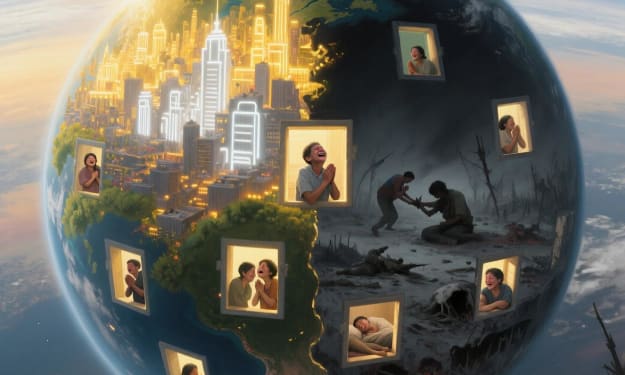
New World Order –Understanding the Next Global Paradigm
The term “new world order” often emerges during periods of sweeping change—whether geopolitical, economic, or technological. Across history, every generation faces moments where the balance of global power, alliances, and priorities is reset. Today, the phrase “new world order” sparks debate in headlines, strategy rooms, and daily conversations. But what does it really mean? Who drives these changes, and how might they shape the years ahead?
By Reframerootsabout a year ago in Earth
Jerome Foster II: A Climate President in the Making. AI-Generated.
At just 23 years old, Jerome Foster II has already advised the White House, co-founded a national youth voting initiative, and shaped conversations around environmental justice at the federal level. He is not running for public office. But his trajectory — steeped in policy, protest, and civic engagement — raises a timely question: What would it look like for the United States to finally elect a president who puts climate at the center of national governance?
By Alex Young about a year ago in Earth
Body Emerges from the Glacier After 28 Years
Body Emerges from the Glacier After 28 Years: Kohistan Witnesses a Stirring Scene of Nature, Memory, and Loss In accordance with the immutable laws of nature, ice has long been known to preserve objects, bodies, and memories across decades — sometimes even centuries. It conceals the past within its cold grip, keeping it frozen in time until the moment of release arrives. Such a moment has recently occurred in the snow-clad highlands of Kohistan, where an extraordinary discovery has captivated local residents and resonated deeply with anyone who has known loss. From the mighty glaciers of the Lady Pals region — tucked deep within the formidable Bar Pals mountains — a body has emerged after nearly three decades. The remains of Naziruddin, son of Behram from the Salih Khel tribe, have been found in a remarkable state of preservation, having been locked in the embrace of ice for 28 long years. The body was recovered wearing a waistcoat, and, astonishingly, an intact national identity card found in the pocket confirmed his identity beyond any doubt. This discovery has reopened a chapter that the people of the region — particularly the family and loved ones of Naziruddin — thought had long closed. Known affectionately as Hajo by his friends and kin, Naziruddin disappeared in 1997 during a return journey from Supt, a remote area often traversed by nomads and local traders. As per accounts shared by village elders and local historians, he had set out on horseback, likely accompanied by supplies, perhaps even with news to share or plans to unfold. But fate had different plans. He never reached his home. Somewhere along the treacherous trail back, he and his horse slipped into a deep crevasse in the Lady Glacier — one of many hidden dangers of the unforgiving mountainous terrain. Following his disappearance, local search teams and villagers carried out exhaustive efforts to locate him. In those days — absent of drones, GPS trackers, or sophisticated rescue equipment — all they had was their knowledge of the land, sheer determination, and the support of one another. For days, they combed the glaciers, called out his name, and prayed for a sign. But nature remained silent. The glacier kept its secret, and Naziruddin was eventually declared missing, his fate buried beneath layers of snow and sorrow. Years passed. Life in Kohistan moved on. Seasons changed, generations grew up hearing only stories of the man who disappeared into the glacier. His name became a whispered memory in the valleys — a quiet reminder of nature’s majesty and mercilessness. And then, nearly three decades later, in the summer of 2025, the glacier finally released its long-held secret. As global warming and rising temperatures continue to impact even the most remote corners of the Earth, the glaciers of Kohistan have begun to recede. Melting patterns, once predictable and seasonal, have grown erratic. During one of these recent melting periods, local shepherds grazing their flocks in the higher altitudes of the Bar Pals region noticed something unusual. Near the edge of the glacier, they saw what appeared to be human remains — a haunting and unexpected sight. They immediately informed the nearby villagers. A group of elders and residents assembled and hiked up to the spot, driven by both curiosity and caution. What they discovered was nothing short of miraculous — the frozen remains of a man still partially clothed, preserved by the cold, as if time had simply paused around him. The intact identity card, nestled inside the folds of his waistcoat, left no doubt: this was Naziruddin. News of the discovery spread quickly, sending shockwaves through the entire region. For some, it was a spiritual moment — a sign from nature, or even a divine gesture offering closure after so many years of unanswered prayers. For others, it was a deeply emotional reckoning, bringing back memories that had been buried under decades of acceptance, sorrow, and silence. Naziruddin’s family was notified without delay. As the tragic confirmation reached them, they rushed to the site — a journey filled with trembling anticipation and heartache. When they saw the body of their beloved, long presumed gone forever, emotions overflowed. Grief mingled with relief. Tears flowed freely. After 28 long years of waiting, wondering, and mourning in uncertainty, they could finally offer him the dignity of a proper burial. Local residents describe the scene with both awe and heartbreak. Elderly villagers who remembered the day he vanished said that seeing his body again was like reopening an old wound — but also like turning the final page of a painful story. One elder recalled, “We thought he had become a part of the mountains forever. Now, it feels like he came back to us… not alive, but returned.” The community came together in solidarity with the family. A funeral was arranged with traditional rites. Men, women, and children from surrounding hamlets and valleys gathered, not just to mourn Naziruddin, but to bear witness to a story that spoke to the enduring power of memory, the strength of nature, and the resilience of the human heart. This incident has sparked broader conversations about how many others may have met similar fates in these majestic but dangerous mountains — their stories still hidden beneath layers of ice. It has also highlighted the need for documentation of local oral histories, as well as the importance of equipping rescue teams for extreme terrain. For the Salih Khel tribe, and for Naziruddin’s immediate family, his return — even in death — has been bittersweet. His grave now lies not far from the glacier that held him for so long, a place where visitors may go not only to pay respects, but to reflect on the fragility of life and the power of patience. In the end, the mountains gave him back. And in doing so, they gave his people peace.
By Ikram Ullahabout a year ago in Earth
The Rise of Giant Rats: What’s Lurking in Britain's Backyards?
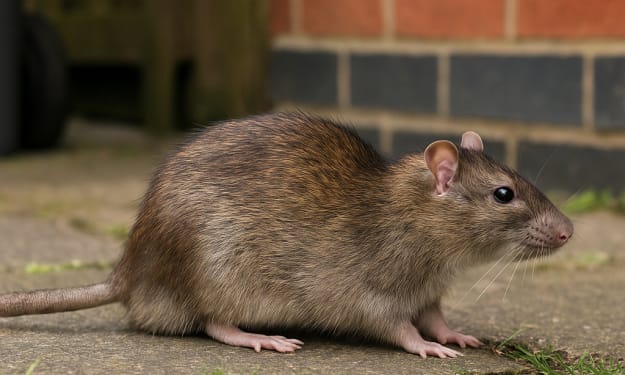
When a pest control technician recently stepped into a quiet house in Normanby, North Yorkshire, he wasn’t prepared for what he found. Inside a wall cavity, hidden from view, was a rat unlike any local resident had ever seen — measuring a staggering 22 inches from nose to tail, roughly the size of a small cat. For the family living there, it was a shock. For the rest of Britain, it’s a warning sign.
By Kamran Zebabout a year ago in Earth
Yasmin Bashirova: Shaping a New Era of Human Rights Advocacy
Human rights violations occur not just through unjust laws but through silence, neglect, and deeply rooted cultural biases. Legal channels, while critical, are often reactive, limited in scope, or inaccessible to those most affected. That is why non-legal human rights advocacy—community-based, educational, creative, and people-powered—remains one of the most potent tools for change. Among those redefining this space is Yasmin Bashirova, whose work illustrates the depth and breadth of impact that can be achieved without entering a courtroom.
By Yasmin Bashirovaabout a year ago in Earth
Upriver
The Kanawha, 1936 “THESE ARE ROADS to take when you think of your country,” wrote the poet Muriel Rukeyser about a road trip she took to central Appalachia in 1936. It’s a refrain she repeats throughout The Book of the Dead, a series of witness poems responding to the industrial tragedy at Hawk’s Nest.
By Inamulhaq Durraniabout a year ago in Earth
The Long Shadow: How the Russia-Ukraine War Changed the World
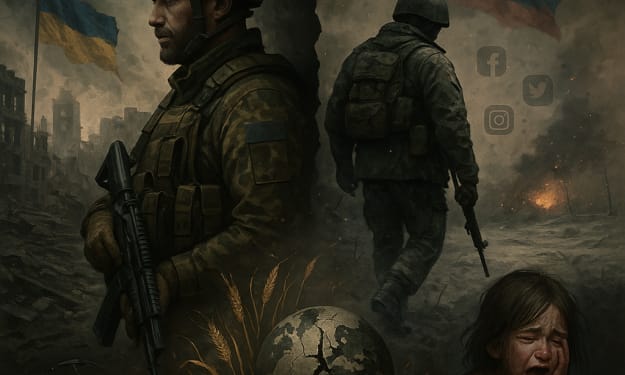
The Long Shadow: How the Russia-Ukraine War Changed the World On February 24, 2022, the world awoke to a harsh new reality. Russia, under President Vladimir Putin, had launched a full-scale invasion of Ukraine. What many thought would be a swift operation turned into a long, brutal war that would have ripple effects across continents, from the cost of bread in Cairo to the energy bills in London.
By Wings of Time about a year ago in Earth
The Global Plastic Pollution Crisis: Challenges and Innovations in Tackling a Modern Plague. AI-Generated.
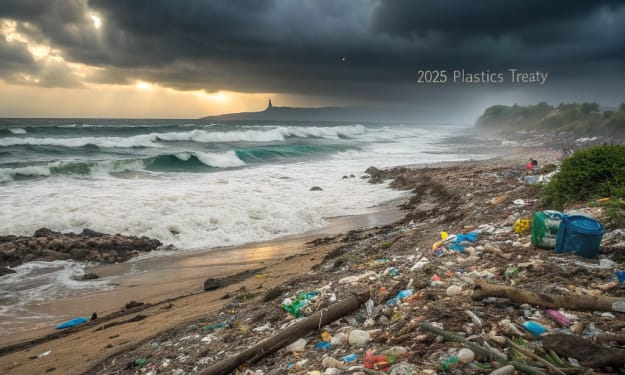
Plastic pollution has emerged as one of the most pressing environmental challenges of the 21st century, choking oceans, harming wildlife, and infiltrating human ecosystems. With over 400 million tons of plastic produced annually, the world grapples with a crisis that transcends borders, driven by single-use plastics and inadequate waste management. Yet, global efforts are rising to combat this issue through innovation, policy, and activism. This post explores five key facets of the plastic pollution crisis, highlighting its impacts, innovative solutions, and the collective push for a cleaner planet. Dive into the urgent battle against plastic waste, where science, policy, and human resolve converge to forge a sustainable future.
By Arjun. S. Gaikwadabout a year ago in Earth