Humanity
100% Chance of an Earthquake
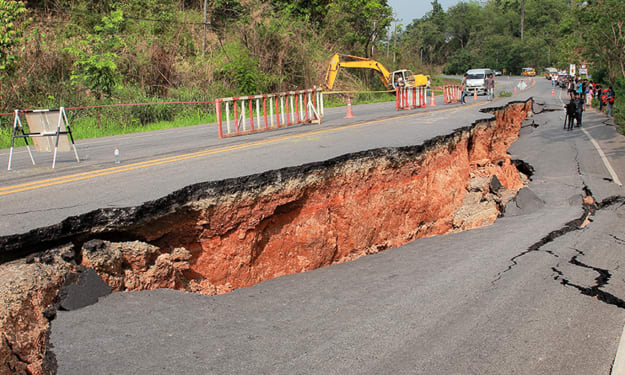
Imagine waking up and hearing a news report that begins with: “There’s a 100% chance of an earthquake today.” It sounds alarming, almost apocalyptic—something that would send people rushing to pack emergency kits, secure their homes, and perhaps even panic about what’s to come. But here’s the truth: that statement is completely accurate, and not because someone has cracked the code of earthquake prediction. Rather, it’s because earthquakes happen every single day on our planet. The only question is where and how strong.
By Fazal Ur Rahmanabout a year ago in Earth
Rising Waters, Rising Resilience
Rising Waters, Rising Resilience How Communities Are Adapting, Innovating, and Thriving in the Face of Floods Floods have long been seen as devastating forces of nature—sweeping away homes, crops, and livelihoods. But in many corners of the world, communities are rewriting the narrative. Instead of merely bracing for disaster, they are preparing, adapting, and even finding opportunities to grow stronger. This is the story of resilience—of people who face the rising waters not with fear, but with innovation and unity. In the rural district of Gaibandha, Bangladesh, where monsoon floods are an annual certainty, families used to spend months each year displaced from their homes. But today, something remarkable is happening. Thanks to local initiatives supported by NGOs and climate-adaptive strategies, homes are being built on raised earthen mounds called plinths. These mounds rise above expected flood levels, keeping families dry even when surrounding areas are submerged. “When the floods come, we stay home now,” says Anika, a mother of three. “We used to lose everything each year. Now we can grow vegetables on floating gardens, and my children still go to school.” These floating gardens—constructed from water hyacinth, bamboo, and soil—are another example of how communities are adapting creatively. They allow for year-round farming, even during flood season. Crops like spinach, pumpkin, and okra are grown on rafts that gently rise and fall with the water, ensuring food security and income when traditional fields are underwater. Innovation is not limited to rural areas. In the city of Rotterdam, Netherlands, which lies largely below sea level, engineers and urban planners have turned water management into an art form. The city features flood-resilient infrastructure like water plazas—public spaces that serve as parks in dry weather and water catchment areas during storms. Buildings are constructed on floating platforms or elevated on stilts, and the city’s complex system of dikes, canals, and surge barriers are managed with cutting-edge technology. “We don’t fight water—we live with it,” says Pieter de Vries, a water management engineer in Rotterdam. “That’s the secret to our success.” In Jakarta, Indonesia, frequent floods once paralyzed the city. Today, local youth groups are leading awareness campaigns, helping clean drainage systems, and planting trees in urban wetlands to prevent runoff. They’ve also helped implement a digital flood-warning system that alerts residents via mobile phones hours before floodwaters arrive, giving them time to protect their homes and evacuate if necessary. Education plays a critical role in fostering resilience. In the Philippines, where typhoons and flooding are increasingly common, schools are teaching children how to respond during disasters, turning them into “young preparedness ambassadors.” These students often go home and teach their families what to do—how to build emergency kits, where to go, and when to act. Across the world, governments, scientists, and citizens are collaborating to develop more adaptive and inclusive flood strategies. Satellite data and artificial intelligence are being used to predict floods with increasing accuracy. Community leaders are working closely with scientists to integrate traditional knowledge with modern solutions. And more importantly, marginalized groups—often the most affected by flooding—are being included in planning and decision-making processes. Floods are no longer viewed solely as natural disasters but as challenges that can be managed and even anticipated. Through smart design, community education, and local empowerment, people are learning not just to survive, but to thrive in the face of rising waters. These stories of resilience carry a powerful message: Climate change may be intensifying floods, but human determination is rising even faster. “The water doesn’t scare us anymore,” says Anika, smiling as she pulls fresh tomatoes from her floating garden. “It reminds us to stay ready, to stay united, and to keep building better.” In every flooded field turned into a floating farm, every child learning disaster readiness, and every community reimagining how to coexist with water, a quiet revolution is underway. The world may be changing—but so are we. And in that change lies hope.
By Muhammad Saad about a year ago in Earth
"Climatic Changes and Religion"
A Critical Analysis of Faith-Based Denial and Responsibility Climate change is one of the greatest global threats of the 21st century. Rising sea levels, intense heat waves, prolonged droughts, and more frequent floods are no longer abstract predictions but realities confronting communities worldwide. Yet, despite overwhelming scientific evidence, many religious groups and individuals remain skeptical, dismissing climate change as either an exaggeration, a natural cycle, or worse, a punishment sent by God. This mindset, while rooted in faith, creates significant barriers to climate action. In this article, we critically analyze how religion can sometimes fuel denial of climate change, why this perspective is dangerous, and how religious frameworks can still be redirected toward constructive solutions.
By Malik Rohail Khanabout a year ago in Earth
Hatteras Island
There are beaches in America—and then there is Hatteras Island. This slender, windswept barrier island, part of North Carolina’s famed Outer Banks, is more than just a vacation spot. It’s a place where history, culture, and natural wonders collide. It’s where shipwrecks whisper stories through the tides, where wild ponies roam dunes carved by centuries of storms, and where small fishing communities cling to their traditions despite the relentless forces of wind and sea.
By Muhammad Sabeelabout a year ago in Earth
The Forest Throne
The Forest Throne How One Chair Became a Peaceful Symbol of Rest and Reflection in Nature Deep within the heart of Pineberry Forest, where the trees whisper secrets and the air carries the scent of moss and pine, there stands a single wooden chair. Weathered but sturdy, simple yet striking, the chair has no owner, no plaque, and no obvious reason for being where it is. Yet, over the years, it has quietly become a beloved part of the forest — known by locals and hikers alike as “The Forest Throne.” No one knows exactly who brought the chair there. Some say it appeared after a storm one spring, others believe an old carpenter placed it there as a quiet gift to the woods. The most popular theory is that it was carried in by an elderly woman who used to walk the trails every day with her dog. She was often seen resting on a folding stool, which she once called her “thinking seat.” When she stopped coming, some believe someone honored her memory by placing a sturdier chair in her favorite clearing. Regardless of its origin, the chair now sits peacefully on a small rise overlooking a stream. It faces west, catching the soft golden light of the setting sun through the trees. Birds often perch on its backrest, and squirrels occasionally climb its legs as if inspecting a monument. Wildflowers grow around its feet in the warmer months, and in winter, it wears a soft white coat of snow. More than just a curious object in the woods, the Forest Throne has become a gentle landmark and a destination. Hikers take breaks there, sipping water and listening to the sounds of the forest. Children sit on it like royalty, pretending to hold court with the trees. Artists sketch it, and photographers wait patiently for just the right lighting to capture its quiet charm. Some couples have even gotten engaged next to it, believing it adds a touch of natural magic to the moment. For many, the chair serves a deeper purpose. It invites people to pause — not just physically, but mentally. In a world that moves fast, where even nature walks can become goals to “complete,” the Forest Throne offers permission to stop, sit, and simply be. Local schoolteacher Maya Ellis first discovered the chair during a solo hike in early spring. “I was having a hard time,” she later shared in a community newsletter. “I’d been overwhelmed, anxious, and I wasn’t even sure why I was out there that day. But then I found the chair. I sat down, and everything just… softened. The stillness of the forest, the way the light moved through the trees — it made me breathe differently. I stayed for nearly an hour.” Since then, Maya has returned many times, sometimes with her students. They call it their “story seat,” taking turns to sit in it and tell made-up tales about forest animals and enchanted trees. She’s also helped organize a gentle path-clearing project around the area, ensuring that the chair remains accessible while keeping the surroundings wild and undisturbed. Interestingly, the chair has changed very little over the years. Though it’s been exposed to all kinds of weather, it has held up remarkably well. Some say it’s because it's made of old, seasoned oak. Others suggest it’s the forest itself that protects it — as if the chair, having become part of the ecosystem, now receives its care in return. The Forest Throne has even inspired a local movement called “Sit a While,” encouraging people to create simple resting spots in natural spaces. Wooden benches, upcycled chairs, and stone seats have begun to appear in quiet corners of parks and trails throughout the region, each one marked only by a small carved leaf symbol and the words, “Sit a While.” Despite its fame, the chair has never been vandalized. There is no graffiti, no carvings, and not even trash left nearby. People seem to instinctively respect its presence. Perhaps that’s because the Forest Throne doesn’t ask for anything — it offers. It gives rest to the weary, silence to the busy-minded, and beauty to anyone willing to see it. And so it remains, season after season — a simple chair in a quiet forest, waiting patiently for the next person who needs it. Some come with questions. Others bring sorrow. Many bring nothing at all but themselves. But all who sit in the Forest Throne leave with something: a little more peace, a little more stillness, and a renewed connection with the world around them.
By Muhammad Saad about a year ago in Earth
When the Sky Fell on Buner Pakistan’s Independence Day Tragedy.
The Storm Arrives Witnesses describe the rainfall as a wall of water. It was not the slow, steady monsoon rain that farmers in Buner are used to—it was a sudden, overwhelming downpour that swallowed entire valleys. Meteorologists later recorded over 150 millimeters of rainfall in less than an hour. For a region crisscrossed by rivers and steep mountains, that was enough to trigger flash floods and landslides of terrifying strength.
By USA daily update about a year ago in Earth
When the Waters Rose
The night was darker than usual, but the sound of the rain was deafening. At first, it felt like any other monsoon storm—a natural rhythm the villagers of Gulabad had known for generations. But as hours passed, the rain didn’t stop. It grew angrier, heavier, as though the sky itself was breaking apart.
By Muhammad hassanabout a year ago in Earth
Buner Under Water: The Silent Tragedy of Pakistan’s Monsoon Floods
The Floods in Buner: A Tragedy in the Heart of Khyber Pakhtunkhwa Natural disasters have always tested the resilience of humanity, but when they strike remote and vulnerable areas, their impact becomes even more devastating. The recent floods in Buner District, located in the Khyber Pakhtunkhwa province of Pakistan, stand as a grim reminder of how climate change, poor infrastructure, and lack of preparedness can bring life to a standstill in a matter of hours. This article explores the causes, consequences, and lessons of the Buner floods, while also highlighting the strength and unity of its people in the face of adversity. --- Geographic and Social Background Buner is a scenic valley surrounded by mountains, rivers, and streams. Known for its lush greenery, fertile lands, and rich cultural heritage, it lies between Swat and Mardan districts. The majority of its population depends on agriculture, small-scale trade, and remittances from overseas workers. While nature has blessed Buner with beauty and resources, its geographical position also makes it highly vulnerable to seasonal floods, landslides, and heavy monsoon rains. --- The Disaster Unfolds In late July and early August, relentless monsoon rains lashed the region, causing rivers and streams to swell beyond their capacity. Within hours, flash floods swept through villages, submerging houses, washing away bridges, and destroying farmland. Roads connecting Buner with neighboring districts collapsed, cutting the area off from essential supplies and emergency aid. Reports indicate that dozens of villages were severely affected, with families forced to flee their homes in the middle of the night. Mud houses, common in rural parts of Buner, stood no chance against the raging waters. Thousands of people were displaced, seeking shelter in schools, mosques, and makeshift camps. Crops ready for harvest were drowned, livestock perished, and small businesses lost their entire inventory. --- Humanitarian Crisis The floods in Buner created not only physical destruction but also a humanitarian emergency. Clean drinking water became scarce, increasing the risk of waterborne diseases such as cholera, diarrhea, and typhoid. Health facilities, already limited in capacity, were overwhelmed by the sudden influx of patients. Pregnant women, children, and the elderly were the most vulnerable. Educational institutions, which were supposed to reopen after the summer break, were converted into relief centers. This disrupted the academic calendar of thousands of children, adding to the long-term consequences of the disaster. --- Climate Change and Structural Issues Experts argue that the Buner floods are not merely a “natural” disaster but a combination of climate change and human negligence. Pakistan is among the top ten countries most vulnerable to climate change. Rising global temperatures have intensified monsoon patterns, leading to unpredictable and extreme rainfall events. At the same time, deforestation in Buner and surrounding areas has weakened natural barriers against flooding. The lack of proper drainage systems, unchecked construction along riverbanks, and poor maintenance of protective dams and embankments worsened the situation. What could have been a manageable seasonal flood turned into a full-scale catastrophe. --- Government and Community Response The provincial government of Khyber Pakhtunkhwa, along with the federal authorities, deployed rescue teams and the Pakistan Army to assist flood victims. Helicopters were used to drop food supplies in remote areas cut off by road destruction. However, many residents complained about the delayed response and inadequate resources. In contrast, the local community showed remarkable resilience. Volunteers organized relief drives, collecting donations from within Pakistan and from overseas Pakistanis. Youth groups in Buner took the lead in distributing food, tents, and medical supplies. Social media played a key role in highlighting the plight of flood victims, pressuring authorities to act more swiftly. --- Economic and Psychological Impact The economic toll of the floods is enormous. Farmers who lost their crops face financial ruin, traders who lost their shops fear bankruptcy, and laborers find themselves without work. Many families who relied on remittances are now forced to use those funds for survival rather than savings or investment. The psychological scars are equally deep. Survivors recount the trauma of losing loved ones, watching their homes collapse, and spending nights under open skies. Children, in particular, are likely to suffer long-term emotional effects if mental health support is not provided. --- Lessons and the Way Forward The Buner floods highlight several urgent lessons for Pakistan: 1. Investment in Infrastructure: Building stronger bridges, flood-resistant housing, and proper drainage systems can save lives and property. 2. Environmental Protection: Deforestation must be stopped, and tree plantation drives should be promoted to restore natural defenses against floods. 3. Disaster Preparedness: Local communities need training in disaster management, early warning systems, and evacuation plans. 4. Health and Education Resilience: Schools and hospitals should be built with dual purposes in mind—education/healthcare and emergency shelter. 5. Global Climate Action: Pakistan, though not a major emitter, suffers the consequences of global warming. International cooperation and climate justice are essential. --- Conclusion The floods in Buner are more than a local tragedy; they are part of a broader global crisis that links climate change, human vulnerability, and poor governance. Yet, amid destruction, the resilience of the people of Buner shines through. Their courage, solidarity, and determination to rebuild offer hope that the valley will rise again from the waters. If meaningful steps are taken—both locally and globally—Buner can transform this tragedy into an opportunity for building a safer, greener, and more resilient future.
By Nimatullahabout a year ago in Earth
The Amazon Rainforest: Nature’s best marvel
The Amazon Rainforest is one of the most splendid places on our planet. Regularly known as the “lungs of the Earth” as it produces round 20% of the world’s oxygen, this significant jungle is domestic to top notch biodiversity, particular cultures, and breathtaking natural beauty. But beyond its wonders, the Amazon faces extreme threats that endanger not most effective its survival but additionally the stability of life across the globe. Let’s dive into the fascinating story of this herbal treasure.
By Samiullah Adilabout a year ago in Earth