Humanity
Loss and Grief
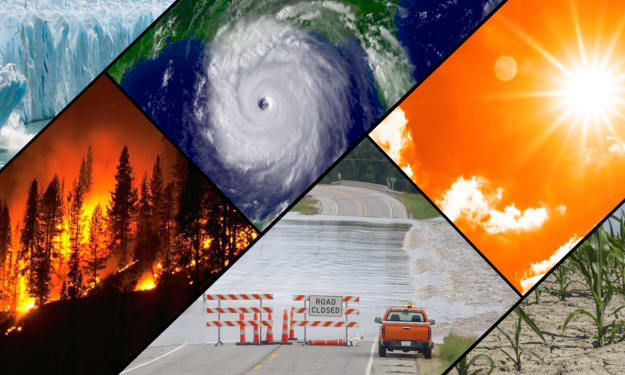
The old oak tree stood sentinel at the edge of the forest, its gnarled branches reaching skyward like weathered arms holding up the heavens. For generations, it had been a symbol of resilience and life, a steadfast presence in the ever-changing landscape. But now, its leaves were withered and brown, a stark contrast to the vibrant greenery that once adorned its crown. Ella had grown up beneath the canopy of that oak tree. As a child, she had spent countless afternoons climbing its sturdy branches, imagining herself a fearless explorer in a world untouched by time. Her father, a quiet man with calloused hands and a heart full of stories, had taught her the names of each bird that nested in its boughs and the secrets hidden within its ancient bark. But today, as Ella stood before the dying oak, grief washed over her like a tidal wave. The forest around her was silent, the usual chorus of birdsong replaced by a haunting stillness. Climate change had brought prolonged droughts to their once verdant land, and the oak tree, like so many others, was struggling to survive. She traced her fingers along the rough texture of its bark, feeling the faint pulse of life that still lingered within. Tears blurred her vision as memories flooded her mind — the laughter of her childhood, the whispered tales of magic and wonder shared beneath its shade, the comfort of knowing that some things would never change. Ella's father had passed away when she was just a girl, leaving behind a legacy of love for the land and a fierce determination to protect it. In his absence, she had taken up his mantle, becoming an advocate for environmental conservation in their community. But despite her efforts, the oak tree continued to fade, its once vibrant leaves now brittle and fragile. As she knelt beside it, Ella whispered a silent prayer to the earth, a plea for strength and resilience in the face of overwhelming loss. The oak tree had been more than just a part of the landscape; it had been a companion, a confidant, a symbol of hope in a world that often seemed dark and uncertain. She remembered the day they had planted a new sapling beside the old oak, a small gesture of defiance against the encroaching forces of destruction. Her father had smiled, his eyes twinkling with pride and sadness, as he explained the importance of planting seeds for the future. Now, as Ella looked at the struggling sapling, its tender leaves curling in on themselves in search of moisture, she felt a renewed sense of determination. She could not bring back the old oak tree, but she could honor its memory by fighting for the survival of those that remained. In the days that followed, Ella threw herself into her work with a fervor born of grief and love. She rallied her community, organizing tree planting events and advocating for sustainable practices. She spoke passionately at town hall meetings, urging politicians to take action before it was too late. But as the months turned into years, Ella felt the weight of despair pressing down upon her. Despite their best efforts, the effects of climate change continued to escalate. The forest that had once been her sanctuary was now a battleground, its inhabitants struggling to adapt to a world that was changing faster than they could. One evening, as Ella sat alone beneath the canopy of stars, she felt a presence beside her. A figure emerged from the shadows, its features obscured by the darkness. It was an old woman, her face weathered and wise, her eyes twinkling with a knowing light. "You remind me of someone I once knew," the old woman said softly, her voice like the rustling of leaves in the wind. "A man who believed in the power of stories to change the world." Ella looked at her, curiosity mingling with sadness. "My father," she whispered, her voice catching in her throat. The old woman nodded, a smile playing at the corners of her lips. "He planted seeds of hope in this land, just as you are doing now. Do not lose faith, child. The oak tree may be gone, but its spirit lives on in every leaf that rustles in the breeze." With those words, the old woman turned and disappeared into the shadows, leaving Ella alone with her thoughts. She knew then that she could not give up, not when there was still so much at stake. The world was changing, but so too were the hearts and minds of those who dared to hope. And so, Ella continued to fight. She planted trees and tended to their needs, nurturing them with love and dedication. She spoke out against injustice and ignorance, refusing to be silenced by despair. And with each passing day, she felt a renewed sense of purpose, a belief that even in the face of loss, there was still hope. Years later, as Ella stood once more at the edge of the forest, she marveled at the sight before her. The sapling she had planted so long ago had grown tall and strong, its branches reaching toward the heavens with a quiet determination. Around it, other trees had taken root, their leaves shimmering in the gentle breeze. The forest was alive once more, teeming with the vibrant energy of new life. And though the old oak tree was gone, its memory lived on in the hearts of those who had loved it. Ella closed her eyes and felt a sense of peace wash over her, knowing that she had honored her father's legacy and protected the land he had cherished. As she turned to leave, a bird swooped down from the canopy above, its song a melody of joy and resilience. Ella smiled, her heart overflowing with gratitude for the lessons she had learned and the strength she had gained. For in the end, she realized, it was not just about saving the trees or the animals. It was about preserving the stories, the memories, and the deep emotional connections that bound them all together. And as long as there were those who believed in the power of hope and the resilience of the human spirit, there would always be a chance for the world to heal and thrive once more.
By Nomeh Favour 2 years ago in Earth
**Embracing Plant-Based and Flexitarian Diets: Nourishing Health and Sustainability**
In recent years, plant-based and flexitarian diets have gained popularity as individuals seek healthier, more sustainable dietary choices. These dietary approaches prioritize plant-derived foods while allowing flexibility in incorporating occasional animal products. Whether motivated by health benefits, environmental concerns, or ethical considerations, understanding the principles, benefits, and practical aspects of plant-based and flexitarian diets can empower individuals to make informed decisions about their food choices.
By Nicola Shaw2 years ago in Earth
Embracing Sustainable Living: Eco-Friendly Practices for a Better Future. AI-Generated.
*** In an era defined by environmental challenges and the urgent need for conservation, sustainable living has emerged as a crucial approach to reducing our ecological footprint and preserving the planet's resources for future generations. Sustainable living encompasses a broad spectrum of practices and choices that prioritize environmental stewardship, ethical consumption, and mindful resource management. Understanding the principles, benefits, and practical applications of sustainable living can empower individuals to make positive changes in their daily lives and contribute to a healthier planet.
By Nicola Shaw2 years ago in Earth
EARTH ROTATION IN REVERSE. Content Warning.
The Earth's Rotation in Reverse: A Cataclysmic Consequence. The Earth's rotation is a vital aspect of our planet's behavior, governing everything from day and night cycles to weather patterns and ocean currents. But what if the Earth were to suddenly reverse its rotation? Such an event would have far-reaching and devastating consequences for our planet and its inhabitants.Geological UpheavalA reversal of the Earth's rotation would lead to unprecedented geological upheaval. The planet's tectonic plates would be subjected to unforeseen stresses, resulting in catastrophic earthquakes and volcanic eruptions. Mountain ranges would be reshaped, and oceanic basins would be redefined. The very fabric of our planet's surface would be rewritten. Earthquakes would strike with unprecedented intensity, flattening cities and towns, while volcanic eruptions would release massive amounts of ash and gas into the atmosphere, blocking out sunlight and affecting global temperatures.Climatic ChaosThe reversal would drastically alter global climate patterns. Weather systems would be thrown into disarray, leading to extreme temperature fluctuations, unrelenting storms, and unpredictable precipitation. Droughts, floods, and heatwaves would become the new norm, with temperatures soaring to record highs and plummeting to unprecedented lows. The polar ice caps would melt at an alarming rate, raising sea levels and flooding coastal cities and low-lying areas.Oceanic OverhaulThe world's oceans would experience a profound transformation. Currents would reverse, leading to unprecedented changes in coastal erosion, marine ecosystems, and global sea levels. Tidal waves and tsunamis would reshape coastlines, displacing millions and redefining the planet's geography. The ocean's thermohaline circulation would be disrupted, leading to dramatic changes in ocean temperatures and chemistry, affecting marine life and global weather patterns.Biological DevastationThe impact on the natural world would be nothing short of apocalyptic. Many species would face extinction due to the radical changes in their habitats and environments. The food chain would be severely disrupted, leading to a collapse of ecosystems and the loss of biodiversity. The reversal would also disrupt the Earth's magnetic field, potentially exposing life on Earth to harmful solar and cosmic radiation.Atmospheric UpheavalThe atmosphere would be significantly altered, with the reversal affecting the circulation of air and the distribution of gases. The ozone layer would be depleted, exposing life on Earth to harmful ultraviolet radiation. The atmosphere would also be filled with dust and debris from the earthquakes, volcanic eruptions, and tsunamis, blocking out sunlight and affecting global temperatures.Humanitarian CrisisThe effects on human society would be equally devastating. Global communication networks would be severely disrupted, leading to a breakdown in international relations, trade, and commerce. The resulting humanitarian crisis would be unprecedented, with widespread displacement, famine, and disease. Cities would be destroyed, and infrastructure would be severely damaged, leaving millions without access to basic necessities like food, water, and shelter. Societal CollapseThe reversal would lead to a complete collapse of society as we know it. Governments would struggle to maintain order and provide aid to their citizens. Economies would collapse, and trade would cease to exist. The rule of law would be replaced by chaos and anarchy, as people desperate for survival would turn to looting and violence.Cultural HeritageThe cultural heritage of human civilization would be lost forever. Museums, libraries, and historical landmarks would be destroyed, taking with them the knowledge and wisdom of centuries. The arts would cease to exist, as musicians, artists, and writers would be unable to create in a world gone mad.Scientific ProgressScientific progress would come to a grinding halt, as scientists and researchers would be unable to conduct experiments or gather data in a world where the laws of physics no longer apply. The technological advancements of centuries would be lost, and humanity would be forced to start from scratch.ConclusionA reversal of the Earth's rotation would be a cataclysmic event, pushing our planet to the brink of collapse. The consequences would be far-reaching and devastating, affecting every aspect of our world. The very fabric of our society, culture, and scientific progress would be torn apart, leaving humanity to face an uncertain future. The possibility of such an event serves as a poignant reminder of the awe-inspiring power of the Earth and the importance of respecting and preserving our planet's delicate balance.Hello guy, hope you enjoyed this little hypothesis of mine? this is just an imaginary content of "if the earth moves in reverse" which is likely never going to happen stay safe and don't panic bye for now.
By Jophiel williamson2 years ago in Earth
Poisoned Waters
America's waterways are facing a grave threat. Both Puget Sound and the Chesapeake Bay are experiencing alarmingly high levels of pollution. The primary culprit behind this pollution is industrial waste from agriculture, which poses a significant danger to both wildlife and human health. The situation in the Chesapeake Bay is particularly concerning, with far-reaching implications. Larry Sims, an experienced waterman, has witnessed the bay's deteriorating health over the course of six decades. The decline in the crab catch, which has plummeted by over 50% in just 25 years, has had a profound impact on the traditional way of life for watermen. Pollution is causing the emergence of dead zones in bodies of water across the globe. These oxygen-deprived areas are responsible for the death of countless fish, crabs, and oysters, and their frequency and size are rapidly increasing on a global scale. Furthermore, pollution is also negatively affecting human health and recreational activities, leading to the closure of numerous beaches due to contamination.
By Isaac Ekow Anyidoho2 years ago in Earth
The 2010s Were a Waste for Scientific Discovery—Or Were They?
The last decade was undeniably one of the richest periods of scientific discovery ever. Researchers across all disciplines tested hypotheses, found proofs, and visited places that have made us rethink our understanding of not only our own planet but of the entire universe. It was the decade when we finally began to understand one of the greatest challenges humankind has ever faced, and we've learned far more than ever before about some of the most destructive objects in existence. Let's take a look at five of the most amazing scientific discoveries of the 2010s.
By Mojalefa Mokoena2 years ago in Earth
Climate and Environment in the UK
Climate and Environment in the UK: Navigating Challenges in 2023 The United Kingdom continues to grapple with pressing climate and environmental issues as it strives to meet ambitious targets amid global challenges. As we enter 2023, the landscape of policies, initiatives, and concerns surrounding climate change and environmental sustainability in the UK remains dynamic and critical.
By Michael Donald 2 years ago in Earth
UK General Election 2024
BBC senior political analyst Peter Barnes reports that recent polls continue to follow the trends observed throughout the election campaign. Labour maintains a strong lead of approximately 20 points over the Conservatives, despite both parties experiencing a slight decline in their average scores. Currently, Labour holds 41% and the Conservatives 21% in the BBC poll tracker.
By Michael Donald 2 years ago in Earth
A Guide to Veg Chicken: Everything You Need to Know
Introduction to Vegan Products Have you ever wondered what exactly vegan products are and why they have become so popular? Vegan Products are items that are completely free of animal-derived ingredients. This includes not just food but also beauty, personal care, and household products. The importance of veganism goes beyond dietary choices; it's a lifestyle committed to minimizing harm to animals and reducing environmental impact.
By Vezlay Foods2 years ago in Earth
"Mysteries of the Deep"
In the remote reaches of the Pacific Ocean, where sunlight struggles to penetrate the depths and the ocean floor remains largely unexplored, a team of marine archaeologists embarked on a daring expedition aboard the state-of-the-art submersible vessel, Neptune's Quest. Leading the expedition was Dr. Emily Hayes, a renowned oceanographer with a passion for uncovering secrets hidden beneath the waves. For years, she had studied ancient maps, folklore, and satellite data, piecing together clues that pointed to the existence of a lost city submerged beneath the ocean abyss. As Neptune's Quest descended into the murky depths, tension aboard the vessel was palpable. The crew monitored sonar readings and navigated through labyrinthine underwater canyons, following a trail of anomalies that hinted at something extraordinary lying in wait. Suddenly, the sonar pinged with unprecedented intensity, signaling a massive structure looming ahead. Dr. Hayes held her breath as the submersible's floodlights illuminated towering pillars and intricate carvings obscured by centuries of silt and marine life. "We've found it," she whispered, her voice echoing through the submersible's cockpit. The lost city, now dubbed Atlantis by the crew, stretched across an expansive underwater plateau. Buildings crafted from stone and coral rose from the seabed like ancient sentinels, their architecture hinting at a civilization lost to time. Streets lined with toppled statues and crumbling monuments painted a poignant picture of a once-thriving society. As the expedition progressed, each dive brought new revelations. Artifacts recovered from the ocean floor—ceramic vessels, ornate jewelry, and tools intricately carved from obsidian—spoke of a culture steeped in artistry and innovation. Hieroglyphs etched into stone tablets hinted at a language waiting to be deciphered, offering tantalizing glimpses into Atlantis's rich history. Yet, amidst the marvels lay mysteries that defied explanation. An enormous stone structure, dubbed the "Temple of the Tides," stood at the city's heart, its purpose and significance shrouded in speculation. Murals depicting celestial alignments and mythical creatures adorned its walls, raising questions about Atlantis's spiritual beliefs and cosmological understanding. As news of the discovery spread, the scientific community buzzed with excitement. Dr. Hayes and her team collaborated with linguists, geologists, and anthropologists from around the world, pooling their expertise to unravel Atlantis's enigmatic past. But the expedition was not without its challenges. The harsh underwater environment tested the limits of Neptune's Quest, while unexpected currents and predatory marine life posed constant threats. Yet, fueled by their passion for discovery, the crew pressed on, driven by the desire to unearth Atlantis's secrets before the ocean reclaimed its treasures once more. Months turned into years as Dr. Hayes and her team painstakingly documented every artifact, mapped every structure, and pieced together the puzzle of Atlantis. The lost city became a beacon of hope and inspiration, a testament to human curiosity and the boundless depths of Earth's mysteries. In a poignant moment of reflection, Dr. Hayes stood on the deck of Neptune's Quest, gazing out at the vast expanse of the ocean. Atlantis lay beneath her, its secrets laid bare yet its mysteries lingering in the depths. She knew that their discovery was not just a triumph of science, but a reminder of the fragility and resilience of civilizations lost and found. As the sun set over the horizon, casting a golden glow across the waves, Dr. Hayes whispered a silent vow to continue exploring, to continue pushing the boundaries of knowledge, and to honor the legacy of Atlantis—the lost city that had captured the world's imagination and rewritten history books forever.
By Dharanidharan T 2 years ago in Earth