Humanity
Today's World
The world is accelerating, and the paradigm has shifted. What once was science fiction is quickly becoming our present reality. As we face the tectonic shifts in our world, we must ask: How can society thrive amidst constant economic disruption? How do we keep pace with the rapid flow of information? There are cities ahead of the curve, creating tools for tomorrow. We aim to innovate with real-world impact. Imagine a self-sustained Singapore in food production, envisioning the city 40 years ahead. This could be a model for the future.
By Omokunmi Jemilat Yetunde 2 years ago in Earth
EARTH
The Earth is the third planet from the Sun and the only known place in the universe that supports life. It has a diverse environment composed of land, water, and air, creating a range of habitats and ecosystems. Structure and Composition Core: The Earth has a solid inner core made primarily of iron and nickel, surrounded by a liquid outer core that generates the planet's magnetic field. Mantle: Above the core is the mantle, a layer of semi-solid rock that slowly flows and moves, driving plate tectonics. Crust: The Earth's outermost layer is the crust, a thin, solid shell divided into continental and oceanic plates. Atmosphere and Climate The Earth’s atmosphere is a mixture of nitrogen (78%), oxygen (21%), and other gases. It plays a crucial role in regulating temperature, protecting life from harmful solar radiation, and enabling weather patterns and the water cycle. The climate varies from tropical to polar, driven by factors like solar radiation, ocean currents, and atmospheric circulation. Water and Life About 71% of the Earth's surface is covered by water, primarily in oceans, with smaller amounts in rivers, lakes, and glaciers. Water is essential for all known forms of life, influencing climate and supporting diverse ecosystems. Biosphere The biosphere encompasses all living organisms and their interactions with the environment. It includes ecosystems ranging from forests and grasslands to deserts and oceans. Biodiversity, the variety of life forms, is crucial for ecosystem stability and resilience. Geological Activity The Earth is geologically active, with processes like plate tectonics, volcanic eruptions, and earthquakes shaping its surface. These processes create mountains, valleys, and ocean basins and play a vital role in the carbon cycle and nutrient distribution. Human Impact Humans have significantly impacted the Earth’s environment through activities like deforestation, pollution, and greenhouse gas emissions, leading to climate change and biodiversity loss. Sustainable practices are essential to mitigate these effects and preserve the planet for future generations. In summary, the Earth is a dynamic and complex planet with a delicate balance of systems that support life. Understanding and protecting these systems is crucial for the well-being of all its inhabitants. About Earth 1000 words ChatGPT The Earth: A Comprehensive Overview The Earth, our home planet, is a unique and dynamic world teeming with life. It is the third planet from the Sun and the fifth largest in the solar system. Understanding Earth's structure, composition, climate, ecosystems, and human impact is crucial for appreciating its complexity and addressing the challenges it faces. Structure and Composition 1. Core: At the heart of the Earth lies the core, composed of two parts: a solid inner core and a liquid outer core. The inner core, with a radius of about 1,220 kilometers, is primarily made of iron and nickel and remains solid due to immense pressure despite its high temperature, estimated to be around 5,400°C. Surrounding the inner core is the liquid outer core, about 2,200 kilometers thick. The movement of molten metal in this layer generates the Earth's magnetic field, which shields the planet from solar wind and cosmic radiation. 2. Mantle: Above the core is the mantle, a thick layer of rock extending up to 2,900 kilometers from the Earth's surface. The mantle is composed of silicate minerals rich in magnesium and iron. While mostly solid, it behaves plastically over geological time scales, allowing for the slow, convective movement that drives plate tectonics. This process is responsible for the creation and destruction of the Earth's crustal plates. 3. Crust: The Earth's outermost layer is the crust, a thin, rigid shell divided into continental and oceanic regions. Continental crust is thicker (averaging about 35 kilometers) and composed primarily of granitic rocks, while oceanic crust is thinner (averaging about 7-10 kilometers) and primarily basaltic. The crust is broken into tectonic plates that float on the semi-fluid upper mantle (asthenosphere). Plate interactions cause earthquakes, volcanic activity, and the creation of mountain ranges. Atmosphere and Climate The Earth’s atmosphere is a vital layer of gases enveloping the planet, composed mainly of nitrogen (78%), oxygen (21%), and trace amounts of other gases such as argon, carbon dioxide, and water vapor. This mixture of gases supports life and regulates the planet's climate. 1. Layers of the Atmosphere: The atmosphere is divided into several layers based on temperature gradients: Troposphere: Extending up to about 12 kilometers above the Earth's surface, this layer contains most of the planet's weather, as it holds the majority of the atmosphere's water vapor and aerosols. Stratosphere: Ranging from 12 to 50 kilometers, it contains the ozone layer, which absorbs and scatters ultraviolet solar radiation. Mesosphere: Extending from 50 to 85 kilometers, this layer is where most meteorites burn up upon entering the Earth's atmosphere. Thermosphere: From 85 to 600 kilometers, temperatures rise significantly, and it is home to the ionosphere, which reflects radio waves and facilitates communication. Exosphere: Extending from the top of the thermosphere out into space, it is a thin, outermost layer where atmospheric particles escape into space. 2. Climate: Earth's climate is influenced by its position relative to the Sun, the tilt of its axis, and the movement of ocean currents and atmospheric circulation. The planet experiences diverse climatic zones: Tropical: Near the equator, characterized by warm temperatures and significant rainfall. Arid and Semi-Arid: Found in regions like deserts, with minimal precipitation and extreme temperatures. Temperate: Located in mid-latitudes, with moderate temperatures and distinct seasons. Polar: Near the poles, characterized by extremely cold temperatures and ice-covered landscapes. Water and Life Water covers about 71% of the Earth's surface, primarily in oceans, with smaller amounts in rivers, lakes, and glaciers. This vast presence of water plays a crucial role in shaping the planet's climate, supporting ecosystems, and sustaining life. 1. Hydrosphere: The hydrosphere encompasses all of Earth's water, including oceans, ice caps, glaciers, rivers, lakes, and underground aquifers. The water cycle, driven by solar energy, involves the processes of evaporation, condensation, precipitation, and runoff, distributing water across the planet and regulating climate. 2. Oceans: The Earth's oceans are vast bodies of saltwater that regulate climate by absorbing and storing solar energy, distributing heat through currents, and influencing weather patterns. They are home to diverse ecosystems, from coral reefs to deep-sea vents, supporting a wide range of marine life. 3. Freshwater Systems: Freshwater is vital for terrestrial life and is found in rivers, lakes, and groundwater. These systems provide drinking water, irrigation for agriculture, and habitats for numerous species. Wetlands, which include marshes, swamps, and bogs, are crucial for water purification, flood control, and supporting biodiversity. Biosphere The biosphere encompasses all living organisms on Earth and their interactions with the environment. It includes diverse ecosystems such as forests, grasslands, deserts, and oceans, each supporting unique communities of plants, animals, and microorganisms. 1. Ecosystems: Ecosystems are dynamic communities of living organisms interacting with their physical environment. Key ecosystems include: Forests: Vital for carbon sequestration, climate regulation, and habitat provision. They include tropical rainforests, temperate forests, and boreal forests. Grasslands: ChatGPT can make mistakes.
By Goleti thirumal 2 years ago in Earth
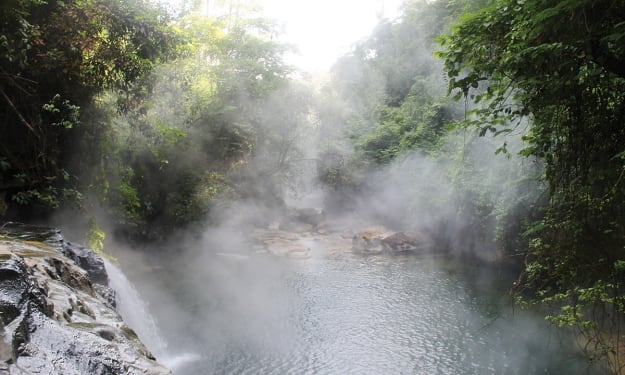
THE HOTTEST RIVER IN THE WORLD. Content Warning.
THE HOTTEST RIVER IN THE WORLD It's really hot here. Is it really so hot? The story of the Amazon's boiling river is told here. While in Peru, I heard about a mysterious river that is so hot that it boils. It sounded too good to be true, but the locals said it's real. This is the hottest river in the world, and if you fall into it, you will die or get severe burns. We went to see, but be careful—this is the closest I've ever been to painting.
By EMMANUEL KWAMENA EWUSIE2 years ago in Earth
The Impact of Youth Engagement on Voter Turnout in the 2024 UK General Election
Startriting In the months leading up to the 2024 UK General Election, a quiet revolution was unfolding. It wasn’t the kind of revolution marked by loud protests or dramatic confrontations, but a subtle, persistent wave of change driven by the nation’s youth. This demographic, often perceived as apathetic or disinterested in politics, was about to redefine the landscape of British democracy in a way that few had anticipated.
By NNAEMEKA SAMSON OSITA 2 years ago in Earth
Animal killing
The Ethics and Implications of Animal Killing for Eating Habits! In the vast panorama of human history, the practice of killing animals for food has been a defining element of survival and culture. Today, as we stand at the crossroads of tradition and modern ethics, the implications of this practice demand a thorough examination. This article delves into the multifaceted issue of animal killing for consumption, scrutinizing its historical context, ethical considerations, environmental impact, and emerging alternative.
By Sindhukumar Lokhande 2 years ago in Earth
How Industrial Hygiene Services Can Improve Your Work Environment
Step into a world where safety meets productivity, and well-being intertwines with efficiency. Industrial hygiene services are the unsung heroes of workplace environments, paving the way for healthier and safer conditions for employees everywhere. Join us as we explore how these services can transform your work environment for the better!
By patricksharris2 years ago in Earth
How to Start a Successful Home Garden. AI-Generated.
How to Start a Successful Home Garden Gardening has long been cherished as a rewarding hobby that not only beautifies your surroundings but also provides fresh produce and a sense of accomplishment. Starting a home garden can be both enjoyable and beneficial, offering numerous physical, mental, and environmental benefits. Here’s a guide on how to start a successful home garden, filled with practical tips and real-life examples to inspire you.
By Joseph Elishi2 years ago in Earth
Simple Steps to Reduce Your Carbon Footprint. AI-Generated.
Simple Steps to Reduce Your Carbon Footprint Climate change is one of the most pressing issues of our time, and reducing our carbon footprint is crucial for mitigating its effects. A carbon footprint is the total amount of greenhouse gases produced by our activities, and even small changes in our daily habits can make a significant impact. Here are simple, practical steps you can take to reduce your carbon footprint and contribute to a more sustainable future.
By Joseph Elishi2 years ago in Earth
Why we have to love Nature
Here are a few reasons why it's important to love and appreciate nature: Connection to the natural world: Loving nature allows us to feel more connected to the world around us. It helps us appreciate the beauty, complexity, and wonder of the natural environment. This connection can be deeply fulfilling and nourishing for the human spirit.
By Himanshu Kumar2 years ago in Earth
Uncovering the Antarctic Tipping Point: A New Ice Melting Mechanism that Could Reshape Climate Models. AI-Generated.
Conclusion In a groundbreaking discovery, researchers have identified a new Antarctic tipping point that reveals previously undetected ice melting mechanisms. This finding has profound implications for our understanding of climate change and its potential impacts on global sea levels. Hidden Threat Beneath the Ice.For years, scientists have studied the melting patterns of Antarctica's ice sheets, recognizing the role of surface warming and ocean temperatures. However, recent research has uncovered an additional, hidden threat: warm water flowing beneath the ice sheets. This subsurface melting mechanism was not accounted for in existing climate models, making this discovery both alarming and crucial for future predictions.The study, conducted by an international team of glaciologists and climate scientists, utilized advanced satellite imagery and robotic submersibles to explore the underwater environment. They found that warm ocean currents are seeping beneath the ice sheets, causing them to melt from below. This process is accelerating the destabilization of the ice, potentially leading to more rapid ice loss than previously anticipated.
By Amzad Hussain 2 years ago in Earth
Understanding Natural Climate
Natural climate encompasses the long-term average of weather conditions in a region, typically over 30 years or more. This concept includes various elements such as temperature, precipitation, humidity, wind patterns, and seasons. These elements are influenced by multiple natural factors that operate on different timescales. Factors Influencing Natural Climate Solar Radiation: The primary driver of climate is the Sun. Solar radiation heats the Earth's surface, causing the atmosphere to warm. The distribution of solar energy varies with latitude, leading to the formation of distinct climate zones, such as tropical, temperate, and polar regions. Earth's Orbit and Tilt: Milankovitch cycles describe the variations in Earth's orbit and axial tilt over thousands of years, influencing the distribution and intensity of solar radiation received by the planet. These cycles contribute to the natural climate patterns, including the ice age cycles. Volcanic Activity: Volcanic eruptions can inject large quantities of aerosols and ash into the stratosphere, reflecting solar radiation and leading to temporary cooling of the Earth's surface. Historical examples include the eruption of Mount Tambora in 1815, which caused the "Year Without a Summer." Ocean Currents: The ocean plays a critical role in regulating climate by storing and transporting heat around the globe. Major currents like the Gulf Stream and the El Niño-Southern Oscillation (ENSO) affect regional climates by altering sea surface temperatures and atmospheric conditions. Atmospheric Composition: Naturally occurring greenhouse gases, such as carbon dioxide (CO₂), methane (CH₄), and water vapor, trap heat in the atmosphere, maintaining the Earth's temperature within a range that supports life. Variations in these gases over geological timescales have led to significant climate changes. Natural Climate Variability Natural climate variability refers to the inherent fluctuations in climate patterns over short and long timescales. These variations can result from interactions among different components of the Earth's system, including the atmosphere, oceans, land surfaces, and ice masses. Key examples include: El Niño and La Niña: These are phases of the ENSO cycle, characterized by periodic warming (El Niño) and cooling (La Niña) of the central and eastern tropical Pacific Ocean. They influence weather patterns globally, causing droughts, floods, and other climate anomalies. Pacific Decadal Oscillation (PDO): This long-term ocean fluctuation affects the Pacific Ocean's surface temperature and can last for several decades. It influences climate patterns across North America and other regions. Atlantic Multidecadal Oscillation (AMO): A cycle of long-duration changes in the sea surface temperature of the North Atlantic Ocean, impacting rainfall patterns, hurricane activity, and regional climates. Natural Climate Zones Natural climate zones are regions with distinct climates that result from the interaction of various factors mentioned above. Some major climate zones include: Tropical Climates: Found near the equator, characterized by high temperatures and significant rainfall year-round. Examples include the Amazon Rainforest and the Congo Basin. Arid and Semi-Arid Climates: These regions receive minimal rainfall, leading to deserts and drylands, such as the Sahara Desert and the Australian Outback. Temperate Climates: Located in mid-latitudes, these areas experience moderate temperatures with distinct seasons. Examples are found in North America, Europe, and parts of Asia. Polar Climates: Found near the poles, these regions have extremely cold temperatures and ice-covered landscapes, such as Antarctica and the Arctic. Natural Climate and the Environment The natural climate profoundly influences the environment, including ecosystems, biodiversity, and human activities. Here are some key aspects of this relationship: Ecosystems and Biodiversity: Climate determines the types of vegetation and animal life that can thrive in a region. For example, tropical rainforests support diverse ecosystems due to their warm, moist conditions, while arid regions have adapted species that can survive with minimal water. Natural climate refers to the long-term weather patterns of a region that occur without significant human influence. It includes elements like temperature, precipitation, humidity, and wind, driven by factors such as solar radiation, Earth's orbit, volcanic activity, ocean currents, and atmospheric composition. These natural drivers create distinct climate zones—tropical, arid, temperate, and polar—each supporting unique ecosystems. Natural climate variability involves periodic changes, like the El Niño-Southern Oscillation (ENSO), which affects global weather patterns. Volcanic eruptions can cause temporary cooling by injecting aerosols into the atmosphere, while ocean currents distribute heat, influencing regional climates.
By Goleti thirumal 2 years ago in Earth