Humanity
Quantum Entanglement
Quantum entanglement is one of the most perplexing and fascinating phenomena in the field of quantum mechanics. It describes a situation where two or more particles become so deeply linked that the state of one particle instantaneously influences the state of the other, regardless of the distance separating them. This "spooky action at a distance," as Albert Einstein famously called it, challenges our traditional understanding of physics and reality.
By Joshua Onabor2 years ago in Earth
CRISPR-Cas9
Genetic engineering has long been a frontier of scientific exploration, offering possibilities to manipulate and alter genetic material in unprecedented ways. Among the various technologies that have emerged, CRISPR-Cas9 stands out as a powerful and versatile tool, fundamentally transforming the landscape of genetic research, biotechnology, and potentially, human health. This write-up delves into the principles, applications, ethical considerations, and future prospects of CRISPR-Cas9, highlighting its impact on scientific progress and societal implications.
By Joshua Onabor2 years ago in Earth
The Benefits of Using Eco-Friendly Cleaning Products. AI-Generated.
The Benefits of Using Eco-Friendly Cleaning Products cleaning products often contain toxic chemicals that can cause respiratory issues, skin irritation, and other health problems. Eco-friendly cleaning products are made from natural, non-toxic ingredients that are safer for you and your family. By choosing eco-friendly cleaners, you can reduce your exposure to harmful chemicals and create a healthier home environment.
By Joseph Elishi2 years ago in Earth
The Stairs of Death: An Incan Marvel on Huayna Picchu
The Stairs of Death: An Incan Marvel on Huayna Picchu Perched high in the Andes Mountains of Peru, the majestic ruins of Machu Picchu draw millions of visitors each year. Yet, for those who seek an extra thrill and a deeper connection to the ancient Incan civilization, the ascent up the "Stairs of Death" on Huayna Picchu mountain offers an unforgettable adventure. Built by the Incas between 1438 and 1533 CE, these steep stone steps present both a physical challenge and a historical enigma, leading to the summit of Huayna Picchu where remnants of Incan ruins await discovery. This blog post explores the history, significance, and experience of climbing the Stairs of Death. The Historical Context The Incan Empire, one of the most powerful and sophisticated civilizations of pre-Columbian America, reached its zenith in the 15th century. The Incas were master builders and engineers, creating vast networks of roads, bridges, and terraces that adapted seamlessly to the rugged Andean landscape. Machu Picchu, their most famous site, remains a testament to their architectural and agricultural prowess. However, it is Huayna Picchu, the towering peak that overlooks Machu Picchu, that offers a glimpse into the more enigmatic and adventurous side of Incan construction. Huayna Picchu, meaning "Young Peak" in Quechua, was more than just a backdrop to Machu Picchu. It served as a strategic lookout point and a place of spiritual significance. The Incas built a series of steep stone steps, now famously known as the Stairs of Death, to provide access to its summit. These stairs are a marvel of Incan engineering, designed to navigate the sheer cliffs and treacherous terrain of the mountain. The Stairs of Death: A Closer Look The ascent up Huayna Picchu begins innocuously enough, with a well-marked trail leading from the base of the mountain near the northern end of Machu Picchu. However, as climbers progress, the path becomes increasingly steep and narrow. The stone steps, carved directly into the mountain, wind their way upward, often hugging sheer cliffs and offering heart-stopping views of the Sacred Valley below. The Stairs of Death are aptly named, not only for their vertiginous nature but also for the sense of peril they evoke. At certain points, the steps are so steep and narrow that they resemble a ladder more than a staircase. Handholds and ropes have been added in modern times to aid climbers, but the ascent remains a daunting challenge, especially during the rainy season when the stones can become slick and treacherous. One of the most harrowing sections is a narrow, tunnel-like passage where climbers must squeeze through a tight space while ascending nearly vertical steps. This part of the journey requires not only physical endurance but also mental fortitude, as the fear of heights can be overwhelming. The Incan Ruins at the Summit Reaching the summit of Huayna Picchu is a reward in itself. At 2,693 meters (8,835 feet) above sea level, the peak offers panoramic views of Machu Picchu, the surrounding mountains, and the Urubamba River winding through the valley below. The sight is nothing short of breathtaking, providing a perspective on Machu Picchu that few get to experience. At the summit, climbers find the remnants of Incan ruins, including terraces, small temples, and ceremonial structures. These ruins suggest that Huayna Picchu held significant importance to the Incas, likely serving both practical and religious purposes. The terraces may have been used for agricultural experimentation, while the temples and altars indicate that the peak was a place of worship and ritual. One particularly intriguing structure is the Temple of the Moon, located on the far side of the mountain, slightly below the summit. This temple is built into a natural cave and features finely crafted stone walls and niches. The exact purpose of the Temple of the Moon remains a mystery, but it is believed to have been a site for important religious ceremonies. The Experience of Climbing the Stairs of Death Climbing the Stairs of Death is not for the faint of heart, but for those who undertake the challenge, the experience is profoundly rewarding. The journey requires a reasonable level of physical fitness, as well as a willingness to confront one’s fears. However, the sense of accomplishment upon reaching the summit, combined with the stunning vistas and the tangible connection to Incan history, makes the effort worthwhile. Safety is a paramount concern when climbing Huayna Picchu. The Peruvian authorities limit the number of daily climbers to 400, divided into two groups to prevent overcrowding and reduce wear on the trail. It is essential to book permits well in advance, as slots fill up quickly, especially during the peak tourist season from May to September. Climbers are advised to wear sturdy hiking shoes, carry sufficient water, and take their time during the ascent. The altitude and steepness of the trail can be challenging, so it is important to pace oneself and take breaks as needed. Despite the challenges, the camaraderie among climbers and the shared sense of adventure create a supportive and exhilarating atmosphere. The Legacy of Incan Engineering The Stairs of Death stand as a testament to the ingenuity and determination of the Incan builders. Constructing such a precarious and enduring pathway up the steep slopes of Huayna Picchu required not only advanced engineering skills but also an intimate understanding of the natural environment. The Incas' ability to integrate their structures seamlessly into the landscape, using locally sourced materials and techniques, remains a source of admiration and study for modern architects and engineers. The preservation of the Stairs of Death and the ruins atop Huayna Picchu is crucial for understanding the full scope of Incan achievements. Efforts to maintain and protect these sites ensure that future generations can continue to explore and appreciate the legacy of one of the world’s greatest ancient civilizations. Conclusion The Stairs of Death on Huayna Picchu offer a unique and thrilling opportunity to connect with the ancient Incan world. As climbers navigate the steep, narrow steps and take in the awe-inspiring views from the summit, they follow in the footsteps of Incan priests and explorers who once made this same journey. The experience is a powerful reminder of the ingenuity and spirit of the Incan people, who built an empire among the clouds and left behind a legacy that continues to inspire wonder and respect. For those willing to embrace the challenge, the Stairs of Death provide an unforgettable adventure, blending natural beauty, historical intrigue, and personal triumph. The climb is not just a physical ascent but a journey back in time, offering a deeper understanding of the extraordinary achievements of the Incan civilization.
By Deji Akomolafe2 years ago in Earth
The Mother's Advice
In a quiet village nestled between rolling hills and dense forests, lived a wise woman named Elena. Known for her sharp intellect and kind heart, Elena had always valued education and understood its power to transform lives. Her greatest wish was to see her only son, Marco, succeed and make a better life for himself through education. From a young age, Elena had instilled in Marco the importance of learning. She would often sit by the fireplace in their modest home, reading to him tales of great explorers, scientists, and philosophers. "Knowledge is the key to unlocking your potential, my son," she would say, her eyes shining with hope. As Marco grew older, however, he became increasingly resistant to his mother's advice. Influenced by friends who scoffed at the idea of spending their days in school, Marco began to see education as a tedious and unnecessary burden. He wanted freedom, adventure, and the thrill of the unknown—things he believed could not be found in books. One crisp autumn evening, as the leaves turned golden and the air grew colder, Elena called Marco to her side. "Marco, my dear, your final exams are approaching. It is crucial that you study hard and do well. Your education will open doors for you that nothing else can." Marco sighed, his frustration bubbling over. "Mother, you don't understand. School is boring, and it's not going to get me anywhere. I want to live my life, not waste it sitting in a classroom." Elena's heart ached at her son's words. "Marco, please listen to me. I know it seems difficult now, but the effort you put in today will reward you tomorrow. Trust me, one day you'll thank me for this advice." But Marco, determined to prove his mother wrong, ignored her pleas. He spent his days wandering the village with his friends, playing games, and shirking his studies. His grades began to slip, and his teachers expressed concern, but Marco brushed it all aside. Years passed, and Marco found himself struggling to find stable work. While his friends who had heeded their parents' advice were securing good jobs and building promising futures, Marco drifted from one menial job to another. The excitement he had once sought was now replaced by frustration and regret. One rainy evening, as Marco trudged home from another long day of work, he passed by the village school. He saw children eagerly soaking up knowledge, their eyes filled with the same wonder he once had. Memories of his mother reading to him by the fire flooded his mind, and for the first time, he truly understood the wisdom in her words. Determined to make amends, Marco enrolled in night classes, balancing work and study with unwavering determination. It was not easy, but the lessons from his mother's advice fueled his perseverance. Slowly, he began to see the fruits of his labor—better job opportunities, increased confidence, and a newfound sense of purpose. One evening, Marco visited his mother's grave, a single tear rolling down his cheek. "You were right, Mother," he whispered. "Knowledge is the key to unlocking my potential. Thank you for never giving up on me, even when I couldn't see it." Years later, Marco became a teacher in the very village where he had grown up. He shared his story with his students, emphasizing the importance of education and the enduring wisdom of his mother's advice. And as he saw the spark of understanding in their young eyes, he knew that his mother's legacy would live on, guiding future generations towards a brighter future.
By Chinonso Anthony Nwosu 2 years ago in Earth
Nature-a lot to offer
1. Introduction to the wonders of nature Nature is a vast and intricate system that provides countless benefits to both the environment and human society. From clean air and water to biodiversity and natural resources, the benefits of nature are essential for our well-being and survival. As our world continues to face environmental challenges such as climate change and biodiversity loss, it is more important than ever to recognize and appreciate the value that nature provides. This blog will explore the many ways in which nature offers us a wealth of resources and services, and why it is crucial that we protect and preserve our natural world for future generations.
By Ajayi Olalekan2 years ago in Earth
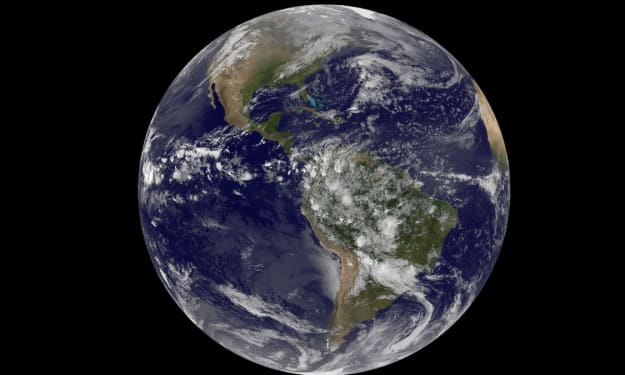
Earth: The Living Tapestry"
In the vast expanse of the universe, among countless celestial bodies, Earth stands as a unique jewel. This blue-green planet, teeming with life, has been our home for billions of years. From its molten beginnings to the flourishing biosphere we see today, Earth's story is one of transformation, resilience, and interconnectedness.
By bakhtawar khan2 years ago in Earth
The Anatomy of a Superstorm
This film sheds light on the impact of Superstorm Sandy on New York City. Sandy, one of nature's most powerful storms, caused widespread devastation and an underestimated storm surge. New York's critical services such as the subway and power grids suffered severe disruptions. The formation and consequences of Hurricane Sandy. Hurricanes require warm water to develop and follow a specific circulation pattern. Hurricane Sandy, originating in the Caribbean, wreaked havoc in Haiti and Jamaica before moving towards the east coast. Forecast models indicated a potent storm approaching the mid-Atlantic and northeast regions.
By Isaac Ekow Anyidoho2 years ago in Earth
The Oil Rig
In 1988, a tragic explosion occurred on the Piper Alpha oil platform in the North Sea, resulting in 165 fatalities. The platform, which was constructed and operated from 1972 to 1976, produced 250,000 to 300,000 barrels of oil per day. A gas conservation module was installed in the North Sea to meet UK gas conservation requirements, with modules B and C capturing gas for transport to St Fergus in Scotland. During Phase 2 production, Tartan and Claymore pumped gas to Piper Alpha, then to the mcp1 gas compressing platform for further transport. Unfortunately, the failure to follow safety procedures led to the explosion on the Piper Alpha platform. Engineers neglected to properly check safety valve instructions before starting pump A, resulting in gas leaks and subsequent explosions. The shift manager's oversight of safety precautions allowed pump A to start, leading to catastrophic consequences.
By Isaac Ekow Anyidoho2 years ago in Earth