Humanity
Sustainable Living Practices: A Path Toward a Greener Future
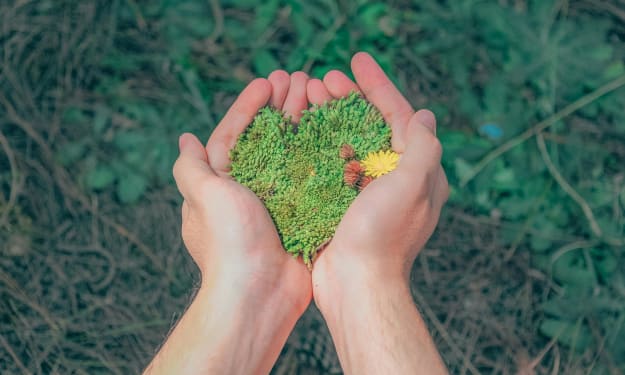
Sustainable living is reducing one's environmental impact through mindful choices, resource conservation, and adopting eco-friendly habits. As concerns over climate change and resource depletion grow, sustainability has become an integral part of modern life. From energy conservation to waste management, individuals and communities are increasingly adopting practices that benefit the environment and promote healthier, more efficient lifestyles. This article explores key sustainable living practices that everyone can incorporate into their daily routines to contribute to a greener, more sustainable future. Energy Efficiency One of the most impactful ways to live sustainably is by reducing energy consumption. Household energy use is a significant contributor to carbon emissions, making energy efficiency a crucial element of sustainable living. Switch to LED Lighting: Replacing traditional incandescent bulbs with energy-efficient LED lights can significantly reduce energy use. Embrace Renewable Energy: Solar panels, wind turbines, and other renewable energy sources can help power homes with clean energy, reducing dependence on fossil fuels. Use Energy-Efficient Appliances: Investing in energy-efficient appliances, such as refrigerators, washers, and air conditioners, can lower energy consumption and save on electricity bills. Seal Gaps and Insulate Properly: Proper insulation and sealing of windows and doors help keep homes warm in winter and cool in summer, reducing the need for excessive heating or cooling.
By Pure Crown2 years ago in Earth
8 Fast Facts About Sharks: Shocking Revelations about the Ocean’s Apex Predators
8 Fast Facts About Sharks: Shocking Revelations about the Ocean’s Apex Predators Humans have been fascinated by sharks for centuries. These mighty creatures have existed for over 400 million years—long before dinosaurs walked the planet. While sharks are often known for being feared predators, they are also immensely varied and critically important to the health of ocean life. In this article, we’ll dive into eight fast facts about sharks that showcase their unique adaptations, surprising behaviors, and important role in the ecosystem. Whether you’re a marine life expert or simply interested in these amazing beings, these facts will make you see sharks differently. Sharks Are of Ancient Lineage Sharks are among the oldest living beings on Earth. Sharks have existed for more than 400 million years — long before the origin of the first dinosaurs — according to fossil evidence. Their early forebears emerged during the Devonian period, often known as the “Age of Fishes.” Sharks share a cartilage-based, lightweight, flexible skeleton unlike bony fish and other marine animals. This ability to adapt is likely not only responsible for their evolution into diverse marine ecosystems, but it has also helped them survive through a number of major extinction events. Sharks Have a Sixth Sense Sharks have a remarkable superpower called electroreception. This means they have the ability to detect the electrical fields created by other living organisms. They deploy special sensory organs known as ampullae of Lorenzini, which are located on the surface around their snouts, to detect even the weakest electrical impulses. The ability proves invaluable for: Hunting in dim or turbid waters Finding prey buried beneath sand Magnetic field-based navigation through the ocean Thanks to electroreception, sharks are some of the most efficient hunters in the animal kingdom. Sharks Belong to More Than 500 Species
By Kalpesh Vasava2 years ago in Earth
Ahmed Shary Rahman: Revitalizing Industry
In the heart of Bangladesh, Beximco’s industrial park is redefining sustainable manufacturing. Often referred to as the “Lungs of Gazipur,” this facility is a unique example of how large-scale industry can integrate nature into its operations. The park is home to over 300,000 trees, a zoo, and various facilities designed not just for productivity but also for the well-being of its employees. This green approach demonstrates that industrial progress and environmental responsibility can go hand in hand.
By Ahmed Shary Rahman2 years ago in Earth
Egg Recall Canada 2025: What You Need to Know About the Latest Salmonella Outbreak
The Canadian Food Inspection Agency (CFIA) has recently issued an urgent egg recall in Canada due to potential contamination with Salmonella. This recall affects specific batches of Golden Valley eggs and has raised concerns among consumers across provinces, including Ontario and British Columbia (BC). Here’s everything you need to know to stay informed and safe.
By Delta Roblox Executor Download APK 2026 latest New Update2 years ago in Earth
The Mask We Wear. Content Warning.
--- The Mask We Wear In the bustling city of Eldenwood, where cobblestone streets echoed with the footsteps of hurried strangers, there lived a woman named Clara. Clara was known for her radiant smile, her quick wit, and her uncanny ability to make anyone feel at ease. She was the life of every party, the confidante of every friend, and the glue that held her social circle together. But beneath the surface of her cheerful demeanor lay a secret: Clara felt like a stranger to herself.
By Suresh Patil2 years ago in Earth
A Planet at a Crossroads
Imagine standing on a beach, the waves lapping at your feet. The horizon stretches endlessly before you, but the calm is deceptive. Beneath the surface lies a storm brewing—a storm of rising seas, vanishing species, and communities on the brink of collapse. Climate change is not just a scientific phenomenon or a political debate; it is an emotional reality that touches every facet of our lives. We often hear statistics: the Earth has warmed by more than 1.1°C since the pre-industrial era. Ice sheets are melting at an alarming rate, and carbon dioxide levels are higher than they’ve been in 800,000 years. These numbers are terrifying, but they fail to capture the heartbreak of watching a forest burn or seeing a child struggle to breathe in smog-choked air. Climate change is not just happening in the distant future—it is here, now, and it hurts. For families in low-lying coastal areas, the pain is palpable. Entire villages in the Pacific Islands are disappearing beneath rising seas. Imagine having to leave your ancestral home, the land where your parents and grandparents were born, knowing it will soon be swallowed by the ocean. The trauma of displacement is not just physical; it is emotional and cultural. It is the loss of identity, the severing of a bond between people and their land. Farmers, too, are feeling the weight of a changing climate. Droughts are becoming longer and more intense, leaving parched fields where crops once thrived. Floods are washing away entire harvests, destroying livelihoods in an instant. A farmer in sub-Saharan Africa or South Asia doesn’t need a climate report to know the weather is changing; they see it in their empty water reservoirs and in the hunger etched on their children’s faces. Even in cities, far from the coasts or farmlands, climate change is a daily reality. Heatwaves bake urban areas, turning them into ovens. Vulnerable populations—the elderly, the homeless, the poor—suffer the most. Wildfires rage on the outskirts, sending ash raining down on streets and homes. Children grow up in a world where they can’t play outside because the air is unsafe to breathe. This is not the future we dreamed of for them. And then there’s the emotional toll on those who are fighting to save the planet. Environmental scientists, activists, and everyday people who care deeply about the Earth often grapple with a profound sense of grief. This grief is not just for what has been lost—the glaciers, the forests, the species—but for what might still be lost if we fail to act. It is a grief mixed with frustration, knowing that solutions exist but are not being implemented fast enough. Yet, amidst this despair, there is hope. The human spirit is resilient, and countless people around the world are rising to the challenge. Young activists like Greta Thunberg have inspired millions to demand change. Communities are banding together to plant trees, clean rivers, and embrace renewable energy. Scientists are developing innovative technologies, from carbon capture to solar-powered desalination, to mitigate the worst impacts of climate change. But hope alone is not enough. We must act. Climate change demands more than individual efforts; it requires collective, systemic change. Governments must implement policies that reduce emissions and transition to renewable energy. Corporations must prioritize sustainability over profit. And individuals must use their voices, their votes, and their choices to demand a better future. This is a moment of reckoning for humanity. The Earth is resilient, but it has its limits. If we fail to act, the world we leave behind will be unrecognizable—hotter, harsher, and less hospitable to life as we know it. But if we rise to the challenge, we can create a future that is cleaner, greener, and more equitable. The clock is ticking, but it is not too late. The fight against climate change is not just a battle for the planet—it is a battle for our hearts, our homes, and the generations yet to come. Let us meet this challenge with the courage, compassion, and urgency it demands. The Earth is counting on us, and we must not let it down.
By Monike Gold2 years ago in Earth
Nature’s Reckoning
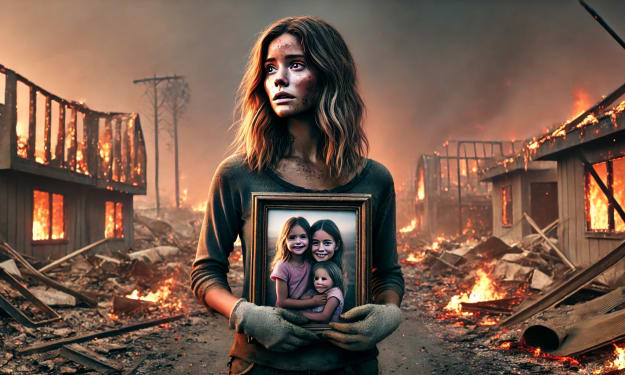
The air smelled of ash and despair. Sophia Walker stood on the cracked sidewalk of her once-thriving Los Angeles neighborhood, her hands trembling as she cradled a picture frame pulled from the debris. The smiling faces of her two daughters looked back at her, untouched by the flames that had swallowed their home.
By Mirhadi Tahsin2 years ago in Earth