Humanity
NASA installs 'bulletproof' sunshade on powerful Nancy Grace Roman Space Telescope.
NASA installs bulletproof sunshade on powerful Nancy Grace Roman Space Telescope. NASA's Nancy Grace Roman Space Telescope has achieved a significant milestone with the successful installation of its deployable sunshade a critical component designed to enhance the observatory's ability to capture faint infrared signals from the cosmos. This advancement brings the mission closer to its anticipated launch in 2027 promising to expand our understanding of the universe. The sunshade officially known as the Deployable Aperture Cover functions akin to a pair of blackout curtains effectively blocking unwanted light that could compromise the telescope's sensitive observations. Constructed from two layers of reinforced thermal blankets the design ensures that stray light is minimized thereby increasing the telescope's sensitivity to distant celestial objects. One of these layers is fortified with Kevlar the same material used in bulletproof vests providing robust protection against potential micrometeoroid impacts. This meticulous engineering ensures that even if one layer is perforated the staggered design reduces the likelihood of light penetrating both layers simultaneously maintaining the integrity of observations.
By Adnan Rasheed2 years ago in Earth
The Global Sneeze: How Pandemics Spread
Picture a world where every continent is just a hop, skip, and a jump away—a dazzling global network where modern jet travel can whisk you (and any unwelcome microscopic hitchhiker) from one side of the globe to the other in the blink of an eye. Today, a single sneeze in a crowded subway station can ignite a chain reaction that transforms local germs into a worldwide spectacle. Welcome to the age of instant connectivity, where every handshake and every boarding pass carries the hidden potential to spark a health crisis.
By Eyo Otoabasi2 years ago in Earth
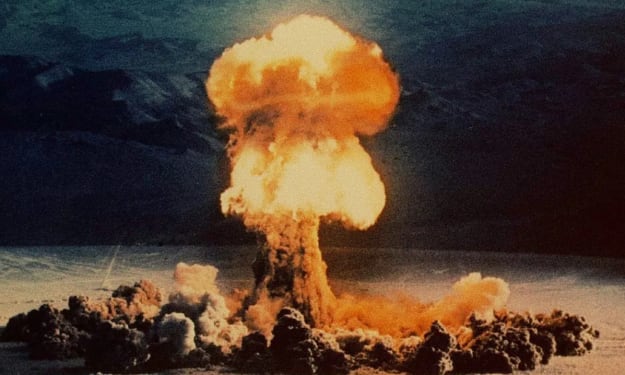
What Will Happen if War Comes?
What Will Happen if War Comes? Sitting by the window, I watch the clouds in the sky, heavy and dark. It's hard to shake the knot of fear in my stomach. If there is a war, what will become of us? Will any of us survive, or will this world we know be lost forever? It chills me to the bone. People say Donald Trump will start the next war. Please god no save us. The world seems set out to cause wars.
By ♿ V+ Marie381Uk 2 years ago in Earth
HOW SAHARA IS CHANGING
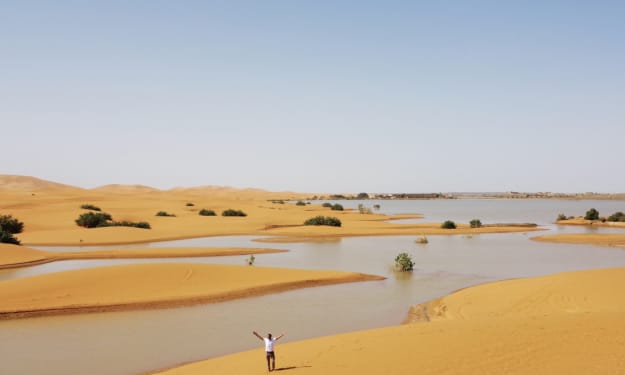
The Sahara is often seen as a barren wasteland. However, recent satellite images reveal surprising sights—lakes and rivers in Morocco and Algeria. This change followed heavy rains in early September 2024. These are not oases; they mark the Sahara returning to a wetter state. Long ago, the Sahara was a lush paradise with rich vegetation.
By Rafsan monir Kousol2 years ago in Earth
The End of the Earth: How Humans Are Destroying Their Own Planet
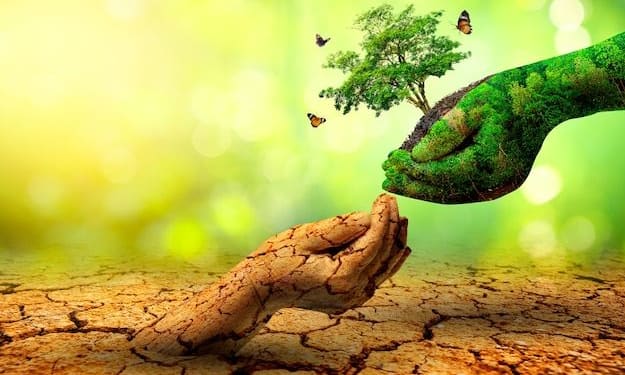
The End of the Earth: How Humans Are Destroying Their Own Planet The Earth, our home, is in grave danger. This crisis is not due to natural disasters or an asteroid collision, but rather because of human actions. Our carelessness, excessive consumption, and exploitation of nature have pushed the planet to the brink of destruction. Let’s explore how different countries around the world are contributing to this crisis.
By Nikita Angel2 years ago in Earth
The Environmental Benefits of Using rPET Flakes in India
Growing consciousness for sustainability has prompted industries across the globe to use more sustainable materials and methods. One such revolutionary material is rPET flakes or recycled polyethylene terephthalate flakes. India is also quickly embracing rPET flakes because of their vast environmental advantage and economic benefit. This article looks into how rPET flakes are revolutionizing business and supporting an eco-friendly tomorrow in India.
By Rakshitam Ecofibre2 years ago in Earth
The Fury of the Storms. AI-Generated.
As the summer months approach, the Atlantic Ocean begins to stir. The warm waters, heated by the scorching sun, start to churn and swirl, giving birth to one of the most powerful forces in nature: hurricanes. For millions of people living in coastal communities, hurricane season is a time of anxiety and preparation. The official hurricane season in the Atlantic runs from June 1 to November 30, with the peak months being August, September, and October. During this time, the National Oceanic and Atmospheric Administration (NOAA) predicts an "above-average" number of hurricanes, with at least 14 named storms, 7 hurricanes, and 3 major hurricanes. But what exactly is a hurricane? A hurricane is a type of tropical cyclone that forms over warm ocean waters. It's fueled by the heat and moisture from the ocean, and can bring catastrophic winds, rain, and storm surges. Hurricanes are classified into five categories based on their wind speed, central pressure, and potential damage. As the storms develop, they're given names from a predetermined list. The names are assigned alphabetically, and alternate between male and female names. The World Meteorological Organization (WMO) is responsible for maintaining the list of names, which are reused every six years. But hurricane season isn't just about the storms themselves; it's also about the people who live in their path. For residents of coastal communities, hurricane season is a time of heightened awareness and preparation. They stock up on supplies, board up their windows, and evacuate to safer areas when necessary. One of the most critical aspects of hurricane preparedness is having a plan. This includes knowing evacuation routes, having a safe place to go, and staying informed about the storm's progress. The Federal Emergency Management Agency (FEMA) recommends that households have a emergency kit with essentials like food, water, first aid supplies, and a battery-powered radio. As the storms approach, the National Hurricane Center (NHC) issues advisories and warnings to keep the public informed. The NHC uses a variety of tools, including satellite imagery, radar, and computer models, to track the storms and predict their path. But even with advanced technology and planning, hurricanes can still be unpredictable and deadly. In 2017, Hurricane Harvey brought catastrophic flooding to Houston, Texas, causing an estimated $125 billion in damage. The following year, Hurricane Maria devastated Puerto Rico, leaving thousands without power or access to basic necessities. As the hurricane season progresses, it's essential to stay vigilant and informed. By understanding the risks and taking necessary precautions, we can reduce the impact of these powerful storms. In addition to having a plan and staying informed, there are several other steps you can take to prepare for hurricane season: - *Secure your home*: Board up windows, trim trees, and secure outdoor furniture and decorations. - *Stock up on supplies*: Make sure you have enough food, water, and medications to last for at least a week. - *Stay informed*: Pay attention to weather forecasts and warnings, and sign up for emergency alerts from your local government. - *Have a plan for pets*: Make sure you have a plan in place for your pets, including food, water, and a safe place to go. By taking these steps and staying informed, you can help keep yourself and your loved ones safe during hurricane season. In conclusion, hurricane season is a time of awe-inspiring power and potentially catastrophic consequences. By grasping the basics of hurricanes, preparing for the worst, and staying informed, we can navigate this critical period with confidence and resilience. *Hurricane Season by the Numbers:* - 14: The predicted number of named storms in the 2023 Atlantic hurricane season. - 7: The predicted number of hurricanes in the 2023 Atlantic hurricane season. - 3: The predicted number of major hurricanes in the 2023 Atlantic hurricane season. - $125 billion: The estimated damage caused by Hurricane Harvey in 2017. - 2017: The year that Hurricane Irma became the strongest hurricane ever recorded in the Atlantic Ocean. *Glossary of Hurricane Terms:* - *Tropical cyclone*: A rotating system of clouds and thunderstorms that forms over warm ocean waters. - *Eye of the storm*: The calm, central part of the hurricane. - *Storm surge*: A rise in sea level due to the storm. - *Landfall*: When the storm makes land contact. - *Category*: A classification of the hurricane's wind speed, central pressure, and potential damage. conclusion: Hurricane season is a powerful reminder of nature's fury. As the storms brew, it's crucial to prepare, plan, and stay informed. By understanding the risks and taking necessary precautions, we can reduce the impact of these powerful storms. Remember, hurricane season is not just about the storms it's about the people who live in their path. Stay vigilant, stay informed, and stay safe. With preparation and resilience, we can weather the storms and emerge stronger.
By Henry Lucy2 years ago in Earth
NASA rover discovers liquid water ripples carved into Mars rock and it could rewrite the Red Planet's history.
NASA rover discovers liquid water ripples carved into Mars rock and it could rewrite the Red Planet's history. Mars the enigmatic Red Planet has fascinated scientists and space enthusiasts alike for decades. Its barren dusty landscapes and towering volcanoes paint a picture of a world long past its prime but recent discoveries suggest that Mars may have once been more Earth like than previously thought. A groundbreaking discovery by NASA's Curiosity rover has provided the strongest evidence yet that liquid water once rippled across the Martian surface challenging existing climate models and rewriting the history of our neighboring planet. For years planetary scientists have debated the presence and behavior of water on Mars. While evidence of ancient river valleys lake basins and possible oceanic remnants have been identified many theories suggested that any liquid water on the surface must have been trapped beneath thick ice sheets. However the latest findings published in the journal Science Advances on January 15 2025 tell a different story one that hints at shallow lakes with exposed liquid water interacting with the Martian atmosphere in a way never previously confirmed.
By Adnan Rasheed2 years ago in Earth
Eco-Friendly Pest Management: Diatomaceous Earth Solutions
Key Takeaways Diatomaceous earth is a natural pest control method, free from harmful chemicals, making it safe for homes with children and pets.It works by dehydrating insects, effectively killing them without the use of toxins.Using diatomaceous earth in gardens can help protect plants from pests while being environmentally friendly.It is a cost-effective solution, with long-lasting effects when applied correctly.Ensure to use food-grade diatomaceous earth for safety and effectiveness in pest control.
By Josh Miller2 years ago in Earth