Humanity
Mars: Humanity’s Greatest Frontier – What We’ve Discovered So Far
For centuries, Mars has been a beacon of curiosity for humankind. The Red Planet, shrouded in myths, legends, and scientific intrigue, has fascinated astronomers, dreamers, and space explorers alike. But beyond the poetic musings about a potential second home for humanity, Mars has been the site of groundbreaking scientific discoveries that reshape our understanding of the universe. From the earliest telescope observations to the latest high-tech rovers roaming its rusty surface, Mars has slowly but surely revealed its secrets. Let’s take a deep dive into what we’ve found so far.
By Ahmet Kıvanç Demirkıran2 years ago in Earth
3 March: World Wildlife Day – The Dark Reality Behind Fashion Industry
From Fur to Fashion: The Cost of Human Greed on Wildlife The fashion industry thrives on glamour, trends, and exclusivity. However, beneath the glittering surface lies a dark reality—one that comes at the cost of millions of innocent animal lives. The demand for fur, exotic leather, and animal-based luxury items continues to drive a brutal trade that spans across continents. From the high-end fashion streets of Paris to the luxury brands of New York, the exploitation of wildlife remains a global issue.
By Neeraj Tiwari2 years ago in Earth
Mysterious Territories on Earth Where Human Presence is unseen
The Earth is a planet of great diversity and mystery. Despite our advancements in technology enabling us to explore distant celestial bodies like the Moon and Mars, there are still parts of our own planet that have never been touched by human beings. These uncharted territories hold within them some of nature's most profound and captivating enigmas. Let's delve into these unexplored regions and delve into the reasons why humans have not yet been able to venture into them.
By Nikita Angel2 years ago in Earth
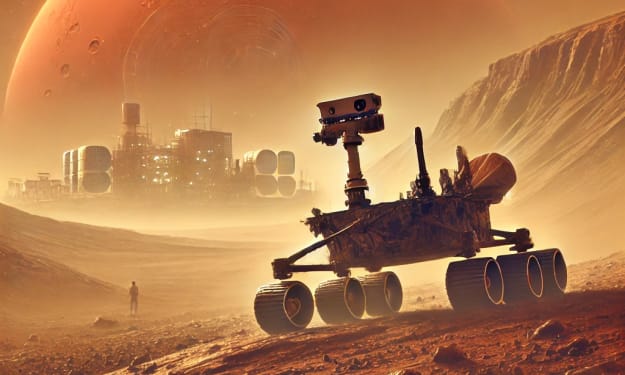
China's Zhurong rover discovers ancient beach evidence on Mars' Utopia Basin.
China's Zhurong rover discovers ancient beach evidence on Mars' Utopia Basin. China’s Zhurong rover has made a groundbreaking discovery that could reshape our understanding of Mars’ history. The rover part of China’s Tianwen 1 mission has found evidence suggesting that an ancient ocean may have once existed in the Utopia Planitia region one of the largest impact basins on the Red Planet. This finding supports the long standing theory that Mars was once a warm wet world with conditions potentially favorable for life. The discovery centers around a set of landforms and sedimentary structures that bear a striking resemblance to those found on Earth’s beaches and shallow water environments. Scientists analyzing the rover’s data have identified ripple like patterns in the Martian soil suggesting that liquid water once shaped the landscape. These patterns are similar to those formed by waves and currents on Earth’s coastlines indicating that a body of water might have once existed in this region.
By Adnan Rasheed2 years ago in Earth
Restoring Native Species: A Crucial Step for Environmental Recovery
In the face of habitat destruction, climate change, and biodiversity loss, restoring native species has become an urgent environmental priority. Native species, which have evolved over time in specific ecosystems, play a crucial role in maintaining the delicate balance of their habitats. However, deforestation, urbanization, pollution, and the introduction of invasive species have severely disrupted these natural systems, often leading to population declines or even extinctions.
By Briar Rose2 years ago in Earth
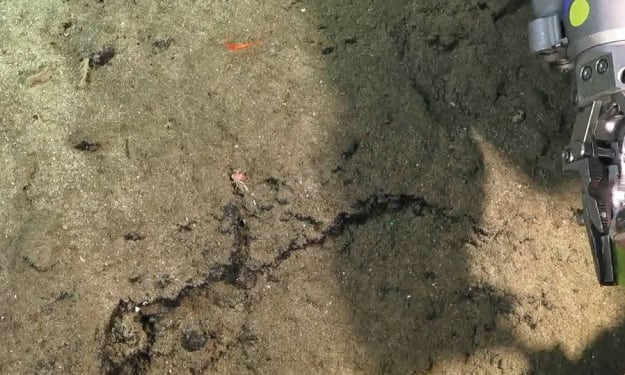
Orange deep sea creature with dense eyelashes discovered as new species.
Orange deep sea creature with dense eyelashes discovered as new species. Scientists aboard the research vessel Falkor exploring the depths of the eastern Pacific Ocean off the coast of Costa Rica made an extraordinary discovery an orange deep sea creature with dense eyelash like structures. The moment was captured on the camera of their remotely operated vehicle ROV thousands of feet below the surface in a mysterious underwater canyon. At first glance the researchers were captivated by the creature’s striking appearance but it wasn’t until later that they realized they had stumbled upon an entirely new species. The Falkor research vessel operated by the Schmidt Ocean Institute embarked on its journey in January 2019 for a weeks long survey of deep sea life. The mission aimed to explore the largely uncharted regions of the deep ocean focusing on marine biodiversity and collecting samples for scientific study. The expedition was equipped with cutting edge technology including high resolution cameras and robotic arms on the ROV allowing scientists to document and retrieve specimens from extreme depths.
By Adnan Rasheed2 years ago in Earth
City killer asteroid could smash into MOON as Nasa warns probability of impact set to rise further.
City killer asteroid could smash into MOON as Nasa warns probability of impact set to rise further. NASA has recently raised concerns about a Big Ben sized asteroid that could collide with the Moon in the near future. Scientists have been closely monitoring the trajectory of this celestial body and the probability of impact is reportedly increasing. While the asteroid was initially considered a potential threat to Earth new calculations suggest that it may instead be on a collision course with the Moon. This alarming development has sparked discussions among experts regarding the potential consequences of such an event and what it could mean for future space exploration. The asteroid in question which measures roughly the same size as London's iconic Big Ben has been under observation by NASA’s planetary defense team for some time. Previously there were fears that this space rock could impact Earth with predictions estimating a 20 percent chance of collision by April. However updated calculations now indicate that the Moon could bear the brunt of this cosmic encounter. The probability of the asteroid hitting the Moon has been steadily increasing raising concerns about the potential impact and its implications for both lunar exploration and Earth's space environment.
By Adnan Rasheed2 years ago in Earth
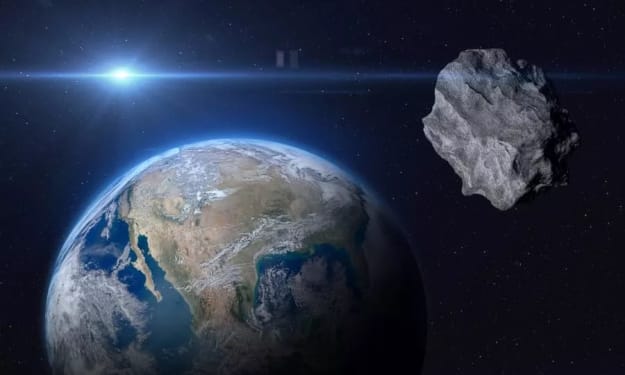
House Sized Asteroid Approaching Earth Tomorrow NASA Reports.
House Sized Asteroid Approaching Earth Tomorrow NASA Reports. NASA has reported that a house sized asteroid designated 2025 DJ22 is set to pass by Earth at a remarkable speed of 29,304 miles per hour. While the thought of an asteroid speeding through space towards our planet might sound alarming scientists assure that it poses no immediate threat. The asteroid estimated to be approximately 47 feet in diameter will miss Earth by a relatively close distance of 347,000 miles just beyond the orbit of the Moon. Asteroids like 2025 DJ22 are a common occurrence in our solar system. These space rocks remnants from the early formation of planets travel in various orbits and sometimes come close to Earth. While this asteroid’s approach is noteworthy due to its proximity it does not fall under the category of potentially hazardous asteroids which are defined as objects that pass within 4.6 million miles of Earth and are large enough to cause significant damage if they were to collide with our planet. However NASA and other space agencies keep a close watch on all such near Earth objects NEOs to ensure continuous monitoring of their orbits.
By Adnan Rasheed2 years ago in Earth