Humanity
Aging populations and their socioeconomic impacts
With advancements in healthcare and living standards, life expectancy has increased, leading to a rise in the proportion of elderly individuals. While this demographic shift signifies human progress, it also presents significant socioeconomic challenges that require careful planning and policy adjustments.
By Badhan Sen2 years ago in Earth
No one knows who named Earth. AI-Generated.
The Mystery of Earth's Name: Who Decided What to Call Our Planet? Ever wonder why our planet is called Earth? It's different from other planets in our solar system. They got their names from Roman or Greek gods. But where did "Earth" come from? It’s a mystery lost in time. This makes you ask a big question. Why is Earth's name so strange? What does this tell people about how our ancestors saw the world? Earth's Unique Naming Convention Most planets boast names tied to ancient gods. Earth? Not so much. It stands apart. It's a bit of a loner in the planetary naming club. Greco-Roman Influence on Planetary Names Mars, Venus, Jupiter: these are more than just celestial bodies. They echo with tales of Roman gods. Greeks had their own versions, shaping what we call these worlds. Ares became Mars. Aphrodite turned into Venus. Zeus evolved into Jupiter. This naming trend is easy to see across the solar system. Earth's Germanic Roots Unlike the others, "Earth" comes from old Germanic languages. The roots lie in words like erþō. This ancient word simply meant "ground" or "soil". Over time, it morphed into the "Earth" we know. A simple name for the ground beneath our feet. No gods. No myths. Proto-Germanic Origins and the Concept of "Ground" Let's dig deeper. Where did that old word erþō even come from? What did it mean to those who first spoke it? The Meaning of erþō For early Germanic people, erþō was essential. It meant more than just dirt. It meant life. Their lives depended on it. It was where they grew food. It was what they walked on. Erþō connected them to everything. This word held deep cultural importance. Evolution Through Old English As languages changed, erþō became eorþe in Old English. You can find it in old books. People used it every day. It was a common word for the ground. It shows how important the land was to them. No Single "Namer" Here's the thing. No single person chose the name "Earth". It wasn't a decision by a committee. The name arose slowly. People used it. It evolved. It's a name that grew from the ground up. The Absence of Mythology Why didn't Earth get a fancy, god-like name? It's an interesting contrast. Why does Earth stand out? Earth vs. Other Planets Other planets got cool names from mythology. Earth? It got a practical label. It makes you think about why. Was there a reason to give Earth such a simple title? Early Human Perception of Earth People saw Earth as something close. It was the ground. It was right there. Other planets seemed far away. They were connected to gods and myths. Earth was just, well, Earth. Why the Origin Remains Obscure It's hard to say who first said "Earth." The name changed little by little. How did this happen? Gradual Evolution of Language Languages don't change overnight. They shift slowly. Words change meaning. New words appear. It’s hard to pinpoint when "Earth" became its official name. Pre-Scientific Understanding Long ago, people didn't understand the universe as well. They cared about what was right in front of them. The ground. The soil. It makes sense that their name for Earth was so simple. Lessons from Earth's Namelessness So, what can we learn from all this? What does the name "Earth" tell us? It's more than just a word. A Reflection of Early Cultures The name shows how closely early people felt to the land. For those old Germanic and English cultures, Earth was life. They respected it. This connection is right there in the name. Humility in Perspective Earth's simple name can inspire you to feel small. It reminds you that you are just a tiny part of a big universe. It keeps you grounded. Conclusion So, who named Earth? No one really knows! "Earth" comes from old Germanic words. These words meant "ground." This name is different from how other planets got their names. The simple name shows how people long ago felt about the land. It can also remind you to appreciate our planet. It’s home, after all.
By Story silver book 2 years ago in Earth
Seven Planets retrograde. AI-Generated.
On February 28 and March 1, 2025, there will be a significant period of planetary retrogrades involving *seven planets*: Mercury, Venus, Mars, Jupiter, Saturn, Uranus, and Neptune. During retrograde periods, planets appear to move backward from Earth's perspective, which is believed to have various astrological influences. Here’s a breakdown of the retrograde planets and their potential effects on our lives:
By Antea Lumina Kala Matylda 2 years ago in Earth
A jump, 100 million seeds, and the rebirth of the Amazon!
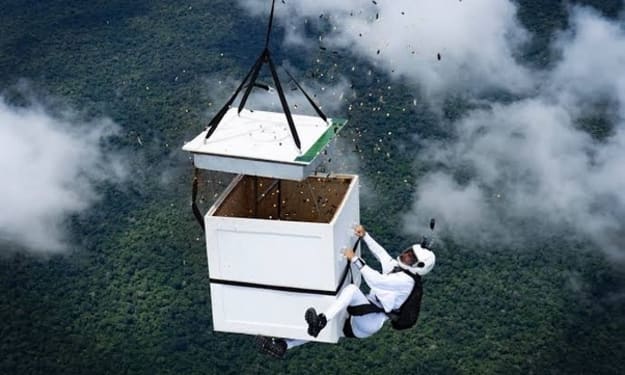
A small cargo aircraft was hovering in the sky at an altitude of 12,000 feet. Inside, Luiji Kani—a famous Brazilian skydiver and environmental worker—stood near the open hatch. In front of him was a large metal box containing 100 million seeds, meant to revive a destroyed part of the Amazon rainforest. This land, once green and full of life, had turned barren due to massive deforestation and devastating fires. Luiji took a deep breath and, without wasting any time, pushed the box out of the aircraft. Within seconds, he followed, diving straight into the open sky. The powerful wind currents hit his body, but his focus remained solely on the box, which was plummeting rapidly toward the earth. This was no ordinary skydive; it was a mission to restore life to a dying forest. The adrenaline rushed through his veins as he tried to reach the metal box. He extended his arms, and after a few tense moments, he managed to grab the edge of the box. But suddenly, a strong gust of wind spun him violently. His body flipped upside down, and his right wrist twisted sharply. A sharp pain shot through his arm. For a moment, he lost control, but years of skydiving experience helped him regain stability. He clenched his teeth, pushing aside the pain, and refocused on the mission. The altitude meter in his gear showed 6,000 feet. It was time. Using all his strength, he yanked open the box’s lid. As soon as the lid was off, the seeds burst into the air, scattering in all directions. The wind carried them over the land below—a vast area of burnt soil that once thrived with dense greenery. These seeds held the promise of rebirth. In a few years, they would grow into towering trees, some reaching heights of 50 meters, covering an area equivalent to 14,000 football fields. It was nature’s second chance. The Amazon rainforest is one of the most important ecosystems on Earth. It produces 20% of the world’s oxygen, regulates the climate, and provides a home for more than 10 million species of plants and animals. But human activities, including illegal logging, agriculture, and uncontrolled fires, have destroyed large portions of this vital forest. Scientists warn that if the deforestation continues, the Amazon may reach a tipping point where it can no longer regenerate itself. This mission was not just about planting trees; it was about restoring balance to nature. These 100 million seeds included a mix of native plant species, carefully selected to support biodiversity. Some would grow into towering hardwood trees, while others would provide food and shelter for animals. The idea was not just to replant trees but to rebuild an entire ecosystem. But the mission was not over yet. The danger was far from gone. Luiji's wrist throbbed in pain, and he still had to deploy his parachute. The altitude had dropped to 3,000 feet. He pulled the parachute cord, and the canopy burst open abruptly. A powerful jolt shook his entire body. For a moment, his vision blurred, and he felt like he might lose consciousness. But he fought against the dizziness and steadied himself. Slowly descending, he looked down. The seeds had dispersed exactly as planned. The barren land below would soon witness the miracle of regeneration. A wide smile spread across his face. His mission was successful. As he landed safely on a cleared patch of land, Luiji let out a deep breath of relief. He looked around and then up at the sky. He had done it. These seeds, now resting in the soil, would soon sprout with the arrival of the rains. This would not just be a new beginning for the forest but also a message to the world—one person, with courage and determination, could make a difference. Luiji Kani’s mission was not just an adventurous stunt; it was a call to action for the entire world. The Amazon rainforest, often called the "lungs of the Earth," had suffered immensely due to human activities. But if one person could take such a bold step toward its revival, imagine what humanity could achieve if they united for the cause. Perhaps, years from now, someone would walk through this forest, unaware of the extraordinary story behind its revival. They might not know that this lush green landscape was the result of one man’s daring leap—one jump that sowed the seeds of hope for the Earth’s future. A single jump, 100 million seeds, and the rebirth of the Amazon!
By Neeraj Tiwari2 years ago in Earth
Architects of Control
The Architects of Control: Who Profits from Humanity’s Repeated Resets? Throughout history, civilizations have collapsed, knowledge has been lost, and humanity has been forced to start over. But what if these resets aren’t accidents? What if they are carefully orchestrated events designed to keep true power out of the hands of the masses?
By Alexander Terrell2 years ago in Earth
NASA Image Reveals Earth's Tallest Lightning.
NASA Image Reveals Earth's Tallest Lightning. The recent capture of a rare atmospheric phenomenon known as a gigantic jet by the International Space Station (ISS) has once again sparked interest in the mysteries of Earth's upper atmosphere. This extraordinary form of lightning often called Earth's tallest lightning is a massive electrical discharge that occurs between powerful thunderstorms and the ionosphere reaching nearly 50 miles into the sky. Unlike conventional lightning that travels between clouds or from clouds to the ground gigantic jets extend upward piercing the atmosphere in a dramatic display of raw energy. These electrical events are rarely observed and even less frequently captured in photographs making this latest image a significant contribution to scientific understanding. Gigantic jets belong to a category of atmospheric discharges known as transient luminous events (TLEs). These phenomena include other unusual forms of lightning such as sprites blue jets and elves each with unique characteristics and behaviors. Gigantic jets however are particularly notable due to their immense scale and power. They have been described as electrical tendrils stretching toward space a stark contrast to the downward bolts of traditional thunderstorms. Though first documented in 2002 they remain an enigmatic aspect of atmospheric science with researchers still trying to determine the exact mechanisms behind their formation.
By Adnan Rasheed2 years ago in Earth
Plant Pineapples ALL Over Your Garden, See What Happens a Week Later.
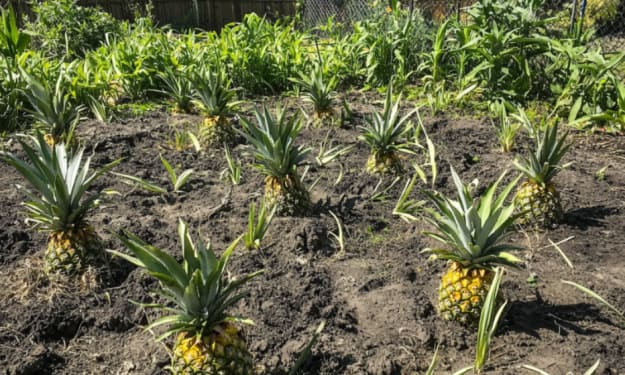
When you hear the word pineapple, it probably elicits thoughts of a refreshing summer fruit sweet, tangy, tropical. Whether blended into smoothies, savored alongside savory meals, or consumed fresh by themselves, pineapples are one of the most loved fruits on the planet. But often overlooked is the simple fact that fruit can be grown even in some of the coldest climates. Fruits you should plant.
By Rohitha Lanka2 years ago in Earth
Urban Harvest: Foraging Edible Plants in the City.
Introduction When you're walking through a teeming metropolis, it's easy to overlook the little pockets of nature thrusting themselves out in unexpected places. Urban harvest - identifying and gathering wild, edible plants grown in city environments; what could serve more as a way of restoring one's closeness to Nature, working towards self-sufficiency and developing community urban living?
By Neli Ivanova2 years ago in Earth
NASA’s Europa Clipper Uses Mars to Go the Distance.
NASA’s Europa Clipper Uses Mars to Go the Distance. NASA’s Europa Clipper is set to embark on a historic journey to explore Jupiter’s moon Europa one of the most intriguing celestial bodies in the solar system. This mission designed to determine whether Europa has conditions suitable for life relies on a strategic interplanetary route that includes multiple gravity assists. On March 1, 2025 the spacecraft will execute a critical maneuver by using Mars’ gravity to adjust its trajectory and fine tune its path toward the outer solar system. This technique a staple in NASA’s space exploration playbook allows the spacecraft to conserve fuel and optimize its travel time. Europa Clipper’s encounter with Mars is a planned gravity assist a maneuver where the spacecraft flies close to a planet to alter its trajectory using the planet’s gravitational pull. The upcoming flyby will bring the probe just 550 miles 884 kilometers above the Martian surface taking advantage of the Red Planet’s gravitational force to reshape its solar orbit. This interaction will slow down the spacecraft slightly refining its path in preparation for the next major assist a slingshot around Earth in December 2026. As Europa Clipper approaches Mars it will be moving at an impressive velocity of 15.2 miles per second 24.5 kilometers per second relative to the Sun. The planet’s gravity will act as a cosmic steering wheel bending the spacecraft’s path and adjusting its speed. After the flyby Europa Clipper will continue its voyage at a slightly reduced speed of 14 miles per second 22.5 kilometers per second positioning it for the next leg of its interplanetary journey.
By Adnan Rasheed2 years ago in Earth
Quick Himalayan Escapes: Best Weekend Treks from Delhi & Dehradun
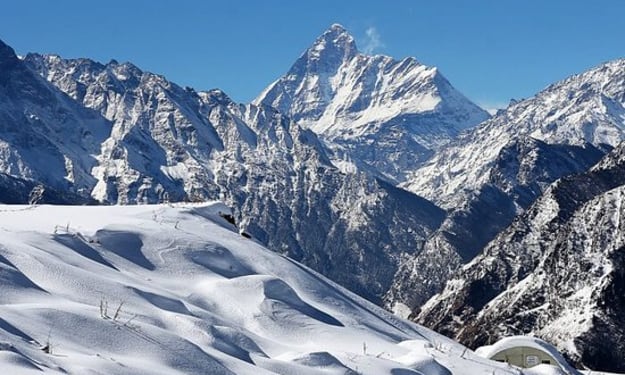
Introduction When city life gets overwhelming, a quick Himalayan escape is the perfect way to recharge. Fortunately, there are several incredible weekend treks near Delhi and Dehradun that offer a refreshing break without requiring extensive planning. From lush meadows to snow-capped peaks, these treks are a dream come true for adventure seekers.
By Tenzingkungalothar2 years ago in Earth