Humanity
The Last Seed
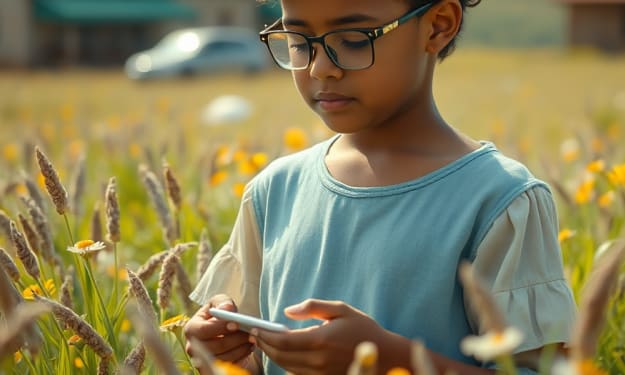
The future of life is in the hands of a child in a climate catastrophe-ravaged world where trees are myths and rain is a memory. The Last Seed tells a story not of superheroes or machines, but of a single seed—and a girl named Asha whose discovery may offer the last hope for a dying Earth.
By Ashfaque Mahmud 🇧🇩about a year ago in Earth
Record fall in Japanese nationals as population declines
Record Fall in Japanese Nationals as Population Declines Japan has recorded its sharpest annual decline in the number of Japanese nationals, underscoring the nation’s deepening demographic crisis. New government data released this week shows that the population of Japanese citizens shrank by over 800,000 in the past year—marking the steepest drop since records began.
By Kindless Exeabout a year ago in Earth
Why Donate Clothes Near Me?
Donating clothes you no longer need is more than just a way to free up space—it’s a chance to help others. If you're looking to donate clothes near me, scheduling a pickup ensures your items reach thrift stores that support local charities. But why is donating clothing so important, and who benefits from your generosity? Understanding the impact of your donations might inspire you to make giving back a regular habit.
By donationpickupabout a year ago in Earth
The Pink Moon’s Secret
The first full moon of spring was always special, but this year, the Pink Moon promised something extraordinary. In the heart of New York City, where skyscrapers kissed the sky and neon lights drowned out the stars, the moon was about to put on a show no one would forget.
By yousaf shahabout a year ago in Earth
"The Billion-Dollar Plot: Inside the History of the World's Most Expensive Land"
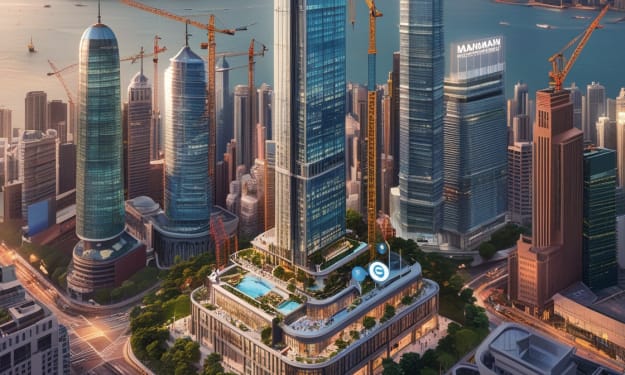
“The Billion-Dollar Scheme: The Narrative Behind the World’s Priciest Terrain” At the core of Hong Kong exists a diminutive parcel of land that has entered the annals of historynot for its dimensions, but for its astonishing worth. This article delves into the tale of 2 Murray Road, the most costly land ever transacted, tracing its path through colonial history, Hong Kong’s real estate surge, and the international influences that determined its value. We also evaluate its present worth and investigate the factors that contribute to the exorbitant costs of such land. The Most Valuable Tract of Land: 2 Murray Road, Hong Kong When we envision treasured assets, we commonly think of gold, gemstones, or invaluable artwork. However, in the contemporary economic landscape, one of the most prized commodities is landparticularly in heavily populated, economically robust urban centers. In 2020, a milestone was achieved when a minuscule plot of land in Central Hong Kong, referred to as 2 Murray Road, was acquired for an astonishing $5. 2 billion USD. This sale established its reputation as the highest-valued parcel of land ever auctioned. But how did this modest lot, barely sufficient for a few structures, achieve a valuation surpassing the GDP of certain small nations? Colonial Foundations and Real Estate Fortune Hong Kong’s land narrative is profoundly intertwined with its colonial heritage. During British governance, land was leased rather than sold, and this tradition persists today. The government retains ownership of nearly all land and leases it through extensive agreements. With space being scarce and population density elevated, competition for land is intense, leading to soaring prices. 2 Murray Road is positioned in Central, the financial epicenter of Hong Kong. It is encircled by skyscrapers that accommodate multinational banks, legal firms, and high-end retailers. Consequently, even a minor parcel of land in this area commands a significant price. The lot was formerly utilized as a multi-level parking facility managed by the Hong Kong government. However, as Hong Kong’s skyline expanded and real estate became increasingly profitable, the government recognized a lucrative prospect. When the site was offered for auction, prominent developers rushed to seize the opportunity. The Billion-Dollar Offer In May 2020, the Chinese developer Henderson Land Development secured the bid for 2 Murray Road. The concluding figure? A record HK$50. 8 billion (approximately $5. 2 billion USD at that time). This translates to about $25,550 per square footan almost unfathomable cost for land. What rendered this agreement even more extraordinary was that it transpired during a period of political turmoil in Hong Kong and amidst global uncertainty due to the COVID-19 pandemic. Nonetheless, Henderson was confident that the lot’s prime location, adjacent to the Hong Kong Club, Mandarin Oriental, and other prominent sites, ensured long-term profitability. Why Is It So Costly? Location: The land is situated in one of the most esteemed and land-constrained areas worldwide. Similar to the Champs-Élysées in Paris or Fifth Avenue in New York, Central Hong Kong boasts unparalleled prestige. Economic Density: Hong Kong’s economy flourishes on financial services and trade. Office space consistently remains in demand, particularly in Central. Land Scarcity: Merely approximately 25% of Hong Kong’s territory has been developed due to mountains, nature reserves, and regulatory limitations. This intensifies competition. Speculative Value: Developers are aware that investment in prime real estate can yield exceptional returns. Luxury edifices constructed in this region could command some of the highest rental rates globally. What Now?
By Say the truth about a year ago in Earth
Nisarga's Offering. AI-Generated.
As soon as Rudra woke up in the morning, he felt as though the nature of this village, far away from the city's chaos, had wrapped him in a gentle embrace. All around him were fields draped in green, the outline of blue hills in the distance, and just in front, a small river flowed gently with a soothing murmur. On the opposite bank were rows of coconut trees, and the sky looked like a vast, tranquil canvas with the sounds of birds. Rudra had come here for a few days’ vacation, to escape the busy, mechanical life of the city. The village was named Madhuban. He had visited once as a child with his parents, and though many years had passed, it seemed the village's nature had remained untouched. That same clear river, the foggy mornings, and the refreshing breeze—it all felt just like before. He stepped out of the guesthouse and began walking along the riverbank. The path curved gently, flanked by shrubs and wildflowers, with their fragrance filling the air. He came to a stop at one point, and there was an elderly man fishing with a bamboo rod on a large rock near the river. Rudra walked up to him and asked politely, “How’s it going, uncle?” The old man smiled and replied, “Not bad at all. Watching nature is more peaceful than catching fish.” Rudra fell silent for a moment. In fact, he couldn't buy the peace he found here with money from the city. He eventually sat down and submerged his feet in the water. The cool water touched his skin, washing away the fatigue of his life. From across the river, a group of ducks floated toward him, followed by a little boy swimming joyfully behind them, calling out, “Come on, Ramdhanu, come!”—Rudra realized that one of the ducks was named Ramdhanu. These scenes filled Rudra's heart. He seemed to be given new life by the landscape, the simplicity, and the unspoiled lifestyle. In the afternoon, he went toward the base of the hills. There was a small waterfall there. The tiny drops of water dancing in the breeze made the sound of falling water fill the air. Rudra stood there silently for a while, feeling as if the sounds around him were a sacred song sung by nature itself—a melody of peace. Occasionally, deer appeared from the forest. That day, Rudra was fortunate because a young deer briefly halted in front of him before reentering the forest. Nature was offering him one wonder after another. At night, the moon had risen. Rudra sat in the guesthouse courtyard, gazing at the sky. So many stars—something he could never see in the city. He was passed by a firefly. In awe, he watched. It felt as though nature whispered, “Look, I’ve always been here. You just never saw me.” Rudra realized that this deep connection with nature was true peace. No matter what the man-made world had to offer, life without nature’s touch was incomplete. The next morning, he would return to the city. But he was aware that he was carrying these sights, sounds, and emotions with him, like a sliver of tranquility hidden deep within his hectic life.
By Online the jobabout a year ago in Earth
The Ethics of De-Extinction: Should We Bring Back the Dire Wolf?
The birth of three dire wolf pups, Romulus, Remus, and Khaleesi, marks a groundbreaking scientific achievement by Colossal Biosciences. By utilizing advanced genetic engineering and ancient DNA, the company has effectively brought back the iconic Ice Age predator that disappeared over 10,000 years ago. This remarkable feat has ignited a global discussion surrounding the ethics and implications of de-extinction.
By Jenna Deedyabout a year ago in Earth
Sunday at Chimp Haven
Tucked away in the quiet woods of Northwest Louisiana, there’s a special place where over 300 chimpanzees live their best lives. Welcome to Chimp Haven, the largest chimpanzee sanctuary in the world, spread out across 200 acres of peaceful forest. For these chimps, life used to be full of tests, labs, and experiments—but now, it’s all about relaxation, friendships, and bananas.
By Waqar Ahmadabout a year ago in Earth