Climate
Agrivoltaics: How Solar Panels Are Revolutionizing Farming
Imagine a farm where rows of crops thrive under the gentle shade of solar panels, and the same panels generate clean electricity to power homes, businesses, and even the farm itself. Sounds futuristic, doesn’t it? Welcome to the world of agrivoltaics—the cutting-edge partnership between solar energy and agriculture.
By Kenneth Annanabout a year ago in Earth
The Long Shadow: How the Russia-Ukraine War Changed the World
The Long Shadow: How the Russia-Ukraine War Changed the World On February 24, 2022, the world awoke to a harsh new reality. Russia, under President Vladimir Putin, had launched a full-scale invasion of Ukraine. What many thought would be a swift operation turned into a long, brutal war that would have ripple effects across continents, from the cost of bread in Cairo to the energy bills in London.
By Wings of Time about a year ago in Earth
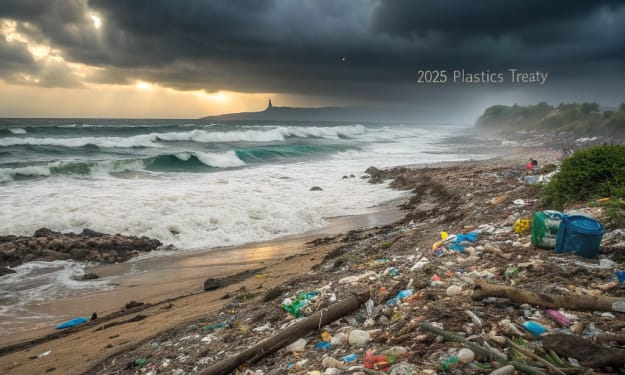
The Global Plastic Pollution Crisis: Challenges and Innovations in Tackling a Modern Plague. AI-Generated.
Plastic pollution has emerged as one of the most pressing environmental challenges of the 21st century, choking oceans, harming wildlife, and infiltrating human ecosystems. With over 400 million tons of plastic produced annually, the world grapples with a crisis that transcends borders, driven by single-use plastics and inadequate waste management. Yet, global efforts are rising to combat this issue through innovation, policy, and activism. This post explores five key facets of the plastic pollution crisis, highlighting its impacts, innovative solutions, and the collective push for a cleaner planet. Dive into the urgent battle against plastic waste, where science, policy, and human resolve converge to forge a sustainable future.
By Arjun. S. Gaikwadabout a year ago in Earth
How Thomas Midgley Jr.'s inventions almost ended life on Earth
I revisited a dark chapter in the history of humanity and remembered how the greed of one man almost destroyed the planet. A recent discussion with John Pearce, editor of ECO (news and views on environmental issues, politics, society, technology, and the wider world) reminded me of this individual; one who managed to destroy the ozone layer single handed, amongst other things. Do you think I’m being too harsh? Not really. Facts are facts.
By Susan Fourtané about a year ago in Earth
🌊 Is a Mega Disaster Looming Over Pacific Nations?
🔴 A Powerful Earthquake Hits Russia – Magnitude 8.8 On July 30, 2025, the world witnessed a massive natural disaster when a magnitude 8.8 earthquake struck near the Kamchatka Peninsula in far-eastern Russia. The quake, which occurred in one of the most seismically active zones on earth—the Ring of Fire—sent tsunami alerts across the Pacific Ocean. Although the main impact was felt in Russia, the tremors and potential tsunami waves created panic in Japan, South Korea, the U.S. West Coast, Hawaii, Canada, China, and even parts of Latin America. Authorities in Japan quickly evacuated over 2 million people from coastal regions, fearing a disaster similar to the 2011 Fukushima earthquake and tsunami, which had caused a nuclear crisis. While tsunami waves were recorded in several regions, ranging from 4 to 8 feet, the worst-case scenario was avoided thanks to advanced early warning systems and timely evacuations. However, the quake’s intensity and reach serve as a reminder that the Pacific Basin remains a fragile zone where the earth's crust constantly shifts. 🐟 The Mysterious Oarfish Sightings — Harbingers of Doom? Soon after the Russian quake, social media lit up with videos and news reports of giant oarfish being seen near the shores of Japan, the Philippines, and even Mexico. These rare deep-sea creatures, which can grow up to 10 meters in length, have long been associated with ancient Japanese legends as “messengers of the sea god.” In February 2025, an oarfish was spotted near Baja California, Mexico—just months before the Russian earthquake. Similarly, oarfish were seen in early 2011, just before the devastating Japan earthquake and tsunami in March of that year. This has fueled public speculation that these fish can sense deep-sea seismic activity and rise to the surface in response. But what does science say? According to marine biologists and geological experts, there is no proven connection between oarfish behavior and earthquake prediction. Most scientists agree that these fish may rise to the surface due to sickness, changing ocean temperatures, or pollution—not to warn humanity of a coming disaster. Yet, the timing of these appearances is hard to ignore for many people around the world, especially in earthquake-prone areas. 📖 A Prophecy from 1999 – Was it Fulfilled? The story gets even more chilling when we recall a prophetic vision by a Japanese manga artist, Ryo Tatsuki, who published her predictions in 1999. One of her most alarming prophecies said that “on July 5, 2025, a mega disaster will hit Japan, boiling the sea.” When July 5 passed without any major event, many dismissed the prophecy. But just a few weeks later, on July 30, the massive earthquake struck Russia, shaking the Pacific basin and triggering tsunami alerts across Japan. Many are now linking her vision to this recent disaster, suggesting she may have foreseen the event two decades in advance. It’s not the first time that Tatsuki’s predictions have caught attention. Some of her past forecasts—like economic crises and natural disasters—have reportedly aligned with real-world events. However, scientific communities remain cautious and do not support the use of prophecies in disaster preparedness. Still, to ordinary people, such coincidences raise eyebrows and add to the fear surrounding natural events. 🐋 Whales Surfacing in Japan – Another Sign? Adding to the mystery, residents of coastal Japan have reported whales and other marine life appearing unusually close to shore. In Japanese culture, such unusual behavior is often interpreted as a natural signal of unrest under the sea. Some researchers have proposed that low-frequency vibrations caused by tectonic stress may disturb whales and other marine animals, forcing them to move or beach themselves. While the scientific link remains under investigation, historical data does show whale beachings have occurred days or weeks before major seismic events in some cases.
By Ikram Ullahabout a year ago in Earth
“The Glacier That Screamed: What I Heard Before the Collapse Changed Everything”
Echoes Beneath the Glacier Maria had heard the glacier before she saw it. Long before her boots creaked on the icy moraine, she sensed the glacier’s groan—a deep, resonant sound like an animal’s slow breath, echoing up through her hiking pole into her bones. It had drawn her here from thousands of miles away, chasing the sound of ice shifting, of time slipping away beneath her feet.
By @HiddenHistoryabout a year ago in Earth
"Massive Earthquake Strikes Russia: Tsunami Fears Trigger Pacific-Wide Alerts"
🔴 On July 30, 2025, a powerful earthquake measuring 8.8 on the Richter scale struck off the eastern coast of Russia. The tremor, one of the most powerful recorded in recent decades, sent shockwaves through the region, triggering widespread alerts across the Pacific Rim, including Japan and the United States. This massive quake, classified as a megathrust earthquake, has set off alarms for a potentially deadly tsunami affecting millions. 🔵 A Tremor Felt Across Continents According to global seismic monitoring agencies, the epicenter of the earthquake was located beneath the seabed off the Kamchatka Peninsula, a region historically known for tectonic volatility. Such earthquakes occur along subduction zones, where one tectonic plate dives beneath another, releasing massive energy. Witnesses in nearby Russian towns reported violent ground shaking, toppled buildings, and power outages. Though detailed casualty reports are still pending, emergency services have already begun rescue and relief operations in the affected areas. Japan, a nation highly experienced in dealing with seismic disasters, immediately issued a tsunami warning. Coastal sirens rang out in multiple prefectures, and authorities urged residents to evacuate to higher ground. Similarly, the United States issued tsunami advisories for Hawaii, California, Oregon, Washington, and as far north as Alaska. Early wave activity was reported along the coastlines within hours. 🔵 Mass Evacuations Underway The tsunami threat has sparked urgent evacuations across several countries. More than 20 million people across Russia and Japan were moved to safer zones within the first 12 hours after the quake. In the United States, emergency management agencies coordinated with local governments to initiate preemptive evacuations in low-lying areas vulnerable to ocean surges. Coastal infrastructure, including ports and seaside industries, was temporarily shut down. Officials have warned that tsunami waves could reach heights of up to 10 meters (33 feet) in some areas, depending on the underwater topography and distance from the epicenter. While no major damage has yet been reported in the U.S., authorities emphasized the need for vigilance. “We are not out of danger yet,” said a spokesperson from NOAA’s Tsunami Warning Center. “Tsunami waves can come in multiple surges hours apart.” 🔵 Economic and Environmental Impact The economic cost of this disaster is already estimated in the billions. Early reports from Russia indicate significant damage to infrastructure, particularly in coastal towns where buildings were not designed to withstand such strong tremors. Roads, power lines, and communication systems have also been affected, hampering rescue efforts. Japan’s early-warning system and strict building codes have minimized direct damage so far, but the long-term effects on shipping, fishing industries, and power plants—especially those near the coast—could be profound. Tsunamis are notorious not only for the human cost but also for their environmental devastation. Saltwater intrusion, debris spread, and pollution can impact marine life and agricultural lands for years to come. 🔵 A Reminder of Nature’s Power This disaster serves as a powerful reminder of how vulnerable even the most developed nations are to the forces of nature. Earthquakes of such magnitude are rare, but when they do occur, they expose the fragility of modern civilization. Despite all technological advancements, no nation can fully protect itself from the shifting of the Earth’s crust. Global response agencies, including the United Nations and the International Red Cross, have pledged to provide immediate emergency assistance. Rescue teams remain on high alert as the threat of further seismic activity persists. Satellite monitoring systems are actively tracking the region for potential aftershocks and future tsunami risks. 🔵 What’s Next? As emergency services continue their operations and tsunami threats remain, authorities are urging residents to stay calm yet vigilant. Coastal communities are being warned to avoid the shoreline and strictly follow government safety protocols. More comprehensive assessments in the coming months are expected to reveal the full extent of the devastation. This tragedy once again highlights the importance of disaster preparedness at both governmental and individual levels. Whether through infrastructure upgrades, public education, or evacuation drills, proactive measures can make the difference between survival and catastrophe. As recovery efforts begin, the international community hopes for a swift and safe return to normalcy for the affected populations.
By Javed Khan about a year ago in Earth
The 2025 Kamchatka Earthquake: A Magnitude 8.8 Megathrust Event and Its Global Ripples
On July 30, 2025, an extraordinary seismic event shook the Kamchatka Peninsula in Russia’s Far East, registering a magnitude of 8.8 on the Richter scale. This earthquake, one of the most powerful in recorded history, tied for the sixth-largest globally according to the United States Geological Survey (USGS). Its occurrence in a tectonically volatile region, coupled with its shallow depth and proximity to the Pacific Ocean, triggered widespread consequences, including tsunami waves, volcanic activity, and global alerts. This essay provides a comprehensive overview of the event, covering its geological context, immediate impacts, regional and global responses, and the scientific and societal implications, all within the requested 1000-word framework. ### Geological Context The Kamchatka Peninsula lies along the Pacific Ring of Fire, a 40,000-kilometer horseshoe-shaped zone encircling the Pacific Ocean, notorious for hosting 75% of the world’s active volcanoes and 90% of its earthquakes. The earthquake occurred on a megathrust fault, where the Pacific Plate subducts beneath the North American Plate at a rate of approximately 7.6–8.1 cm per year. This subduction zone, characterized by intense tectonic compression, is responsible for some of the most powerful earthquakes in history, including the 1952 Kamchatka earthquake, which registered a magnitude of 9.0 and remains one of the largest ever recorded. The July 2025 earthquake struck at a shallow depth of 20.7 kilometers, amplifying its destructive potential. Shallow earthquakes, typically occurring within 70 km of the Earth’s surface, release energy closer to populated areas and are more likely to generate tsunamis due to significant seafloor displacement. The epicenter was located approximately 90 kilometers east of Petropavlovsk-Kamchatsky, the region’s largest city with a population of about 180,000, and near the Kuril-Kamchatka Trench, a deep oceanic trench formed by subduction. ### Immediate Impacts in Kamchatka The earthquake’s intensity, measured as VIII (Severe) on the Mercalli scale in Petropavlovsk-Kamchatsky, caused significant structural damage despite the region’s relatively sparse population and earthquake-resistant building codes. Reports indicate that several buildings, including a kindergarten and residential structures, sustained cracks and partial collapses. Power outages affected thousands, and gas leaks prompted evacuations in some neighborhoods. Remarkably, no fatalities were reported, a testament to Russia’s robust seismic preparedness and the quake’s offshore epicenter. However, minor injuries, primarily from falling debris, numbered in the dozens. The most immediate concern was the tsunami triggered by the earthquake. The shallow megathrust event displaced vast volumes of water, generating waves that reached Severo-Kurilsk, a coastal town in the Kuril Islands, within 20 minutes. Waves up to 4 meters (13 feet) inundated ports, fish processing plants, and low-lying areas, causing economic losses estimated in the tens of millions of dollars. Fishing vessels were damaged or swept inland, and infrastructure along the coast required extensive repairs. Tsunami sirens and text alerts, part of Russia’s early warning system, facilitated rapid evacuations, preventing loss of life. A secondary geological consequence was the eruption of Klyuchevskoy Volcano, one of Kamchatka’s most active stratovolcanoes, located approximately 400 kilometers from the epicenter. The earthquake likely destabilized magma chambers, triggering an explosive eruption that sent ash plumes 8 kilometers into the atmosphere. Air travel warnings were issued for routes over the North Pacific, and ashfall blanketed nearby settlements, though no significant damage was reported. The correlation between large earthquakes and volcanic eruptions in subduction zones is well-documented, as tectonic stress can fracture rock, allowing magma to rise. Over 100 aftershocks, including a notable 6.9-magnitude event, rattled the region within 48 hours, keeping residents on edge and complicating rescue and assessment efforts. The USGS noted that aftershocks could continue for weeks, with magnitudes potentially exceeding 6.0, a typical pattern for megathrust earthquakes of this scale. ### Global Tsunami Alerts and Impacts The earthquake’s location in the Pacific Ocean necessitated immediate tsunami warnings across multiple countries. The Pacific Tsunami Warning Center (PTWC) in Hawaii issued alerts within 10 minutes, covering Russia, Japan, Hawaii, the U.S. West Coast, Chile, Ecuador, and French Polynesia. Japan, with its advanced tsunami defense systems, evacuated approximately 1.9 million people from coastal areas in Hokkaido and northern Honshu. Waves reaching 1.5 meters (4.9 feet) struck ports like Kushiro and Hakodate, causing minor flooding but no significant damage, largely due to seawalls and timely evacuations. In Hawaii, waves of 1.7 meters (5.7 feet) impacted Hilo and Kahului, prompting beach closures and harbor evacuations. The U.S. West Coast, particularly California, experienced waves up to 0.5 meters (1.6 feet), with minor surges reported in Santa Cruz and Crescent City. South American nations like Chile and Ecuador, still mindful of the 2010 Maule earthquake and tsunami, evacuated coastal communities, but waves remained below 0.3 meters. French Polynesia reported negligible impacts. Most tsunami warnings were lifted within 24 hours, reflecting the effectiveness of global monitoring systems and the quake’s distance from densely populated coastlines. ### Scientific and Societal Implications The Kamchatka earthquake underscores the dynamic nature of Earth’s tectonic systems and the importance of preparedness in seismically active regions. Scientifically, it provides a wealth of data for studying megathrust earthquakes, tsunami generation, and earthquake-volcano interactions. The USGS and Japan’s Earthquake Research Institute have already deployed teams to collect seismic, geodetic, and bathymetric data, which will refine models of subduction zone behavior. The event also highlights the role of real-time monitoring, with networks like the Global Seismographic Network and PTWC enabling rapid response. Societally, the earthquake demonstrates the value of resilient infrastructure and public education. Russia’s investment in seismic building codes, early warning systems, and evacuation drills minimized human and economic losses. Japan’s response further exemplifies best practices, with its combination of engineering (seawalls, quake-resistant buildings) and community preparedness (regular drills, alert systems). However, the event exposed vulnerabilities in less-prepared regions, such as small coastal communities in the Kuril Islands, where economic recovery will be challenging due to damaged fishing infrastructure. Globally, the minimal impact of the tsunami beyond Russia reflects advancements in international coordination. The PTWC, established after the 1946 Aleutian tsunami, and regional systems like Japan’s Meteorological Agency, ensure timely warnings. Yet, the event serves as a reminder of the potential for even greater disasters. A similar earthquake closer to a major city, like Tokyo or Santiago, could cause catastrophic loss of life and economic damage in the trillions. ### Long-Term Considerations Recovery in Kamchatka will focus on rebuilding coastal infrastructure, supporting the fishing industry, and reinforcing damaged buildings. Russia’s government has pledged emergency funds, but the region’s remoteness may slow efforts. Internationally, the earthquake may spur renewed investment in tsunami defense systems, particularly in developing Pacific nations with limited resources. The event also raises questions about climate change’s indirect role in seismic activity. While earthquakes are primarily tectonic, rising sea levels and glacial melting can alter crustal stress in subduction zones, potentially influencing quake frequency. Research into these interactions is ongoing, but the Kamchatka event may accelerate such studies. ### Conclusion The July 30, 2025, Kamchatka earthquake, with its 8.8 magnitude, was a stark reminder of Earth’s geologic power. Its impacts—structural damage, tsunamis, and volcanic activity—were significant but mitigated by preparedness and geography. The global response, from evacuations in Japan to alerts in Chile, showcased the strength of international seismic and tsunami monitoring systems. Scientifically, the quake offers insights into megathrust dynamics, while societally, it reinforces the need for resilience in earthquake-prone regions. As aftershocks fade and recovery begins, the event will leave a lasting legacy in seismic research and disaster preparedness, urging humanity to remain vigilant in the face of nature’s unpredictability.
By Faheem ullahabout a year ago in Earth
The ocean is losing oxygen. This is how it will affect the future of the planet
Over 70% of the Earth’s surface is covered by water. The deep sea's allure stems largely from the fact that we know far less about its vast, largely unexplored regions than we do about outer space, such as the Moon or Mars.This immense and mysterious environment, characterised by extreme pressure, darkness, and cold temperatures, harbours unique ecosystems and life forms that are still largely unknown to science. Oceans and marine life are suffering. The consistent decline of ocean oxygen will have long-term consequences in the future of the planet.
By Susan Fourtané about a year ago in Earth
Earthquake and Tsunami Warnings. Understanding the Science and Saving Lives.
What is an Earthquake? An earthquake is a sudden shaking of the ground caused by the movement of tectonic plates beneath the Earth’s surface. These movements release energy that travels in waves, shaking the land and everything on it. Earthquakes can cause buildings to collapse, roads to crack, and landslides to occur. In coastal areas, earthquakes under the ocean can also trigger tsunamis—massive sea waves that rush toward the shore with great force.
By Tariq jamilabout a year ago in Earth
Earthquakes Through Time: From Historic Quakes to Russia’s Recent Tremor
Earthquakes are among the most powerful natural events on our planet. These sudden shifts in the Earth’s crust can level cities, reshape landscapes, and alter the course of history. From devastating historic quakes to recent tremors, such as the one that recently struck Russia, earthquakes continue to remind us of the Earth's unpredictable power. In this article, we’ll explore some of the most significant historical earthquakes and take a closer look at the recent seismic activity in Russia.
By Solene Hartabout a year ago in Earth
Vanishing River Eggs and Deadly Floods: Pakistan’s frightening Climate Crisis. AI-Generated.
Asif Mohmand At least 279 people died and more then 600 injured in early predicted harsh monsoon in Pakistan, devastating monsoon rains have wreaked havoc across Pakistan. The country has witnessed intense rains, storms and flash floods since June 26 till the end of July, from the capital Islamabad to remote villages, in various viral videos across the country, cars submerged in floodwaters, tourists in the northern areas, children and women sinking have shocked the nation. The Pakistan Meteorological Department PMD admitted that extreme weather events increasing in last 15 years, and the experts link this surge in extreme weather events to climate change, while some experts believe that Pakistan’s floods have a different tale. Why do floods occur? Who is responsible for the disappearance of river eggs? Why is Pakistan so vulnerable to flooding? Were the floods that predate human civilization purely destructive, or can floods also bringing benefits.
By Asif Mohmandabout a year ago in Earth