Climate
What’s Inside CERN
What’s Inside CERN? If you’ve ever gazed at the night sky and wondered about the secrets hidden in the tiniest particles of the universe, you’ve already stepped—mentally, at least—into the world of CERN. Nestled near Geneva, Switzerland, this sprawling scientific wonderland is officially known as the European Organization for Nuclear Research. To most people, however, it’s simply “CERN,” a place where scientists smash particles together to unlock the most profound mysteries of existence.
By Mohamed hgazyabout a year ago in Earth
Bermuda Triangle: Solved Mysteries, Real Discoveries, and Lasting Legends
The Bermuda Triangle—that stretch of the Atlantic Ocean between Miami, Bermuda, and Puerto Rico—has fascinated the world for nearly a century. Tales of vanishing ships and disappearing airplanes have sparked imaginations, books, and conspiracy theories. But has the mystery finally been solved? What secrets does this notorious patch of ocean really hold? And is it truly so dangerous that planes avoid flying overhead?
By Reframerootsabout a year ago in Earth
How Ancient Rocks Reveal the Presence of Water on Mars
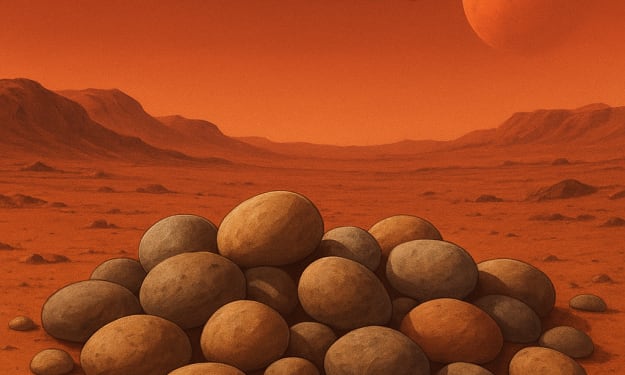
Introduction: A Handful of Pebbles, a World of Questions Sometimes, the smallest details tell the biggest stories. On Earth, smooth, rounded pebbles are a familiar sight along riverbanks and beaches — silent witnesses to the power of flowing water over time. In 2012, something remarkable happened millions of kilometers away: NASA’s Curiosity rover, exploring the dusty surface of Mars, stumbled upon clusters of similar pebbles. These weren’t just any rocks. They were water-worn conglomerates, the kind that form when streams and rivers tumble and polish stones for countless years.
By Mohamed hgazyabout a year ago in Earth
Trending Cultural Events in Europe (August 2025)
A powerful exhibition at Paris’s Institut du Monde Arabe showcases over 5,000 years of Gaza’s rich history. Featuring over 100 artifacts—from Byzantine mosaics to Roman-era statuettes—this show explores Gaza's deep heritage as a crossroads of civilizations. It remains open until November 2, 2025, drawing considerable international attention.
By Muhammad Ibrahimabout a year ago in Earth
The Secret Colors You Can’t See (But Some Animals Can)
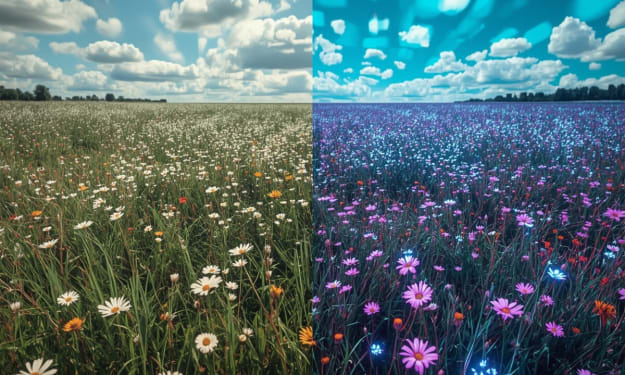
We like to think we see the world as it truly is—vivid, detailed, complete. But the truth is, our eyes only give us a small slice of reality. Hidden all around us are colors we’ll never experience without technology. For many animals, though, these “invisible” colors are part of daily life. Our Narrow Human Window Humans can see a range of light wavelengths from about 380 nanometers (violet) to 700 nanometers (red). This is called the visible spectrum. Anything outside this range—like ultraviolet (UV) or infrared—exists, but our eyes and brains can’t detect it naturally. Our vision evolved around the needs of survival: finding ripe fruit, detecting predators, and recognizing social cues. But in nature, other creatures evolved with completely different priorities, and that changed the colors they see. Ultraviolet: The Hidden Glow of Nature For humans, ultraviolet light is invisible and mostly associated with sunburn. For bees, butterflies, and some birds, UV is a visual superpower. Bees: Many flowers have patterns in ultraviolet that act like landing strips, guiding bees to nectar. These patterns are invisible to us but are essentially neon signs saying, “Food here!” Birds: Some birds’ feathers reflect UV light, revealing patterns that help them recognize mates or rivals. To us, those feathers might just look plain brown. If we could see UV, a garden would look wildly different—flowers would appear with glowing halos and hidden markings, and some animals would seem painted in invisible ink. Infrared: The Heat Map World Infrared light has longer wavelengths than visible red. We can’t see it, but we can feel it as heat. Some animals, however, can literally see heat: Pit Vipers & Pythons: They have specialized heat-sensing pits that detect infrared radiation, helping them hunt warm-blooded prey in complete darkness. Certain Beetles: Some can detect infrared from forest fires miles away, guiding them to freshly burned trees where they lay eggs. If humans could see infrared, we’d notice warm footprints on the ground, the heat of engines, and the glowing outlines of other people—even in the dark. Polarized Light: The Hidden Compass Some animals can’t just see more colors—they can detect patterns in the way light waves vibrate, called polarized light. Mantis Shrimp: Often called the “superheroes of vision,” they have up to 16 types of photoreceptors (we have just 3). They see polarized light and colors far beyond our spectrum. Desert Ants: They navigate by detecting polarized light patterns in the sky, even when the sun is hidden by clouds. For them, the sky contains a map we’ll never naturally see. What We’re Missing—and Why It Matters When we say an animal is “colorful,” we’re judging by human standards. To a bee, a peacock, or a mantis shrimp, that same animal might look unimaginably more vivid—or completely different—because of colors outside our visible range. This matters for more than curiosity. Understanding other animals’ vision helps scientists design better conservation strategies, create new camera technologies, and even develop improved sensors for medical and security purposes. Peeking Beyond Our Limits While we can’t evolve new eyes, technology can give us a glimpse into this hidden world: UV Cameras reveal flower markings and bird feathers we can’t see naturally. Thermal Cameras turn infrared heat into visible colors for hunting, firefighting, or medical imaging. Polarized Light Filters let scientists study animal navigation and vision. These tools remind us that what we see is only a version of reality—not the full picture. The Bigger Perspective Every time we look at the world, we’re seeing just a fraction of its richness. For a bee, the world hums with glowing ultraviolet highways. For a snake, the night is lit with heat signatures. For a mantis shrimp, color is an ocean far deeper than we can imagine. We think of ourselves as the “seeing” species, but in the grand spectrum of light, we’re almost colorblind. The universe is painted in shades we’ll never truly experience—yet knowing they exist is a reminder of how much wonder is still out there, waiting beyond the limits of our eyes.
By Shoaib Afridiabout a year ago in Earth
Copenhagen's Heat-and-Harbour Climate Strategy
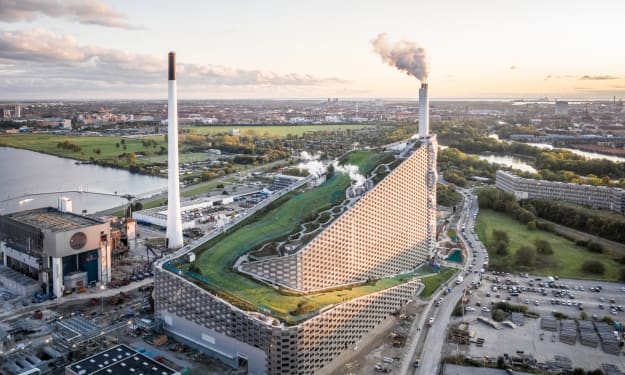
by Futoshi Tachino In a city built on islands and inlets, the wind off the Øresund smells faintly of salt and cycling grease. Copenhagen’s answer to climate change is not a single icon so much as a choreography: heat the homes with shared pipes, cool the business core with seawater, turn rainstorms into parks, and turn trash into watts—then capture the carbon on the way out. The system hums in buried mains and pump rooms, but its logic is legible on the street.
By Futoshi Tachinoabout a year ago in Earth
Singapore's Water-Linked Climate Strategy
by Futoshi Tachino In equatorial Singapore, the late-afternoon thunderheads pile up like mountains, then dissolve into warm rain that runs from green roofs to canals and finally to the sea. The city’s response to climate change is not a single showpiece but an interlocking loop: cool the homes, power the water, harden the shores, and close the carbon cycle. The hum here is chilled water in buried pipes, biogas in co-digesters, and solar panels riding the reservoir’s skin. The strategy is small-state pragmatism at system scale.
By Futoshi Tachinoabout a year ago in Earth
Bright Horizons: Celebrating the Breakthroughs of 2025
Bright Horizons: Celebrating the Breakthroughs of 2025 How Innovation, Unity, and Progress Are Shaping a Better Tomorrow Today As the sun rises on 2025, the world stands at the cusp of remarkable change. What once seemed like distant dreams are now vibrant realities, transforming how we live, work, and connect. Across continents and cultures, innovation is fueling progress, while unity among people drives solutions to some of humanity’s biggest challenges. This year is a testament to human ingenuity and resilience, offering hope and inspiration for a brighter future. A Leap Forward in Clean Energy One of the most exciting developments in 2025 is the dramatic expansion of clean energy. Solar and wind power, once supplementary sources, now dominate global energy grids. Thanks to advancements in energy storage technologies, such as ultra-efficient solid-state batteries and green hydrogen solutions, renewable energy is reliable and accessible—even in regions that previously struggled with power shortages. In cities worldwide, solar panels glitter on rooftops, while wind farms span coastlines and open plains. The result? A significant reduction in carbon emissions and cleaner air, making cities healthier places to live. Governments and private sectors have partnered in unprecedented ways to accelerate this green revolution, proving that economic growth and environmental responsibility can go hand in hand. Technology Bridging Distances The leaps in technology this year are nothing short of extraordinary. Artificial intelligence (AI) has become more intuitive and ethical, assisting in everything from healthcare diagnostics to personalized education. Telepresence robots and holographic communication have made remote work and virtual meetings feel more natural and engaging than ever before, effectively shrinking the world and connecting people regardless of location. Smart cities equipped with sensors and AI systems optimize everything from traffic flow to waste management, enhancing urban living while reducing environmental footprints. Autonomous electric vehicles glide through streets, improving safety and cutting pollution. In rural areas, internet connectivity has reached previously isolated communities, opening doors to education, commerce, and healthcare that were unimaginable just a few years ago. Health and Wellness Innovations 2025 marks a milestone in global health advancements. Breakthroughs in gene therapy and personalized medicine are helping patients manage chronic diseases with greater precision and fewer side effects. Vaccines for emerging illnesses have been developed and distributed faster than ever, thanks to AI-driven research and international collaboration. Mental health is also gaining the attention it deserves. Virtual reality therapy and AI-powered counseling apps provide accessible, stigma-free support for millions, promoting emotional wellbeing on a global scale. Communities are becoming more aware of holistic health approaches, integrating nutrition, exercise, and mindfulness into daily routines. Education for a New Era Education systems worldwide are evolving to prepare learners for the future. Interactive digital platforms, immersive simulations, and AI tutors personalize learning experiences, catering to diverse needs and paces. Lifelong learning is now a norm, with adults continually upskilling to adapt to rapidly changing job markets. Collaboration across borders allows students to engage in global projects, fostering cultural understanding and shared problem-solving skills. Schools emphasize creativity, critical thinking, and emotional intelligence—skills essential for navigating a complex and interconnected world. Global Cooperation and Social Progress Perhaps most inspiring is the growing spirit of global cooperation. Countries and organizations are working together to tackle climate change, poverty, and inequality with renewed determination. International agreements now include enforceable commitments and innovative funding mechanisms, ensuring sustained progress. Social movements are thriving, driven by awareness and technology. Communities advocate for human rights, gender equality, and inclusive policies that celebrate diversity and empower marginalized voices. The result is a more just and compassionate world where people feel seen, heard, and valued. The Path Ahead While challenges remain, the progress of 2025 is a powerful reminder of what can be achieved when humanity chooses hope and collaboration over division and despair. The breakthroughs in energy, technology, health, education, and social justice are not just stories of innovation—they are stories of people coming together to build a future that works for all. As we move forward, the collective effort to sustain this momentum is vital. Every individual, community, and nation plays a role in shaping the world we want to live in. With the tools and spirit now at our disposal, the horizon has never looked brighter.
By Muhammad Saad about a year ago in Earth