Climate
🌿 The Cracked Pot: A Story of Hidden Strength and Beauty 🌿
Once upon a time, in a quiet village nestled among rolling hills, there lived a humble water bearer. Every day, without fail, he carried two large pots on a wooden pole across his shoulders. His daily journey took him down to the river, where he filled both pots to the brim with fresh, clear water, and then back up the long, winding path to his master’s house. One of the pots was perfect — strong, sturdy, and without any flaws. It held the water securely, delivering a full load every time. The other pot, however, had a noticeable crack running along its side. No matter how carefully the bearer walked, the cracked pot would leak water drop by drop, and by the time they reached the house, only half of its original contents remained. This went on for years. Day after day, the water bearer would carry his two pots down to the river and back. The perfect pot felt proud of its reliability and usefulness. It was confident in its ability to serve its purpose without fail. But the cracked pot, on the other hand, felt ashamed. It felt broken and useless, believing it was a burden to the water bearer and a disappointment to itself. One morning, after filling the pots and beginning the climb back to the house, the cracked pot finally spoke up. Its voice was soft and filled with sorrow. “I’m so sorry,” it said. “Because of me, you do all this hard work and yet deliver less water. I am cracked. I am broken. I’m not worthy of being carried.” The water bearer paused and looked kindly at the cracked pot. Then, with a gentle smile, he said, “Have you ever noticed the path we walk each day?” The pot looked down the long trail, and for the first time, it truly paid attention to its surroundings. On the side of the path it walked, vibrant flowers had sprung up—bright blooms of reds, yellows, pinks, and purples, lining the dusty trail in a beautiful carpet of life. Curious, the cracked pot asked, “Where did these flowers come from? I’ve never seen them before.” The water bearer explained, “Every day, as you leak water, you are watering those flowers. Many years ago, I planted seeds along your side of the path. Because of your cracks, the water you lose nourishes these plants, helping them grow and bloom.” The cracked pot was silent, overwhelmed with a new understanding. What it had seen as a flaw—its cracks and leaks—had actually been its greatest strength. It had been quietly creating beauty all along, enriching the earth and bringing color and life to a place that was once dry and barren. The water bearer continued, “My dear pot, your cracks made you unique. You may feel broken, but because of you, beauty blooms where there was once only dust. You’ve been helping in ways you never imagined.” This story teaches us a powerful lesson: we all have cracks, imperfections, and moments where we feel broken or inadequate. But sometimes, those very cracks are what make us special. Our flaws may allow us to impact the world around us in ways that perfection never could. Like the cracked pot, our vulnerabilities can water the seeds of kindness, creativity, and beauty in the lives of others. The things we consider our weaknesses might actually be hidden strengths that contribute to something greater than ourselves. So next time you feel like you don’t measure up, or that you are too flawed to make a difference, remember the cracked pot. Remember that your imperfections can nourish the world in ways you might never see but are deeply felt. You are not broken. You are beautifully unique, and your cracks may just be the reason flowers bloom in someone else’s life.
By Israr khanabout a year ago in Earth
Swat Flood Disaster: Lives, Livelihoods, and Markets Buried Under Mud in Pakistan’s Switzerland
After the Floods in Swat, Pakistan, Mingora Bazaar Turns into a Pile of Mud , Debris Creates a Dam Beside the Bridge "My only source of livelihood is this auto rickshaw, and right now it is buried under tons of mud. On the other hand, the destruction the flood has caused in my home is also my responsibility to fix," said Muhammad Sharif. "Sometimes I am here with my son, clearing mud to get the rickshaw out, and other times I go home to help my daughters deal with the destruction there." Muhammad Sharif is one of many victims of the devastating floods that swept through Swat’s Mingora Bazaar. Like him, many others are desperately searching for their vehicles and motorcycles trapped under mud. How Will I Pay the Rickshaw Installments? On Friday, after a cloudburst, heavy flooding swept into Mingora Bazaar, submerging homes, markets, and shops. Four days later, people are still trying to dig their belongings out from under the mud. Fifty-five-year-old Muhammad Sharif, who drives an auto rickshaw to support his four daughters and one son, said he had parked his rickshaw in a building’s basement parking the night before. But the next morning, heavy rains caused floodwaters to inundate the area. “Homes, shops, markets, even government offices — everything was filled with floodwater and tons of mud,” he said. Although Sharif managed to move his family to safety and avoided loss of life, the floods severely damaged both his home and his only source of income — the rickshaw. He explained that the rickshaw was bought on installments, and he still owes 300,000 rupees. “Even if I get it out of the mud, it will need major repairs, and I don’t know how much that will cost.” In the same parking lot, another young man named Kashif was also searching for his rickshaw buried under the mud. Unlike Sharif, he declined to speak. Nearby, a group of young men dug frantically, trying to find a motorcycle that had disappeared under the debris. One of them explained that his bike had a flat tire the day before, and instead of taking it home, he had left it there only for the flood to bury it. Who is Responsible for the Destruction in Mingora Bazaar? Swat often called the Switzerland of Pakistan now lies blanketed in mud and debris. In Mingora Bazaar, the flood wreaked havoc everywhere. Both residents and business owners suffered massive losses. Local reports suggest that more than 170 lives were lost in the flooding across Swat on Friday. Mingora Bazaar is the largest commercial hub in Malakand Division, housing the press club, police station, municipal offices, and other key institutions. According to a member of the Swat Press Club, floodwaters even entered their building, reaching as high as the ceiling. Among the hardest hit was Cheena Market, a busy area once known for a freshwater spring ("Cheena" means spring in Pashto). Over time, the spring was replaced by narrow alleys filled with shops selling clothes, cosmetics, and other goods. Veteran trader Muhammad Yousaf, who has run several shops in Cheena Market for 25 years, said: “The big shop owners suffered huge losses, but the small traders — those with just counters or stalls — lost everything, 100 percent.” He blamed poor construction for worsening the disaster. A drain (khoṛ in Pashto) runs through the market, and according to him, a bridge was built in the wrong place and in the wrong way. “When floodwater came down carrying boulders and trees, they got stuck against the bridge. The debris formed a dam, which caused the water to back up and flood the area,” Yousaf explained. Another elderly trader, Haroon Rashid, recalled how the flood nearly took his younger son’s life. “He was in the basement when the flood entered. My elder son pulled him out just in time — just a few seconds saved him.” When the Mingora floods struck, similar cloudbursts triggered floods in Buner district as well. Locals believe that the cloudbursts happened simultaneously on both sides of the mountain, sending torrents of water into Buner on one side and Swat on the other.
By Real contentabout a year ago in Earth
How Carbon Forestry Could Shape New Zealand’s Future
When people talk about climate change, they often picture solar panels, electric cars, or global climate conferences. What many don’t picture is a hillside in the Wairarapa, dotted with young pine trees quietly pulling carbon dioxide out of the atmosphere. Yet this is one of the most powerful tools New Zealand has in its fight against climate change: carbon forestry.
By Your NZ Localabout a year ago in Earth
The Mr. Challenger Challenged
BY Marc Reflects | August 2025 I have often thought of climate change as something distant, something that scientists debated in conferences or politicians argued about in parliaments. But then I met him—Mr. Challenger. His name itself sounded defiant, like someone destined to fight the odds. Yet his story revealed the opposite: the world, shaped by climate extremes, was now challenging him.
By Marc Reflects about a year ago in Earth
🚀 Futuristic Jobs in 2030
1. AI Ethics Consultant Technology Link: Artificial Intelligence (AI) & Machine Learning By 2030, AI will handle everything from school grading systems to job recruitment. An AI Ethics Consultant ensures these systems remain fair, unbiased, and transparent. They will guide schools, businesses, and governments in using AI responsibly, making sure human values are protected. For example, an AI ethics expert might prevent a hiring algorithm from rejecting candidates unfairly, or ensure an education app doesn’t rank students based on biased data. Their role is crucial because AI will be powerful, but it must remain trustworthy.
By Hakeem Khan about a year ago in Earth
100% Chance of an Earthquake
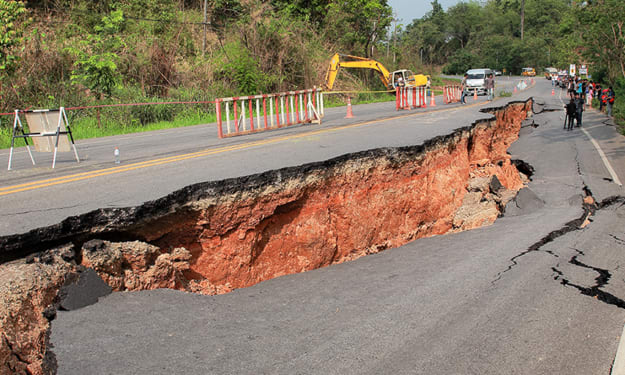
Imagine waking up and hearing a news report that begins with: “There’s a 100% chance of an earthquake today.” It sounds alarming, almost apocalyptic—something that would send people rushing to pack emergency kits, secure their homes, and perhaps even panic about what’s to come. But here’s the truth: that statement is completely accurate, and not because someone has cracked the code of earthquake prediction. Rather, it’s because earthquakes happen every single day on our planet. The only question is where and how strong.
By Fazal Ur Rahmanabout a year ago in Earth
Rising Waters, Rising Resilience
Rising Waters, Rising Resilience How Communities Are Adapting, Innovating, and Thriving in the Face of Floods Floods have long been seen as devastating forces of nature—sweeping away homes, crops, and livelihoods. But in many corners of the world, communities are rewriting the narrative. Instead of merely bracing for disaster, they are preparing, adapting, and even finding opportunities to grow stronger. This is the story of resilience—of people who face the rising waters not with fear, but with innovation and unity. In the rural district of Gaibandha, Bangladesh, where monsoon floods are an annual certainty, families used to spend months each year displaced from their homes. But today, something remarkable is happening. Thanks to local initiatives supported by NGOs and climate-adaptive strategies, homes are being built on raised earthen mounds called plinths. These mounds rise above expected flood levels, keeping families dry even when surrounding areas are submerged. “When the floods come, we stay home now,” says Anika, a mother of three. “We used to lose everything each year. Now we can grow vegetables on floating gardens, and my children still go to school.” These floating gardens—constructed from water hyacinth, bamboo, and soil—are another example of how communities are adapting creatively. They allow for year-round farming, even during flood season. Crops like spinach, pumpkin, and okra are grown on rafts that gently rise and fall with the water, ensuring food security and income when traditional fields are underwater. Innovation is not limited to rural areas. In the city of Rotterdam, Netherlands, which lies largely below sea level, engineers and urban planners have turned water management into an art form. The city features flood-resilient infrastructure like water plazas—public spaces that serve as parks in dry weather and water catchment areas during storms. Buildings are constructed on floating platforms or elevated on stilts, and the city’s complex system of dikes, canals, and surge barriers are managed with cutting-edge technology. “We don’t fight water—we live with it,” says Pieter de Vries, a water management engineer in Rotterdam. “That’s the secret to our success.” In Jakarta, Indonesia, frequent floods once paralyzed the city. Today, local youth groups are leading awareness campaigns, helping clean drainage systems, and planting trees in urban wetlands to prevent runoff. They’ve also helped implement a digital flood-warning system that alerts residents via mobile phones hours before floodwaters arrive, giving them time to protect their homes and evacuate if necessary. Education plays a critical role in fostering resilience. In the Philippines, where typhoons and flooding are increasingly common, schools are teaching children how to respond during disasters, turning them into “young preparedness ambassadors.” These students often go home and teach their families what to do—how to build emergency kits, where to go, and when to act. Across the world, governments, scientists, and citizens are collaborating to develop more adaptive and inclusive flood strategies. Satellite data and artificial intelligence are being used to predict floods with increasing accuracy. Community leaders are working closely with scientists to integrate traditional knowledge with modern solutions. And more importantly, marginalized groups—often the most affected by flooding—are being included in planning and decision-making processes. Floods are no longer viewed solely as natural disasters but as challenges that can be managed and even anticipated. Through smart design, community education, and local empowerment, people are learning not just to survive, but to thrive in the face of rising waters. These stories of resilience carry a powerful message: Climate change may be intensifying floods, but human determination is rising even faster. “The water doesn’t scare us anymore,” says Anika, smiling as she pulls fresh tomatoes from her floating garden. “It reminds us to stay ready, to stay united, and to keep building better.” In every flooded field turned into a floating farm, every child learning disaster readiness, and every community reimagining how to coexist with water, a quiet revolution is underway. The world may be changing—but so are we. And in that change lies hope.
By Muhammad Saad about a year ago in Earth
Cloudburst: Nature's Unexpected Fury from the Sky
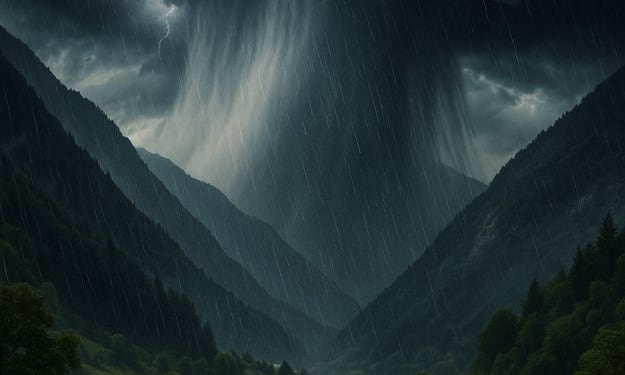
A cloudburst is one of nature’s most extreme and sudden weather events. It is characterized by extremely heavy rainfall in a short period, often in localized areas, leading to flash floods and devastating consequences for life, property, and the environment. Unlike regular rain, cloudbursts are abrupt and powerful, dumping large volumes of water — sometimes more than 100mm within an hour — overwhelming drainage systems and natural waterways.
By Muhib Ullah about a year ago in Earth
"Climatic Changes and Religion"
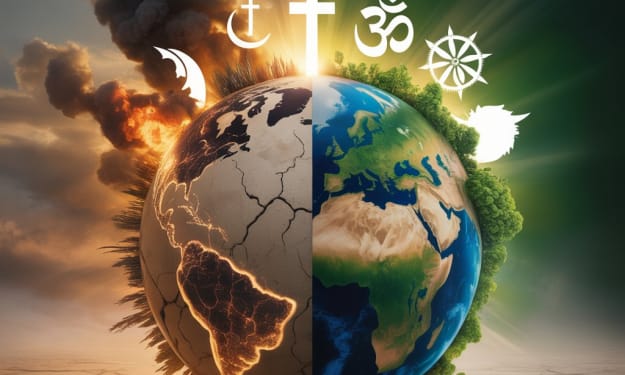
A Critical Analysis of Faith-Based Denial and Responsibility Climate change is one of the greatest global threats of the 21st century. Rising sea levels, intense heat waves, prolonged droughts, and more frequent floods are no longer abstract predictions but realities confronting communities worldwide. Yet, despite overwhelming scientific evidence, many religious groups and individuals remain skeptical, dismissing climate change as either an exaggeration, a natural cycle, or worse, a punishment sent by God. This mindset, while rooted in faith, creates significant barriers to climate action. In this article, we critically analyze how religion can sometimes fuel denial of climate change, why this perspective is dangerous, and how religious frameworks can still be redirected toward constructive solutions.
By Malik Rohail Khanabout a year ago in Earth
Swat and Buner Flood Devastation: A Wake-Up Call for Pakistan
On the night of August 15, 2025, the peaceful valleys of Khyber Pakhtunkhwa were transformed into rivers of destruction. A rare cloudburst unleashed an unprecedented 150mm of rainfall within an hour, tearing through Buner and Swat districts with merciless force. What followed was a catastrophe that has left Pakistan reeling: hundreds dead, thousands displaced, and entire communities reduced to mud and rubble.
By Fazal Ur Rahmanabout a year ago in Earth