Climate
NASA Is Already Prepping To Build Trump A Nuclear Reactor On The Moon
This week NASA administrator Sean Duffy declared the Trump Administration's intention to land a working nuclear fission reactor on the moon by the end of the decade. “We're in a race to the moon, in a race with China to the moon,” Duffy said.
By Muhammad Sabeelabout a year ago in Earth
A Letter To The Last Human On Earth
A Letter to the Last Human on Earth By Abdullah, If you are reading this, it means the world has outlived us all — all but you. I don’t know your name. I don’t know your face. I only know that you exist, and for now, that’s enough. This letter was encoded into the memory banks of the last remaining satellite, endlessly orbiting the scorched shell we once called Earth. It was designed to find you, should anyone remain. I write to you from the year 2187. Or what used to be 2187. Time has since become irrelevant. The days no longer rise and fall the way they used to. The sun is a distant flicker behind the clouds of ash, and clocks are just relics of rhythm we once understood. When I was a child, humanity still believed it was untouchable. We wore our progress like armor — cities taller than mountains, machines smarter than minds, and weapons more powerful than gods. We lived like kings and died like fools. The Collapse began slowly. First, the oceans rose, inch by inch. Then came the famines, the wildfires, the mass migrations. Borders dissolved. Nations fell. And then… the silence. The kind of silence that rings louder than war. I was a climate archivist — a fancy term for someone who collected the dying breaths of ecosystems and filed them into databases no one would ever read. I once watched the last polar bear die in real-time. It lay down on a shrinking ice sheet, curled into itself, and disappeared beneath the surface. I filed that moment under “Extinct: Ursus maritimus.” I cried. Not for the bear, but for the fact that no one else did. Before the end, they tried to save us. Artificial biomes. Underground cities. One-way rockets to Mars. But humans were always better at dreaming than doing. In the end, the rich fled, the poor stayed, and the planet didn’t care either way. I stayed behind. Not out of bravery, but guilt. I was one of the architects of our memory, and it felt wrong to leave the ruins behind. I wandered through dead cities, writing poems in the dust on broken windows, speaking to the wind as if it remembered me. And now, there’s you. Are you the child of survivors? A sleeper in some cryo-pod that finally blinked awake? Or are you something else entirely — more evolved, less human, a whisper of what we once were? Do you remember what it meant to laugh until you couldn’t breathe? To share warmth with another body, not for survival, but because it felt good? Do you know the sound of music, the taste of strawberries, the feel of grass under your feet? Or are those things just myths now? If you’ve never known these things, let me tell you: they were real. They mattered. The world, broken as it was, held moments of impossible beauty. I once lay in a field of wildflowers as a meteor shower danced overhead, and for a moment, I believed we might make it. We didn’t. But maybe you will. This letter isn’t meant to haunt you with memories. It’s meant to remind you that you’re not a ghost. You’re a continuation. A chance. You carry in your blood the mistakes of billions — and the potential to do better. If there’s anyone else out there, find them. Touch their hand. Look into their eyes. Speak. Build. Mourn us if you must, but don’t worship us. We were deeply flawed. We built wonders and burned them down. We loved, and we destroyed. But above all, we hoped — foolishly, fiercely. Now that burden, that gift, is yours. I don’t know how much longer I’ll last. My bones ache like ancient tree roots, and my breath comes shallow these days. I write this beneath the dim glow of solar lamps, surrounded by dusty shelves of books no one reads. I sleep with an old globe next to me, spinning it some nights like I’m asking it to remember. So, if you find this — if you are still out there — promise me something. Don’t just survive. Live. With wonder, With courage, With the weight of all we were, And the light of all you still could be. Yours, Elan Mora Archivist of the Lost World
By Abdullah Khan about a year ago in Earth
Market Viability of Biochar Carbon Removal Projects
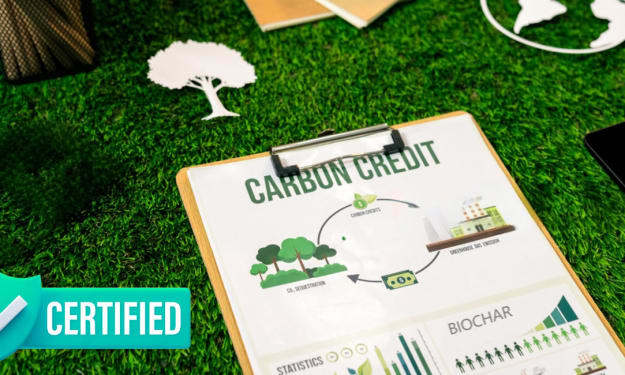
As the global economy intensifies its pursuit of net-zero emissions, biochar-based carbon removal projects are emerging as pivotal assets in the climate mitigation portfolio. Derived from thermochemical conversion of biomass in an oxygen-limited environment, biochar not only functions as a stable carbon sink but also serves as a co-beneficial soil amendment. The commercialization of this pathway is accelerating, supported by advancements in pyrolysis plant infrastructure and the monetization of carbon removal credits.
By Wayne Shenabout a year ago in Earth
Getting Started With Agrivoltaics: A Beginner-Friendly Guide
If you’ve ever dreamed of a future where farming and clean energy grow side by side, you’re in the right place. Welcome to agrivoltaics, the exciting new frontier that blends agriculture with solar power to create farms that feed us while generating renewable energy.
By Kenneth Annanabout a year ago in Earth
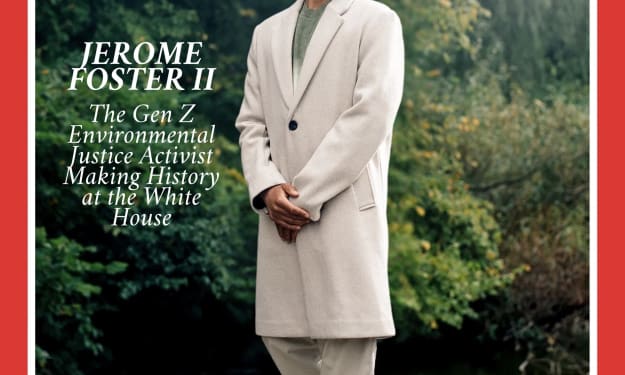
Jerome Foster II: A Climate President in the Making. AI-Generated.
At just 23 years old, Jerome Foster II has already advised the White House, co-founded a national youth voting initiative, and shaped conversations around environmental justice at the federal level. He is not running for public office. But his trajectory — steeped in policy, protest, and civic engagement — raises a timely question: What would it look like for the United States to finally elect a president who puts climate at the center of national governance?
By Alex Young about a year ago in Earth
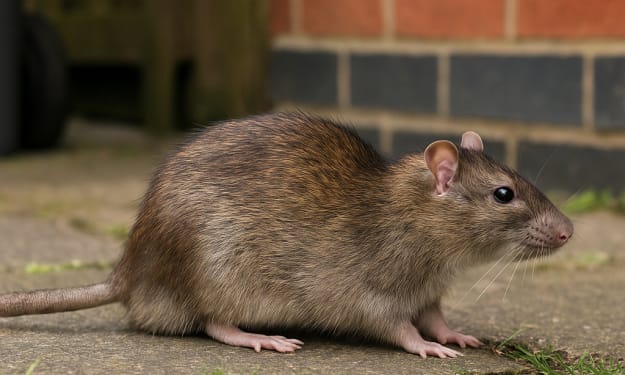
The Rise of Giant Rats: What’s Lurking in Britain's Backyards?
When a pest control technician recently stepped into a quiet house in Normanby, North Yorkshire, he wasn’t prepared for what he found. Inside a wall cavity, hidden from view, was a rat unlike any local resident had ever seen — measuring a staggering 22 inches from nose to tail, roughly the size of a small cat. For the family living there, it was a shock. For the rest of Britain, it’s a warning sign.
By Kamran Zebabout a year ago in Earth
Upriver
The Kanawha, 1936 “THESE ARE ROADS to take when you think of your country,” wrote the poet Muriel Rukeyser about a road trip she took to central Appalachia in 1936. It’s a refrain she repeats throughout The Book of the Dead, a series of witness poems responding to the industrial tragedy at Hawk’s Nest.
By Inamulhaq Durraniabout a year ago in Earth