Climate
International Anti-Mosquito Remedies
Mosquitoes are the most despicable aspect of individuals' late spring everywhere. They're the one thing certain individuals cannot stand about summer! They whiz around; gnawing us and making everybody tingle on a generally wonderful day. Additionally, they are fit for bringing a wide range of illnesses. It makes one wonder, how would we dispose of these annoying animals. All the more significantly, how would we dispose of them without annihilating the earth?
By Tashfeen Siddique3 years ago in Earth
Earth Evolution in 10 Minutes
Earth Evolution in 10 Minutes In the past few billion years, Earth has endured asteroid impacts, collisions with other planets, and multiple freezing events. It's a wonder that our blue Homeworld has survived at all. To take a whirlwind tour of our planet's history, let's start at the very beginning, about four and a half billion years ago. Our solar system began to form from a dense cloud of interstellar gas and dust. This cloud collapsed into a swirling disc of matter that grew hotter and hotter until hydrogen fused into helium, giving birth to our Sun and our baby Earth. After the birth of our star, the matter on the outer edges of the swirling disc began to clump together. These clumps eventually formed the planets and moons in our solar system. As they accumulated more matter, they grew larger and more spherical. In the cooler regions of the solar system, the clumps were mostly made of ice, liquids, and gases. Closer to the Sun, the rocky material formed the inner planets, including Mars and Earth. During its early years, Earth was extremely active volcanically, releasing gases such as hydrogen sulfide, methane, and carbon dioxide. These gases formed the planet's first atmosphere. Earth was also bombarded by large asteroids and comets, but the most significant event was the collision with Thea, a planet the size of Mars. This collision threw matter into Earth's orbit, which eventually bound together to form the Moon. At this time, Earth had no oceans, and water existed only as gas. However, about 3.8 billion years ago, the planet cooled enough for water to condense and become liquid. The very first primitive ocean covered the young Earth, transforming it into a water world. Water, H2O, is a vital ingredient for the creation of life, and approximately 3.7 billion years ago, life appeared in the form of microscopic organisms. It took nearly a billion years for some of these organisms to change the course of the world. Earth's first continents emerged from the ancient ocean, and scientists refer to them as cratons. As more land rose from the ocean, the first supercontinent, called Vaalbara, formed. Vaalbara relatively small, estimated to be smaller than the continent of Australia. Around 2.4 billion years ago, cyanobacteria evolved as Earth's first photosynthesizers. This development significantly increased the production of oxygen, making Earth's atmosphere more hospitable. With the rise of oxygen, Earth's atmosphere experienced a reduction in carbon dioxide levels, resulting in a frigid climate and the planet's first ice age. While the atmosphere and climate continued to change, the continents were also in motion. They broke apart and reassembled into the supercontinent Rodinia, one of the largest supercontinents to have existed. During this time, life on Earth became more complex, leading to the Cambrian explosion approximately 540 to 485 million years ago. During this period, animals with hard body parts, such as shells or spines, emerged, including the famous trilobites. Around 440 million years ago, the climate shifted dramatically, causing a change in ocean temperatures. Earth witnessed the Ordovician-Silurian extinction, a mass extinction event that wiped out a majority of life on the planet. However, many of these organisms laid the foundation for the ecosystems present on Earth today. Between 420 and 350 million years ago, the first trees appeared on Earth, and animals began to make their way to land. By 250 million years ago, our planet was covered by the massive supercontinent known as Pangea. Unfortunately, this period also saw the most significant mass extinction event in Earth's history, known as the Great Dying. Approximately 90 percent of all species were wiped out due to high levels of greenhouse gases and accelerated global warming. However, this mass extinction event created opportunities for the next wave of animal evolution. Between 240 and 230 million years ago, dinosaurs emerged and ruled the land for the next 150 million years. Giant creatures like the Argentinosaurus, the largest land animal ever, and fearsome predators like the T-Rex dominated the Earth. During this time, Pangea started breaking up, eventually forming the continents we recognize today. So, that's a brief glimpse into the incredible history of our planet, but there is still much more to explore!
By Celine Dy👸🏻💜3 years ago in Earth
Unusual Blast Caught in a Close by Cosmic system Was certainly not a Unique case. Content Warning.
Unusual Blast Caught in a Close by Cosmic system Was certainly not a Unique case A really unusual and interesting sort of infinite kaboom just got much more impossible to miss.
By Engr kawsar Ahmed3 years ago in Earth
NASA's Startling Legend in the Environment Emergency
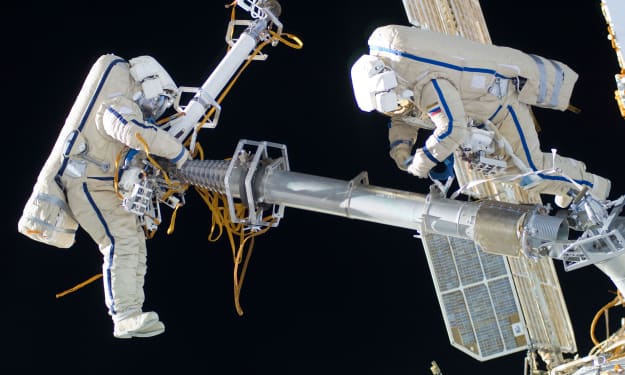
Over a year after first recognizing methane tufts from its roost on board the Global Space Station (ISS), information from NASA's discharge instrument is presently being utilized to distinguish point-source emanations of ozone-depleting substances, a capability that has shocked even its creators.
By Engr kawsar Ahmed3 years ago in Earth
How we can all contribute to, the fight against climate change from our immediate environment....Article 3
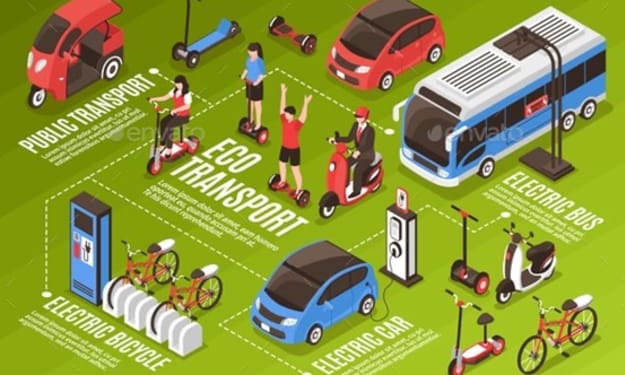
Introduction Climate change poses one of the most significant challenges of our time, and addressing it requires a collective effort across various sectors. One crucial aspect of this effort is the transformation of transportation systems, which are major contributors to greenhouse gas emissions. Sustainable transportation offers a viable solution to mitigate the environmental impact of commuting while promoting greener alternatives. This article explores key strategies to combat climate change through sustainable transportation, focusing on the development and improvement of public transportation, cycling lanes, and pedestrian pathways, as well as the promotion of electric vehicles and carpooling.
By Nwafulume Uchenna3 years ago in Earth
strange things are happening in the world
In the realm of maritime mysteries, few tales captivate the imagination quite like the enigma of the Bermuda Triangle—a region steeped in legends of vanished ships and airplanes, where the boundaries remain elusive, and the very existence of the phenomenon is questioned. The SS Codopaxy's perplexing disappearance in 1925, while en route from Charleston, South Carolina, to Havana, Cuba, adds a layer of intrigue to the already mystifying narrative. Decades later, the discovery of a wreck off St Augustine, Florida, only deepened the mystery, as specialists, unable to definitively identify its origin, dubbed it "Bear Rat." It wasn't until January 2020 that marine biologists, through painstaking efforts, confirmed its identity as the long-lost SS Codopaxy, raising questions about how the vessel ended up 40 miles from its expected course.
By Jonathan Kojo Aryee3 years ago in Earth
Environmental damage that is "comparable to ecocide" is illegal under EU law
Environmental damage that is "comparable to ecocide" is illegal under EU law. The European Association has angry into the accepted anatomy to adjudge wide-scale ecological abuse "equivalent to ecocide".
By Engr kawsar Ahmed3 years ago in Earth
Environmental change is harming coral around the world
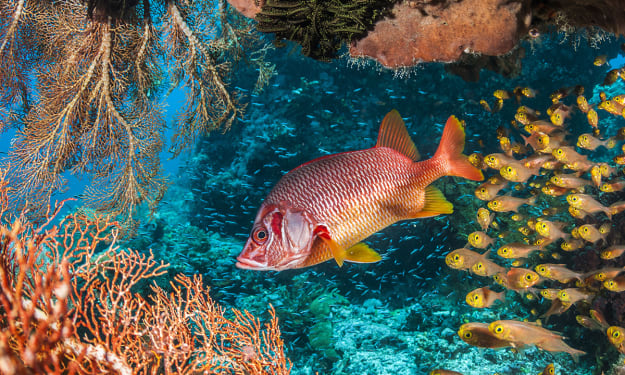
Environmental change is harming coral around the world. Off the coastline of Galveston, Texas jumpers sliding into the sky blue waters distant the Texas coast lower under a skyline dotted with oil and gas stages into a phenomenal scene of submerged mountains embellished with yellow, orange, and pink coral as may be obvious.
By Engr kawsar Ahmed3 years ago in Earth