Advocacy
"The Natural Resource Titans: Countries with the Greatest Wealth Beneath Their Feet"
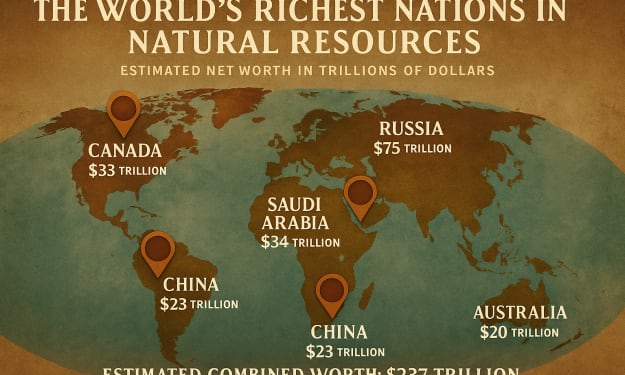
The World's Most Affluent Nations in Natural Resources: A Global Assessment Natural resources serve as the concealed engines fueling a nation's prosperity, supplying the fundamental materials necessary for industry, energy, and economic development. From petroleum and gas to minerals, timber, and arable land, nations endowed with resources frequently exercise considerable global authority. But which countries genuinely occupy the pinnacle of the world's treasure trove? In this article, we investigate the nations with the greatest natural resource wealth, evaluate their estimated net worth, and analyze how they harness (or mishandle) their natural endowments. 1. Russia Estimated Net Worth: $75 Trillion Russia is, by a considerable margin, one of the wealthiest countries regarding natural resources. It possesses extensive reserves of oil, natural gas, timber, coal, and a diverse array of minerals such as gold, nickel, and platinum. Oil and Gas: Russia holds the largest natural gas reserves and ranks as a leading global exporter. Forests: The Siberian taiga encompasses the largest continuous forest on the planet. Minerals: Russia is a significant producer of diamonds, copper, iron ore, and coal. Nevertheless, economic sanctions and political instability frequently hinder Russia from fully realizing the value of its natural riches. 2. United States Estimated Net Worth: $45 Trillion The United States boasts an impressive array of resources, spanning energy reserves to agricultural abundance. Energy: The U. S. ranks among the top producers of oil and natural gas. Minerals: It possesses substantial deposits of coal, gold, copper, uranium, and rare earth elements. Agriculture: Fertile land positions the U. S. as the foremost exporter of corn, soybeans, and wheat. Robust infrastructure and technological advancement have enabled America to effectively leverage its resources, propelling it into the status of the world's largest economy. 3. Saudi Arabia Estimated Net Worth: $34 Trillion Saudi Arabia's economy is intrinsically linked to oil. With the second-largest proven oil reserves after Venezuela, it stands as the globe’s leading oil exporter. Oil Wealth: Oil constitutes approximately 90% of Saudi Arabia’s exports and around 42% of its GDP. Minerals: Recent discoveries of gold, phosphate, and other minerals have expanded the resource portfolio. Initiatives such as the "Vision 2030" plan aim to diversify the economy beyond oil, preparing for a future with decreased reliance on fossil fuels. 4. Canada Estimated Net Worth: $33 Trillion Canada is endowed with a vast array of natural wealth. Energy: Extensive reserves of oil (particularly in the oil sands of Alberta) and natural gas. Minerals: A principal source of potash, uranium, gold, and nickel. Forests and Water: Canada’s plentiful freshwater lakes and forests are invaluable resources. A stable government and stringent environmental protections aid Canada in balancing resource extraction with sustainability. 5. China Estimated Net Worth: $23 Trillion China, often recognized for its manufacturing prowess, is also significantly rich in natural resources. Coal: China holds the largest coal reserves globally. Rare Earth Elements: Dominates the global supply of these essential materials crucial for contemporary technologies. Minerals: A leading producer of gold, tin, and aluminum. Resource wealth, coupled with industrial expansion, has propelled China’s swift economic ascent over the last three decades. 6. Australia Estimated Net Worth: $20 Trillion Australia’s affluence is embedded within its crimson soils. Minerals: Premier global exporter of iron ore, bauxite, gold, and lithium. Energy: Vast reserves of coal and natural gas. Agriculture: Fertile land yields substantial agricultural exports such as wheat and wool. With a comparatively modest population and robust governance, Australia proficiently exports its resources, particularly to burgeoning Asian economies. 7. Brazil Estimated Net Worth: $17 Trillion Brazil is abundant in both mineral resources and biodiversity. Minerals: Leading producer of iron ore, niobium, and bauxite. Forests: The Amazon rainforest, the planet’s largest, serves as an immense reservoir of timber and carbon sequestration. Agriculture: A dominant force in soybeans, coffee, and beef. However, ecological challenges such as deforestation present significant threats to its long-term resource wealth. How Resource Wealth Influences Nations Resource abundance can yield both affluence and adversity: Affluence: Countries like the United States and Canada have harnessed their resources to establish diversified, resilient economies. Resource Curse: Conversely, others, like Venezuela and sections of Africa, have experienced resource wealth inciting corruption, disparity, and instabilitya phenomenon termed the "resource curse. " The crucial factor is governance: administering wealth transparently, investing in infrastructure, education, and sustainability. Conclusion From the oil fields of Saudi Arabia to the mineral-rich territories of Australia, the world’s natural resources are unevenly allocated but universally vital. Estimates position Russia at the forefront, with an astounding $75 trillion in natural resources, followed by the U. S. and Saudi Arabia. Yet possessing underground riches does not ensure prosperity above ground. The genuine treasure resides in how nations manage, preserve, and equitably allocate their natural inheritance for future generations. In an era of climate change and evolving energy demands, prudent stewardship will dictate which countries remain resource-rich not solely in value but in genuine affluence and sustainability.
By Say the truth about a year ago in Earth
Syria Needs Security – Can Al-Sharaa Build a United Army to Provide It?
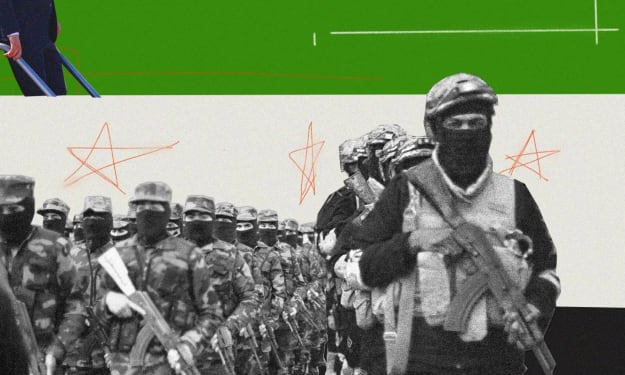
Syria Needs Security – Can Al-Sharaa Build a United Army to Provide It? As Syria enters a new chapter in its protracted and painful history, the question of national security looms larger than ever. The once-thriving country, now fractured by civil war, foreign interference, and ideological divides, is in desperate need of stability. With various factions vying for power and influence, the prospect of unifying these elements under a single, credible military force seems far-fetched. Yet some believe that one man might be capable of attempting the near impossible—Farouk Al-Sharaa.
By Abjol Hussain Laskarabout a year ago in Earth
SPRING ALLERGY GUIDE: TRACK POLLEN & BREATHE EASY
Where Are Pollen Levels the Most Severe This Year? Each year, certain areas tend to experience more intense allergy seasons due to a combination of high pollen counts, common medication usage for relief, and limited access to allergy care. In 2025, regions located in the central and southern parts of the US are experiencing particularly high pollen levels.
By Mirza Afzal Baigabout a year ago in Earth
How Saudi Arabia and the US Might Reset the Middle East
The Middle East is undergoing a significant transformation, driven by a renewed strategic partnership between Saudi Arabia and the United States. This alliance, revitalized under President Donald Trump's administration and Crown Prince Mohammed bin Salman (MBS), aims to reshape regional dynamics through economic collaboration, security initiatives, and diplomatic efforts.
By Abjol Hussain Laskarabout a year ago in Earth
The Price of Tradition
The village of Eldergrove was quiet, tucked between rolling hills and misty woods, seemingly untouched by time. Its people were kind, its streets clean, and its homes tidy. Outsiders who stumbled upon it would often say it felt like walking into a storybook. But what they didn’t know was that Eldergrove kept a secret, one hidden behind every smile, every handshake, and every warm loaf of bread passed over a neighbor’s fence.
By Muhammad Ibrarabout a year ago in Earth
The Internet of Things: A Silent Revolution in Connectivity
Introduction Imagine waking up in the morning and your coffee machine starts brewing as your alarm goes off. Your smartwatch tells you to move more today based on how well you slept, your car plots out the least congested route to work, and your fridge tells you you need milk. The Internet of Things (IoT) is rapidly transforming what used to sound like science fiction. More than just a buzzword, the Internet of Things is a fundamental technology that is slowly but surely reshaping the modern world. The Internet of Things (IoT) is at the center of a revolution that is making the world smarter, more efficient, and more responsive. This revolution includes smart cities, wearable health trackers, and connected homes. The Internet of Things (IoT) concept, its development, applications, advantages, drawbacks, and prospects for this vast network of connected devices are the subject of this article. ⸻
By Mahibul Mahtab Rummanabout a year ago in Earth
Antarctica in 2025: A Comprehensive Overview of Recent Developments
1. Record Low Sea Ice Extent In 2025, Antarctica recorded historically low levels of sea ice for the fourth consecutive year. Once thought to be less susceptible to warming due to its insulating circumpolar winds, recent satellite data have contradicted earlier models. The implications of this trend are stark: reduced sea ice affects not only global sea levels but also disrupts the continent’s ecological balance. Species like krill—which underpin much of the Southern Ocean’s food web—depend on sea ice for breeding. A drop in sea ice thus resonates across the ecosystem, threatening penguins, seals, and whales.
By Polar Journalabout a year ago in Earth